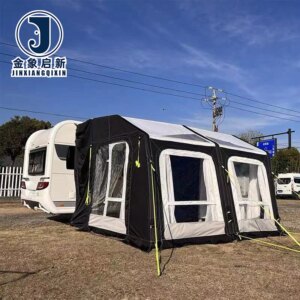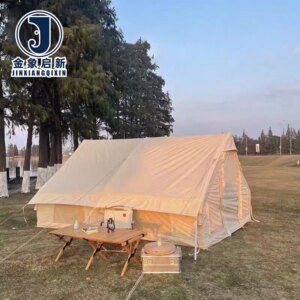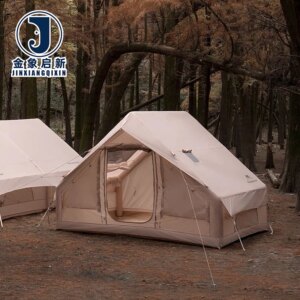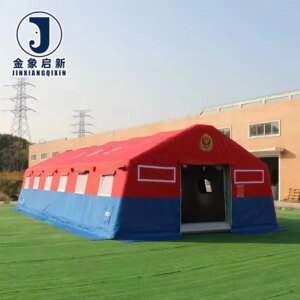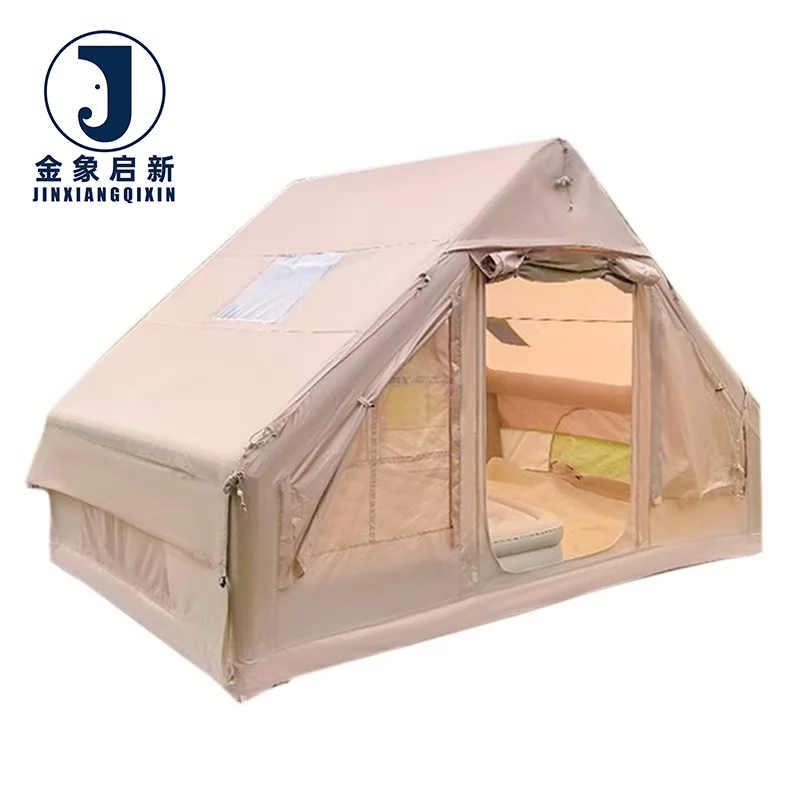
Proven Coating Control — three full production lines maintain consistent PVC thickness across every inflatable tent fabric roll, ensuring predictable heat-seal behavior and structural integrity during rapid deployment cycles.
Technical Specifications
| Parameter | Value |
|---|---|
| Product Type | Inflatable Camping Tent Fabric for Truck and Transport |
| Core Material | PVC tarpaulin |
| Waterproof | Yes (test basis not stated in source) |
| UV-Resistant | Yes (test basis not stated in source) |
| Tear-Resistant | Yes (test basis not stated in source) |
| Flame Retardant Grade | Available in flame retardant grades — confirm the grade required for your market |
| Customization | OEM & ODM, sample customization, pattern printing |
| Quality Control | Full-process QA/QC with dedicated inspection staff |
| Standards | ISO9001, ISO14001, ISO45001, CE |
Application Suitability
| Application | Exposure & Requirement |
|---|---|
| Roadside emergency shelters for fleet recovery | Repeated inflation/deflation stress, road dust abrasion, wind-driven rain |
| Temporary mobile storage at freight staging yards | Prolonged UV exposure, forklift and cargo contact, ground moisture |
| Rapid-deployment site offices at transport construction zones | Sun and weather cycling, tie-down loads from anchoring points |
| Auxiliary facilities at outdoor logistics hubs | High-frequency setup cycles, branding and zone-identification printing |
Why Tear Resistance Matters More Than Stated GSM for Inflatable Transport Shelters
Fabric that tears at flex points fails the structure, not the seams. Fleet operators staging loads at cross-dock yards or deploying emergency shelters on highways need Inflatable Camping Tent Fabric for Truck and Transport that resists tear propagation at inflation joints and tie-down anchor zones. A quoted GSM value tells you how much coating went onto the base fabric, but it says nothing about how that fabric behaves when the tent is inflated, deflated, folded and redeployed multiple times in a single week [NEED_CITE: tensile and tear test methods for coated fabrics per ISO 1421]. We have seen inflatable shelter fabrics split at the valve reinforcement patch not because the GSM was low, but because the base fabric weave lacked sufficient tear resistance to handle cyclic flex loading. Always request batch-specific tear and tensile data rather than relying on weight alone.
Designed for the Flex and Fold Cycle of Transport Deployment
Inflatable tent structures used in logistics environments face a duty cycle that generic camping fabrics were never engineered to handle. Each setup requires the PVC membrane to stretch under internal pressure, hold that tension against wind load, and then collapse flat for storage on a truck or in a freight terminal. The Inflatable Camping Tent Fabric for Truck and Transport addressed here uses a PVC tarpaulin core built for that repeated flex-and-fold pattern, where the coating must remain bonded to the base fabric through hundreds of inflation cycles without delamination at stress concentrations.
UV and Weather Exposure at Open-Air Logistics Hubs
Freight staging yards and outdoor logistics hubs offer minimal shade, leaving inflatable shelter surfaces under direct sunlight for extended periods. UV-resistant treatment on this PVC tarpaulin slows the embrittlement and color shift that degrade untreated coated fabrics in continuous sun exposure. Waterproof construction keeps stored equipment, staging cargo and temporary office interiors dry during transit and stationary deployment, addressing the moisture ingress that damages sensitive freight at uncovered loading points [NEED_CITE: UV degradation mechanisms in plasticized PVC coated fabrics].
Reading the Specs That Actually Determine Field Performance
Tear resistance in PVC tarpaulin depends on the interplay between base fabric denier, weave density and coating adhesion — not on weight alone. A heavier coating may add stiffness without improving tear propagation resistance if the base fabric is loosely woven. The coating method applied to this inflatable tent fabric determines how well the PVC layer bonds to the yarn structure, which directly affects performance at welded seams where the material is heat-joined to form air chambers. Fabricators should confirm coating weight and base fabric specifications together when evaluating suitability for rapid-deployment inflatable structures in transport environments.
The Hidden Cost of Specifying Inflatable Fabric on Price Per Meter Alone
When procurement decisions focus solely on unit cost, the fabric that arrives on site may meet the quoted GSM but fall short on the tear strength needed for real deployment. Inflatable tent panels that split at anchor points during the first storm event cost far more in cargo exposure and emergency replacement logistics than the savings achieved on the initial purchase. Batch-to-batch color variation across rolls in the same shipment becomes visible once multiple tent units are erected side by side at a logistics hub, forcing either acceptance of an inconsistent appearance or a costly full replacement [NEED_CITE: batch color consistency standards for coated technical textiles]. Welded seams failing before the fabric body reaches its service limit indicate a mismatch between the heat-seal parameters and the coating chemistry, a problem that originates in specification, not in the welding shop.
What This Supply Chain Delivers for Transport Applications
Three full production lines and 36 sets of professional processing equipment support volume orders of inflatable tent fabric with consistent coating weight across every roll in the batch. A 10-technician R&D team handles material thickness adjustment and pattern printing customization, enabling fleet branding and site-zone identification directly on the tent surface. Dedicated QA and QC staff inspect every production stage, with 100 percent pre-shipment inspection ensuring that the inflatable fabric leaving the facility matches the agreed specification. Sample development within days allows fleet operators and transport equipment builders to validate material performance and structural design before committing to bulk production. ISO9001, ISO14001, ISO45001 and CE certifications provide the compliance documentation required for commercial tenders and transport infrastructure projects.
Documentation & Verification
- Material specification sheet stating PVC coating type, base fabric construction and available flame retardant grades
- Test reports for UV resistance and waterproof performance referenced by order batch number
- ISO9001, ISO14001, ISO45001 and CE certificates for commercial tender compliance
- Pre-shipment inspection record confirming roll-to-roll consistency before dispatch
- Certificate of origin and customs documentation for cross-border shipment
Fabrication, Handling & Storage
- Confirm heat-seal temperature range matches the PVC coating chemistry before welding inflatable chamber seams
- Reinforce tie-down anchor zones with additional PVC patches to distribute wind load stress on the base fabric
- Store rolls upright on pallets to prevent flat-spot creasing that affects inflation uniformity
- Allow cold-stored rolls to reach ambient temperature before unrolling to avoid coating crack at low temperature
- Use PVC-compatible cleaners only — solvent-based products may dissolve the plasticizer in the coating layer
Starting Your Inflatable Tent Fabric Inquiry
To move from specification to sample, share your deployment scenario including typical wind loads, setup frequency and expected sun exposure duration at the site. Specify whether you need rolls for in-house fabrication or finished inflatable tent units with valve fittings and anchor reinforcement. Indicate any fleet branding, color-coding for site zones or pattern printing requirements so the R&D team can prepare sample panels for your approval before production begins.
Frequently Asked Questions
Q: Can inflatable tent fabric ship in the same container as truck tarpaulin rolls?
A: Yes. Consolidated loading is arranged when inflatable tent fabric and truck tarpaulin orders share the same destination port. The warehouse team calculates container weight distribution across both product types and provides a combined packing list with roll counts, dimensions and gross weight for customs clearance at the destination.
Q: What equipment is needed to inflate the tent structure on site?
A: Inflation requires an air blower matched to the chamber volume and fabric weight of the specific tent design. Voltage and connector specifications depend on the deployment market. Confirm blower requirements during the sample phase so the inflation system is validated before bulk production of the Inflatable Camping Tent Fabric for Truck and Transport begins.
Q: Are UV and waterproof test reports provided with each shipment?
A: Test reports documenting UV resistance and waterproof performance are issued per batch and referenced by order number. Request these documents during the quotation stage to verify that the test basis aligns with the exposure conditions your inflatable tent structures will face at transport logistics sites.
Q: Can the tent surface be printed with fleet logos or zone-identification colors?
A: OEM and ODM customization includes pattern printing and color specification for inflatable tent panels. Submit artwork files and Pantone references during sample development. The R&D team produces printed sample sections for color and adhesion approval before the print is applied to full production rolls or finished units.
Q: What is the typical lead time for custom thickness or color orders?
A: Lead times depend on the specific thickness, color and printing requirements along with current production line scheduling. The quotation includes a confirmed dispatch date based on the agreed specification. Request an expedited timeline if your transport project requires urgent deployment of inflatable shelter units.