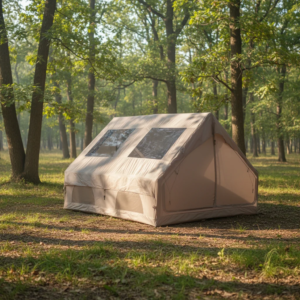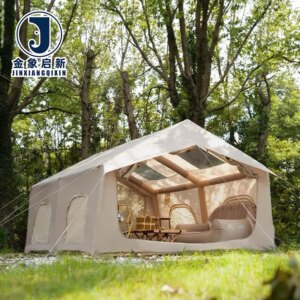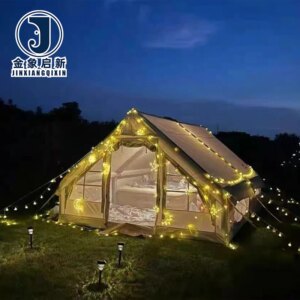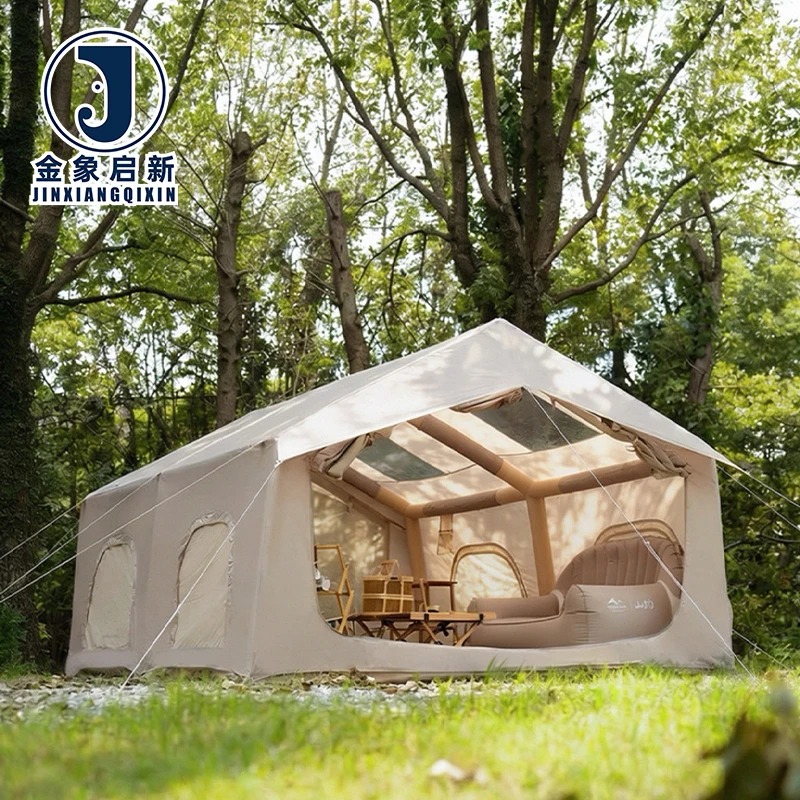
Deep Process Control Over Coating — Nearly 30 years of PVC tarpaulin production with in-process QA ensuring consistent adhesion and weight across every roll of inflatable tent fabric.
Technical Specifications
| Parameter | Value |
|---|---|
| Product Type | Inflatable Tent Fabric |
| Core Material | PVC tarpaulin |
| Waterproof | Yes |
| UV-resistant | Available (test basis to be confirmed per order) |
| Tear-resistant | Yes |
| Flame-retardant | Available (grade to be confirmed per order) |
| Anti-static | Available (standard to be confirmed per order) |
| Key Features | Waterproof, tear-resistant, rapid deployment structure |
| Customization | OEM & ODM, sample customization, pattern printing |
| Standards | ISO9001, ISO14001, ISO45001, CE |
Application Suitability
| Application | Exposure & Requirement |
|---|---|
| Emergency disaster relief shelters | Rapid deployment, harsh weather, immediate waterproofing |
| Temporary logistics support facilities | Frequent assembly/disassembly, ground abrasion, transport handling |
| Construction site field command posts | Prolonged outdoor UV exposure, wind load, equipment proximity |
| Remote engineering project base camps | Temperature fluctuations, dust, high humidity, fire safety compliance |
Why Generic Fabric Fails When Minutes Matter in the Field
Emergency response and remote site operations demand inflatable tent fabric that deploys in minutes, not hours. Inconsistent PVC tarpaulin coating weight and weak weld adhesion cost critical time when a shelter is needed for disaster relief or roadside logistics [NEED_CITE: field failure rates of temporary inflatable shelters under high wind]. I have seen coated rolls arrive on site only to fail at the seam the moment the air beams pressurize. This happens when the base fabric denier and coating adhesion are not matched to the structural stress of rapid inflation. PVC Inflatable Tent aftermarket supplier selection should always begin with a review of the coating method and the peel strength data, not just the surface appearance.
Rapid Inflation Demands Predictable Coating Adhesion
When an inflatable tent structure is pressurized, the PVC tarpaulin fabric must distribute air beam tension evenly across the welded seams. If the coating adhesion is weak, the layers delaminate under pressure before the base fabric reaches its tensile limit. This is why PVC Inflatable Tent aftermarket supplier evaluation must include peel strength verification, not just tensile strength numbers. The 36 sets of professional processing equipment at our facility maintain consistent lamination pressure so every meter of inflatable tent fabric behaves identically under inflation.
Custom Sizing for Transport Hub and Roadside Deployment
Fleet operators and logistics teams often need temporary shelters that fit specific vehicle access points or staging areas. Generic sizing leaves gaps that compromise weather protection or requires on-site cutting that weakens the structure. Our OEM and ODM service covers custom dimensions, pattern printing, and sample development so the inflatable tent fabric arrives ready to deploy. Each unit is checked against the confirmed drawing before dispatch [NEED_CITE: dimensional tolerance standards for inflatable structure fabric].
How PVC Coating Weight and Base Weave Determine Field Durability
The waterproof performance of PVC tarpaulin inflatable tent fabric depends on both the coating thickness and the density of the base polyester weave. A tightly woven base prevents the coating from being pushed through under pressure, maintaining the air barrier that keeps the structure inflated. Tear resistance is governed by the base fabric denier and warp-weft density; higher denier yarns resist tear propagation when the fabric is punctured or snagged on site debris. UV-resistant and flame-retardant treatments are integrated into the coating compound rather than applied as a surface spray, which means they remain effective through repeated folding and transport. Anti-static treatment, where required, prevents dust accumulation that can degrade the surface over extended outdoor use [NEED_CITE: coating adhesion test methods per ISO 1421 for PVC tarpaulin].
The Hidden Cost of Specifying Inflatable Tent Fabric on GSM Alone
Relying solely on GSM to judge inflatable tent fabric quality leads to two common field failures. First, a heavy coating on a low-density base fabric adds weight without adding tear strength, so the material tears easily at stress points during inflation. Second, flame-retardant treatment claimed without a verified grade results in failed site safety inspections, forcing emergency shelter replacement mid-operation. Batch colour inconsistency across multiple units is another consequence of inadequate process control — visible the moment tents are erected side by side at a staging area. Welded seams failing before the fabric itself is a direct result of mismatched heat-sealing parameters to the coating formulation [NEED_CITE: seam peel strength requirements for inflatable structure fabric].
What This Facility Brings to Your Inflatable Tent Fabric Order
Nearly 30 years of PVC tarpaulin production means the coating formulation and lamination process are controlled from raw material to finished roll. Three full production lines and 36 sets of professional processing equipment support bulk orders with reliable on-time dispatch. A 10-person R&D team handles material selection, custom sizing, and sample development within days for specific inflatable tent fabric requirements. Dedicated QA and QC staff inspect every production stage, with 100% pre-shipment inspection ensuring no roll leaves without verification. Pattern printing and branding are managed in-house so colour registration stays consistent across the full order.
Documentation & Verification
- Material specification sheet confirming GSM, base fabric denier, and coating type for each roll
- UV and flame-retardant test reports provided when applicable grades are specified
- Pre-shipment inspection record with dimensional and visual verification per unit
- ISO9001, ISO14001, ISO45001, and CE certificates included with every shipment
- Roll packing list with batch traceability for multi-unit inflatable tent orders
Fabrication, Handling & Storage
- Heat-seal temperature must match the PVC coating formulation — confirm parameters before production
- Store rolls vertically on pallets to prevent permanent creasing in the PVC tarpaulin coating layer
- Avoid dragging inflatable tent fabric on abrasive ground during deployment to protect the coating surface
- Clean with mild detergent only; solvents can degrade the PVC coating and treatment layers
- Field repairs require compatible PVC adhesive and patch material matching the coating weight
How to Prepare Your Inflatable Tent Fabric Inquiry
Start by specifying the deployment scenario — disaster relief staging, construction site shelter, or transport hub logistics — along with the expected environmental exposure. Provide target dimensions, quantity, and any pattern printing or branding requirements. Confirm the flame-retardant or anti-static grade your site compliance demands. Indicate whether you need finished inflatable structures or roll stock for your own fabrication. Request a sample if colour consistency or coating hand feel needs verification before placing the full order.
Frequently Asked Questions
Q: What customization options are available for inflatable tent fabric sizing and branding?
A: We provide full OEM and ODM customization including dimensions matched to your specific deployment requirements, pattern printing, and branding. Samples are developed within days for your approval before mass production begins. Each custom specification is documented in the material sheet and verified during pre-shipment inspection.
Q: How are flame-retardant grades verified for inflatable tent fabric orders?
A: Flame-retardant treatment is available in multiple grades. You should specify the standard required for your target market and site compliance. Test reports are provided with the shipment confirming the grade achieved, so your safety documentation is complete upon delivery.
Q: How is batch colour consistency maintained across multiple inflatable tent units?
A: Colour matching is controlled at the coating compounding stage, and every roll in a batch is inspected against the confirmed colour reference. Pre-shipment inspection includes side-by-side visual comparison to ensure no visible variation when multiple units are erected together at the same site.
Q: What documentation accompanies each inflatable tent fabric shipment?
A: Each shipment includes a material specification sheet, applicable UV and flame-retardant test reports, ISO and CE certificates, a roll packing list with batch numbers, and a 100% pre-shipment inspection record. Certificate of origin and customs documentation are also available to support international logistics.