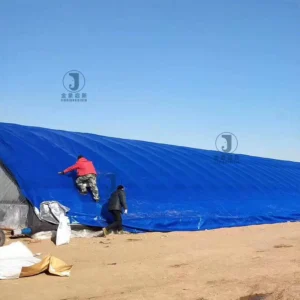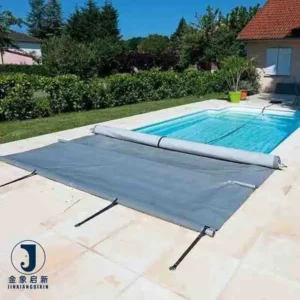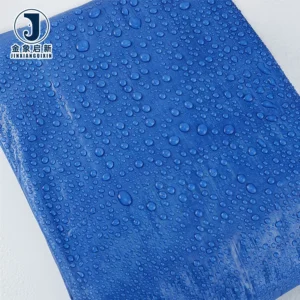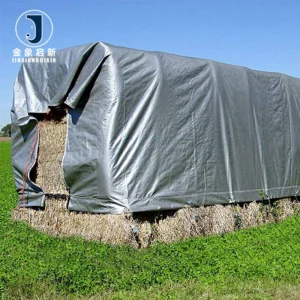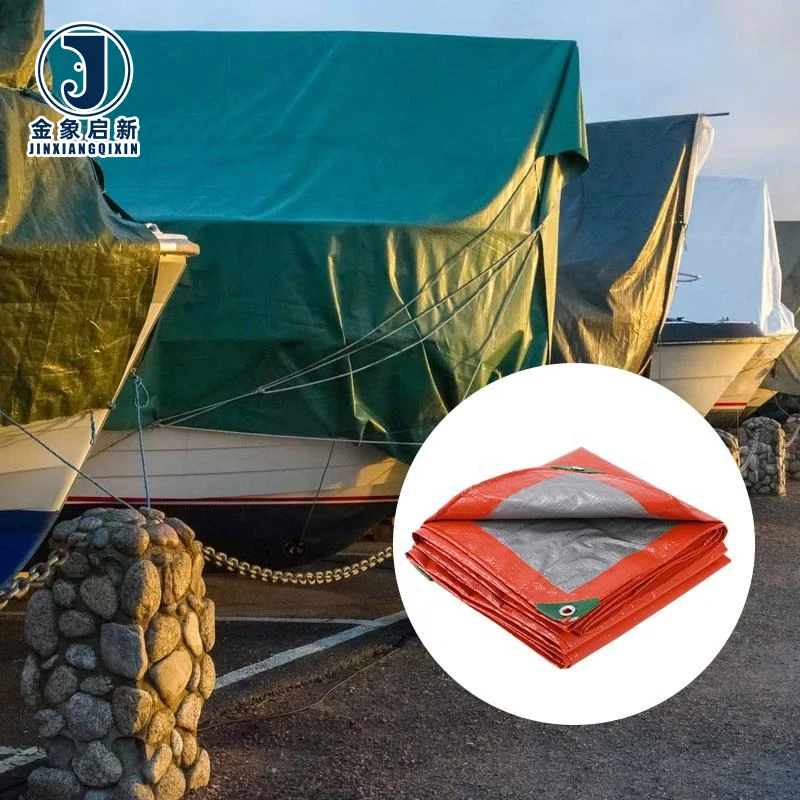
Precision-Cut Fitment — Every PE tarpaulin sheet is sized to your exact trailer dimensions, eliminating the gaps and overlaps that generic covers leave on moving loads.
Technical Specifications
| Parameter | Value |
|---|---|
| Product Type | PE Tarpaulin |
| Material | Polyethylene (HDPE woven base fabric, LDPE coating both sides) |
| Coating Method | Laminated |
| Construction Options | 3-layer (1 fabric + 2 coating) / 5-layer (2 fabric + 3 coating) |
| Weight (GSM) | 40g~500g/m² (range covers product family — confirm the grade for this item) |
| Lightweight Grade Weight | 80-110 g/m² (source value — verify against manufacturer catalog) |
| Medium Grade Weight | 120-150 g/m² (source value — verify against manufacturer catalog) |
| Heavy-duty Grade Weight | 160-240 g/m² (source value — verify against manufacturer catalog) |
| Total Thickness | 0.18-0.22 mm (lightweight) / 0.22-0.28 mm (medium) / 0.30-0.35 mm (heavy-duty) |
| Mesh Count | 8×8 (lightweight) / 10×10 (medium) / 12×12 (heavy-duty) |
| Tensile Strength (N/5cm) | Meridian 300-500 / Latitude 250-450 (lightweight); Meridian 500-800 / Latitude 400-700 (medium); Meridian 900-1200 / Latitude 700-1000 (heavy-duty) (test basis not stated in source) |
| Knitting Density | 5×5 ~ 20×20 (source value — verify against manufacturer catalog) |
| Color | Custom color |
| Size | Custom size |
| Eyelet & Hem Options | Reinforced rustproof grommets, reinforced corner |
| UV Treatment | Available (test basis not stated in source) |
| Waterproof | Double waterproof surfaces |
| Key Features | Tear-resistant, washable, mildew proof, anti-aging |
Application Suitability
| Application | Exposure & Requirement |
|---|---|
| Flatbed truck load cover | Constant road vibration, wind uplift at speed, UV and rain exposure, tie-down abrasion at grommet points |
| Trailer side curtain | Repeated flexing at fold lines, contact friction against cargo edges, weather sealing across long spans |
| Transport equipment builder stock | Dimensional accuracy for model-specific fitment, batch colour consistency across fleet rollouts |
| Logistics fleet replacement cover | Quick swap for worn tarpaulins across mixed trailer types, rustproof hardware for repeated tie-down cycles |
Why Generic Truck Covers Fail on Specific Trailer Models
A cover that is even slightly off-dimension creates wind pockets, accelerates edge wear, and leaves cargo exposed at the most vulnerable corners.
Fleet operators regularly receive PE Tarpaulin for truck and transport cover sheets that are labelled to a standard size but do not account for the actual deck length, bolster height, or side rail profile of a particular trailer model. The result is excess fabric that flaps at highway speed — generating noise, abrading the coating at fold lines, and pulling grommets out of the hem under sustained wind load. On the other end, a cover that is too short leaves the rear edge of the load uncovered, inviting water ingress and cargo damage claims. [NEED_CITE: fleet tarpaulin replacement frequency and fitment-related failure data]
How Vehicle-Specific Sizing Eliminates the Waste Loop
Each PE tarpaulin order for transport use starts with the trailer model designation, deck dimensions, and tie-down configuration rather than a generic length-and-width lookup. The cutting pattern accounts for the drape needed over side rails and the overlap required at the tailgate, so the cover sits flush without tension points or loose fabric. This approach removes the trial-and-error cycle where a fleet operator orders a standard size, discovers the misfit on the first load, and then re-orders at additional cost and delay.
Reinforced Hardware at the Points That Actually Fail
Grommet pull-out and corner tearing account for a large share of in-service tarpaulin failures on transport loads. The reinforced rustproof grommets and reinforced corners on this PE tarpaulin address exactly those failure points. Grommet spacing at 39.4-inch centres provides tie-down anchor density matched to typical ratchet strap patterns on flatbed and curtain-side trailers. [NEED_CITE: grommet spacing and tie-down load distribution standards for transport covers]
Matching Mesh Count to the Route Profile
A cover that runs long-haul motorway routes faces different mechanical demand than one used for short urban distribution hops. The mesh count grading — from 8×8 for lightweight duty through 12×12 for heavy-duty — lets you align fabric density with the actual exposure. Higher mesh count increases the number of HDPE yarns per unit area, distributing tie-down and wind loads across more intersection points in the woven base. The 3-layer and 5-layer laminated construction options add further differentiation: the 5-layer structure introduces an additional fabric ply that improves puncture resistance when cargo edges press against the cover during cornering and braking.
Reading the Specification Sheet Beyond the GSM Number
GSM alone does not predict how a PE tarpaulin will hold up on a truck. A 150 g/m² sheet built on a 10×10 mesh with a tight LDPE laminate may outperform a 180 g/m² sheet that achieves its weight through thicker coating on a looser weave. The coating weight-to-base-fabric ratio determines whether the material fails by coating crack or by yarn tear. Laminated construction — where LDPE films are bonded to both faces of the HDPE woven base — produces a different peel strength profile compared to extrusion coating, and this affects how the material behaves when heat-welded at seams. For transport covers that are fabricated into side curtains or joined panels, weld integrity at flex points is critical; a laminate that delaminates under repeated bending will fail at the seam long before the body fabric shows wear. Thickness readings across the three grade tiers — from 0.18-0.22 mm at lightweight through to 0.30-0.35 mm at heavy-duty — give a tangible indicator of the combined base-and-coating build-up, but they must be read alongside mesh count to understand the full mechanical picture.
The Hidden Cost of Specifying the Wrong Grade
Down-selecting to a lighter mesh count to save on material cost often surfaces as premature replacement in the field. Lightweight-grade covers on long-haul routes experience accelerated grommet deformation and edge fraying because the base fabric lacks the yarn density to distribute tie-down forces. Conversely, specifying heavy-duty grade for a short-distance urban fleet adds dead weight and handling difficulty without measurable service-life gain. Colour inconsistency across rolls in a single fleet order creates a visible mismatch once the covers are deployed side by side on adjacent trailers — a cosmetic issue that triggers rejection on corporate-branded fleets. [NEED_CITE: coated fabric batch consistency standards and colour tolerance for fleet branding]
Why Transport Buyers Source This Range Here
The 10-person R&D team develops cutting patterns matched to individual trailer model profiles, producing samples within days so fitment can be verified before a fleet order enters production. Three full production lines and 36 sets of professional equipment support volume runs with repeatable GSM and mesh count across the batch. Dedicated QA/QC inspects every production stage, with 100% pre-shipment checks that catch weight deviation, coating adhesion faults, and grommet alignment errors before dispatch. UV treatment is available in grades suited to road exposure — confirm the specific grade required for your market and route climate. ISO and CE certified processes underpin the documentation trail that transport compliance audits demand.
Documentation & Verification
- Material specification sheet stating confirmed GSM, mesh count, and coating type for each roll in the PE tarpaulin shipment
- Weight verification per roll against the stated GSM before dispatch, recorded on the pre-shipment inspection report
- Test report for UV treatment grade where applicable, matched to the exposure conditions of the intended route
- Roll packing list with individual roll dimensions and net weight for container loading reconciliation
- Certificate of origin and customs documentation prepared for cross-border transport equipment supply chains
Fabrication, Handling & Storage
- Heat-weld seams using temperature settings matched to the LDPE laminate layer to avoid delamination on 3-layer or 5-layer constructions
- Position reinforced rustproof grommets at specified 39.4-inch centres and reinforce corners before any tie-down load testing
- Store rolls horizontally on pallets in shaded, ventilated areas to prevent compression creasing of the laminated PE surfaces
- Allow cold-stored rolls to reach ambient temperature before unrolling to prevent coating micro-cracking in lightweight grades
- Clean with mild detergent and soft brush; avoid solvent-based cleaners that can degrade the LDPE coating bond
What to Include in Your Enquiry
Provide the trailer model designation, deck dimensions, and side rail profile so the cutting pattern can be matched to your actual vehicle rather than a generic size. Specify the mesh count grade and whether 3-layer or 5-layer construction is preferred for your route exposure. Indicate the colour reference and quantity per size so batch consistency can be confirmed before production begins.
Frequently Asked Questions
Q: How is the truck cover sized to my specific trailer model rather than a generic cut?
A: We take the exact deck length, width, bolster height, and side rail profile of your trailer model to build a dedicated cutting pattern. The PE Tarpaulin for truck and transport cover is then produced to those dimensions, with drape allowance and overlap built in, so the cover fits flush without excess fabric or exposed edges on your specific vehicle.
Q: How do you verify GSM on arrival matches what was quoted?
A: Every roll undergoes weight verification during the 100% pre-shipment inspection. The measured GSM is recorded on the inspection report and compared against the quoted specification. Rolls that fall outside tolerance are replaced before dispatch, so the material you receive matches the grade you ordered.
Q: What grommet spacing and reinforcement options are available for tie-down loads?
A: Standard grommet spacing is set at 39.4-inch centres using reinforced rustproof hardware. Corners receive additional reinforcement patches to handle concentrated tie-down forces. For fleets with specific strap patterns or higher wind-load requirements, spacing and reinforcement configuration can be adjusted during the sample approval stage.
Q: How is colour consistency maintained across multiple covers in the same fleet order?
A: All rolls in a single fleet order are produced from the same coating batch and run consecutively on the production line. The pre-shipment inspection includes a side-by-side colour comparison between rolls to catch any visible variation before packing, preventing mismatched panels once the covers are deployed across the fleet.
Q: What UV treatment options are available for extended road exposure?
A: UV treatment is available for this PE tarpaulin range in grades matched to different exposure levels. The specific grade should be confirmed based on your route climate and expected sun exposure hours. Request the test report for the recommended grade to verify suitability for your market before placing the production order.