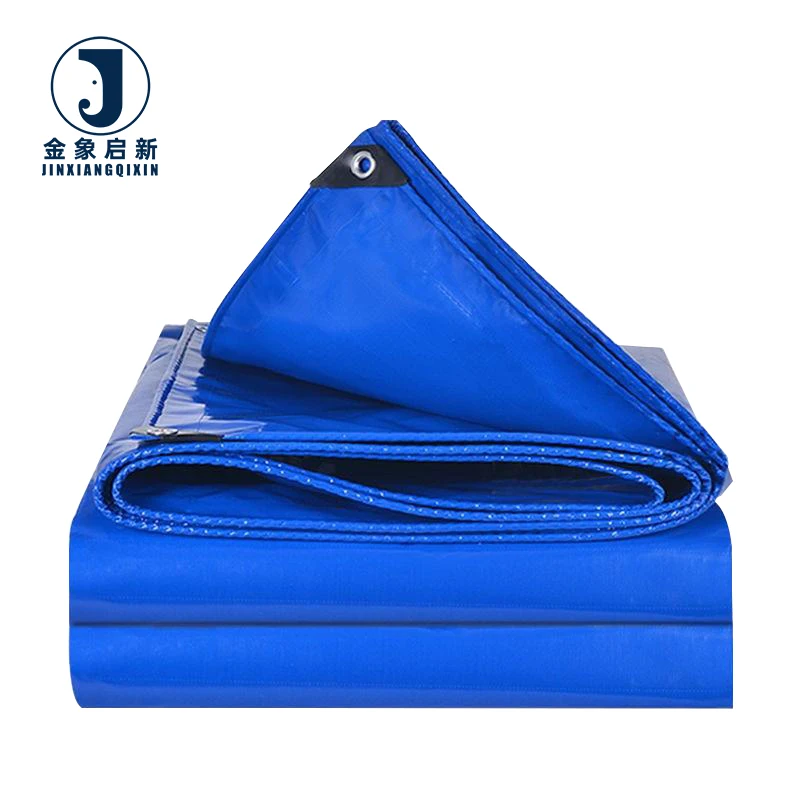
Precision Coating Control — Every roll of PVC coated tarpaulin truck cover leaves our facility with verified coating weight and adhesion integrity, ensuring the GSM you ordered is the GSM you receive.
Technical Specifications
| Parameter | Value |
|---|---|
| Product Type | PVC Coated Tarpaulin |
| Material | PVC + High-strength polyester mesh fabric |
| Coating Method | Laminated technology & Hot-melt Coating technology |
| Weight Options | 350gsm / 420gsm / 500gsm / 550gsm / 600gsm / 750gsm |
| Thickness Options | 0.32mm / 0.35mm / 0.4mm / 0.45mm / 0.5mm / 0.65mm |
| Roll Width | 2m / 2.1m |
| Roll Length | 75m / 50m |
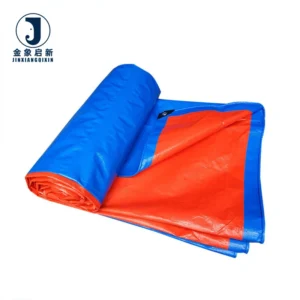
| Color Options | Blue / Red / Yellow / Light blue / Grey (Customized) |
| Key Features | Waterproof, sunproof, cold crack resistance, anti-mildew, anti-static treatment |
| Flame Retardant | Available upon request — confirm the grade required for your market |
| UV Stable | Yes |
| Service Life | 3-7 years under normal circumstances |
| Certifications | ISO 14001, ISO 45001, CE, RoHS |
Application Suitability
| Application | Exposure & Requirement |
|---|---|
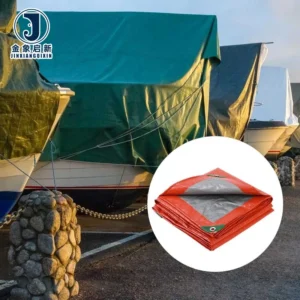
| Truck side curtain covers | Constant flexing at load points, road debris abrasion, prolonged UV exposure, wind flap stress |
| Flatbed trailer tarpaulins | Heavy cargo tie-down tension, weather ingress protection, dimensional stability under load |
| Truck awnings and shelters | Repeated deployment and retraction, crease resistance, colour retention over seasons |
| Cargo ship deck covers | Salt spray exposure, heavy rain, wind uplift forces, long-term moisture contact |
Why Generic Sizing Costs Fleet Operators More Than the Fabric Itself
A PVC coated tarpaulin truck cover cut to standard dimensions rarely fits a specific trailer profile.
The real cost of an ill-fitting cover is not the wasted material at the edges — it is the gap left at the rear corner where wind enters and cargo shifts, or the excess fabric that flaps loose at highway speed and abrades against its own hem. Fleet operators who specify by generic width and length often end up paying twice: once for the cover, and again for the cargo claim. Our PVC coated tarpaulin truck cover aftermarket supplier approach starts with the trailer model drawing before any cutting begins, matching eyelet spacing, hem depth and reinforcement zones to the actual tie-down hardware on your fleet [NEED_CITE: fleet operator cost of cargo damage from improperly fitted tarpaulins].
Sizing to the Trailer, Not to the Roll Width
Every PVC coated tarpaulin truck cover we produce is dimensioned from the trailer’s measured profile, not from standard roll increments. Side curtain applications require precise panel overlap at the buckles, while drop-deck trailers need stepped panels that follow the deck profile without pooling water at the transition. We develop a cutting pattern from your vehicle drawing or physical measurement template, accounting for hem take-up, eyelet placement and the stretch behaviour of the selected GSM grade under tie-down tension.
Weld Integrity at the Flex Points
The seams on a truck cover fail first where the load moves most — across the crown of a curtain side where flexing is constant, and at the base where tie-down straps concentrate force. Our laminated and hot-melt coating process delivers strong adhesion between the PVC coating and the polyester base fabric, which directly supports weld seam strength during high-frequency heat welding. The coating must soften uniformly at the weld temperature for a consistent bond; inconsistent coating weight across the roll surface creates weak spots that open under road vibration [NEED_CITE: relationship between coating adhesion strength and welded seam durability in PVC tarpaulins].
Reading GSM and Coating Weight Together
A PVC coated tarpaulin truck cover’s weight rating tells only part of the story. The 350gsm to 750gsm range available here covers light curtain-side applications through to heavy flatbed covers exposed to abrasive loads. However, the total GSM comprises both the polyester base fabric and the PVC coating applied to each face. A 550gsm fabric with a heavier base and thinner coating will behave differently at the weld line than a 550gsm fabric with a lighter base and thicker coating — the coating thickness determines how well the material fuses during heat welding, while the base denier and weave density determine tear propagation resistance once a puncture occurs. Buyers specifying for fleet covers should request the breakdown of base fabric weight versus coating weight to confirm the material suits their welding equipment and load profile.
What Happens When Specifications Drift Between Orders
A fleet that reorders the same PVC coated tarpaulin truck cover six months later may receive a roll that is lighter by a margin too small to notice by hand but significant enough to alter the service life. A drop in coating weight reduces cold crack resistance in winter conditions and accelerates UV degradation in summer exposure. Colour shift between batches — where a replacement cover looks noticeably different beside the originals on a multi-trailer rig — signals inconsistent pigment dosing or a change in base fabric source. These variations erode the fleet’s professional appearance and, more importantly, create unpredictable maintenance intervals where some covers fail well before their expected replacement date [NEED_CITE: batch consistency challenges in coated fabric production for fleet operators].
Why Production Control Matters at the Coating Stage
Our 10-person R&D team handles material selection and pattern development for each truck cover order, matching GSM grade to the trailer type and duty cycle. Three full production lines with 36 sets of equipment allow us to run dedicated batches for fleet orders rather than mixing grades across a production run, which protects colour consistency and coating weight accuracy. Every roll undergoes dedicated QA/QC inspection at each production stage, with 100% pre-shipment inspection against the stated specification before packing. Samples are developed within days for custom sizing or colour requirements, allowing buyers to approve the exact material and finish before bulk production begins.
Documentation & Verification
- Material specification sheet stating exact GSM, base fabric denier and coating weight for each roll
- Pre-shipment inspection record confirming dimensions, colour and weight against order specification
- Test report for flame retardant and UV grades where applicable — request the grade required for your operating region
- Custom sizing drawing approved against your trailer model before cutting begins
- Roll packing list with individual roll weights and batch identifiers for traceability
- Certificate of origin and customs documentation for cross-border shipment
Fabrication, Handling & Storage
- Heat weld at temperatures matched to the selected coating method — laminated and hot-melt coatings require different dwell times
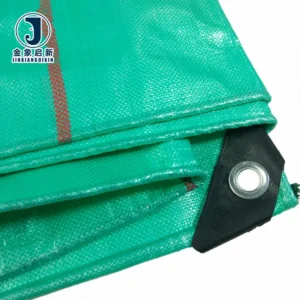
- Reinforce eyelet zones with welded PVC patches on heavier grades above 550gsm to prevent pull-through under tie-down load
- Store rolls upright on their cores to avoid flat-spot creases that become visible after installation on a truck curtain
- Allow cold-stored rolls to reach ambient temperature before unrolling to prevent cracking at the fold line in winter conditions
- Clean with mild detergent and soft brush — avoid solvent-based cleaners that can soften the PVC coating surface
- Cut panels with a sharp blade on a clean table to avoid dragging polyester yarns that weaken the hem weld zone
What We Need From Your Inquiry
To recommend the right PVC coated tarpaulin truck cover grade and sizing for your fleet, please provide the trailer model or detailed dimensions, the tie-down hardware layout, and your operating climate range. Let us know whether you need flame retardant certification for your market, and if custom brand printing or specific colour matching is required across the fleet. Confirm whether you need finished covers with welded hems and eyelets, or roll stock for your own fabrication facility.
Frequently Asked Questions
Q: How do you verify the GSM matches the quotation on each roll?
A: Every roll is weighed and measured during pre-shipment inspection. We record the actual weight per square metre against the quoted GSM on the inspection report, which accompanies the shipment. If a roll falls outside the agreed tolerance, it is held and replaced before dispatch.
Q: Can you cut covers to fit my specific trailer model?
A: Yes. We develop a cutting pattern from your trailer drawing or physical measurements, accounting for hem take-up and eyelet spacing to match your tie-down hardware. A sample panel can be produced for fitment approval before the full order is cut.
Q: What certifications are available for flame retardant grades?
A: Flame retardant treatment is available upon request for PVC coated tarpaulin truck covers. Please confirm the specific grade or standard required for your market — such as local fire codes for transport or storage — so we can supply the matching test report with your order.
Q: How do you maintain colour consistency across a fleet order?
A: We run fleet orders as a single dedicated batch rather than mixing production runs. Pigment dosing and base fabric source are held constant across the batch, and pre-shipment inspection includes a side-by-side colour comparison of rolls before packing.
Q: What is the typical lead time for custom sizes and colours?
A: Custom-sized and coloured PVC coated tarpaulin truck covers require dedicated production scheduling. Lead times vary with order volume and material availability — provide your quantity and colour requirement at inquiry stage and we will confirm the production window before you commit.