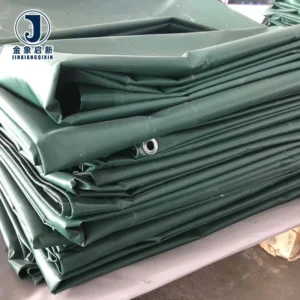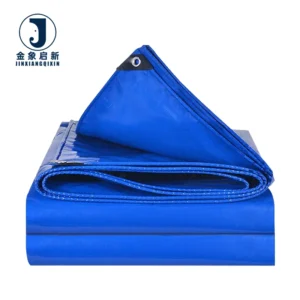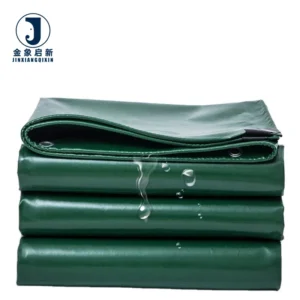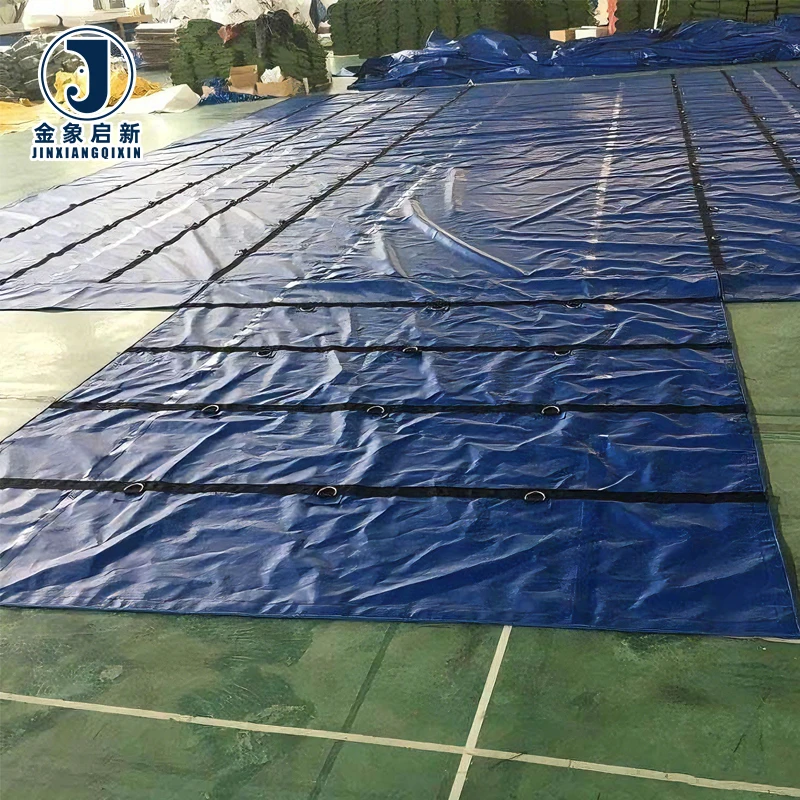
Precision-Fitted Engineering — Every PVC tarpaulin truck cargo cover is patterned to the exact trailer model, cutting generic-fit failures at flex and tie-down zones where loads shift hardest on the road.
Technical Specifications
| Parameter | Value |
|---|---|
| Product Type | PVC Coated Tarpaulin Cover |
| Coating Material | PVC |
| Waterproof | Yes |
| Flame Retardant | Available in flame retardant grades — confirm the grade required for your market |
| Anti-Static | Available with anti-static treatment — specify the standard required for your operation |
| Anti-Cold | Formulated for low-temperature flexibility — confirm test basis for your climate zone |
| Anti-Mildew | Treated for mildew resistance in humid and wet storage conditions |
| Weather Resistance | Rated for extended outdoor exposure (1–3 years service life assurance) |
| High Strength | Engineered for high tensile performance during installation and tie-down |
| Certifications | ISO, CE |
Application Suitability
| Application | Exposure & Requirement |
|---|---|
| Open-bed truck and trailer freight | Rain, wind, UV, road spray — full weather sealing over multi-day transit |
| Construction equipment transport | Abrasion from steel edges, vibration, repeated loading and unloading |
| Long-haul logistics fleets | Sustained sun exposure, temperature swings, high-speed airflow stress at seams |
| Agricultural and bulk commodity haulage | Moisture ingress prevention, mildew risk during extended yard storage |
Why "Waterproof and Fireproof" Labels Mislead Fleet Buyers
A PVC tarpaulin truck cargo cover custom-fitted to your trailer is only as reliable as the test reports behind its treatment claims.
Fleet operators regularly receive covers labelled fireproof that carry no flame retardant grade, leaving them exposed when a site safety audit demands documentation. Waterproof claims are equally hollow if the welded seams are not tested to the same standard as the base fabric [NEED_CITE: flame retardant grade classification systems for transport covers]. When a generic-sized cover shifts in transit, water finds the gap — and the problem is blamed on the material rather than the fit.
Cut to the Trailer, Not to a Blanket Size
A PVC coated truck cargo cover custom patterned to your specific truck or trailer model eliminates the slack that allows wind to lift edges and rain to penetrate. Generic cuts rely on excessive overlap and rope tension, which accelerates wear at the eyelets and hem lines. By matching the cover to the exact vehicle dimensions, the fabric sits flat under tension, reducing abrasion against the load and extending service intervals between replacements.
Reinforcement Where the Load Flexes Hardest
The tie-down points and corners of a truck cargo cover endure concentrated stress every time a strap is tensioned or the load shifts under braking. Reinforced hems and welded seams at these high-flex zones prevent the early splitting that generic covers show within months of route service [NEED_CITE: tensile and tear test methods for coated fabrics per ISO 1421]. The PVC coated truck cargo cover custom build ensures reinforcement is placed according to your trailer’s strap anchor layout, not a standard template.
Reading Beyond the GSM Number
GSM tells you the weight per square metre, but it does not tell you how that weight is distributed between the base fabric and the coating. A high GSM achieved through heavy coating but low-denier base yarn will resist puncture yet tear easily along the weave. Conversely, a tightly woven high-denier base with balanced coating weight delivers both tensile and tear resistance. The coating method — whether knife-over-roll, laminating, or calendering — determines peel strength and heat-weld behaviour, which directly affects seam durability on a finished truck cargo cover.
The Cost of Underspecifying Your Truck Cover
A cover that arrives lighter than the quoted GSM will degrade faster under UV and road spray, requiring replacement well before the expected service life. Flame retardant treatment claimed without a supporting test report can halt a fleet at a compliance checkpoint, causing delivery delays and contractual penalties [NEED_CITE: transport safety compliance requirements for flame retardant cargo covers]. Batch colour inconsistency across a multi-vehicle fleet order becomes visible the moment covers are deployed side by side, damaging brand presentation for liveried trailers.
Why Source Your PVC Truck Covers Here
Three full production lines and 36 sets of professional equipment support volume fleet orders with consistent lead times across repeat batches. A 10-person R&D team handles pattern development for each trailer model, including eyelet spacing and hem reinforcement mapped to your tie-down configuration. Dedicated QA/QC runs at every production stage with 100% inspection before dispatch, so the cover that arrives matches the specification you approved. Samples are developed within days for custom sizing and treatment requirements, allowing fleet trials before committing to full volume. Nearly 30 years of coated fabric process control ensures coating weight and adhesion remain consistent from the first roll to the last.
Documentation & Verification
- Material specification sheet stating GSM, base fabric denier, and coating weight per cover
- Flame retardant test report provided when grade is specified at order confirmation
- Pre-shipment weight verification record confirming GSM matches quotation
- Roll packing list with cover dimensions and batch reference for traceability
- ISO and CE certificates included with every dispatch documentation set
- Certificate of origin and customs documentation for cross-border fleet supply
Fabrication, Handling & Storage
- Heat-weld seams at manufacturer-recommended temperature to maintain PVC coating adhesion integrity
- Specify eyelet spacing and hem fold width matched to your strap and tie-down hardware
- Store rolled covers upright in dry conditions to prevent permanent creasing of the PVC surface
- Allow cold-stored covers to reach ambient temperature before unfolding to avoid coating crack
- Use mild detergent and soft brush for cleaning to preserve anti-mildew treatment on the coating
- Field repairs with compatible PVC adhesive patches maintain waterproof continuity at minor damage points
What to Include in Your Enquiry
Provide the exact truck and trailer make, model, and year so the cover pattern matches the vehicle dimensions and anchor points. Specify the operating environment — including temperature range, UV exposure level, and whether flame retardant or anti-static certification is required at your delivery points. Confirm the quantity per vehicle model and whether you need colour matching across the fleet for visual consistency.
Frequently Asked Questions
Q: How do I confirm the cover will fit my specific trailer model?
A: Supply the trailer make, model, year, and any aftermarket modifications to the body or tie-down rails. The cover is patterned to those exact dimensions rather than cut from a generic template. A dimensional drawing is provided for your approval before production begins, ensuring the PVC tarpaulin truck cargo cover custom fit eliminates slack and overlap issues.
Q: What test reports support the flame-retardant or anti-static claims?
A: When you specify a flame retardant or anti-static grade at enquiry, the corresponding test report is provided with the shipment documentation. Confirm the standard required by your market or site operator before ordering, so the PVC coated truck cargo cover custom treatment aligns with your compliance obligations.
Q: Can I get a sample before committing to a full fleet order?
A: Samples are developed within days to your specified dimensions, treatment, and colour requirements. This allows you to verify fit on the actual trailer, test weld seam behaviour, and assess material hand-feel before authorising full production of your PVC tarpaulin truck cargo cover aftermarket supplier order.
Q: How are welded seams reinforced at tie-down and flex points?
A: High-stress zones are identified from your trailer’s strap anchor layout, and additional coating layers or fabric patches are applied at those positions before welding. This prevents the seam from splitting under tension, which is the most common failure point on generic covers that use uniform seam construction throughout.
Q: Can you match colour across multiple covers for the same fleet?
A: Colour matching is controlled at the coating stage with batch references recorded for each production run. When ordering multiple covers for side-by-side deployment, specify that all units must come from the same batch to eliminate visible shade variation across the fleet.