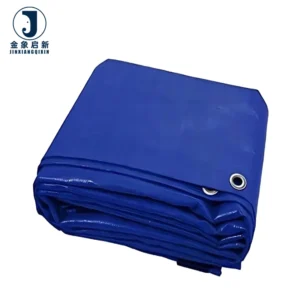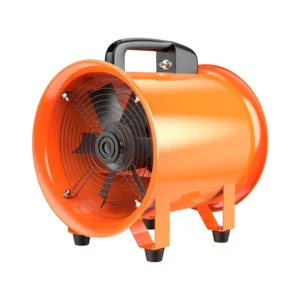
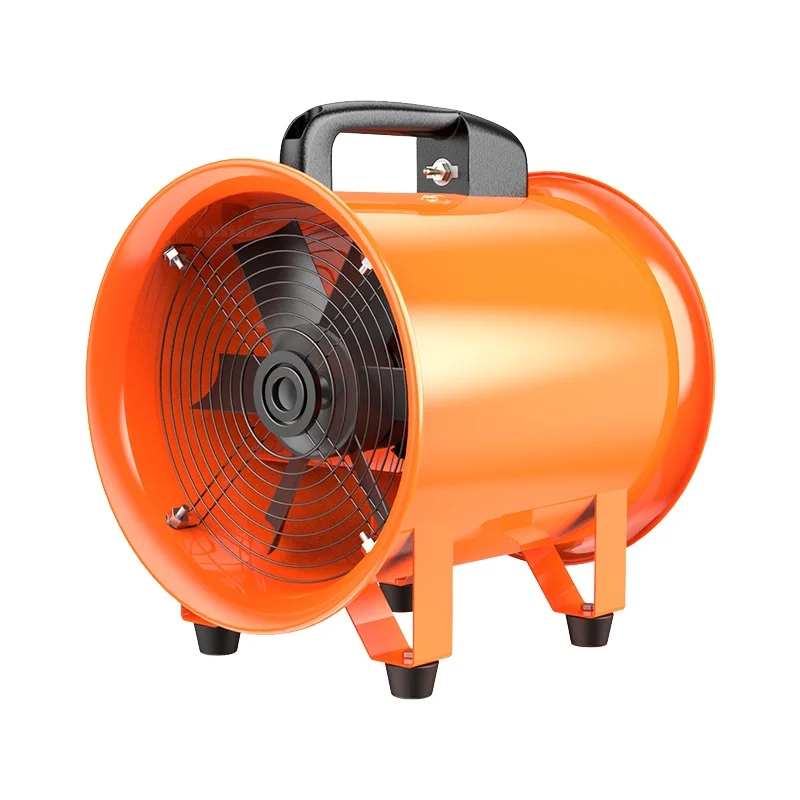
Proven Coating Process Control — nearly 30 years of focused experience on coated fabric ensures that every roll of Portable Axial Flow Exhaust Fan fabric maintains the specified GSM, adhesion, and dimensional stability from first meter to last.
Technical Specifications
| Parameter | Value |
|---|---|
| Product Type | Industrial Air Duct Blower Fan |
| Size Range | 200mm to 900mm |
| Power Range | 250W to 5500W |
| Voltage | 220V/380V |
| Air Volume Range | 1300 to 28000 m³/h |
| Total Pressure Range | 140 to 260 Pa |
| Noise Level | 57 to 88 dB(A) |
| Bearing Type | Ball Bearing |
| Housing Material | Cast Iron |
Application Suitability
| Application | Exposure & Requirement |
|---|---|
| Mining and tunnelling ventilation | Continuous operation in confined, humid, dust-laden environments requiring fire-retardant and anti-static compliance |
| Construction site temporary ventilation | Frequent relocation, exposure to debris, quick-deploy duct runs across open floors and shafts |
| Aviation hangar and confined space exhaust | Fume extraction with certified duct runs, compliance with site safety audits and airflow documentation |
| Industrial air duct ventilation systems | Long duct runs with matched blower pressure, abrasion resistance at flex points and junctions |
What "Fire-Retardant Duct" Means Without Certified Fan Documentation
A ventilation system only passes inspection when every component carries matching compliance paperwork.
When a Portable Axial Flow Exhaust Fan arrives on a mining or tunnelling site, the safety officer checks the entire ventilation package — duct fabric, blower unit, and connectors — against the project specification. If the duct carries a fire-retardant test report but the fan housing and electrical components lack corresponding certification documentation, the entire setup can be rejected before a single hour of operation. This mismatch between fabric compliance and mechanical equipment documentation causes avoidable project delays [NEED_CITE: site compliance requirements for underground ventilation systems].
Matching Blower Airflow to Duct Diameter and Tunnel Length
Selecting the right Portable Axial Flow Exhaust Fan starts with calculating the air volume and total pressure your duct run demands. Longer tunnel sections and smaller duct diameters increase friction loss, requiring a blower with higher total pressure to maintain the specified airflow at the face. Our 10-person R&D team cross-references your duct layout — including bends, junctions, and run length — against the fan performance curve to recommend a unit sized within the 1300 to 28000 m³/h air volume range.
Complete Fan and Duct Package Shipped as One Consignment
Sourcing the blower and the duct from separate suppliers often leads to mismatched outlet diameters, incompatible flange connections, and split shipments arriving weeks apart. We fabricate the duct to match the fan outlet diameter exactly, whether your specification calls for a 200mm confined-space setup or a 900mm main tunnel run. Both components ship together under one packing list, with matching dispatch documentation for your site receiving team.
Reading the Performance Table Beyond the Nameplate
The air volume range of 1300 to 28000 m³/h spans from small confined-space extraction to main tunnel ventilation, but the usable output at your duct face depends on total pressure and duct resistance. A fan rated at 28000 m³/h free-air delivery will move substantially less air through a 200-metre duct run with multiple bends. The total pressure range of 140 to 260 Pa indicates the static pressure the impeller can overcome — this figure, not the nameplate air volume, determines whether your ventilation reaches the working face [NEED_CITE: fan performance curves and duct friction loss calculation methods]. Ball bearing construction supports continuous duty operation without the premature shaft play that sleeve bearings develop under the vibration of cast iron housings on uneven ground.
The Cost of Undersizing Your Ventilation Blower
Choosing a fan based on nameplate air volume alone — without accounting for duct friction and run length — results in inadequate airflow at the working face. In tunnelling and mining applications, this shortfall is often discovered only after the duct is fully deployed and the gas monitor alarms at the face. Replacing an undersized unit mid-project means pulling out the entire duct run, repositioning the blower, and resubmitting compliance paperwork. The downtime and re-mobilisation cost far exceeds the price differential between adjacent fan sizes [NEED_CITE: underground ventilation shortfall remediation procedures].
Why Source the Fan and Duct Together
Three full production lines and 36 sets of professional equipment allow us to fabricate both the fire-retardant or anti-static duct and match it to the correct blower size within a single production schedule. Dedicated QA/QC inspects every fan and duct section at each stage, with 100% pre-shipment inspection ensuring the outlet diameter, voltage rating, and airflow specification match your order. The R&D team develops matched fan-duct configurations within days when your project requires a non-standard diameter or connector type. Samples are prepared for approval before bulk production begins, so your site team validates the connection geometry and duct-to-fan transition before committing to the full run.
Documentation & Verification
- Material specification sheet stating duct fabric GSM, base fabric, and coating type for the paired duct section
- Fire-retardant and anti-static test reports included where applicable for your site compliance requirements
- ISO and CE certificates provided with dispatch documentation for both fan and duct components
- Pre-shipment inspection record confirming fan voltage, airflow, and outlet-to-duct match
- Roll packing list and certificate of origin supporting customs clearance for the combined shipment
Fabrication, Handling & Storage
- Duct-to-fan flange connections fabricated to match the specific outlet diameter from 200mm to 900mm
- Cast iron housing requires level mounting surface to prevent bearing misalignment under continuous vibration
- Store duct rolls and fan units in dry conditions to prevent moisture ingress into ball bearing assemblies
- Anti-static duct sections must maintain continuous grounding path from fan housing through duct run to discharge point
- Pre-deployment voltage verification at 220V or 380V before connecting to site power supply
- Inspect welded duct seams and fan-to-duct transitions at flex points before each relocation on site
Preparing Your Ventilation Enquiry
Provide your duct run length, required airflow at the working face, and any bends or junctions in the layout so we can match the correct Portable Axial Flow Exhaust Fan to your duct diameter. Confirm the fire-retardant or anti-static certification standard your site requires, along with the voltage supply available at the installation point. Specify whether you need the complete fan-and-duct package or replacement duct sections for an existing blower installation.
Frequently Asked Questions
Q: What fire-retardant or anti-static certifications come with the duct and fan?
A: Fire-retardant and anti-static test reports are included with the duct fabric where applicable to your specification. The fan unit ships with its electrical compliance documentation. We confirm the exact certification standards required by your site safety officer before production begins, so the paperwork matches what your project audit demands.
Q: How do I match fan airflow to my duct diameter and tunnel length?
A: Provide your duct diameter, total run length, and number of bends or junctions. Our R&D team calculates the friction loss and recommends a fan from the 250W to 5500W range that delivers the required air volume at the working face. We can prepare a performance recommendation for your review before you commit to the order.
Q: Can I get a complete blower and duct package shipped together?
A: Yes. We fabricate the duct to match the fan outlet diameter and ship both components under one packing list with combined documentation. This eliminates mismatched connections and split shipments that delay site deployment.
Q: What documentation is included for site safety audits?
A: Each shipment includes a material specification sheet, fire-retardant or anti-static test reports where applicable, ISO and CE certificates, pre-shipment inspection records, and a certificate of origin. These documents cover both the fan and the paired duct sections for your compliance file.
Q: Do you supply replacement duct sections for existing ventilation runs?
A: We fabricate replacement duct sections to match your existing fan outlet diameter and duct specifications. Provide the current duct diameter, fabric GSM, and any fire-retardant or anti-static requirements, and we will produce matching sections that connect to your installed blower without modifying the existing setup.