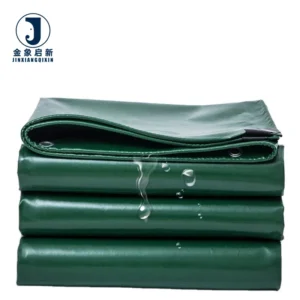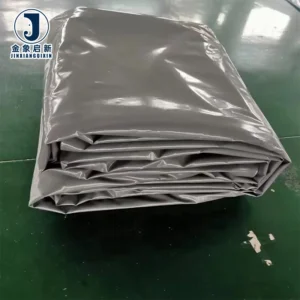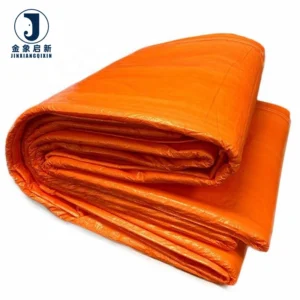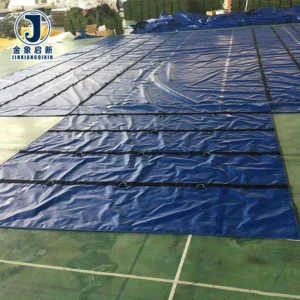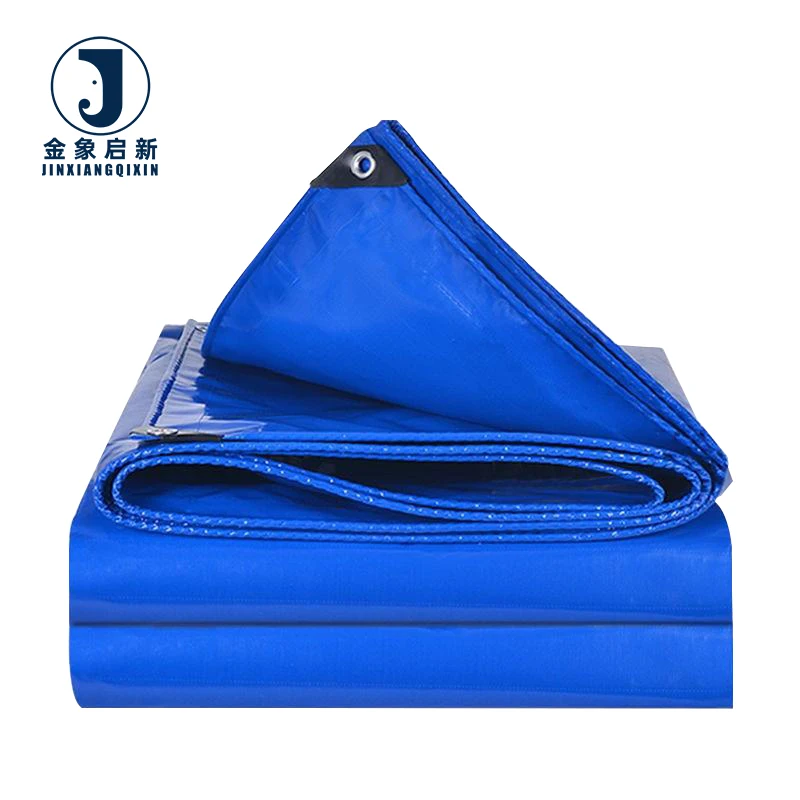
Precision Cut to Fleet Dimensions — our 10-person R&D team develops truck cover patterns matched to specific trailer models, eliminating the loose fabric and wind flap that generic sizing causes on the road.
Technical Specifications
| Parameter | Value |
|---|---|
| Product Type | PVC Coated Tarpaulin |
| Material Composition | PVC & Polyester Base Fabric with Double-Sided PVC Coating |
| Yarn Count | 500D×500D |
| Weight Range | 450–900 g/m² |
| Surface Finish | Smooth, leather-like texture |
| Water Resistance | Waterproof |
| Flame Retardancy | Available in flame-retardant grades — confirm the grade required for your market |
| UV Treatment | Anti-UV treatment available — test basis to be confirmed per order |
| Abrasion Resistance | High resistance to road and flex-point wear |
| Repairability | Hot air weldable for field repairs |
| Certifications | ISO, CE |
Application Suitability
| Application | Exposure & Requirement |
|---|---|
| Open-deck trailer and flatbed cover | Constant road vibration, wind load, UV exposure, tie-down strap abrasion at flex points |
| Side curtain fabric for trailer builds | Repeated flexing along curtain tracks, lateral wind pressure, weather sealing at welded seams |
| Machine and equipment transport cover | Outdoor storage exposure, road spray during transit, puncture risk from sharp equipment edges |
| Construction site equipment cover | Prolonged weather exposure, dust and debris contact, need for flame-retardant compliance on regulated sites |
Why Generic Sizing Costs More Than the Cover Itself
A truck cover cut to a generic size that does not fit the specific trailer model leaves gaps at the edges where water and road spray get in. The cover must be cut and finished to match the exact vehicle dimensions, not the nearest standard size.
Fleet operators replacing covers every season often trace the failure back to poor initial fitment rather than material quality. Loose fabric flaps in crosswinds, creating fatigue at the welded seams long before the PVC coating itself degrades. Tie-down points that do not align with the trailer’s load-bearing structure concentrate stress on a small area of the fabric. [NEED_CITE: common failure modes of PVC coated tarpaulin truck covers under highway conditions] When PVC coated tarpaulin for truck and transport is specified by exact trailer model, seam placement can be moved away from high-flex zones and eyelet spacing can match the vehicle’s anchor points.
How 500D×500D Polyester Base Fabric Handles Road Load
The 500D×500D polyester yarn count in this PVC coated tarpaulin provides the tensile foundation that load-bearing covers require. When straps tension across a loaded flatbed, the base fabric distributes that point load across a wider weave area rather than concentrating it at a single yarn crossover. For fleet operators running long-haul routes, this means the cover resists the slow deformation that accumulates over thousands of kilometres of vibration and strap tension.
Double-Sided PVC Coating and Weld Integrity
The double-sided PVC coating creates a fully sealed construction where welded seams bond coating to coating rather than relying on adhesive or thread. On a truck cover, the welded joints face constant flexing every time the load shifts or the trailer articulates through corners. [NEED_CITE: PVC weld peel strength test methods for coated fabrics per ISO 1421] Unlike stitched seams that allow water penetration through needle holes, hot-air welded seams on this PVC coated tarpaulin maintain waterproof continuity across the entire cover surface.
Reading the Weight and Weave Together
The 450–900 g/m² range covers multiple grades within this product line, and GSM alone does not define how the cover performs under road conditions. A heavier coating weight improves abrasion resistance at tie-down contact points but adds stiffness that can make the cover harder to handle during daily loading operations. The 500D×500D base fabric provides the structural skeleton, while the PVC coating weight determines surface durability and waterproof sealing. Specifying the right grade within this range depends on whether the cover will be removed and replaced daily or left in place for extended periods. For side curtain applications on transport equipment, a mid-range weight balances flexibility with weather protection, while flatbed covers exposed to heavy strap tension benefit from the higher end of the available weight range.
The Hidden Cost of Specifying on Price Per Square Metre
When PVC coated tarpaulin for truck and transport is purchased on unit price alone, the savings disappear quickly once the cover reaches the vehicle. Material that arrives lighter than the quoted GSM wears through at abrasion points within months rather than seasons. Covers supplied without verified flame-retardant documentation fail site inspections on regulated construction and mining sites, forcing emergency reprocurement at premium lead times. [NEED_CITE: risks of unverified GSM and flame-retardant claims in coated fabric procurement] Colour variation between rolls becomes visible the moment panels are installed side by side on the same trailer, requiring partial replacement of an otherwise functional cover.
What We Control Before the Cover Leaves the Factory
Our three full production lines and 36 sets of professional equipment allow truck cover orders to move through coating, cutting, and welding without queuing behind unrelated product runs. The 10-person R&D team develops cut patterns against specific trailer model drawings rather than relying on standard size charts, so eyelet placement and seam lines match the actual vehicle structure. Dedicated QA/QC inspection at every production stage means GSM is checked against the quoted specification before the roll enters cutting, not after. Pre-shipment inspection records confirm that cut dimensions match the trailer model specifications provided at order stage. [NEED_CITE: in-process quality control procedures for PVC coated tarpaulin production] Samples for custom sizing and colour are developed within days, allowing fleet operators to verify fitment before committing to a full production run.
Documentation & Verification
- Material specification sheet stating exact GSM, base fabric denier, and coating weight for each roll shipped
- UV and flame-retardant test reports supplied where applicable to match the treatments claimed on the order
- Pre-shipment inspection record confirming cut dimensions against the trailer model drawing provided
- Roll packing list with weight and dimension data for container loading verification
- Certificate of origin and customs documentation for international fleet procurement
Fabrication, Handling & Storage
- Hot air welding at controlled temperature suits the double-sided PVC coating for clean, waterproof seam joints
- Store rolls horizontally on racking to prevent flat-spotting on the 450–900 g/m² coated surface
- Allow cold-stored PVC coated tarpaulin to reach ambient temperature before unrolling to avoid coating crack at fold lines
- Field repairs by hot air welding are effective on the PVC coating without requiring adhesive patches
- Reinforce tie-down contact areas with additional welded PVC patches to distribute strap load across the 500D×500D base fabric
- Cut panels with allowance for thermal expansion in hot climates to avoid seam tension on installed covers
Before You Send the Enquiry
To match the right PVC coated tarpaulin for truck and transport to your fleet, provide the specific trailer model, deck dimensions, and whether the cover will be used as a removable tarp or a fixed side curtain. If your operating region requires flame-retardant or anti-UV compliance, state the standard your site or local authority references so we can supply the matching test documentation. Indicate whether you need finished covers with eyelets and reinforced hems, or roll stock for your own fabrication.
Frequently Asked Questions
Q: How do I specify the right size for my specific trailer model?
A: Provide the trailer manufacturer, model designation, and exact deck length, width, and height including any side rails or headboards. We develop a cut pattern against those dimensions rather than using generic sizing, and we can supply a sample cover for fitment verification before full production. Eyelet spacing and reinforcement placement are matched to your trailer’s anchor point layout.
Q: What is the difference between PVC and PE tarpaulin for truck covers?
A: PVC coated tarpaulin uses a polyester base fabric with welded seams that maintain waterproof integrity, while PE tarpaulin relies on heat-sealed or stitched joints that are common failure points under road vibration. The PVC coating provides greater abrasion resistance at tie-down contact areas and supports hot air weld repairs in the field, extending service life compared to PE alternatives.
Q: Can flame-retardant or anti-UV treatment be verified with a test report?
A: Yes. Where flame-retardant or anti-UV treatment is specified on your order, we supply the corresponding test report with the shipment. The report references the test standard applied and the result achieved. Confirm the specific grade or standard required by your market or site operator at enquiry stage so the correct treatment is applied.
Q: How are welded seams reinforced at high-flex tie-down points?
A: At areas where tie-down straps contact the cover, additional PVC patches are hot-air welded over the base seam to distribute load across a wider area of the 500D×500D fabric. This prevents the concentrated stress that causes standard seams to fail before the body of the cover reaches its service limit.
Q: What is the typical lead time for custom-sized truck covers?
A: Lead time depends on order volume, the number of distinct trailer models in the order, and whether a specific colour or treatment is required. Standard sizes in stock grades move faster, while custom cut patterns and special treatments require additional production scheduling. Confirm your required delivery date at enquiry stage so we can align production accordingly.