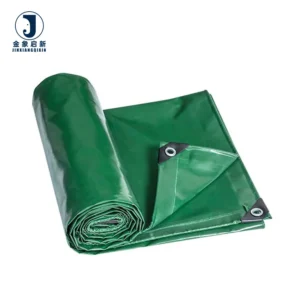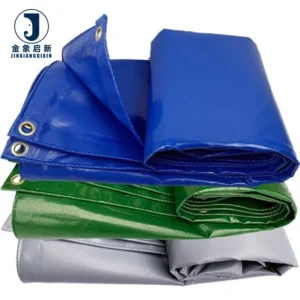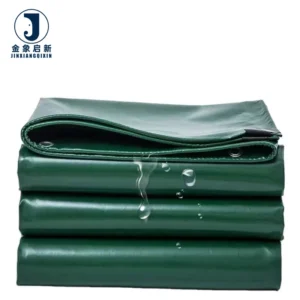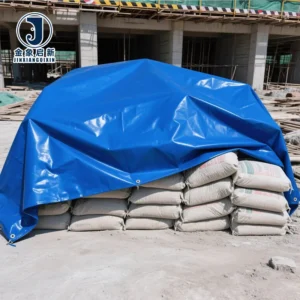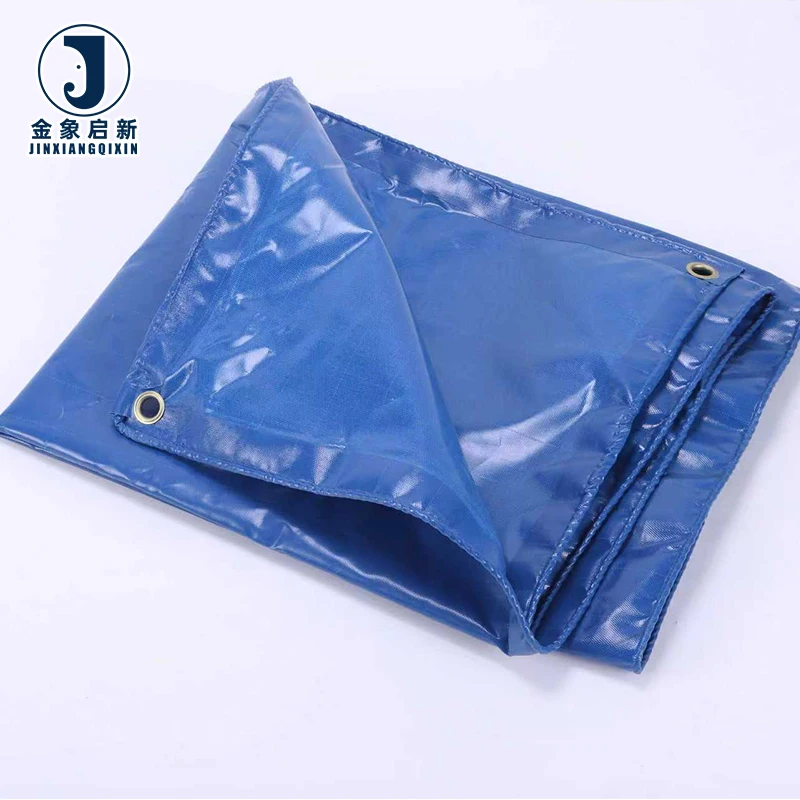
Three production lines — backed by 36 sets of professional equipment, every roll of PVC coated polyester tarpaulin undergoes in-process QA and 100% pre-shipment inspection before dispatch.
Technical Specifications
| Parameter | Value |
|---|---|
| Product Type | PVC Coated Tarpaulin |
| Yarn Count | 500D×500D |
| Base Fabric | Polyester |
| Coating Material | PVC |
| Material Composition | PVC & Polyester |
| Thickness Range | 450–900 g/m² |
| Surface | Smooth, leather-like texture |
| Key Features | Water Resistant, Waterproof, Flame Retardant, Anti-UV |
| Flame Retardant | Grade available — confirm the grade required for your market |
| UV Treatment | Available in anti-UV grades — confirm the test basis required |
| Repairability | Hot air weldable |
| Standards | ISO, CE |
Application Suitability
| Application | Exposure & Requirement |
|---|---|
| Truck side curtain fabric | Constant flexing at load points, road debris abrasion, daily UV exposure |
| Trailer fitted covers | Tension from tie-down straps, wind flap fatigue, rain ingress prevention |
| Machine and equipment covers | Static outdoor storage, moisture exposure, periodic handling |
| Awning and tent fabric | Tension mounting, sun exposure, seasonal tear-down and re-installation |
| Wood and stockpile covers | Moisture ingress, wind uplift, long-term weathering on uneven loads |
Why Generic-Size Truck Covers Fail on Real Trailers
A cover that does not match your exact trailer model will fail at the stress points first.
Truck and trailer fleets operate across mixed model rosters. Covers cut to generic dimensions leave loose fabric that flaps at highway speed, accelerating abrasion at the corners and eyelet zones. PVC Coated Tarpaulin for truck and trailer cover must be developed against the specific vehicle profile to eliminate slack and distribute tie-down load evenly across reinforced hems. [NEED_CITE: ISO 1421 tensile and tear test methods for coated fabrics]
Covering a Moving Load Demands More Than Weight
The road environment subjects a PVC Coated Tarpaulin for truck and trailer cover to cyclical stress that static covers never encounter. Each time a driver applies a tie-down strap, the fabric bears concentrated load at the contact point. A 500D×500D polyester base fabric distributes that point load across the weave structure, reducing the risk of localised tear initiation. Double-sided PVC coating seals the substrate completely, removing the water leakage paths that welded PE joints leave open.
Reinforcement Zones Where the Load Flexes Most
The high-flex areas — corners, eyelet rows, and the centre span where the load shifts under braking — demand more than standard fabric weight. Reinforced hems and strategic panel layout address these stress zones directly. Covers developed for a specific trailer model carry reinforcement exactly where that model’s geometry concentrates strain, rather than applying blanket doubling that adds weight without targeting the real failure points. [NEED_CITE: DIN 53354 tear strength testing for coated textiles]
What the Specification Actually Tells You
A 500D×500D yarn count indicates the denier of both warp and weft threads in the polyester base fabric. Denier alone does not define strength — the weave density and coating adhesion together determine how the fabric handles tensile and tear loads. The PVC coating method influences peel strength between coating and substrate, which directly affects how well a hot air weld holds in field service. A smooth, leather-like surface finish supports consistent weld bead formation and simplifies cleaning between deployments. Flame retardant and anti-UV treatments are available in multiple grades, and the correct specification depends on the compliance requirements of your operating region.
The Hidden Cost of Specifying on Price Alone
When a cover quotation focuses on the lowest GSM and the thinnest acceptable coating, the failure pattern is predictable. Seams split under tie-down tension before the fabric body shows wear. Colour drift between rolls becomes visible when panels are installed side by side on the same trailer. Anti-UV treatment that lacks a supporting test report degrades within a single season, leaving the fabric brittle at the fold lines. These failures do not announce themselves at delivery — they appear weeks into road service, when replacement logistics are far more expensive than getting the specification right up front. [NEED_CITE: coating adhesion peel strength test methods per ISO 2411]
What This Supply Process Brings to Your Fleet
Three full production lines with 36 sets of equipment support bulk roll and cut-to-size orders without compressing lead times on custom dimensions. A dedicated 10-person R&D team develops covers matched to your specific truck and trailer models, moving from inquiry to sample in days rather than weeks. In-process QA checkpoints and 100% pre-shipment inspection verify seam integrity, coating consistency, and dimensional accuracy before any roll leaves the facility. Colour matching is verified roll-to-roll before packing, eliminating the visible variation that appears when panels from the same order are installed adjacent to each other.
Documentation & Verification
- Material specification sheet stating exact GSM, base fabric denier, and coating weight per roll
- Flame retardant and UV test reports provided where treatments are specified in the order
- Pre-shipment inspection record covering seam integrity at high-flex reinforcement zones
- Roll packing list with individual roll weights and dimensions for receiving verification
- Certificate of origin and customs documentation supporting international shipment
Fabrication, Handling & Storage
- Hot air weld temperature and speed must match the PVC coating formulation for consistent seam strength
- Reinforced hem zones should be doubled and welded at tie-down anchor points to spread strap load
- Rolls stored upright on pallets to prevent flat-spot creasing across the 500D polyester base fabric
- Cold-condition rolls should be allowed to reach ambient temperature before unrolling to avoid coating crack
- Mild detergent cleaning preserves the leather-like surface texture without degrading PVC plasticisers
- Field damage repaired by hot air welding, extending service life without returning the cover to the shop
Before You Send an Inquiry
Provide the truck or trailer model numbers in your fleet, the operating environment including exposure to chemicals or extreme temperatures, and whether you need roll stock or finished cut-to-model covers. If your market requires a specific fire classification or UV test standard, state the grade so the correct treatment can be confirmed before sampling.
Frequently Asked Questions
Q: How is GSM verified on arrival and what documentation accompanies the shipment?
A: Each shipment includes a material specification sheet stating the exact GSM, base fabric, and coating weight quoted. A pre-shipment inspection record is provided covering weight verification per roll. Receiving teams can cross-check roll weight against the documented specification before accepting delivery.
Q: Can truck covers be cut and reinforced to match specific trailer models rather than generic sizes?
A: Yes. Covers are developed against your specific vehicle dimensions and model profile. Reinforcement is placed at the flex and tie-down points where that particular model concentrates stress, eliminating the loose fabric and premature edge wear typical of generic-size covers.
Q: What test basis supports the flame retardant and anti-UV claims on transport-grade PVC tarpaulin?
A: Flame retardant and anti-UV treatments are available in multiple grades. Test reports are supplied with the shipment when these treatments are specified in the order. Confirm the grade and test standard required for your market at inquiry stage so the correct documentation is prepared.
Q: How are welded seams reinforced at the flex and tie-down points where loads stress the fabric most?
A: High-stress zones such as eyelet rows, corners, and hem lines receive targeted reinforcement through doubled fabric layers and controlled hot air welding. The 100% pre-shipment inspection covers seam integrity specifically at these reinforcement zones before dispatch.
Q: What is the repair process for PVC coated truck covers damaged in field service?
A: PVC coated polyester fabric is hot air weldable, allowing field repair of tears and punctures without returning the cover. The smooth surface supports consistent weld bead formation, and repair patches bond directly to the coating without adhesive failure at the interface.