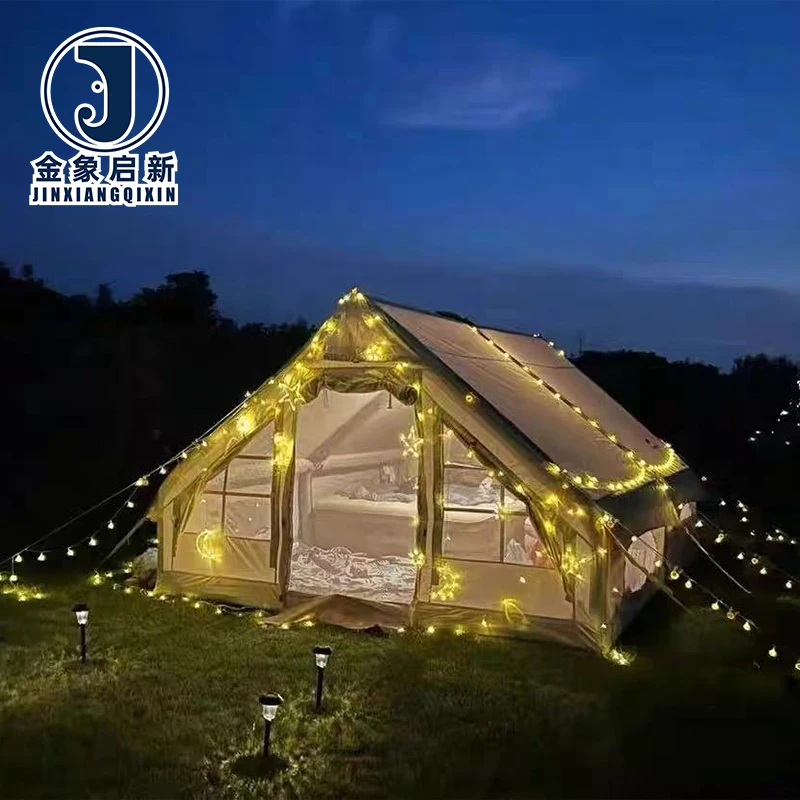
Proven Coating Control — 3 full production lines and 36 sets of professional equipment maintain coating weight consistency across every roll of Inflatable Tent Fabric shipped.
Technical Specifications
| Parameter | Value |
|---|---|
| Product Type | Inflatable Tent Fabric / Inflatable Fabric |
| Core Material | PVC tarpaulin |
| Capacity Configuration | 4-6 person |
| Door Design | Double door |
| Opening Mechanism | Quick automatic opening |
| Waterproof Rating | Minimum 3000mm water column (source value — verify against manufacturer catalog) |
| UV Treatment | 4000 hours accelerated testing (test basis not stated) |
| Tensile Strength | ≥200N/5cm (standard not stated) |
| Customization Scope | OEM & ODM — sample customization, pattern printing, size adjustments, color matching, logo placement |
| Quality Control | Full-process inspection with dedicated QA & QC staff, 12 quality checkpoints |
| Certifications | ISO9001, ISO14001, ISO45001, CE |
Application Suitability
| Application | Exposure & Requirement |
|---|---|
| Commercial outdoor gear manufacturing | Consistent batch quality across seasonal production runs, verified waterproof and UV-resistant performance for end-user satisfaction |
| Engineering project temporary shelters | Rapid deployment under variable weather, structural integrity during repeated inflation cycles, documented material compliance |
| Outdoor recreation business supply | Visual consistency across multiple units deployed side by side, color and finish uniformity for brand presentation |
| Wholesaler OEM production for summer camping shelters | Reliable lead times aligned with seasonal demand windows, full documentation for import clearance and retailer compliance |
Why Unverified Waterproof Claims Cost More Than the Fabric Itself
When sourcing Inflatable Tent Fabric, a stated waterproof rating means nothing without a batch-level test report to back it up. Verification at the roll level — not the brochure level — is what separates a dependable supply chain from a costly recall.
Buyers who accept a blanket waterproof claim without asking for hydrostatic pressure test data tied to their specific batch often discover the problem only after end-users report leaks during the first rainstorm. [NEED_CITE: hydrostatic head testing methods for coated fabrics per ISO 811]. The cost of replacing defective inventory, managing returns, and absorbing brand damage far exceeds the effort of requesting documentation up front. An Inflatable Tent Fabric manufacturer that cannot produce a test result for the exact rolls in your order is asking you to carry their risk.
Coating Weight Control and What It Means for Inflatable Structures
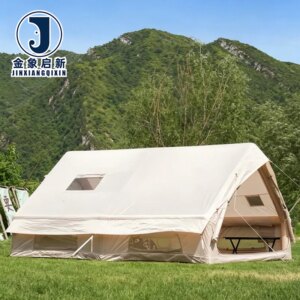
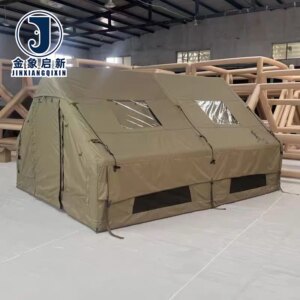
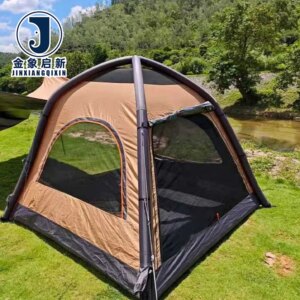
The PVC tarpaulin core used in this Inflatable Tent for truck and transport field shelters is produced in-house, giving direct control over coating weight and adhesion at every stage. Inflatable structures place unusual demands on coated fabric — the material must hold air pressure continuously while flexing at seam lines during inflation and deflation cycles. Coating adhesion failure at these flex points is one of the most common reasons inflatable structures lose pressure prematurely. By managing the coating process internally rather than sourcing pre-coated rolls, the coating-to-base-fabric bond can be optimized for the specific demands of inflatable applications.
Double-Door Design and Rapid Deployment in Field Conditions
The quick automatic opening mechanism paired with a double-door configuration addresses a practical reality of field shelters: personnel and equipment need to move in and out without compromising internal pressure or weather protection. The Inflatable Tent Fabric must maintain dimensional stability around door openings, where stress concentrates during inflation. The 10-technician R&D team handles custom sizing and door placement configurations, developing samples within 5-7 days so buyers can validate the design against their specific deployment scenario before committing to bulk production. [NEED_CITE: stress distribution in inflatable structure panels under internal pressure].
Reading the Specification Sheet Beyond the Headline Numbers
Tensile strength stated as ≥200N/5cm gives a baseline, but without knowing the test standard applied, comparing this figure against other suppliers is unreliable. The relationship between base fabric denier, weave density, and coating weight collectively determines how the material behaves under load — a heavier coating does not automatically mean higher tear resistance if the base fabric is loosely woven. The waterproof rating of minimum 3000mm water column indicates the hydrostatic pressure the coated surface can withstand before leakage, a meaningful benchmark for temporary shelters exposed to sustained rainfall. UV treatment rated at 4000 hours of accelerated testing suggests resistance to solar degradation, though the specific test protocol behind that figure should be confirmed against your market’s expected service conditions. Understanding these parameters together — rather than treating any single number in isolation — is what allows procurement teams to specify with confidence.
The Hidden Cost of Batch-to-Batch Color Drift
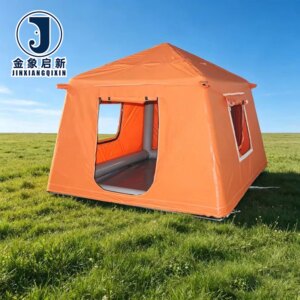
When multiple inflatable tents from the same order are deployed side by side at an outdoor event or construction site, even minor color variation between rolls becomes immediately visible. This is not a cosmetic concern alone — it signals inconsistent coating formulation across the batch, which can extend to differences in UV stability and waterproof performance. [NEED_CITE: color consistency measurement standards for coated textile batches]. Buyers who skip the step of requesting a roll-to-roll color reference before production often find themselves negotiating replacements after the material has already been cut and fabricated. Specifying a color tolerance range and requiring a pre-production approval sample protects against this outcome.
What Manufacturing Infrastructure Means for Your Order
Three full production lines and 36 sets of professional processing equipment provide the capacity to fulfill bulk seasonal orders without sacrificing lead time commitments. The 12-checkpoint quality inspection process runs from raw base fabric receipt through final roll packing, catching coating weight deviations and adhesion weaknesses before they leave the facility. A 10-technician R&D team handles OEM and ODM requests — from pattern printing to custom sizing — with sample turnaround in 5-7 days, allowing design validation well before the production window. ISO9001, ISO14001, ISO45001, and CE certifications are maintained as active standards governing production workflow, not displayed as marketing badges. [NEED_CITE: ISO 9001 quality management system requirements for textile manufacturing].
Documentation & Verification
- Material specification sheet stating PVC coating details, base fabric construction, color reference, and dimensional tolerances for each custom order
- Batch-specific quality inspection report covering waterproof rating, UV aging data, and tensile strength values tied to your shipment
- ISO9001, ISO14001, ISO45001, and CE certificates included in the shipping documentation for import clearance
- Pre-shipment inspection record and certificate of origin prepared for customs support
- Roll packing list with individual roll weights and dimensions for receiving verification
Fabrication, Handling & Storage
- Heat-weld seam parameters must be calibrated to the PVC coating thickness to prevent adhesion failure at inflatable panel joints
- Store rolls upright in a climate-controlled environment to avoid permanent creasing that weakens the PVC coating at fold lines
- Use compatible PVC adhesive for field repairs on the double-door perimeter where flex stress concentrates during inflation cycles
- Cut panels with allowance for seam overlap to maintain airtight integrity across welded joints in the quick-opening mechanism housing
- Avoid dragging rolls across abrasive surfaces during warehouse handling to protect the outer coating finish
Before You Request a Quote
To receive an accurate specification recommendation and sample, share your target deployment environment, the inflation pressure your design requires, and the expected frequency of setup and teardown cycles. Confirm your market’s compliance requirements — including any fire classification or import documentation standards — so the correct material grade and certification package are prepared from the outset. If pattern printing or logo placement is part of your brand requirement, provide artwork files early to allow the R&D team to validate print adhesion on the PVC tarpaulin surface during sampling.
Frequently Asked Questions
Q: How is the waterproof rating verified before shipment?
A: Each batch undergoes hydrostatic pressure testing at one of the 12 quality checkpoints. A batch-specific inspection report documenting the waterproof rating, UV aging results, and tensile strength values is included with every shipment, giving you traceability tied directly to the rolls you receive rather than a generic product datasheet.
Q: What UV test basis supports the accelerated weathering claim?
A: The material undergoes 4000 hours of accelerated UV testing, though the specific test standard should be confirmed against your market requirements. Request the test report for your batch and share it with your compliance team to verify alignment with regional outdoor exposure expectations before finalizing your order.
Q: How is color consistency controlled across rolls in one order?
A: Color reference standards are established during sample approval, and each production roll is checked against that reference during the 12-checkpoint inspection process. Specify your acceptable color tolerance range at the inquiry stage so the QC team applies the correct measurement criteria throughout your batch.
Q: What OEM and ODM customization options are available?
A: Customization covers size adjustments, color matching, pattern printing, and logo placement on the PVC tarpaulin surface. The 10-technician R&D team develops samples within 5-7 days, allowing you to validate material performance, print quality, and dimensional accuracy before authorizing bulk production.
Q: What is the typical lead time for bulk orders?
A: Standard orders of 100-500 units typically require 15-20 days from production authorization. Custom orders involving unique sizing, pattern printing, or special color matching generally take 25-30 days. Confirm your seasonal inventory timeline early to align production scheduling with your deployment window.