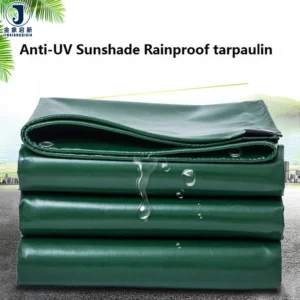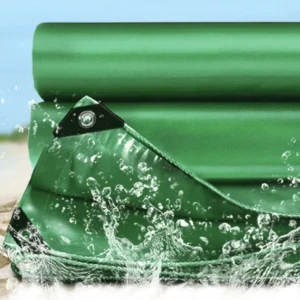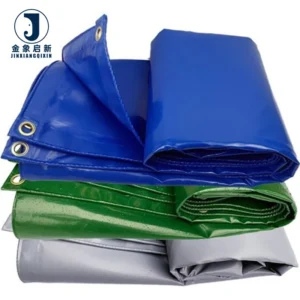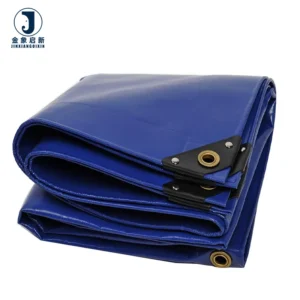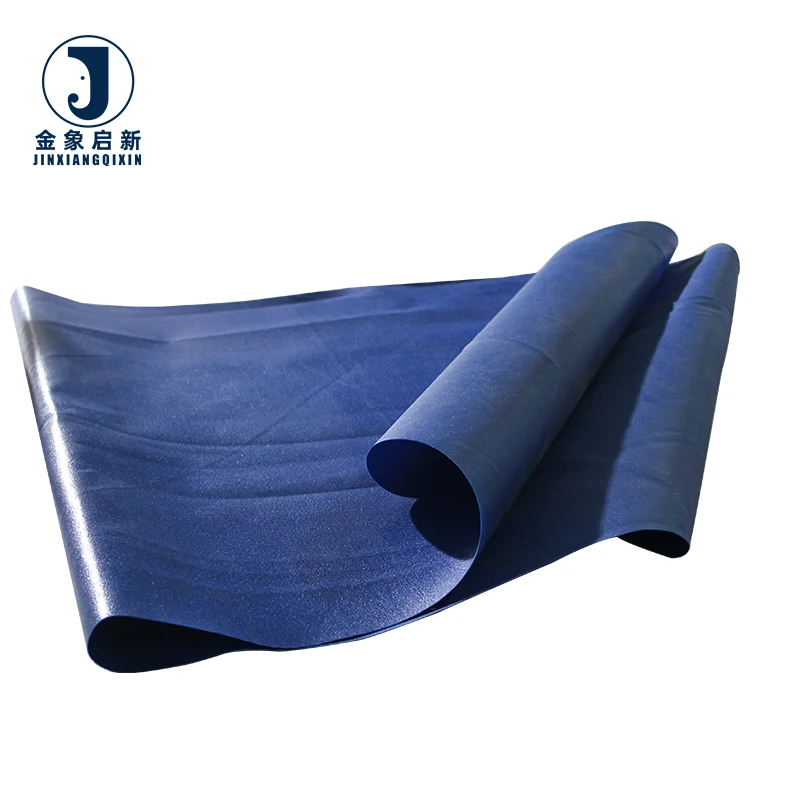
Verified Coating Weight Control — Every PVC coated tarpaulin roll is weighed and documented against its stated GSM before dispatch, eliminating the gap between quotation and delivery.
Technical Specifications
| Parameter | Value |
|---|---|
| Product Type | PVC Tarpaulin Roll |
| Material | PVC Coated Fabric |
| Weight (GSM) | 550g / 600g / 650g / 900g |
| Application | Truck Cover, Roof Tent |
| Key Features | Waterproof |
| Certifications | ISO, CE |
Application Suitability
| Application | Exposure & Requirement |
|---|---|
| Truck side curtain and top cover | Constant flexing at load points, road debris abrasion, sustained UV and rain exposure |
| Trailer flatbed load protection | Wind uplift stress, tie-down strap pressure, repeated folding and unfolding |
| Roof tent outer shell | Prolonged sun exposure, overnight condensation, repeated pitch-and-stow cycles |
| Transport fleet weather protection | High-speed airflow drag, thermal cycling across seasons, diesel exhaust residue |
| Construction site equipment cover | Dust ingress, standing water pooling, abrasive contact with concrete and rebar |
Why GSM Verification Matters More Than the Number on the Quotation
A quoted 650g GSM means nothing unless the roll that arrives actually weighs 650g per square metre.
Transport fleet buyers have received PVC tarpaulin roll shipments where the material felt noticeably lighter than the specification sheet promised. When you are buying PE tarpaulin roll wholesale or PVC coated fabric by the container, a shortfall in coating weight translates directly into reduced tensile strength and earlier failure at high-stress flex zones. The discrepancy often goes undetected until the first cover splits along a seam during transit. [NEED_CITE: tensile and tear test methods for coated fabrics per ISO 1421]
Consistent Roll-to-Roll Colour Across the Entire Shipment
When a fleet operator orders multiple PVC tarpaulin roll units to cover a mixed trailer fleet, adjacent panels installed on the same vehicle must match visually. Colour drift between production batches is a common complaint in coated fabric procurement, and it becomes obvious the moment two rolls are unrolled side by side on the workshop floor. Our colour control process locks the reference at sample approval stage and holds it through every subsequent roll in that order.
Weld Integrity at the Points Where Loads Flex Most
The seam on a truck cover fails before the fabric does, almost every time. Heat-welded joints on PVC coated fabric must be calibrated to the specific GSM and coating formulation so that the weld line outlasts the surrounding material. A 550g grade and a 900g grade require different heat input and dwell time, and getting that wrong leaves a brittle weld that cracks when the load shifts. [NEED_CITE: DIN 53354 heat seal strength testing for coated textiles]
Reading the Specification Sheet Beyond the GSM Number
Coating weight alone does not define how a PVC tarpaulin roll performs under tension. The base fabric denier and weave density determine the tear propagation path — a tightly woven polyester scrim with a balanced warp-and-weft count resists tear spread far better than a loose weave at the same GSM. The PVC coating method matters equally: knife-coated fabric achieves higher adhesion between coating and scrim compared to laminated alternatives, which directly influences how well the material holds up at heat-welded seams and folded hems. Thickness readings should always be cross-referenced with GSM, because a thicker coating with low density can weigh the same as a thinner, denser coat yet perform very differently under abrasion.
The Hidden Cost of Specifying the Wrong Grade
A truck cover cut from material that is too light for its trailer size will develop stress cracks at the tie-down points within the first season of use. Conversely, specifying a 900g grade for a light roof tent application adds unnecessary weight and makes the cover harder to fold and store. Colour inconsistency between rolls forces a fleet workshop to reject an entire batch and wait weeks for replacements, leaving vehicles uncovered. Heat-weld parameters set for the wrong GSM produce joints that delaminate under load flex, and the repair cost on a fitted side curtain far exceeds the savings from buying a cheaper roll. [NEED_CITE: field failure analysis of PVC coated truck covers at seam zones]
What This Supply Chain Actually Delivers
Three full production lines with 36 sets of professional equipment handle bulk PVC tarpaulin roll orders without sacrificing lead-time reliability. The 10-person R&D team develops custom widths, colour matches, and sample panels before production starts, so you approve the exact material that will run on the line. Dedicated QA/QC checkpoints at every production stage — from base fabric inspection through coating, winding, and packing — catch weight deviation and colour drift before rolls reach the dispatch bay. Full ISO and CE certified production processes ensure documentation traces back to the specific batch. Nearly 30 years of continuous coated fabric manufacturing has built the process discipline that keeps roll-to-roll consistency tight.
Documentation & Verification
- Material specification sheet stating GSM, base fabric denier, and coating formulation for each PVC tarpaulin roll grade
- Pre-shipment inspection record covering 100% roll inspection against weight and visual standards
- UV and flame-retardant test reports supplied where applicable grades are specified
- Roll packing list with per-roll weight recorded against the stated GSM
- Certificate of origin and customs documentation included with every shipment
Fabrication, Handling & Storage
- Heat-weld temperature and dwell time must be matched to the specific 550g, 600g, 650g, or 900g GSM grade being fabricated
- Reinforced hem tape should be applied at all tie-down eyelet zones to distribute strap load across the PVC coated fabric
- Store rolls upright on a clean, dry surface to prevent flat-spot creasing on the coating surface
- Allow cold-stored rolls to reach workshop temperature before unrolling to avoid coating crack at the fold line
- Use PVC-compatible cleaning agents only; solvent-based degreasers can degrade the plasticiser in the coating layer
- Field repairs on PVC coated fabric respond well to hot-air welding with matching PVC repair tape
What to Include in Your Enquiry
To specify the correct PVC tarpaulin roll for your application, share the trailer model dimensions or cover size, the GSM grade you require, and whether UV or flame-retardant treatment is needed for your market. Let us know if you need custom width, colour matching to a Pantone or RAL reference, or brand printing on the roll. Confirm whether you are ordering stock rolls for distribution or cut-to-size finished covers for a specific fleet.
Frequently Asked Questions
Q: How do you verify GSM on delivery matches the quotation?
A: Every roll is weighed and measured before packing. The actual GSM is recorded on the pre-shipment inspection report that accompanies each consignment, so you can cross-reference the physical material against what was quoted. Any deviation outside tolerance is flagged before dispatch.
Q: Can the roll width and colour be customised for my trailer model?
A: Yes. We produce PVC tarpaulin roll in custom widths and match colours to your specified reference. A sample panel is produced and sent for approval before the full order runs, ensuring the material fits your trailer dimensions and colour standard.
Q: Are UV and flame-retardant treatments supported by test certificates?
A: Where applicable grades are ordered, we supply third-party test reports documenting the treatment performance. Specify the certification your market requires at enquiry stage so the correct formulation is selected and documented.
Q: What is the lead time and minimum order for custom width or colour?
A: Lead times depend on the custom specification and current production schedule. Custom widths and colours typically require a sample development stage first. Contact us with your target GSM, width, and volume so we can confirm timing and minimums.
Q: How do you ensure colour consistency across multiple rolls in one order?
A: The colour reference is locked after sample approval and monitored through every production run in that order. Rolls are checked side by side before packing, and any panel showing visible drift is pulled from the batch before it reaches the container.