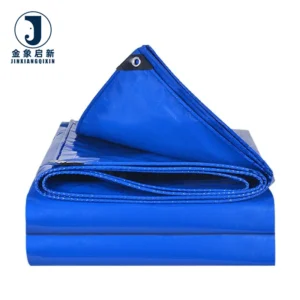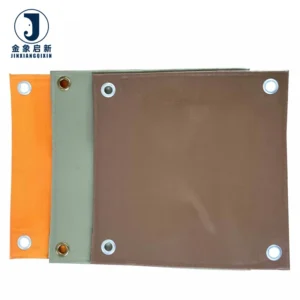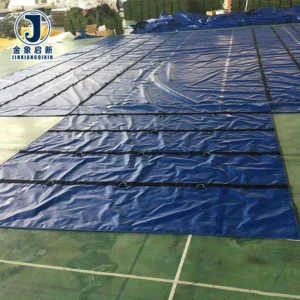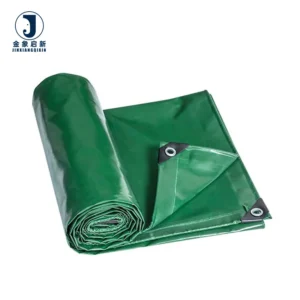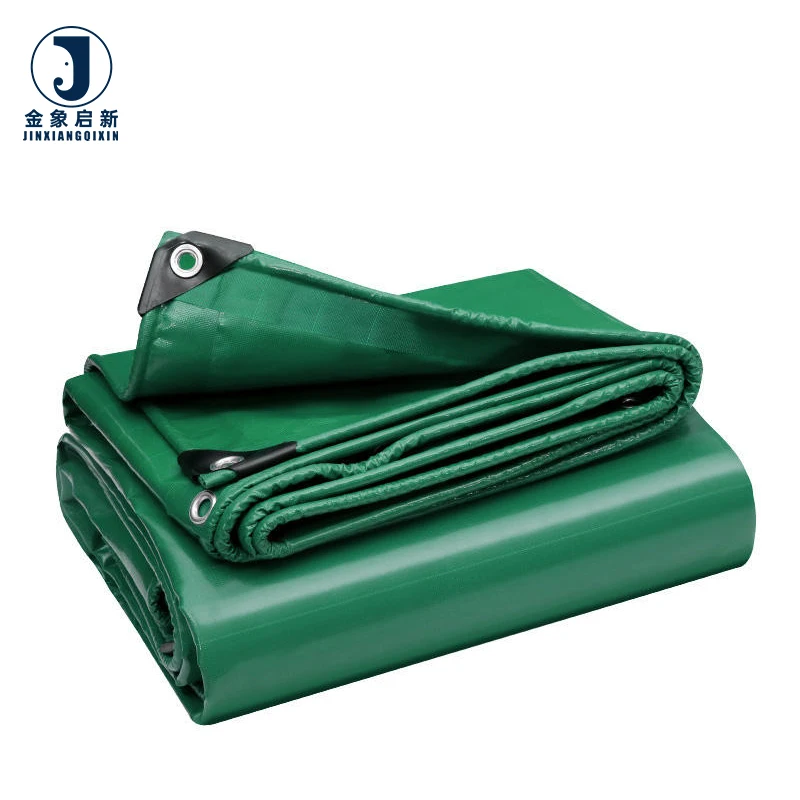
Proven Coated Fabric Expertise — nearly three decades of PVC and PE tarpaulin production with three full lines and 36 equipment sets supporting custom truck and trailer covers built to actual vehicle dimensions.
Technical Specifications
| Parameter | Value |
|---|---|
| Product Type | PVC Coated Tarpaulin |
| Weight Range | 250gsm–1500gsm (confirm grade for your application) |
| Base Fabric Denier | 200D×300D, 500D×500D, 840D×840D, 1000D×1000D |
| Available Sizes | 3×4m, 6×8m, 8×10m, 10×12m or custom made to trailer model |
| Surface Finish | Glossy or matte |
| Colour Options | Blue, yellow, black, green, white (custom colours available) |
| Temperature Range | -15°C to 70°C |
| Waterproofing | Fully waterproof PVC coated construction |
| UV Treatment | Available in anti-UV grades — confirm test basis for your market |
| Flame Retardant | Available in FR grades — confirm grade required for your market |
| Anti-Fungal | Anti-fungal treated options available |
| Key Features | Rain-resistant, tear-resistant, flexible, good abrasion resistance, strong adhesion between coating and base fabric |
| Certification | ISO, CE |
Application Suitability
| Application | Exposure & Requirement |
|---|---|
| Dump trailer load cover | Constant aggregate abrasion, repeated flexing during tipping cycles, UV exposure on open haul roads |
| Flatbed cargo cover | Highway wind load, rain ingress at seams, tie-down strap pressure at hems |
| Boat transport cover | High-speed road wind, rain deflection, prolonged UV during storage and transit |
| Firewood haulage cover | Sawdust and bark abrasion, moisture exposure, repeated removal and refitting |
| Construction equipment cover | Hydraulic fluid contact risk, dust and grit abrasion, outdoor storage between jobs |
Why Generic-Size Covers Fail Where Yours Should Not
A cover cut to a standard rectangle will always leave the edges that matter most unprotected.
When a dump trailer operator pulls a generic PVC Coated Tarpaulin for truck and trailer over a load, the corners never sit flush. Flapping edges catch highway wind, the hem takes cyclic loading it was never sized for, and the weld line at the grommet fails weeks before the fabric body shows any wear [NEED_CITE: common failure modes in transport tarpaulin field use per ISO 1421 test protocols]. The cargo underneath — aggregate, equipment, or boat hull — is left exposed at the exact points where weather ingress does the most damage. Fleet operators replacing covers every few months rarely have a fabric problem; they have a fitment problem.
Covers Cut to the Actual Trailer, Not a Catalogue Grid
Every truck and trailer model has different rail heights, hinge clearances and tie-down point locations. A PVC Coated Tarpaulin for truck and trailer finished to those exact dimensions eliminates the overhang that flaps at speed and the shortfall that leaves cargo exposed. Our R&D team works from vehicle drawings or on-site measurements to set the cut pattern, eyelet spacing and hem reinforcement layout before production begins.
Weld Integrity at the Points That Flex First
The seam where a tarpaulin folds over a trailer edge or wraps around a load corner experiences cyclic stress every time the vehicle moves. Standard stitch-and-sew construction separates at these flex points because the needle holes create a perforation line that propagates under load. High-frequency welded seams on PVC coated fabric fuse the material into a continuous joint, so the weld line holds as long as the fabric body itself [NEED_CITE: welded seam peel strength testing methods for coated fabrics].
Matching Colour and Finish Across a Fleet
When a logistics company orders a batch of covers for multiple trailers, colour drift between rolls becomes visible the moment two covers are installed side by side on adjacent vehicles. We control coating pigment batching across the full production run so that every cover in a fleet order matches the specified colour reference, whether the finish is glossy or matte.
Specifying GSM and Denier for the Actual Load
A 250gsm fabric may be adequate for a light firewood cover that sees occasional use, while a dump trailer hauling sharp aggregate daily demands a heavier grade with a denser base fabric such as 1000D×1000D. The denier of the base yarn determines how well the fabric resists tear propagation once a puncture starts, and the coating weight applied over that base determines abrasion and puncture resistance at the surface. Selecting the right combination means matching the fabric construction to the specific cargo type and haul frequency, not simply choosing the heaviest option by default [NEED_CITE: relationship between base fabric denier and tear resistance in PVC coated textiles].
What Happens When the Specification Is Wrong
A cover ordered at a lighter GSM to reduce unit cost often shows abrasion wear at the trailer contact points within the first few weeks of regular use. A flame-retardant grade specified without confirming the test standard required by the destination market leads to rejected loads at the mine site or construction gate. Colour variance between production batches forces a fleet operator to reject an entire shipment because no two covers match on adjacent trailers. Each of these outcomes costs more in downtime and replacement than specifying correctly at the enquiry stage [NEED_CITE: field failure reports associated with underspecified tarpaulin grades in transport applications].
Why Fabricators and Fleet Buyers Source This Cover Here
Three full production lines and 36 sets of professional equipment mean we run dedicated capacity for custom-size transport covers rather than fitting them around bulk roll orders. The 10-person R&D team develops cut patterns and reinforcement layouts for specific trailer models, producing samples within days for fitment trials before full production. A dedicated QA/QC team inspects every finished cover against the vehicle dimensions, eyelet spacing and hem reinforcement specified on the order. We supply dispatch documentation including material specification sheets, UV and flame-retardant test reports where applicable, and pre-shipment inspection records that verify the finished product against the purchase specification.
Documentation & Verification
- Material specification sheet stating base fabric denier, coating weight and confirmed GSM for the grade supplied
- UV test report and flame-retardant grade certificate matched to the treatment specified on the order
- Pre-shipment inspection record verifying finished dimensions, eyelet spacing and hem reinforcement against the trailer model drawing
- ISO and CE certificates included with dispatch documentation
- Roll packing list with net weight and dimensions for freight planning
Fabrication, Handling & Storage
- Weld high-frequency seams at temperatures matched to the PVC coating grade to avoid delamination at flex points
- Space reinforced eyelets according to the tie-down pattern of the specific trailer model to distribute strap load evenly
- Store rolls or folded covers off the floor in a dry environment to prevent moisture trapping against the PVC surface
- Avoid folding at the same crease line repeatedly during handling to prevent coating crack initiation at low temperatures
- Clean with mild detergent and soft brush; avoid solvent-based cleaners that degrade the plasticiser in the PVC coating
- Field-repair minor punctures with compatible PVC patch material heat-bonded to the coated surface
Before You Send the Enquiry
To specify the right cover, share the truck or trailer make, model and year along with the cargo type and typical haul conditions. If your destination site requires a specific flame-retardant or anti-static standard, confirm the test classification upfront. Let us know whether you need finished covers with eyelets and reinforced hems, or flat panels for your own fabrication.
Frequently Asked Questions
Q: How do I specify the right cover size for my trailer model?
A: Provide the trailer make, model, year and body type along with the rail height, overall length and width at the load surface. If the trailer has hinges, latches or protrusions that the cover must clear, include their positions. We develop a cut pattern and sample for fitment approval before full production runs.
Q: What eyelet and hem options are available for tie-down security?
A: Eyelet spacing is set to match the tie-down points on your specific trailer model, with reinforced hem tape bonded or welded behind each grommet to distribute strap load. We confirm the spacing layout on the sample before production so the finished cover aligns with your existing strap hardware.
Q: How durable are welded seams at high-flex points on moving loads?
A: High-frequency welding fuses the PVC coating layers into a continuous joint without needle perforations. This means the seam does not create a tear propagation path at the fold lines where the cover wraps over trailer edges and load corners during transit.
Q: Can you match colour across multiple covers for a fleet order?
A: Yes. We control pigment batching across the full production run so every cover in a fleet order matches the specified colour reference. This applies to both glossy and matte finishes, eliminating visible colour drift when covers are installed on adjacent vehicles.
Q: What UV treatment is available and how does it perform on the road?
A: Anti-UV treatment is available in grades selected based on your market requirements. We supply the UV test report with the dispatch documentation so you can verify the treatment basis. Confirm the specific test standard your application requires at the enquiry stage.