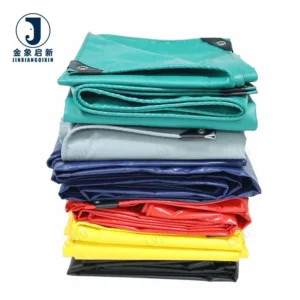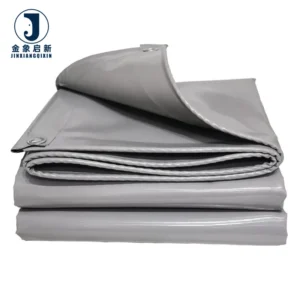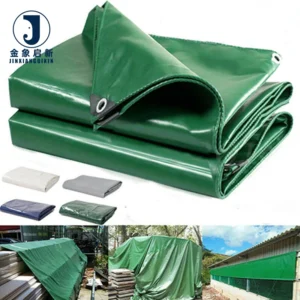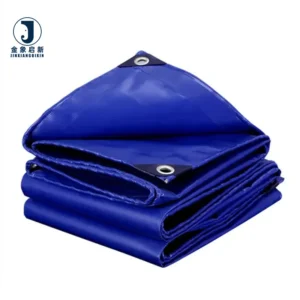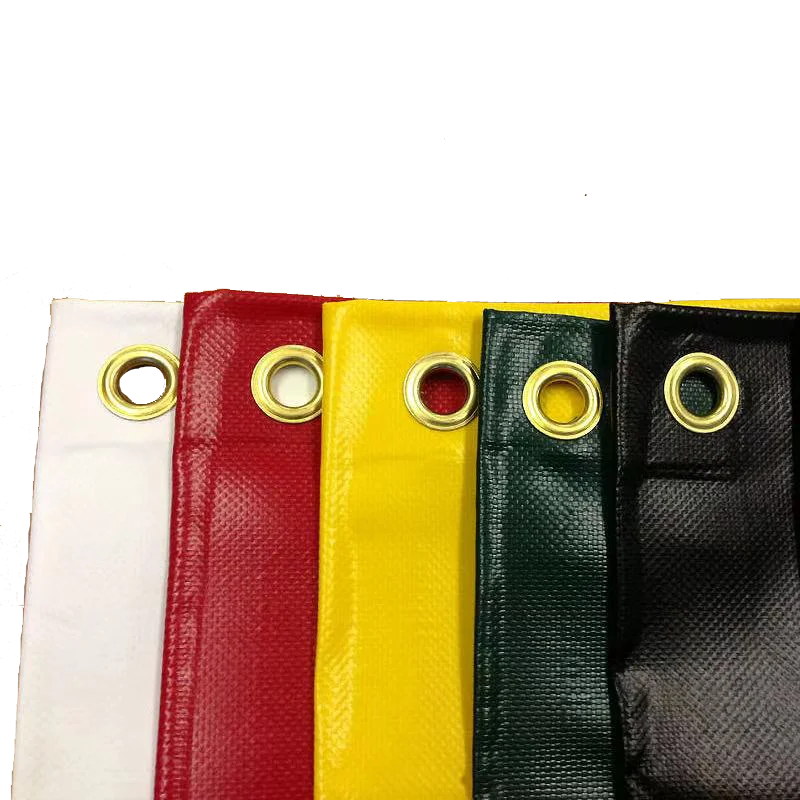
Precision-coated fabric supply — Three dedicated production lines and 36 sets of equipment allow this PVC knife-coated tarpaulin fabric to be cut and finished to specific truck and trailer model dimensions rather than generic sheet sizes.
Technical Specifications
| Parameter | Value |
|---|---|
| Product Type | PVC Coated Tarpaulin Fabric |
| Coating Method | Knife coated |
| Coating Material | PVC |
| Weight Range | 300–600 g/m² (confirm the grade required for your vehicle type) |
| Surface Treatment Options | Anti-UV, Flame Retardant, Anti-Static, Anti-cold, Anti-mildew (grade not stated) |
| Format | Roll or Customization |
| Outdoor Service Expectancy | Suited to extended outdoor exposure (verify specific grade lifespan) |
Application Suitability
| Application | Exposure & Requirement |
|---|---|
| Truck side curtain | Constant flexing at load points, road spray, wind abrasion, UV exposure |
| Trailer top cover | Tension loading, pooled rainwater, direct sun, temperature cycling |
| Flatbed load cover | Tie-down strap friction, cargo edge puncture, highway-speed wind lift |
| Equipment transport cover | Abrasion from metal surfaces, weather exposure during multi-day transit |
Why Generic Sizing Fails on Moving Loads
A truck cover cut to a standard dimension rarely fits the specific trailer model it is ordered for.
Fleet operators often order PVC knife-coated tarpaulin for truck and transport applications based on a general length and width. When the cover arrives, excess fabric flaps in highway wind, creating abrasion against the cargo and the cover itself. Insufficient fabric leaves tie-down points exposed and the load vulnerable. [NEED_CITE: fabric tension and fit tolerances for curtain-side trailers] This is not a material defect — it is a specification gap that costs fleets in early replacement and cargo claims.
Fitment Accuracy Over Generic Dimensions
The PVC knife-coated tarpaulin for truck and transport use is supplied in rolls or as custom-cut panels sized to the exact trailer model. This means the fabric length accounts for the curtain runner drop, the hem allowance for the top rail, and the overlap at the rear doors. Fleet operators specify the vehicle make, model, and year, and the cut is adjusted accordingly.
Reinforcement Where the Load Flexes
The most common failure point on a truck cover is not the field of the fabric but the flex zone where the load shifts during braking and cornering. This PVC knife-coated tarpaulin fabric accommodates reinforcement patches and additional tie-down webbing at these stress concentrations. The knife-coated construction bonds the PVC layer to the base fabric with high peel strength, so welded seams hold at the points where the material flexes repeatedly [NEED_CITE: peel strength requirements for welded PVC tarpaulin seams].
Specification Interpretation for Fleet Buyers
The 300–600 g/m² range covers multiple grades within this product family. A light-duty trailer curtain operating on urban routes may perform adequately at the lower end, while a long-haul side curtain exposed to sustained highway wind loads and temperature extremes typically requires a heavier grade. The base fabric denier and weave density work together with the coating weight to determine the final tensile and tear performance — GSM alone does not define durability. Knife coating forces the PVC compound into the base fabric under blade pressure, producing a mechanical bond that supports heat welding without delamination at the seam line.
The Cost of Specification Mismatches
A cover that is too light for the route profile will show cracking at fold lines during cold-weather operation. Flame retardant treatment claimed without a supporting test report can lead to rejected loads at compliance checkpoints. Batch colour variation across rolls becomes visible when panels are installed side by side on a fleet of identical trailers — a problem that only appears after installation. [NEED_CITE: batch colour consistency standards for PVC coated fabrics] Welded seams that fail before the fabric does indicate either incorrect welding parameters for the coating thickness or insufficient peel strength in the base material.
Procurement Advantages for Transport Operators
Dedicated QA/QC at every production stage means each roll is inspected against the ordered GSM before dispatch, reducing the risk of underweight material arriving at the fleet depot. The 10-person R&D team develops samples cut to your specific trailer model within days, allowing fitment verification before bulk production. Three full production lines support volume orders for fleet-wide replacements with consistent lead times. Custom widths and colours are available without prohibitive minimums, so small fleets can order the exact quantity needed. Pre-shipment inspection records accompany every dispatch, giving procurement teams documented proof of compliance.
Documentation & Verification
- Material specification sheet confirming exact GSM, base fabric denier, and coating weight per roll
- Test report for flame retardant or anti-static treatment where applicable — confirm the grade required for your market
- Pre-shipment inspection record with weight verification per roll before dispatch
- Certificate of origin and customs documentation supporting cross-border fleet procurement
- Roll packing list detailing dimensions, weight, and batch reference for each unit shipped
Fabrication, Handling & Storage
- Heat weld parameters must match the specific coating thickness of the selected GSM grade
- Store rolls upright on a flat surface to prevent permanent creasing in the PVC coating layer
- Allow cold-stored rolls to reach ambient temperature before unrolling to avoid coating crack
- Use compatible PVC-based adhesives for field repairs on knife-coated surfaces
- Plan cut patterns around the roll width to minimise offcut waste on large curtain panels
- Clean with mild detergent only — solvent-based cleaners can soften the PVC coating
What We Need to Quote Your Cover
Provide the trailer make, model, and year so the fabric can be cut to the correct dimensions. Specify the operating climate and whether flame retardant or anti-static compliance is required for your routes. Confirm whether you need rolls for in-house fabrication or finished panels with hems and reinforcement. Indicate your annual volume and any colour consistency requirements across multiple vehicles.
Frequently Asked Questions
Q: How do I verify the GSM matches what was quoted?
A: Every roll is weighed and inspected before shipment. The pre-shipment inspection record documents the actual GSM per roll against the specification sheet. Buyers can also request a sample cut from the production batch to conduct independent weight verification before the full order is dispatched.
Q: Can the fabric be cut to my specific trailer model?
A: Yes. The fabric is customised to the exact dimensions of your truck or trailer model rather than supplied in generic sheet sizes. Provide the vehicle make, model, and year, and the cut accounts for runner drop, hem allowance, and door overlap specific to that configuration.
Q: What test evidence comes with flame retardant or anti-static treatment?
A: Where flame retardant or anti-static treatment is applied, a test report is supplied with the documentation package. The specific grade and test standard depend on the treatment selected — confirm the compliance standard required in your market before ordering.
Q: Will the colour be consistent across multiple rolls?
A: Batch colour consistency is controlled during the coating stage. All rolls for a single fleet order are produced in the same batch to minimise shade variation. A pre-shipment inspection record confirms colour reference matching across the order before dispatch.
Q: How do welded seams perform at load flex points?
A: The knife-coated construction produces high peel strength between the PVC layer and the base fabric, which supports durable heat-welded seams. Reinforcement patches can be added at known flex zones to distribute stress and prevent seam failure under repeated load movement.