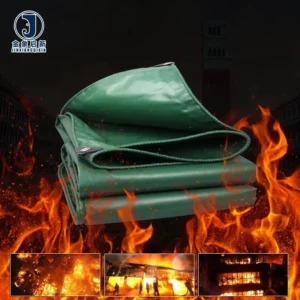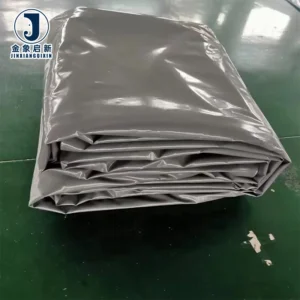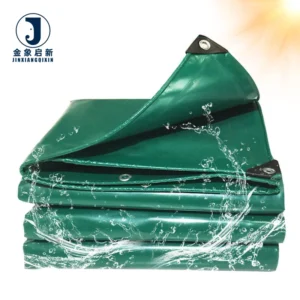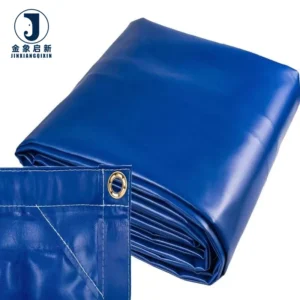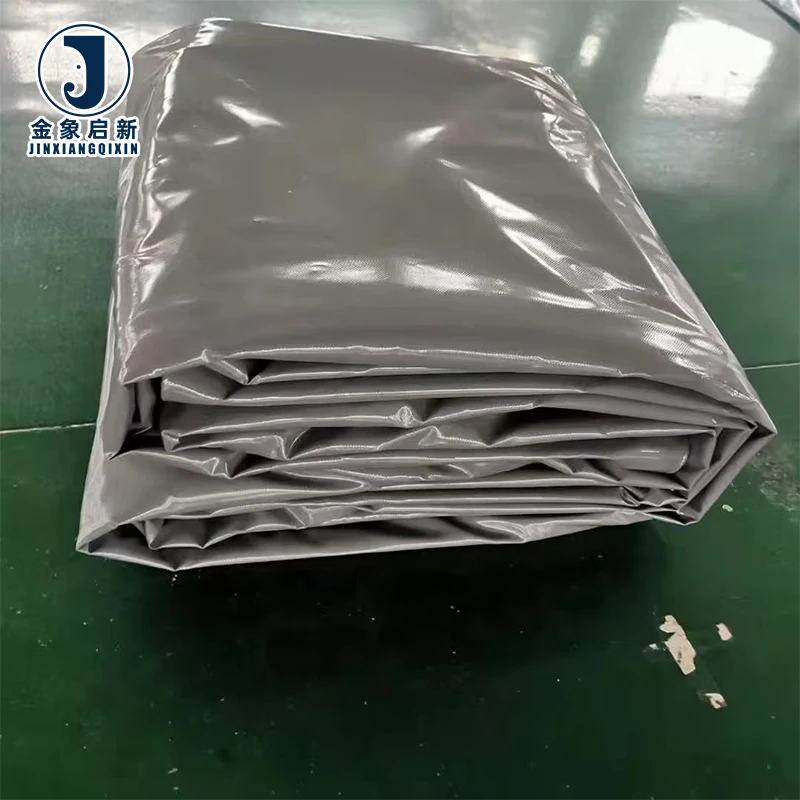
Proven Coating Control — nearly three decades focused on PVC coated fabric production, ensuring consistent adhesion and weight accuracy across every roll destined for truck and trailer covers.
Technical Specifications
| Parameter | Value |
|---|---|
| Product Type | PVC Coated Tarpaulin |
| Weight Range | 250gsm–1500gsm |
| Base Fabric Denier | 200DX300D, 500DX500D, 840DX840D, 1000DX1000D |
| Color Options | Blue, Yellow, Black, Green, White, Custom |
| Surface Finish | Glossy or Matte |
| Temperature Range | -15°C to 70°C |
| Waterproof | Yes |
| Treatment Options | UV, Flame Retardant (grade not stated), Anti-fungal |
| Working Life | Suited to extended outdoor exposure depending on environment |
| Standard Sizes | 3x4m, 6x8m, 8x10m, 10x12m or custom made |
| Key Features | Water-proof, rain-resistant, tear-resistant, good flexibility, abrasion resistance |
Application Suitability
| Application | Exposure & Requirement |
|---|---|
| Truck and trailer load covering | Constant flexing at load points, road debris abrasion, sustained UV and rain exposure, tie-down strap tension |
| Fleet transport side curtains | Repeated rolling and unrolling, wind flap stress, colour uniformity across multiple vehicle units |
| Transport equipment OEM covers | Model-specific fitment, reinforced anchor points, batch consistency for production line assembly |
| Outdoor cargo protection | Weather resistance during multi-day haulage, puncture risk from shifting loads, temperature fluctuation |
When "Heavy-Duty" Means Nothing Without the Denier Behind It
A 650 GSM tarpaulin with a low-denier base fabric will tear at the weld line before a lighter fabric built on a 1000DX1000D weave ever shows stress.
Fleet operators ordering PVC coated tarpaulin for truck and transport applications often fixate on GSM alone, assuming heavier always means stronger. In practice, the base fabric denier and weave density determine how the material behaves at the flex points where loads shift most during transit. A cover that looks substantial on the quotation can split at the seam under strap tension if the underlying yarn structure was not matched to the mechanical demand [NEED_CITE: tensile and tear test methods for coated fabrics per ISO 1421]. We have seen transport contractors replace entire fleets of covers within a single season because the specification focused on coating weight while ignoring the yarn count that actually resists tear propagation.
Matching Denier to the Flex Points on Your Trailer
Articulated trailers and flatbeds place very different demands on PVC coated tarpaulin for truck and transport use. Side curtain fabric on a curtainsider must endure thousands of roll-up cycles per year, meaning the base fabric needs sufficient denier and weave density to resist fatigue cracking along the fold lines. Flatbed covers, by contrast, face puncture and abrasion risk from load contact and strap pressure, requiring a tighter weave to distribute point loads across a wider area of the coated surface.
The available denier range — from 200DX300D up to 1000DX1000D — allows the specification to be matched to the actual mechanical profile of each trailer type. Higher denier yarns create a base fabric that resists tear initiation at eyelet points and along welded seams, where the load transfers from strap to fabric. Selecting the correct grade means the PVC coated tarpaulin for truck and transport survives the journey intact, rather than failing at the first stress concentration it encounters [NEED_CITE: DIN 4102 fire classification for building materials].
Reinforced Hems and Weld Zones for Moving Loads
Truck covers fail most often at the edges and seams, not in the field of the fabric. Reinforced hems and correctly positioned weld lines are what keep a cover serviceable across multiple haulage cycles. The PVC coating formulation on this material supports hot-air and wedge welding, allowing fabricators to build seam structures that match or exceed the parent fabric strength.
When specifying PVC coated tarpaulin for truck and transport applications, the weld zone should be treated as a structural element, not a finishing step. High-flex areas — the corners where the cover wraps around the trailer frame, the edges where tie-down straps pass through — need additional ply layers or wider hem allowances to spread the load. The glossy or matte surface finish also influences weld parameter settings, as surface texture affects heat transfer rate during the welding process. Getting these details right at the specification stage prevents the costly cycle of field failures and replacement orders.
What the Specification Sheet Actually Tells You
Weight alone does not define performance; the interplay between GSM and base fabric denier is what determines how the PVC coated tarpaulin for truck and transport holds up in service. A 500DX500D weave at moderate GSM can outperform a lower-denier fabric at higher GSM in tear resistance, because the individual yarns carry more load before breaking. The coating weight fills the weave interstices and provides the waterproof barrier, but it is the base fabric that provides structural integrity under tension.
Surface finish selection — glossy or matte — affects more than appearance. Glossy surfaces shed dirt and road grime more readily during rain events, reducing the cleaning burden on fleet maintenance teams. Matte finishes reduce glare and can improve print adhesion for fleet branding. The temperature range of -15°C to 70°C indicates the operational envelope within which the PVC coating retains flexibility and does not become brittle or excessively soft.
Treatment options for UV and flame retardancy are available in grades suited to different market requirements — confirm the specific grade required for your operating region before placing the order [NEED_CITE: NFPA 701 standard test methods for fire propagation of textiles and films]. Anti-fungal treatment addresses the moisture-trapped conditions that develop between a cover and its load during multi-day transit in humid climates.
The Cost of Getting the Specification Wrong
When a fleet operator receives a truck cover that is lighter than the quoted GSM, the consequences compound quickly. The fabric flexes more under wind load, accelerating fatigue at the weld lines. Strap tension that a correctly specified material would absorb without damage instead pulls eyelets through an underweight coating. Entire cover sets get replaced mid-contract, and the logistics company absorbs both the material cost and the cargo exposure risk [NEED_CITE: coating weight verification methods per ISO 1421].
Colour inconsistency across rolls within a single order creates a different but equally costly problem. When covers installed side by side on adjacent trailers show visible shade variation, the fleet appearance suffers and the buyer faces pressure to reorder matching sets. This is a batch control issue at the coating stage, not something that can be corrected after the rolls leave the factory. Requesting roll-to-roll colour verification before dispatch is the practical safeguard against this outcome.
Why Source Truck Cover Fabric Through This Line
Three full production lines and 36 sets of professional equipment support bulk roll output with consistent coating weight control — every roll is checked against the stated GSM specification during pre-shipment inspection. The 10-person R&D team develops samples within days when custom widths, colours, or fitment dimensions are required, allowing fleet operators to validate material and fit before committing to a full production run.
Dedicated QA/QC runs at every production stage, from base fabric incoming inspection through coating weight measurement to final roll packing. Custom cut sizes are produced to match specific trailer model dimensions rather than generic size charts, with reinforcement applied at the high-flex zones that the vehicle geometry demands. ISO and CE certified production processes ensure that the documentation — material specification sheets, test reports where applicable, and packing lists — accompanies each shipment for compliance and receiving verification.
Documentation & Verification
- Material specification sheet stating GSM, base fabric denier, and coating type per roll
- Colour reference confirmation for batch consistency across multi-roll fleet orders
- UV and flame retardant test reports supplied where applicable to the specified grade
- Pre-shipment inspection record covering weight verification and coating adhesion
- Roll packing list with dimensions and roll count for receiving reconciliation
Fabrication, Handling & Storage
- Hot-air weld temperature and speed must be adjusted for glossy versus matte surface finish
- Eyelet spacing at hem edges should account for tie-down strap tension on loaded trailers
- Store rolls horizontally on pallets to prevent permanent creasing through the coating layers
- Allow cold-stored rolls to reach ambient temperature before unrolling to avoid coating crack
- Use mild detergent for cleaning; solvent-based cleaners may degrade the PVC coating surface
What to Include in Your Inquiry
Provide the specific trailer make, model, and year along with the cover type required — side curtain, flatbed wrap, or tailgate cover — so that the PVC coated tarpaulin for truck and transport can be sized to the exact vehicle dimensions. State the operating climate and any flame retardant or UV grade required by your local regulations, along with the quantity and colour specification for fleet-wide consistency. If you need finished covers with welded hems and eyelets rather than roll stock, include the reinforcement requirements at strap and anchor points.
Frequently Asked Questions
Q: How is the actual GSM verified against the quoted specification before delivery?
A: Each roll undergoes weight verification during pre-shipment inspection, with results recorded against the stated GSM on the material specification sheet. This inspection record ships with the order, allowing you to confirm that the coating weight matches what was agreed at quotation stage before the material enters your production or installation workflow.
Q: Can covers be cut to fit a specific trailer model rather than a standard size?
A: Yes. Custom sizing is produced to match the exact dimensions of your trailer make and model, including reinforcement placement at high-flex zones. Provide the vehicle specification and cover type so that the PVC coated tarpaulin for truck and transport is cut and finished to your fleet requirements rather than a generic size chart.
Q: What test documentation accompanies UV or flame retardant treatment claims?
A: Where UV or flame retardant treatment is specified, test reports are supplied with the shipment documenting the grade achieved. Confirm the specific standard required for your market at inquiry stage so that the correct treatment grade is applied and documented before production begins.
Q: How is colour consistency maintained across multiple rolls for a fleet order?
A: Roll-to-roll colour verification is conducted before dispatch to confirm shade uniformity across the entire order. This prevents the visible variation that occurs when covers installed on adjacent trailers show different tones under daylight conditions. Colour reference samples can be provided for approval before full production runs.
Q: What hem and eyelet reinforcement options are available for tie-down loads?
A: Reinforced hems with additional ply layers and custom eyelet spacing can be specified to match your trailer anchor configuration. The weld zone is engineered to handle strap tension at the points where load transfer concentrates, reducing the risk of seam failure before the fabric itself reaches end of service life.