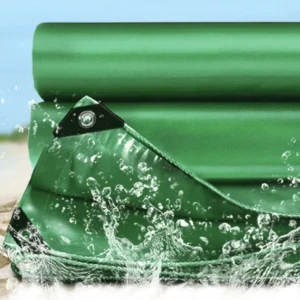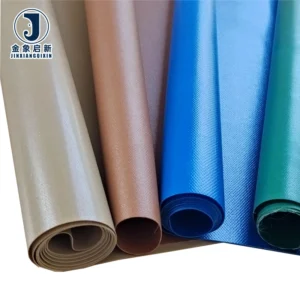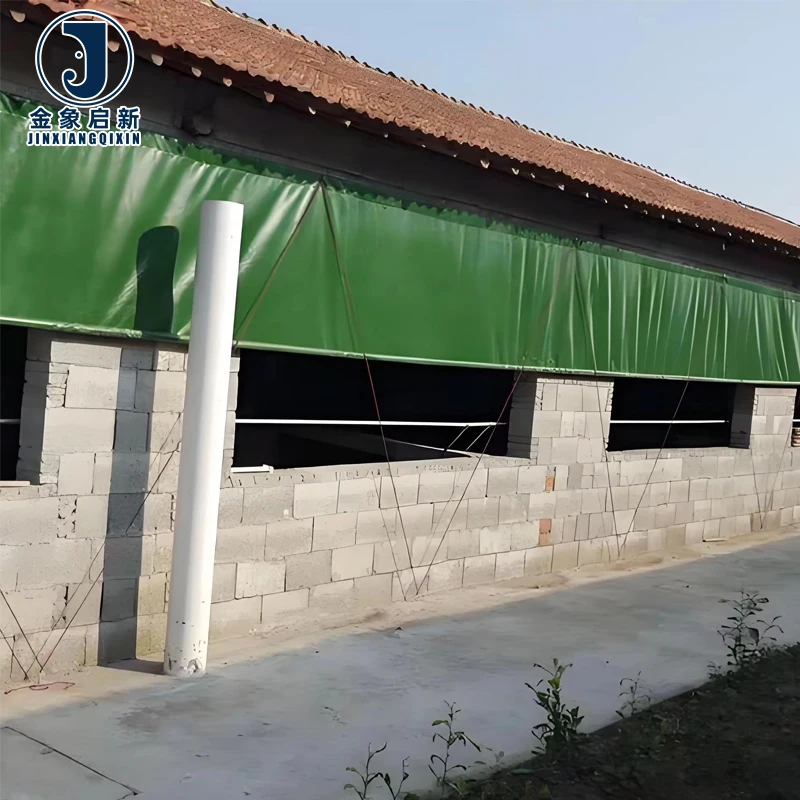
Precision Coating Control — every roll of PVC Coated Tarpaulin Roll is produced on dedicated lines with verified GSM and coating adhesion checks before leaving the factory.
Technical Specifications
| Parameter | Value |
|---|---|
| Product Type | PVC Coated Tarpaulin Roll |
| Coating Material | PVC |
| Base Fabric | Warp Knitted |
| Weave Style | Plain |
| Waterproof | Yes |
| Tear Resistant | Yes (grade not stated) |
| Anti-Static | Available — confirm certification required for your application |
| Color | Customizable across production batches |
| Flame Retardant | Available in flame retardant grades — confirm the grade required for your market |
| UV Treatment | Available — confirm treatment level and test basis for your exposure conditions |
Application Suitability
| Application | Exposure & Requirement |
|---|---|
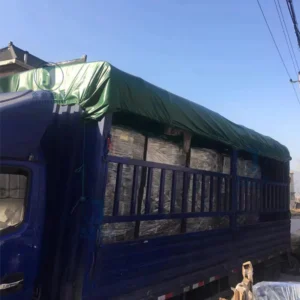
| Truck and trailer side curtain fabric | Continuous road vibration, flex cycling at roller guides, wind-driven rain, abrasion at contact points |
| Livestock transport covers | Moisture and biological exposure, tie-down tension, need for waterproof barrier and anti-static control |
| Fleet tarpaulin refurbishment | Replacement of worn panels requiring colour match to existing fleet livery and welded seam integrity |
| Flatbed load protection | UV exposure during transit, tie-down strap friction, dynamic load shifting on uneven road surfaces |
Why Generic-Size Truck Covers Fail Within Weeks on the Road
A PVC Tarpaulin for Truck and Trailer Covers must be cut to the exact trailer model, not a generic rectangle, or it will flap, chafe and split at the seams long before the fabric itself wears out.
Fleet operators replacing side curtains or load covers often receive tarps sized to a nominal dimension rather than the specific trailer profile. The excess material flaps in transit, creating abrasive wear at the eyelet line and concentrated stress at welded corners. Within weeks the seams open — not because the fabric failed, but because the geometry was wrong and the flex points were never reinforced for that particular trailer’s movement pattern [NEED_CITE: tensile and tear test methods for coated fabrics per ISO 1421]. Sourcing a PVC Tarpaulin for Truck and Trailer Covers engineered around the actual vehicle model eliminates this failure mode entirely.
Model-Specific Fitment Eliminates Premature Flap and Chafe
Every trailer model has distinct panel dimensions, roller guide positions, and tie-down spacing. A PVC Tarpaulin for Truck and Trailer Covers that accounts for these variables sits taut without excessive tension, keeping wind noise down and preventing the micro-abrasion that frays hems over long-haul routes. Pattern templates for common European and North American trailer profiles allow the cutting stage to begin from verified measurements rather than generic size charts.
Welded Seams at High-Flex Zones Must Outlast the Fabric Itself
The junction where a side curtain meets the roller mechanism or where a load cover folds over a trailer edge undergoes thousands of flex cycles per journey. Stitched seams in these zones tend to unravel as thread abrades against the coated surface. Heat-welded seams on warp knitted PVC Coated Tarpaulin Roll stock bond the coating layers directly, creating a joint whose peel strength can equal or exceed the base fabric tear strength [NEED_CITE: weld strength testing for PVC coated fabrics under cyclic flex conditions]. Specifying welded rather than stitched construction at every identified flex point on your trailer drawing is the single most effective way to extend cover service life.
Reading the Specification Sheet Beyond the GSM Number
GSM tells you what the fabric weighs per square metre, but it does not tell you how that weight is distributed between the base fabric and the PVC coating. A roll with a heavier coating and a lighter base fabric may have the same GSM as one with a denser warp knitted substrate and a thinner coat, yet the tear performance will differ substantially. For transport covers subjected to tie-down strap tension and load shift, the base fabric denier and stitch density govern how a puncture or cut propagates across the panel. Coating weight governs waterproofing, abrasion at contact surfaces and weld adhesion. Evaluating both parameters together — rather than GSM alone — gives a far more reliable picture of how the PVC Coated Tarpaulin Roll will perform under fleet operating conditions.
The Hidden Cost of Colour Drift Across a Multi-Roll Order
When a fleet operator orders several rolls of coloured tarpaulin to refurbish a set of trailers, even a slight shade variation between rolls becomes visible once panels are installed side by side. The fleet’s professional appearance is compromised, and in some cases the operator rejects the entire delivery. Colour consistency across rolls demands tight control of pigment dosing and coating temperature throughout production, not just a match to a Pantone chip at the sampling stage [NEED_CITE: colour consistency standards for PVC coated fabric batches]. Requesting a signed reference sample and a batch colour report with your PVC Coated Tarpaulin Roll shipment provides a verifiable benchmark before the material reaches your workshop.
Why Procurement Teams Source This PVC Coated Tarpaulin Roll Here
Dedicated coating lines maintain consistent PVC layer thickness roll after roll, which directly supports uniform weld performance during fabrication.
A 10-person R&D team develops custom width, colour and print specifications in sample form before bulk commitment, reducing the risk of specification mismatch.
Every roll undergoes pre-shipment inspection against the confirmed GSM, coating weight and colour reference, not a random batch sample.
Trailer model templates inform cutting patterns for truck covers, so flex-point reinforcement aligns with the actual vehicle geometry.
Production capacity across three full lines supports multi-container orders with confirmed dispatch dates rather than open-ended lead estimates.
Documentation & Verification
- GSM and coating weight recorded per roll against the purchase specification before dispatch
- Colour batch report comparing production rolls to the approved reference sample
- Weld strength test record at identified flex zones for fabricated truck covers
- Anti-static surface resistance report supplied where livestock or sensitive cargo is specified
- UV or flame retardant test report provided with the grade and test basis stated
- Pre-shipment inspection record covering roll count, dimensions and surface condition
Fabrication, Handling & Storage
- Heat-weld at temperatures matched to the PVC coating thickness to avoid blistering or under-bond at seams
- Reinforce eyelet zones with additional PVC patches where tie-down straps contact the warp knitted base
- Store rolls horizontally on racking to prevent flat spots that telegraph through the coating surface
- Allow cold-stored PVC Coated Tarpaulin Roll stock to reach ambient temperature before unrolling to avoid cracking
- Use mild detergent and soft brush for cleaning; avoid solvent-based agents that attack the plasticiser in the PVC coat
- Cut panels with a margin for weld overlap to maintain seam allowance on trailer-specific patterns
What to Include in Your Next Enquiry
To receive an accurate specification and lead time, share the trailer model or panel dimensions, the exposure conditions your fleet encounters most, and the annual roll or panel volume you anticipate. If your market requires a specific flame retardant grade or anti-static certification, state the standard by name so the correct compound is selected at the coating stage. Requesting a sample roll or fabricated panel before bulk production allows you to verify colour, weld behaviour and fitment on your own equipment.
Frequently Asked Questions
Q: How should I measure my trailer for a custom-fit PVC tarpaulin cover?
A: Measure the full panel width from rail to rail and the drop length from the top rail to the lowest tie-down point, recording each dimension to the nearest centimetre. Note the roller guide positions, buckle spacing and any protrusions. Providing the trailer manufacturer’s model number alongside these measurements allows the pattern to be cross-checked against known profiles before cutting the PVC Coated Tarpaulin Roll.
Q: How do you reinforce eyelets and hems at high-flex abrasion zones?
A: High-flex areas such as roller contact lines and strap tie-down points receive additional PVC patches welded over the warp knitted base before eyelets are punched. This spreads the load across a wider fabric area and prevents the eyelet from pulling through under cyclic tension. The patch material matches the roll specification so weld compatibility is maintained.
Q: How is colour variation controlled across multiple rolls in a single order?
A: Pigment dosing and coating temperature are monitored continuously during production, and each roll is compared against an approved physical reference sample under standardised lighting. A batch colour report accompanies the shipment. If a roll falls outside the agreed tolerance it is replaced before dispatch rather than included in the container.
Q: What anti-static certification is required for livestock transport covers?
A: Requirements vary by market and by the specific livestock handling regulations in force at the destination. State the standard or regulation your operation must satisfy, and the anti-static treatment and test report will be matched to that requirement. Where no specific grade is mandated, a surface resistivity target can be agreed before production of the PVC Coated Tarpaulin Roll begins.
Q: Why choose welded seams over stitched seams for truck covers?
A: Stitched seams rely on thread that abrades against the PVC coating under road vibration and flex cycling, eventually unravelling at the stress points. Heat-welded seams fuse the coating layers of the warp knitted fabric directly, producing a joint that flexes with the panel rather than against it. For side curtains and load covers in constant motion, welded construction substantially reduces seam-related warranty claims.