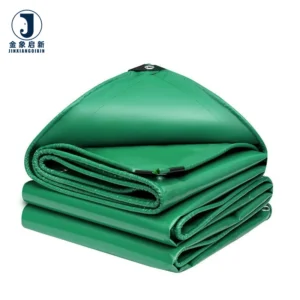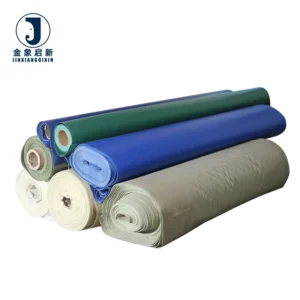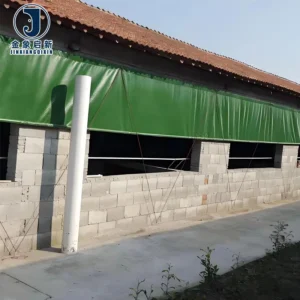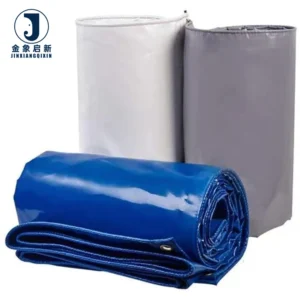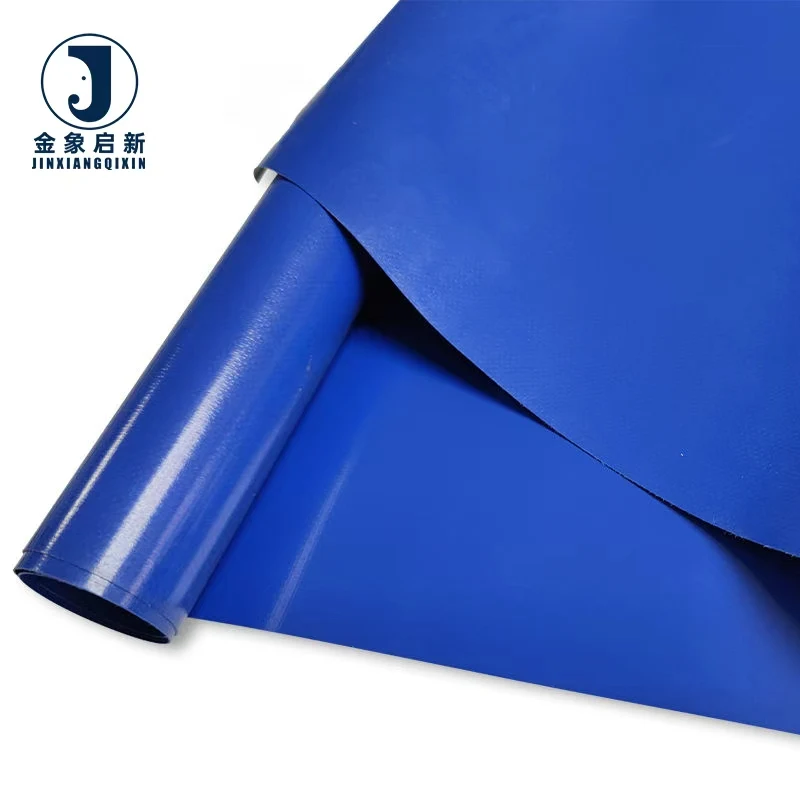
Roll-To-Roll Consistency — Every batch of PE Tarpaulin Roll for Truck Cover is verified for GSM and colour match against a retained production sample before dispatch.
Technical Specifications
| Parameter | Value |
|---|---|
| Product Type | PE Tarpaulin Roll |
| Coating Material | HDPE weaving with LDPE lamination on both sides |
| Weight (GSM) | 50gr/m2 ~ 220gr/m2 available (confirm the grade for this item) |
| Thickness | 0.2-0.4mm / 8 mil-16 mil / Custom |
| Roll Width | 6ft, 8ft, 10ft, 12ft, 2m, 4m, 6m |
| Roll Length | 100 yards, 100 meters, or custom |
| Color | Blue, Blue/Orange, Green, Grey, Black, Clear, Grey/Green, Orange, or any other color |
| Edge Finishing | All four edges reinforced with PP rope in hem; galvanized eyelets every 3ft or 1 meter interval; reinforced plastic corners |
| UV Treatment | Available (test basis not stated in source) |
| Waterproof | Yes |
| Anti-Mildew | Yes |
| Printing Option | Custom brand printing accepted |
| Standards | ISO, CE |
Application Suitability
| Application | Exposure & Requirement |
|---|---|
| Flatbed truck and trailer load covering | Rain, dust, road debris, wind uplift at highway speed, tie-down stress at eyelets |
| Side curtain fabric for curtain-side trailers | Repeated flexing at folds, abrasion against load edges, UV exposure on outer face |
| Transport equipment covers | Outdoor storage, forklift handling, puncture risk from sharp corners |
| Pre-cut finished tarpaulins for specific trailer models | Model-specific dimensions, rapid deployment, consistent eyelet alignment with vehicle anchor points |
Why Generic-Sized Truck Covers Fail at the Flex Points
A cover that does not match the trailer model concentrates stress at the eyelets and seams, not across the fabric field.
Fleet operators routinely receive PE Tarpaulin Roll for Truck Cover cut to a standard rectangle that ignores the taper, curvature and tie-down layout of a specific trailer. The result is predictable: the material bunches at the rear, the eyelets pull through at the corners where the load flexes most, and the PP rope hem separates from the body within the first few trips [NEED_CITE: eyelet pull-out test methods for coated fabrics per ISO 1421]. The fabric itself may still have useful life, but the cover is written off because the reinforcement detail was never matched to the vehicle.
Sizing the Roll to the Trailer, Not the Other Way Around
Buying a PE Tarpaulin Roll for Truck Cover in widths from 2m to 6m means the fabric can be slit trailer-side to the exact deck width of a flatbed or curtain-side unit, eliminating the double-layer folds that trap water and accelerate mildew at the fold line. When the roll length is specified at 100 meters, a fleet workshop can unroll, measure and cut for an entire batch of identical trailers in one session, keeping the offcut to a minimum and the eyelet spacing aligned with the vehicle’s existing anchor points.
Reinforcement Where the Tie-Down Strap Meets the Fabric
The galvanized eyelets set at 3ft or 1 metre intervals sit inside a hem that carries a PP rope core, spreading the strap load across the weave rather than concentrating it at a single yarn. At the corners, reinforced plastic caps prevent the eyelet from migrating through the LDPE face under cyclic tension. This detail matters most on open flatbed loads where wind gusts impose snatch loads that a plain-punched hole would tear through within the first week of operation [NEED_CITE: tie-down load distribution on tarpaulin hems].
Reading the GSM Against the Base Fabric Construction
A 220gr/m2 roll with a tight HDPE weave will resist tear propagation far better than a 220gr/m2 roll where most of the weight sits in the LDPE lamination rather than the woven core. The thickness range of 0.2-0.4mm covers lightweight parcel wraps at the lower end and heavier flatbed sheets at the upper end, but the figure alone does not reveal how much of that thickness is base fabric versus coating. Buyers should request the base fabric denier and the mesh count alongside the GSM to confirm that the woven layer, not the lamination, is carrying the mechanical load.
The Cost of a Colour Drift Across Rolls in One Order
When a logistics company orders twenty rolls of blue PE tarpaulin to cover a mixed fleet, a visible shade difference between rolls installed side by side on adjacent trailers signals inconsistent pigment dosing during the LDPE compounding stage. The covers perform identically, but the fleet operator faces a customer complaint on brand image and may reject the batch outright. Pre-shipment inspection that compares a swatch from every roll against a retained master sample catches this drift before the container is sealed [NEED_CITE: colour consistency standards for batch-produced coated fabrics].
Why the Fabrication Capability Decides the Outcome
Three full production lines dedicated to coated fabric allow the mill to run PE and PVC grades in parallel, so a custom width or colour does not wait behind a unrelated PVC order. A ten-person R&D team develops cut-to-size samples within days, confirming eyelet position, hem construction and print alignment before the bulk run starts. Dedicated QA at each stage — weaving, lamination, slitting, eyelet insertion — means the roll that ships matches the material specification sheet the buyer signed off.
Documentation & Verification
- Material specification sheet stating confirmed GSM, base fabric denier and LDPE coating weight for cross-check on arrival
- Pre-shipment inspection record covering roll-to-roll colour match and eyelet pull-out quality
- Roll packing list with net weight and linear metre count for container loading plan
- ISO and CE certificates referenced against the production batch
- UV and anti-mildew treatment confirmation with test basis where specified
Fabrication, Handling & Storage
- Heat-seal at moderate temperature to bond LDPE faces without scorching the HDPE weave base
- Set galvanized eyelets through the PP rope hem, not through the field, to distribute tie-down load
- Store rolls upright on pallets to prevent flat-spot creases that show through the LDPE surface
- Unroll in ambient conditions; cold-stiffened PE may crack if flexed below freezing point
- Cut with a hot knife to fuse the HDPE yarns and prevent edge fraying at the hem line
- Clean with mild detergent; avoid solvent-based degreasers that soften the LDPE lamination
What to Include in Your Enquiry
Specify the trailer model or deck dimensions so the roll width and eyelet spacing can be matched to the vehicle’s anchor layout. State the required GSM grade from the available range, the colour reference, and whether UV treatment is needed for the operating climate. Confirm if you require finished cut-to-size covers with reinforced corners or if you will slit and hem in your own workshop.
Frequently Asked Questions
Q: How is GSM verified on arrival against the quoted value?
A: Each roll ships with a material specification sheet stating the target GSM and base fabric denier. We retain a production sample from the same batch, so you can cut a swatch from the delivered roll and weigh it against the stated figure. Any deviation beyond the agreed tolerance triggers a replacement at our cost.
Q: What QA steps ensure colour consistency across a bulk order?
A: During production, a swatch from every roll is compared against the approved master sample under controlled lighting. The pre-shipment inspection record documents the result roll by roll. If a shade difference is detected, the affected rolls are held back and re-run before the container is released.
Q: Can eyelet spacing and hem reinforcement be adjusted?
A: Yes. Standard spacing is every 3ft or 1 metre, but we can set eyelets to match your trailer’s anchor points. The PP rope hem and reinforced plastic corners are included as standard; additional corner patches or D-ring attachments can be added for high-flex tie-down locations on request.
Q: How do I choose the right roll width for my cutting process?
A: Rolls are available from 2m to 6m wide. Select a width that allows a single drop to cover the trailer deck with minimal side overlap, reducing the number of field welds and the waste from offcuts. We can slit to a custom width if your trailer dimension falls between the standard options.
Q: What is involved in custom brand printing on rolls?
A: Provide the artwork and Pantone references. We produce a print sample on the specified GSM and colour grade for approval before the bulk run. Minimum order applies to cover plate setup. The print is applied during the lamination stage so it sits beneath the LDPE surface, protected from abrasion during handling and transit.