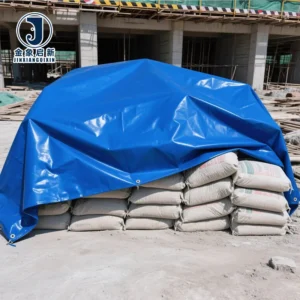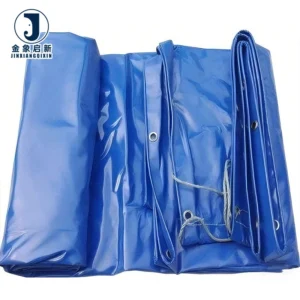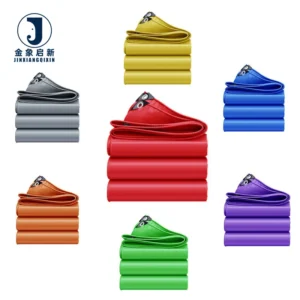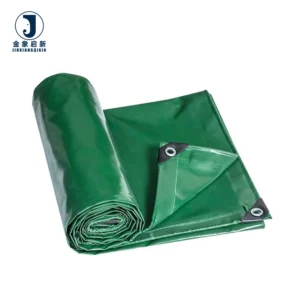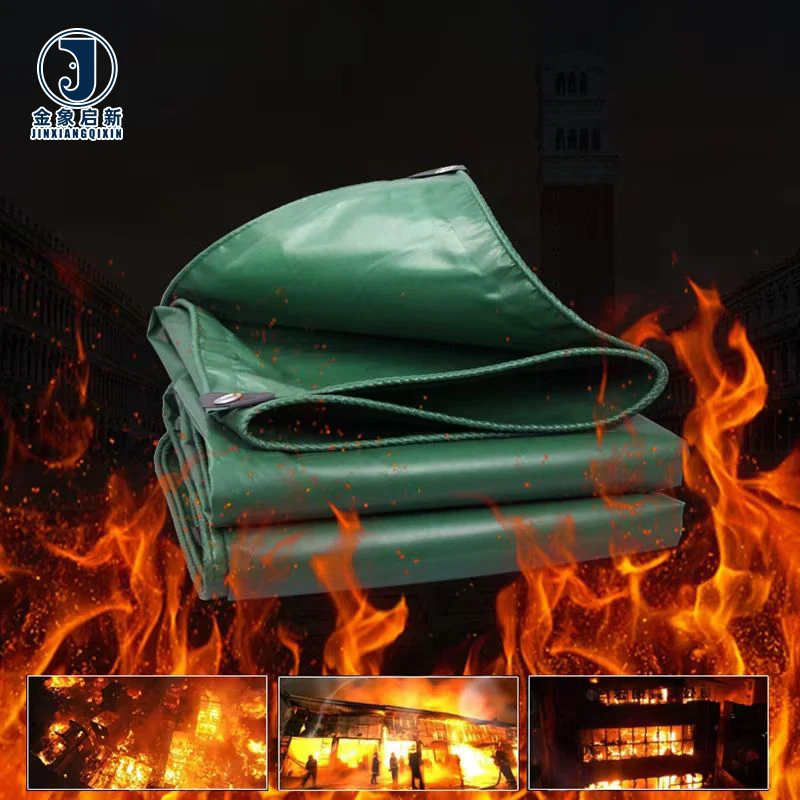
Proven Coating Adhesion — Three dedicated production lines control PVC coating weight and bond strength across every roll, ensuring consistent performance under the constant flex and vibration of road transport.
Technical Specifications
| Parameter | Value |
|---|---|
| Product Type | PVC Coated Tarpaulin |
| Base Fabric Yarn | 500D × 500D Polyester |
| Coating Material | PVC (Polyvinyl Chloride) |
| Water Resistance | Water Resistant / Waterproof |
| Flame Retardant | Available in flame retardant grades — confirm the grade required for your market |
| UV Treatment | Anti-UV treatment available — verify test basis for your target region |
| Primary Usage | Truck, car, trailer, machine, and wood covers; awnings; tents |
| Packaging Options | Roll packing, bale packing, carton |
| Standards | ISO, CE |
Application Suitability
| Application | Exposure & Requirement |
|---|---|
| Long-haul truck side curtains | Continuous flexing at load points, road debris abrasion, prolonged UV and rain exposure |
| Flatbed trailer machinery covers | Heavy tie-down tension at hems and eyelets, wind flap stress during transit |
| Construction equipment protection on site | Dust ingress, UV degradation, contact with sharp structural edges |
| Temporary freight enclosures | Rapid deployment, repeated folding and unfolding, weather sealing at panel joins |
Why a Generic Truck Cover Fails Where Your Load Flexes Most
A cover cut to standard dimensions will gap, billow, and tear at the exact points your cargo moves.
Fleet operators who source PVC coated tarpaulin for truck and transport covers off generic size charts consistently report two failure modes: edge gaps that let rain channel onto freight, and seam splits at the corners where tie-down straps concentrate force. The cover was never measured against the actual trailer profile. [NEED_CITE: tensile and tear test methods for coated fabrics per ISO 1421]
When a PVC coated tarpaulin truck cover aftermarket supplier builds each panel from the specific vehicle dimensions — including wheel arch clearance, tailgate overlap, and strap routing — the fabric sits flush under tension instead of flapping loose. Flush fitment is what keeps water out and prevents the abrasive micro-movement that wears through coating at the hem.
Trailer-Specific Fitment Eliminates the Gaps That Let Water In
A PVC coated tarpaulin for truck and transport use must account for the real geometry of the vehicle, not a catalogue rectangle. Side curtain panels need to follow the rib spacing of the trailer body, while top covers must drape past the load edge with enough overlap to shed water clear of the deck. When covers are cut to exact model dimensions, the hem sits against a solid surface and tie-down points align with the trailer’s lashing rings.
Reinforced Stress Zones Where Tie-Down Straps Meet Fabric
The highest concentration of failure on any truck cover occurs where straps pass through or press against the material. Reinforcing these zones demands more than a simple folded hem — it requires additional fabric layers bonded at the flex point and eyelets set through both the base cloth and the coating. Without this, the PVC coating cracks around the eyelet after repeated strap cycles, and the tear propagates into the panel. [NEED_CITE: DIN 4102 fire classification for building materials]
Reading the 500D × 500D Polyester Base Fabric
The 500D × 500D yarn count in the polyester base fabric determines how the material behaves under load. Denier describes the linear mass of the yarn — a 500D yarn is thicker and carries more tensile load than a 300D alternative. When both warp and weft use the same denier, the fabric offers balanced strength in both directions, which matters on a truck cover where tie-down tension pulls diagonally across the weave. The PVC coating then locks the yarns in place, adding tear resistance and waterproof sealing. Together, base fabric density and coating weight govern how the panel handles the repeated flex-vibration cycle of highway transport. A heavier coating on a light base fabric will crack; a heavy base with insufficient coating will absorb moisture at the yarn crossover points.
What Happens When Specification Shortcuts Reach the Loading Dock
A cover that arrives lighter than quoted GSM may pass a visual check but will show its deficit at the first long-haul trip — the coating wears through at flex points faster, and the base fabric yarns separate under tie-down load. Colour variation between rolls in the same fleet order becomes obvious the moment two panels hang side by side on adjacent trailers, forcing a full replacement rather than a single swap. Flame retardant covers shipped without the test report required by the destination market get held at site inspection, delaying the entire fleet deployment. [NEED_CITE: pre-shipment inspection standards for coated textile products] Welded seams that were not reinforced at the specification stage will part before the body fabric shows any sign of wear, because the heat-affected zone at the weld line is always the first point to fatigue under cyclic loading.
Why Buyers Source This PVC Coated Tarpaulin Truck Cover Here
Deep process control over PVC coating weight and adhesion means every roll leaves the line with the same coating-to-fabric bond, critical when covers are heat-welded into finished panels. Three full production lines and 36 sets of professional equipment support bulk fleet orders without compressing lead times during peak transport seasons. A 10-person R&D team develops custom sizing, eyelet placement layouts, and hem reinforcement specifications matched to specific truck and trailer models, with samples produced within days. Dedicated QA and QC checkpoints at every production stage, followed by 100% pre-shipment inspection, ensure GSM, dimensional accuracy, and coating integrity are verified before dispatch. Material specification sheets, test reports, and inspection records ship with every order so buyers can cross-reference the documentation against the goods on arrival.
Documentation & Verification
- Material specification sheet stating 500D × 500D base fabric, PVC coating type, and colour reference per roll
- Pre-shipment inspection record confirming GSM and dimensional accuracy against the specified trailer model
- Test reports for flame retardant and anti-UV treatments supplied where applicable to destination market requirements
- Roll packing list detailing individual roll dimensions, weight, and colour batch for receiving verification
- ISO and CE certificates included with customs documentation for international freight clearance
Fabrication, Handling & Storage
- Heat-weld seams at manufacturer-recommended temperature to maintain PVC coating bond integrity across the 500D polyester base
- Reinforce eyelet zones with additional PVC-coated fabric patches to distribute tie-down strap loads across the weave
- Store rolls horizontally on racking to prevent compression creases that weaken the PVC coating layer
- Allow cold-stored rolls to reach ambient temperature before unrolling to avoid coating micro-cracking
- Clean surfaces with mild detergent only — solvent-based cleaners will degrade the PVC coating and anti-UV treatment
- Overlap panel joins by the specified width when heat-welding multiple sheets to cover wide trailer loads
Before You Request a Quote
Provide the exact truck or trailer make and model, including body length, width, and height, so covers can be sized to the vehicle rather than to a generic chart. Specify whether your target market requires a particular flame retardant grade or anti-UV test standard, as certification requirements vary by region. Indicate the quantity of covers needed and whether you require finished, eyeletted panels or roll stock for your own fabrication line.
Frequently Asked Questions
Q: How are truck covers sized to fit specific trailer models rather than generic dimensions?
A: We build each cover from the actual vehicle measurements — body length, width, height, wheel arch position, and tailgate overlap. The R&D team develops a cutting pattern for that specific model, so the PVC coated tarpaulin panel sits flush under tie-down tension without edge gaps or excess fabric that flaps in transit.
Q: What reinforcement options are available at eyelet, hem, and tie-down stress points?
A: Hem zones receive additional layers of PVC-coated fabric bonded to the 500D × 500D base, and eyelets are set through both the reinforcement patch and the main panel. Strap contact areas can be further reinforced with welded patches positioned to match the trailer’s lashing ring layout.
Q: How is batch colour consistency maintained across multiple covers in the same fleet order?
A: Every roll in a fleet order is produced from the same PVC coating batch with colour reference recorded on the material specification sheet. The pre-shipment inspection includes a visual colour check across all rolls before packing, ensuring panels match when installed on adjacent trailers.
Q: What fire retardant grades and certifications are available for transport and site compliance?
A: Flame retardant treatment is available in multiple grades to meet different market requirements. We supply the relevant test report with each shipment so buyers can verify the grade against their destination site or transport regulation. Confirm the specific standard your market requires at the inquiry stage.
Q: What is the process for verifying GSM and coating weight on arrival against the quotation?
A: Each shipment includes a pre-shipment inspection record documenting the measured GSM and coating weight per roll. Buyers can cross-reference these figures against the material specification sheet and the original quotation to confirm the goods received match the specification ordered.