Coating Consistency Control — Hot-melt coating technology paired with a dedicated QA process ensures that every roll of PVC coated fabric leaving the line carries verified weight and adhesion performance, critical for truck side curtains and transport covers that flex under real road loads.
Technical Specifications
| Parameter | Value |
|---|---|
| Product Type | PVC Coated Tarpaulin / Pond Liner |
| Material | PVC + High-strength polyester mesh fabric |
| Weight Options | 350gsm / 420gsm / 500gsm / 550gsm / 600gsm / 750gsm |
| Total Thickness | 0.32mm / 0.35mm / 0.4mm / 0.45mm / 0.5mm / 0.65mm |
| Coating Method | Laminated technology & Hot-melt coating technology |
| Roll Width | 2m / 2.1m |
| Roll Length | 75m / 50m |
| Colour Options | Blue, Red, Yellow, Light Blue, Grey (Customizable) |
| Key Features | Waterproof, cold crack resistance, anti-mildew, good color fastness, outstanding tearing strength for welding |
| Special Treatments | Flame retardant (grade not stated), anti-static (test basis not stated), anti-cold, anti-mildew, 3P |
| Certifications | ISO, CE |
Application Suitability
| Application | Exposure & Requirement |
|---|---|
| Truck side curtains and awnings | Constant flexing at load points, road debris abrasion, UV exposure, wind-driven rain ingress |
| Flatbed and trailer cargo covers | Tie-down strap tension at eyelets, puncture risk from load shifting, weather protection during transit |
| Cargo ship deck covers | Salt spray exposure, prolonged UV, heavy rainfall, mechanical wear from mooring lines |
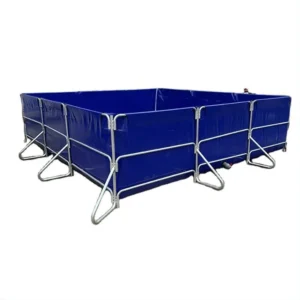
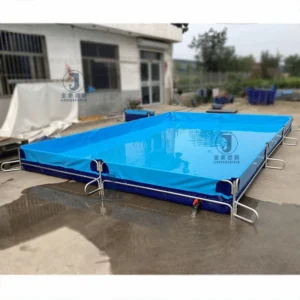
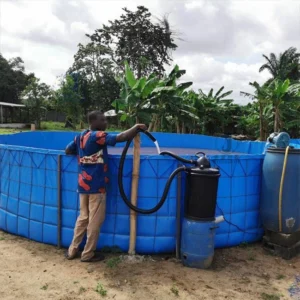
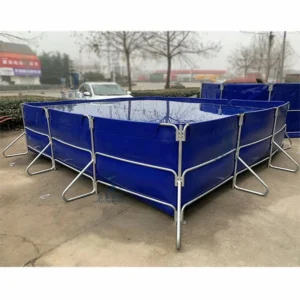
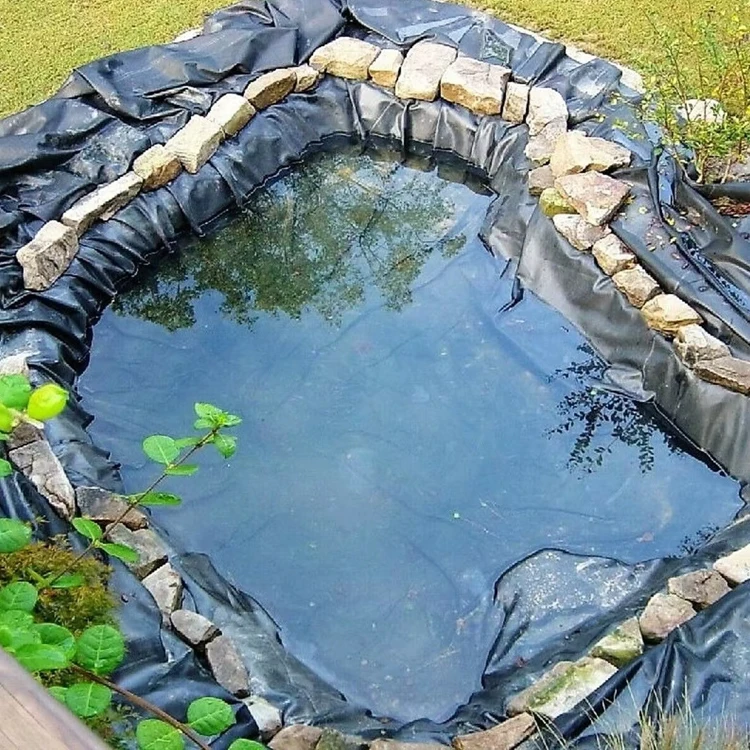
| Fish pond and reservoir liners | Permanent water contact, soil chemistry, puncture risk from substrate, long-term UV on exposed edges |
Why PVC Coated Truck Tarpaulin for Transport Fails at the Weld Line Before the Fabric Does
Seam integrity depends on coating adhesion, not just fabric weight.
When a truck cover splits open on the highway, the tear almost always starts at a welded seam or an eyelet reinforcement point — not in the middle of the fabric panel. The PVC coated truck tarpaulin for transport is only as reliable as its weakest joint. Hot-melt coating bonds the PVC layer into the polyester mesh at a molecular level, giving the weld zone substantially higher peel strength than laminated alternatives where the coating simply sits on the surface. Without verifying that the coating method matches the demands of high-flex areas, fleet operators end up replacing covers that look intact everywhere except the seams [NEED_CITE: tensile and tear test methods for coated fabrics per ISO 1421].
Hot-Melt Coating and Its Impact on Side Curtain Welding
Hot-melt coating technology drives the PVC compound into the high-strength polyester mesh under heat and pressure, creating a bond that resists delamination when the fabric is folded, welded, or flexed repeatedly. For truck side curtains that roll and unroll hundreds of times per week, this coating method directly determines whether the welded seams hold. The PVC coated truck tarpaulin for transport must maintain seam integrity under dynamic loading — something laminated fabrics struggle with once the adhesive layer begins to separate at the fold lines.
Reinforcement Zones and How Coating Weight Affects Tie-Down Performance
Tie-down points and hem reinforcements carry concentrated loads every time a strap is tensioned over a moving load. The available GSM range — from 350gsm up to 750gsm — lets fleet specifiers choose a grade that balances weight savings against puncture and tear resistance at these stress points. Heavier grades provide more coating material around the eyelet and hem zone, distributing the strap load across a wider area of the polyester base fabric. Selecting the right grade for your trailer model and typical cargo profile is the difference between a cover that lasts through the season and one that needs patching after the first long haul [NEED_CITE: coated fabric reinforcement testing under dynamic load conditions].
Reading the Specification Sheet Beyond the GSM Number
GSM tells you the total weight per square metre of the finished PVC coated truck tarpaulin for transport, but it does not isolate how much of that weight is coating versus base fabric. A 550gsm fabric with a dense, high-tenacity polyester mesh will resist tearing far better than a 550gsm fabric that achieves its weight through excessive coating on a lighter scrim. The coating method — hot-melt versus laminated — further changes how the material behaves during fabrication. Hot-melt coated fabrics generally yield stronger heat-welded seams because the PVC is integrated into the mesh rather than bonded on top of it. Roll width options of 2m and 2.1m influence how many panels must be joined for wide trailer covers; fewer welds mean fewer potential failure points. Thickness values ranging from 0.32mm to 0.65mm correlate with both abrasion resistance and flexibility — thicker grades resist road debris better but require more care during folding and storage to avoid permanent creasing.
The Hidden Cost of Specifying on Price Per Kilogram Alone
When purchasing decisions hinge on cost per kilogram, suppliers have an incentive to hit the quoted GSM by adding filler to the coating compound rather than increasing the polyester yarn density. The result is a PVC coated truck tarpaulin for transport that meets the weight target on a scale but lacks the structural backbone to resist tearing at flex points. Covers built this way often develop cracks along the weld lines within months of road use, and the failure pattern is distinctive — the coating flakes away from the mesh at every fold, leaving bare polyester exposed to water ingress. Batch-to-batch colour variation is another symptom of inconsistent coating formulation; when rolls from the same order look different side by side on a trailer fleet, the visual damage undermines the professional image the operator is paying for [NEED_CITE: common failure modes in transport tarpaulin field returns].
Why Procurement Teams Source This Fabric Here
Three full production lines and 36 sets of professional equipment allow this manufacturer to run high-volume transport fabric orders without sacrificing coating consistency across the batch. A 10-person R&D team handles material selection, custom sizing, and sample development in-house, meaning trailer-specific cut patterns and reinforcement layouts are confirmed before production starts rather than corrected after delivery. Every roll undergoes dedicated QA/QC at each production stage, with 100% inspection before shipment — a process designed to catch GSM deviations, colour drift, and coating adhesion issues before they leave the factory. Hot-melt coating capability gives fabricators a material that welds reliably, reducing scrap rates during curtain and cover assembly.
Documentation & Verification
- Material specification sheet stating exact GSM, base fabric construction, and coating method per roll
- Colour reference document ensuring batch-to-batch consistency across multi-roll transport cover orders
- Test report for flame retardant and anti-static grades where applicable — confirm the grade required for your market
- Pre-shipment inspection record verifying weight, thickness, and coating adhesion before dispatch
- Roll packing list with individual roll IDs traceable to production batch and QA checkpoint data
- Certificate of origin and customs documentation for cross-border shipment of PVC coated truck tarpaulin for transport
Fabrication, Handling & Storage
- Hot-melt coated grades weld at higher peel strength; adjust heat bar temperature and dwell time to match the selected GSM and thickness
- Eyelet spacing on hem reinforcements should account for the 2m or 2.1m roll width to minimise off-cuts during panel layout
- Store rolls upright on pallets to prevent flat-spot creasing that becomes permanent on heavier grades above 600gsm
- Cold crack resistant formulation allows deployment in low-temperature environments, but unroll and allow the fabric to acclimatise before tensioning over a load
- Clean with mild detergent only; solvent-based cleaners may attack the PVC surface and compromise colour fastness on the coated truck tarpaulin
- Field repairs on minor punctures require compatible PVC patching compound matched to the hot-melt coating chemistry for proper adhesion
What to Include in Your Enquiry
Provide your trailer model or exact cover dimensions so that panel sizing and reinforcement zones can be matched to your load profile. Specify the operating environment — typical cargo type, climate exposure, and any fire-retardant or anti-static compliance requirements your market demands. Confirm whether you need finished, cut-to-size covers with eyelets and hems or roll stock for your own fabrication line, and indicate annual volume so that batch consistency and colour matching can be planned across multiple shipments.
Frequently Asked Questions
Q: How do you ensure the PVC coated truck tarpaulin for transport fits my specific trailer model?
A: We work from your trailer drawings or physical measurements to develop a cut pattern that accounts for hem allowances, eyelet placement, and reinforcement zones at high-flex areas. A sample panel is produced for fitment confirmation before the full order runs, ensuring that the finished cover matches the trailer profile without excess material that flaps in transit or gaps that expose the cargo to weather.
Q: What reinforcement options are available for high-flex areas and tie-down points?
A: Reinforcement patches, doubled hems, and additional webbing can be specified at strap contact zones and corners where tie-down loads concentrate. The hot-melt coating method provides strong adhesion for welded reinforcement patches, and the available GSM range lets you choose a heavier grade at stress points while keeping the main panel lighter for easier handling during daily roll-up and deployment.
Q: How does the PVC coating withstand continuous road exposure and weather?
A: The hot-melt coating technology bonds PVC into the polyester mesh, creating a unified structure that resists delamination under UV exposure and repeated flexing. Cold crack resistance and anti-mildew treatments are available to extend performance across seasonal temperature swings. For UV protection, flame retardant, or anti-static requirements, confirm the specific grade and test standard your application demands so the correct formulation is applied.
Q: Can you provide material samples to test before placing a bulk order?
A: Samples in your selected GSM, colour, and coating method can be developed within days for weld testing, abrasion evaluation, and fitment trials on your trailer. We recommend testing heat-weld seam strength and eyelet pull-out resistance on the sample before approving the full production run, ensuring the PVC coated truck tarpaulin for transport meets your fabrication standards.
Q: Will multiple rolls in the same order have consistent colour across the fleet?
A: Batch consistency is controlled through dedicated QA checks at every coating stage, with colour reference documentation issued per order. If your fleet requires identical appearance across all trailers, specify the colour reference upfront and request the pre-shipment inspection record that verifies shade matching roll by roll before the PVC coated truck tarpaulin for transport leaves the factory.