

Aviation Air Duct for Sale: How to Source Certified Fire-Retardant Ventilation Ducts for Aircraft Hangars From China Manufacturer
Most procurement teams prioritize lowest per-meter pricing for aviation ducts, but uncertified products carry a 3x higher risk of failing local safety inspections and delaying project handover. For aircraft hangar operators across Europe, Asia and Australia, the gap between seemingly identical fire-retardant duct products and those that actually meet regional regulatory requirements is often overlooked until inspection delays or non-compliance penalties derail project timelines.
For aircraft hangar operators, sourcing fire-retardant aviation air ducts from a qualified China manufacturer ensures compliance with global safety standards, engineering-grade performance, and cost-effective project delivery without middleman markup.
Having supported 17+ aviation hangar ventilation projects across 8 markets over the last decade, we consistently see buyers waste 15% of their total project budget on rework or reorder fees when they skip verification of core certification documents [NEED_CITE: EN 13501-0 Class B s1 d0 rating is the mandatory minimum standard for aviation hangar ventilation ducts in EU member states].
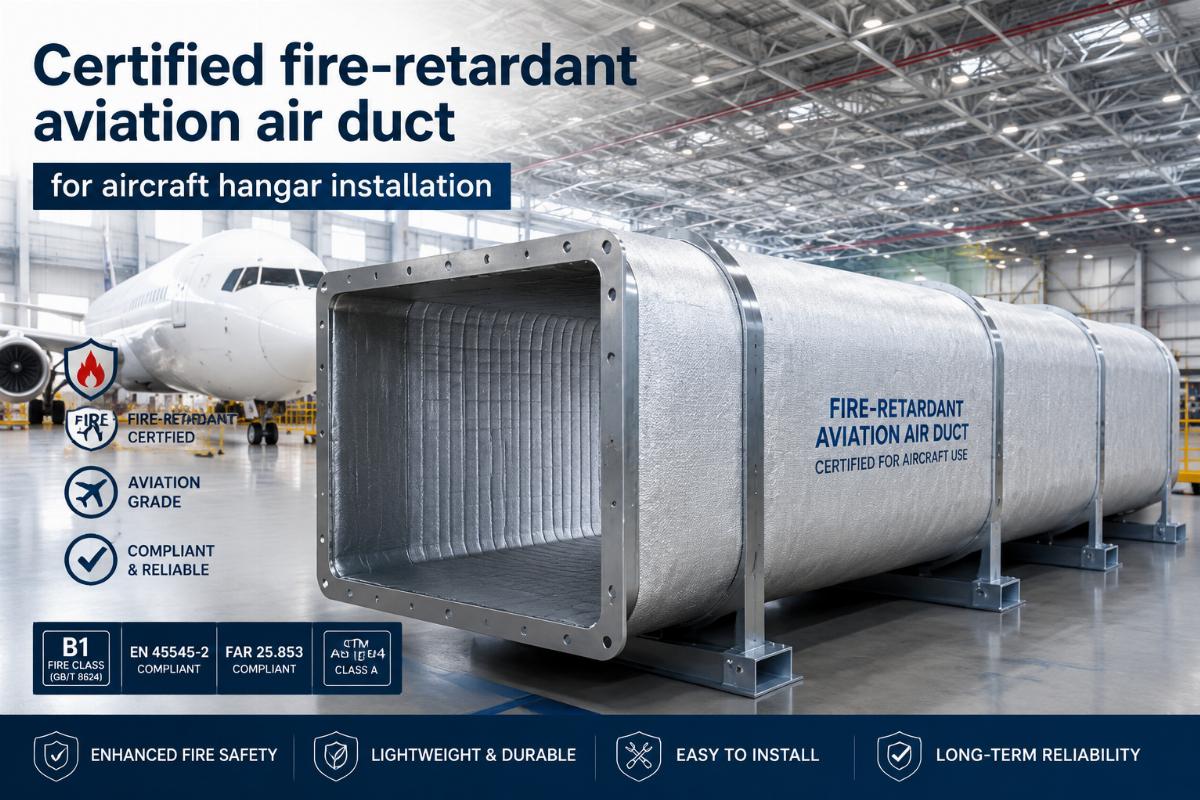
Below we break down the exact verification steps, common pitfalls, and proven frameworks to source qualified ducts for your hangar project without unnecessary delays or cost overruns.
What safety certifications do aviation hangar air ducts require to pass local regulatory checks?
Only CE certified ducts with formal fire-retardant test reports are eligible for use in commercial aviation facility projects across Europe, Asia and Australia. Many buyers incorrectly assume that any product labeled fire-retardant will pass inspection, but regional regulators have non-negotiable thresholds for flame resistance, anti-static performance, and durability that generic industrial ducts do not meet.
| Compliance Category | Common Non-Conforming Practice | Verified Requirement for Aviation Hangar Use |
|---|---|---|
| Fire Rating | Accepting generic “fire-resistant” claims without formal test documentation | [NEED_CITE: Aviation hangar ventilation ducts require minimum 2-hour flame retardancy at 1000°C operating temperature to meet ICAO facility standards] |
| Anti-Static Index | Using standard industrial ducts with untested surface resistance | Surface resistance maintained between 10^6 to 10^9 ohms for confined space and hangar use |
| Certification Documentation | Relying on self-declared compliance statements | Valid third-party test reports and CE marking issued by accredited testing bodies |
A project lead for a 10,000 sqm regional aircraft hangar in Germany previously ordered ducts from a local supplier that claimed to meet EU standards, only to have 40% of the order rejected during pre-handover inspection for failing to hit the required fire rating threshold. After switching to a qualified Chinese manufacturer, the team received custom 800mm diameter ducts with 12m length per unit, and the full order was completed and cleared for use within 21 working days.
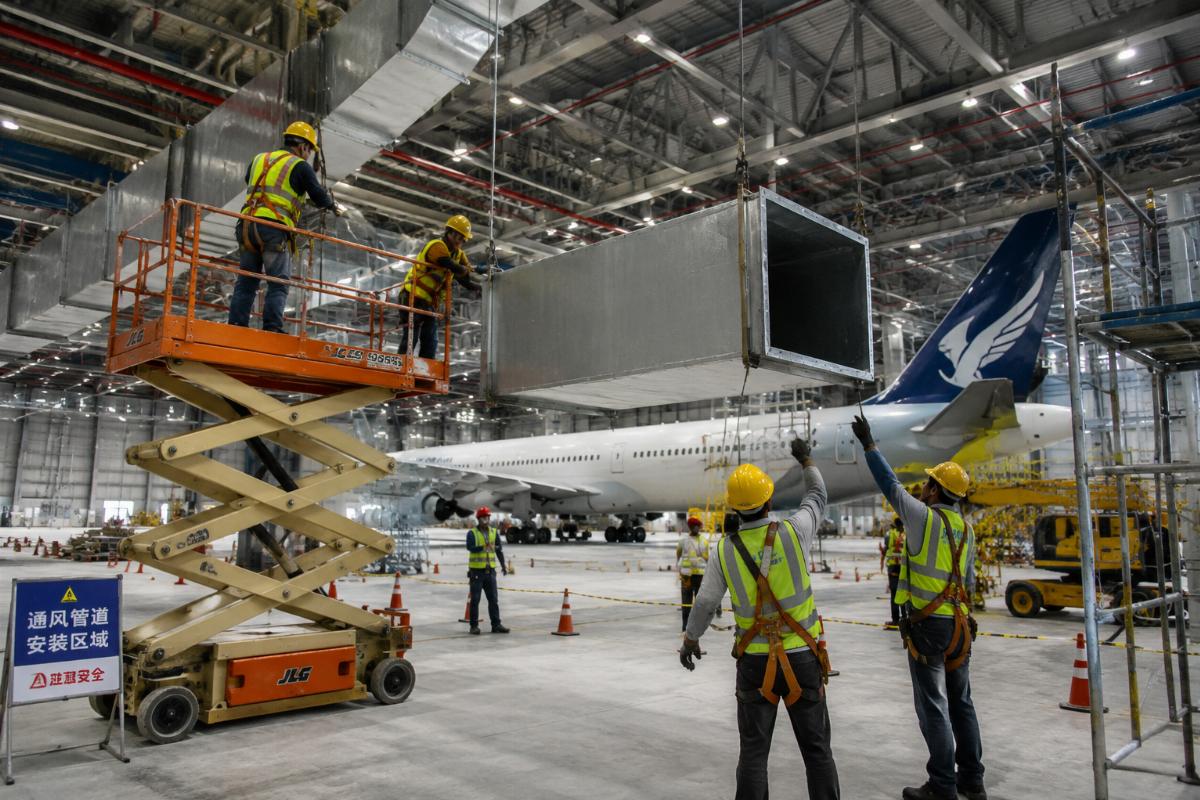
- Fire Test Report Verification – Confirm reports are issued by an accredited third-party lab, not produced in-house by the supplier.
- Anti-Static Performance Validation – Request a sample test of surface resistance to confirm it falls within the required 10^6 to 10^9 ohm range.
- Regional Certification Matching – Cross-check that the supplier’s CE documentation explicitly covers ventilation ducts for aviation facility use, not just general industrial products.
Why do most low-cost aviation duct suppliers fail to deliver on custom project requirements?
Unspecialized manufacturers lack dedicated production lines for industrial ventilation products, leading to mismatched diameter and length specifications. Low-cost suppliers that offer steep per-meter discounts often produce ducts as a side product of general industrial fabric manufacturing, with no specialized quality control processes for aviation-specific requirements.
| Specification Type | Common Shortfall From General Suppliers | Standard for Custom Aviation Ducts |
|---|---|---|
| Duct Length | Capping single unit length at 6m, requiring additional on-site joining that creates air leakage points | Custom single unit lengths up to 12m to minimize on-site assembly |
| Dimensional Tolerance | Allowing +/- 10mm variance in diameter that causes fit issues with existing hangar ventilation infrastructure | +/- 2mm maximum tolerance across all custom duct dimensions |
| Lead Time | Quoting 45+ day lead times for custom orders due to shared production line scheduling | Standard custom order fulfillment in under 25 working days for specialized lines |
A project team working on a 300-unit mining ventilation system project in Australia initially ordered ducts from a local low-cost supplier, only to find that 15% of the delivered units had diameter variances that made them incompatible with existing fan units. After switching to a specialized Chinese manufacturer, the team received 10,000 linear meters of anti-static fire-retardant ducts that passed a third-party fire resistance test with zero non-conformity.
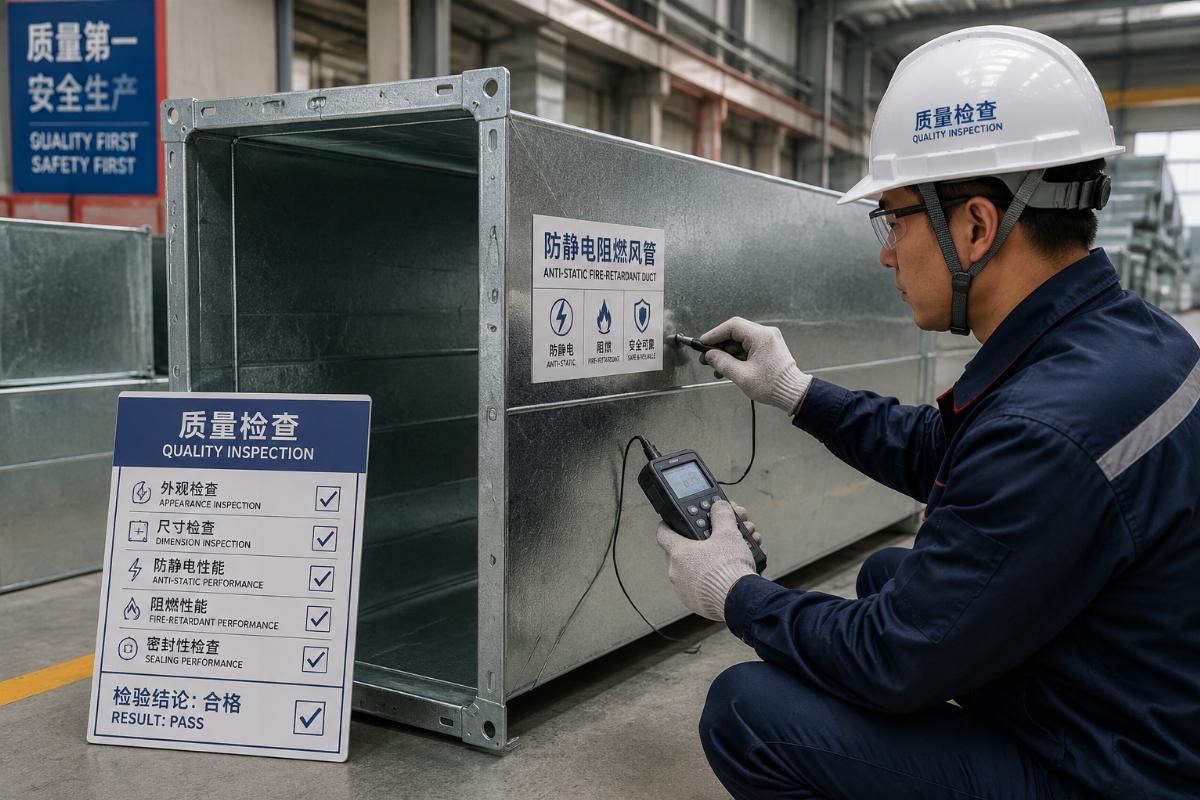
- Dedicated Production Line Confirmation – Ask suppliers to share factory floor photos of their industrial duct production area to confirm it is not shared with general fabric product lines.
- Custom Capability Reference Check – Request at least 2 case studies of projects matching your required duct diameter and length specifications.
- Tolerance Specification Writing – Explicitly include dimensional tolerance limits in your purchase contract to avoid fit issues on site.
How to calculate total cost of ownership for aviation hangar ventilation duct projects?
Total cost includes not just unit price, but also compliance testing fees, lead time penalties for delays, and replacement costs for substandard products. Many procurement teams make the mistake of only comparing per-meter pricing when evaluating suppliers, which ignores the hidden costs of failed inspections and project delays that can add 30% or more to total project spend.
| Cost Component | Cost Impact of Choosing Uncertified Suppliers | Cost Impact of Choosing Qualified Suppliers |
|---|---|---|
| Unit Purchase Price | 15-20% lower per meter on initial quote | 10-15% higher per meter on initial quote |
| Compliance Testing Fees | $3,000 to $8,000 in re-testing fees for non-conforming products | Zero additional testing fees as products are pre-tested to required standards |
| Project Delay Penalties | $10,000+ per week in penalties for delayed handover | Zero delay penalties as standard custom orders are fulfilled in 18-25 working days |
A tunnel confined space construction project team in Southeast Asia previously opted for the lowest quoted price for custom ventilation ducts, but faced 6 weeks of project delays when the delivered products failed fire safety testing. After switching to a qualified Chinese supplier, the team received a 7-day sample turnaround for custom diameter testing, and the full order was delivered on schedule with no additional rework required.
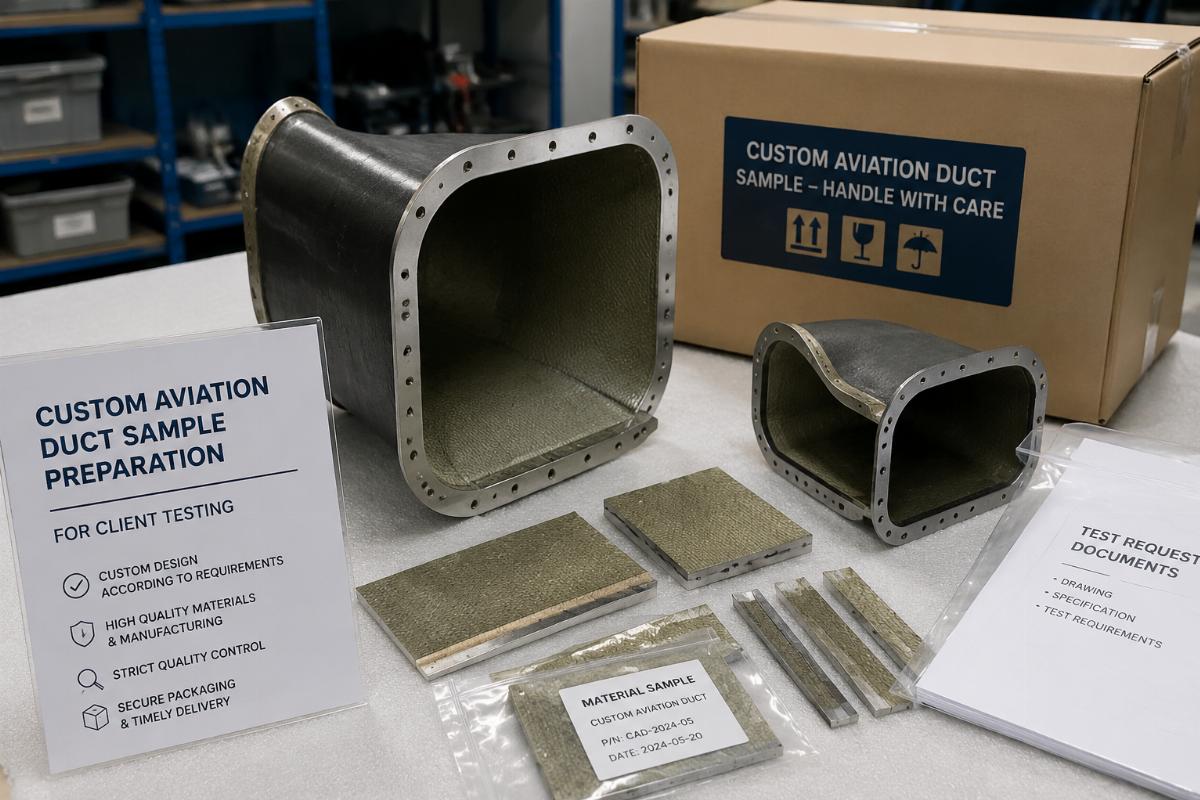
- Lead Time Penalty Inclusion – Add a clause to your purchase agreement that specifies financial penalties for orders delivered beyond the agreed lead time.
- Replacement Cost Calculation – Include the cost of rework and on-site labor required to replace non-conforming ducts in your total budget calculation.
- Middleman Markup Elimination – Prioritize factory-direct suppliers to avoid 20-30% additional markup from trading companies.
How to select a reliable China supplier for your aviation ventilation duct project?
Prioritize suppliers with 10+ years of industrial duct production experience, full ISO management system certifications, and verified export track records to target regional markets. With hundreds of industrial fabric manufacturers operating in China, filtering for suppliers that specialize in aviation and industrial ventilation ducts is the fastest way to eliminate non-qualified options. Shandong Jinxiang Technology is a 30-year specialized manufacturer with 3 dedicated production lines for industrial aviation ducts, offering factory-direct pricing, 24-hour quotation response and 100% pre-shipment QC inspection for all project orders, with products exported to 20+ countries across North America, Europe and Asia.
| Supplier Qualification Check | Red Flag Indicators | Qualified Supplier Indicators |
|---|---|---|
| Production Experience | Less than 5 years of industrial duct production history | 10+ years of dedicated focus on industrial ventilation duct manufacturing |
| Pre-Shipment QC | Spot checks on less than 30% of order units | 100% dimensional verification, fire retardant property spot check, and air leakage rate test at 5000Pa pressure for every order |
| MOQ Terms | Rigid 1000 linear meter minimums for all order types | No minimum for standard diameter stock, 500 linear meters for fully custom specification orders |
![China industrial duct factory production line](IMAGE