PVC Tarpaulin Roll for Tent Manufacturing: Built on Verified Weight and Coating Consistency
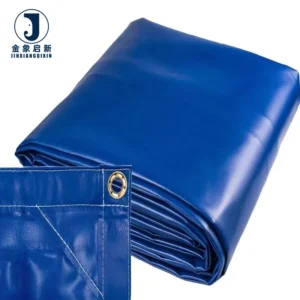
Coating Weight Verified Per Roll — Every roll of 650 GSM PVC coated tarpaulin is weighed at the line and checked against the material specification before packing, because architectural and tent fabricators need the fabric to perform as quoted, not just look right on paper.
Technical Specifications
| Parameter | Value |
|---|---|
| Product Type | PVC Tarpaulin Roll |
| Material | PVC Coated |
| Weight | 650 GSM |
| Waterproof | Fully waterproof coated construction |
| Fire Retardant | Fire retardant (grade not stated — confirm the grade required for your market) |
| UV Resistance | UV resistant (test basis not stated — request report for your climate zone) |
| Additional Protection | Antibacterial, mildew proof, oil and stain resistant, acid and alkali resistant |
| Temperature Range | High temperature and cold resistant |
| Flexibility | Highly flexible, resistant to cracking |
| Durability | Weather-resistant, anti-oxidation |
| Surface Maintenance | Self-cleaning system, easy maintenance |
| Welding Options | HF welding, hot air welding, sewing |
Application Suitability
| Application | Exposure & Requirement |
|---|---|
| Tensile and membrane structures | Continuous tension loading, UV exposure, wind-driven rain, long-term weathering |
| Large format technical textiles | Wide-panel fabrication, weld integrity across long seams, batch colour match |
| Portable storage structures | Abrasion from frame contact, repeated assembly and teardown, moisture ingress |
| Airport hangars | High wind load, fire compliance requirements, chemical exposure from ground operations |
| Shade systems | Sustained solar exposure, thermal expansion, colour retention over seasons |
| Stadium architectural structures | Span loading, public safety fire codes, aesthetic consistency across large surface areas |
When Rolls Arrive Lighter Than Quoted, the Whole Project Pays the Price
A PVC Tarpaulin Roll aftermarket supplier worth working with will verify coating weight roll by roll, not just quote a number and hope for the best.
I spent years on the QC side before moving into order tracking, and the most damaging failures I have seen started with a scale discrepancy nobody caught before loading. A tent fabricator ordered a container of heavy-grade coated rolls and found them underweight on arrival — the coating adhesion was compromised, and welded seams peeled apart during frame tensioning. The entire shipment went back. Since then, I personally check the scale readout on every roll before it leaves the line. If the deviation is outside tolerance, that roll stays in the warehouse. [NEED_CITE: coating weight verification standards for PVC coated textiles]
What Consistent Coating Weight Means for Tent and Structure Fabricators
When you buy PVC Tarpaulin Roll stock for tensile structures or portable storage, you are not just buying fabric — you are buying predictability in your fabrication process. A roll that hits the stated 650 GSM within tight tolerance will weld at the same temperature and speed as the last roll you ran. Your HF welding settings do not need adjusting mid-job, and your hot air seam strength stays uniform from panel to panel.
How Batch Colour Consistency Affects Large-Format Installations
Stadium covers and shade systems often span hundreds of square metres using multiple rolls installed side by side. Colour variation between rolls in the same order becomes visible immediately once the panels are tensioned next to each other. We hold colour reference standards against every production run and match each roll to the approved swatch before release. For large-format technical textiles, this means the finished installation reads as a single continuous surface, not a patchwork of slightly different shades. [NEED_CITE: colour measurement methods for coated fabrics per ISO standards]
Reading the Specs: Why Weight, Flexibility, and Welding Compatibility All Connect
The 650 GSM weight of this PVC coated tarpaulin reflects the combined mass of the base fabric and the PVC coating layers. That weight alone does not tell you the tensile or tear strength — those depend on the base fabric denier and weave density underneath the coating. What the weight does influence is how the material handles during fabrication: heavier-coated fabric holds its shape on the cutting table, resists wrinkling during welding, and maintains dimensional stability under tension.
The flexibility and crack resistance noted in the specs matter directly in cold-weather installations. PVC coatings that become brittle at low temperatures will crack at fold lines during transport or at stress points when the structure is first tensioned in cold conditions. The high-temperature and cold-resistant treatment range means this material can be deployed across climate zones without the coating failing at the temperature extremes.
The three welding options — HF, hot air, and sewing — give fabricators flexibility in how they join panels. HF welding creates a molecular bond between PVC layers, producing seams as strong as the parent material. Hot air welding works well for curved or complex joins on tensile structure panels. Sewing is used where mechanical fastening is preferred or where the seam will be reinforced with additional tape or webbing.
The Hidden Cost of Specifying on Price Alone
Fabricators who select PVC coated tarpaulin rolls based on the lowest quoted GSM price often discover the real cost later. Coating that is thinner than specified peels at the weld line under sustained tension — the seam fails before the fabric does. Anti-UV treatment that was claimed on the quotation but never tested shows up as colour fading and surface chalking within the first season. Rolls with inconsistent coating weight across the width produce weak spots that tear during installation. These failures do not show up in a sample cut from the middle of a perfect roll. They show up in production, on site, under load. [NEED_CITE: common failure modes in PVC coated fabric installations]
Why Fabricators Source This Material Here
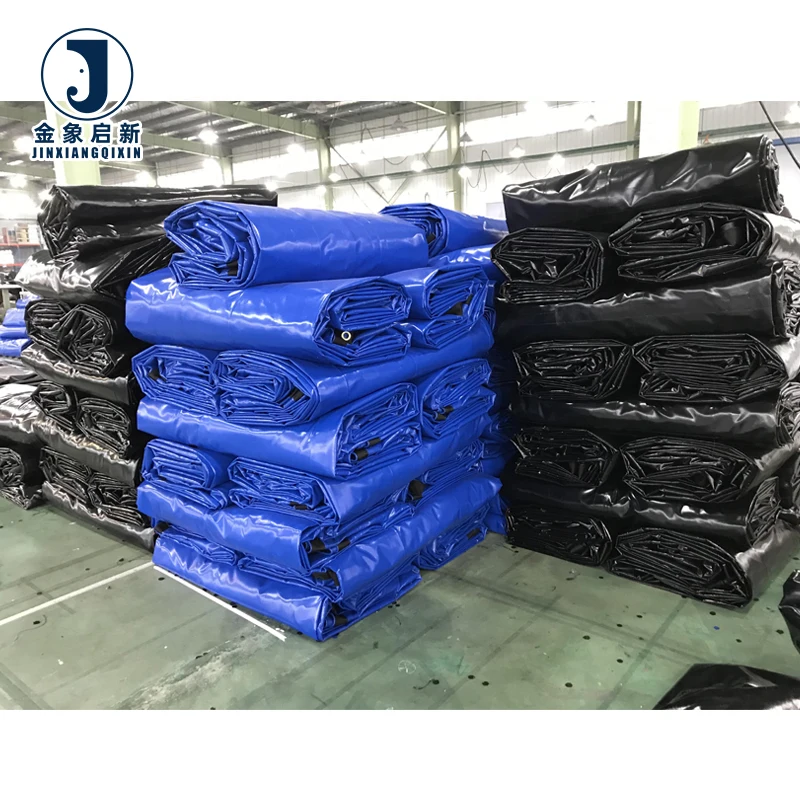
Three full production lines and dedicated coating equipment support bulk roll orders with on-time dispatch, so your fabrication schedule is not waiting on a delayed shipment.
A ten-person R&D team handles custom width, colour matching, and pattern printing development, delivering samples for approval before the full production run starts.
Every roll goes through in-process QA checks and a pre-shipment inspection, meaning the documentation you receive matches the material you unload.
Coating weight and adhesion are controlled through the full production process — not tested once and assumed consistent — giving you a PVC Tarpaulin Roll that behaves the same way on your welding table as it did on ours.
Custom widths and lengths are produced on short lead times with achievable minimums, so you can order what your next project actually needs rather than overstocking standard sizes.
Documentation & Verification
- Material specification sheet confirming 650 GSM, base fabric type, and PVC coating details for each roll
- UV and fire retardant test reports supplied where the grade has been specified for your market
- Pre-shipment inspection record showing every roll was weighed and visually checked before packing
- Roll packing list with individual roll weights, dimensions, and batch references for traceability
- Certificate of origin and customs documentation prepared to match your import requirements
Fabrication, Handling & Storage
- HF welding settings should be calibrated to the 650 GSM coating weight before running production seams
- Hot air welding temperature must account for the PVC coating thickness to achieve full seam fusion
- Store rolls upright on pallets to prevent flat spots and creasing in the PVC coated surface
- Allow cold-stored rolls to reach workshop temperature before unrolling to prevent coating crack
- Use PVC-compatible cleaners only — solvents can degrade the self-cleaning surface treatment
- Plan cutting layout to maximise roll width utilisation and minimise the number of welded joins per panel
Before You Enquire: What We Need to Quote Accurately
To give you a precise specification and lead time for your PVC Tarpaulin Roll order, share the end-use application and the environmental conditions the finished structure will face. Let us know the roll width and length you need, your annual volume, and whether you require colour matching to a specific reference or printed branding on the fabric. If your market requires a particular fire classification or UV performance grade, tell us the standard so we can match the treatment and supply the supporting test report.
Frequently Asked Questions
Q: Can you confirm the GSM on every roll matches what was quoted?
A: Yes. Each roll is weighed individually at the production line and checked against the stated 650 GSM specification before it is cleared for packing. A weight verification record is included with your shipment, so you can confirm the numbers yourself on arrival without needing to run your own tests.
Q: Do you supply test reports for fire retardant and UV resistance claims?
A: Where a specific fire retardant grade or UV performance standard is requested for your market, we supply the corresponding test report with your documentation package. Confirm the standard your project requires — such as a local building code or fire classification — and we will match the treatment and provide verified results.
Q: Which welding methods work with this 650 GSM PVC coated fabric?
A: This material supports HF welding, hot air welding, and conventional sewing. HF welding is typically preferred for tensile structure panels where seam strength must match the parent fabric. Hot air suits curved joins, and sewing is used where mechanical reinforcement is specified. We recommend testing your weld parameters on a sample before production.
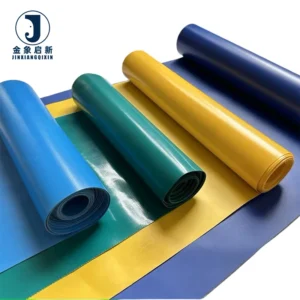
Q: Can I order custom widths, colours, or printed branding by the roll?
A: Yes. Custom widths, colour references, and printed patterns are available with achievable minimums and short sample lead times. Our R&D team develops a sample roll or swatch for your approval before the full order enters production, ensuring colour consistency and print quality meet your specification.
Q: How do you keep colour consistent when my order spans multiple rolls?
A: Every production run is matched against an approved colour reference standard. Rolls within the same order are checked side by side before release to ensure they read as uniform when installed adjacent to each other. This is critical for large-format structures where panels from different rolls are tensioned in the same visible surface.