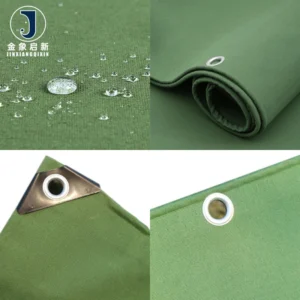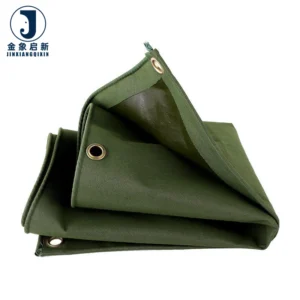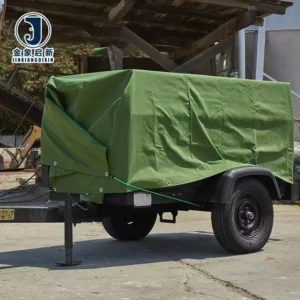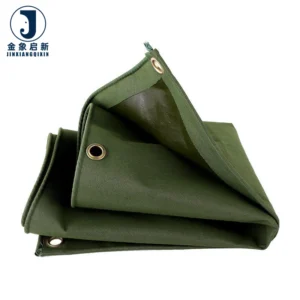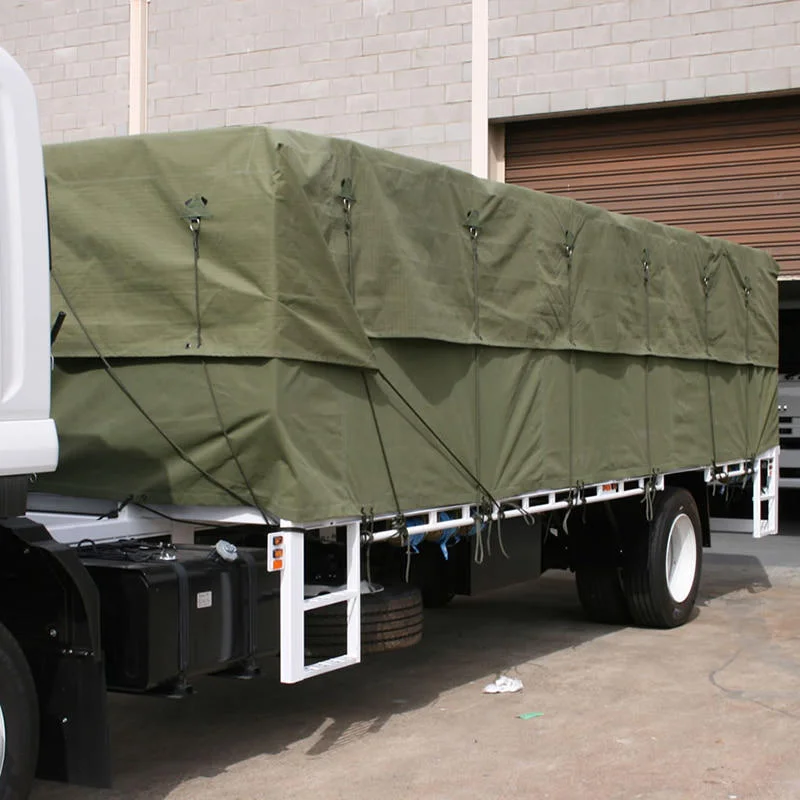
Trailer-Specific Pattern Cutting — covers are developed from individual trailer drawings rather than generic roll widths, so hems, eyelets, and tie-down zones land exactly where the chassis hardware sits.
Technical Specifications
| Parameter | Value |
|---|---|
| Product Type | Canvas Tarp |
| Material | Silicone-coated canvas |
| Weight Range | 250gms–600gms (confirm the grade for this item) |
| Finish / Treatment | Waterproof, wear-resistant, scratch resistant, tensile resistant (test basis not stated in source) |
| Color | Customizable |
| Customization Options | Edge wrapping, punching, buttonhole, size |
Application Suitability
| Application | Exposure & Requirement |
|---|---|
| Flatbed and curtain-side trailer loads | Constant road abrasion, crosswind flex, and prolonged weather exposure requiring reinforced tie-down zones |
| Box trailer cargo protection | Repeated access and retraction cycles demanding scratch and tensile resistance at fold and slide points |
| Tricycle and light-duty transport covers | Frequent handling, UV exposure, and rain contact with lightweight yet durable fabric |
| Transport equipment builder integration | Model-specific sizing and eyelet placement matched to OEM chassis mounting points |
Why a Generic-Cut Truck Tarpaulin Cover for Transport Costs More Than the Fabric Itself
A cover that does not match the trailer footprint shifts load, traps water, and fails first at the seams.
Generic-size covers leave gaps at corners and overhang at edges. In crosswinds, loose fabric flaps and scores the load beneath it. Tie-down straps pull through unreinforced hems within weeks because the eyelet spacing was set for a different trailer wheelbase. [NEED_CITE: common failure modes in transport tarpaulin installations due to dimensional mismatch] Fleet operators report replacing these covers multiple times per year, turning what should be a durable asset into a recurring consumable.
Model-Matched Sizing Eliminates the Flap and Gap Problem
Every truck tarpaulin cover for transport is cut from trailer-specific drawings, not pulled from a standard size chart. The width, length, and drop dimensions are confirmed against the chassis model before any fabric is laid out. This means the cover sits flush against the load bed without excess material catching wind or pooling water at the edges. Operators who have switched from generic cuts consistently note fewer strap adjustments and less cargo exposure during transit.
Reinforced Tie-Down Zones Where the Load Flexes Most
Edge wrapping, punching, and buttonhole options are concentrated at the points where tie-down straps and bungee cords apply the highest point loads. Standard eyelet spacing is adjusted to match the trailer’s existing hardware layout, so straps run straight rather than diagonal. At flex zones — typically above the axle line and at the rear door frame — additional reinforcement layers can be specified to resist the repeated bending that causes standard hems to split [NEED_CITE: reinforcement strategies for high-stress tie-down zones in transport covers].
Reading the Specification Sheet Beyond the GSM Number
The weight range of 250gms to 600gms spans light-duty tricycle covers through to heavy-duty flatbed applications, but gsm alone does not define field performance. Base fabric denier and weave density determine how a tear propagates once the coating is punctured. A lower-gsm fabric with a tight weave may outperform a heavier loose-weave alternative in tear resistance. The silicone coating method affects how the fabric handles heat welding versus sewing — silicone-coated canvas generally requires specific adhesives or seam taping rather than conventional hot-air welding used for PVC. Confirm the coating chemistry before setting fabrication parameters. Surface finish also matters: a smoother finish sheds road grime more readily but may offer less grip when operators handle the cover in wet conditions. Always request the base fabric specification alongside the gsm figure to make an informed grade selection.
The Hidden Cost of Specifying the Wrong Grade
Choosing a weight grade based on price rather than the actual exposure conditions leads to predictable failures. A 250gms cover on a long-haul flatbed trailer will abrade through at the tie-down contact points well before a heavier grade would show wear. Conversely, specifying a heavy-grade fabric for a light delivery vehicle adds unnecessary weight and makes daily handling cumbersome for drivers. Batch colour inconsistency across rolls in a single order becomes visible when multiple covers are deployed side by side on a fleet — a problem that only surfaces after installation. [NEED_CITE: impact of batch colour variation on fleet visual standards and rework costs] Welded seams that are set for one coating chemistry but applied to another will delaminate under flex stress, leaving the fabric intact but the cover unusable.
Why Procurement Teams Source This Cover Here
Three full production lines allow custom-width runs without displacing bulk stock orders, so lead times remain stable even for non-standard trailer dimensions. The 10-person R&D team develops samples within days when a new trailer model needs a cover pattern, rather than waiting for a minimum production run to justify the setup. Dedicated QA inspection checks eyelet spacing, hem reinforcement, and dimensional accuracy against the trailer drawing before any roll is cleared for dispatch — not just a final visual check. Colour matching is controlled at the coating stage with roll-level traceability, so repeat orders land in the same shade as the first batch [NEED_CITE: coating-stage colour control versus post-production dye matching in tarpaulin manufacturing]. Material specification sheets accompany every shipment, stating base fabric, coating type, and verified gsm so receiving teams can confirm the order matches the quotation.
Documentation & Verification
- Material specification sheet stating silicone canvas base, coating type, and confirmed gsm per roll
- Pre-shipment inspection record verifying eyelet spacing and hem reinforcement against trailer drawings
- Colour consistency report across all rolls within the same purchase order
- ISO and CE certificates with certificate of origin for customs clearance
- Sample approval sign-off confirming fitment on the target trailer model before bulk cutting
Fabrication, Handling & Storage
- Silicone-coated canvas requires seam taping or adhesive bonding rather than standard PVC hot-air welding
- Edge wrapping at 250gms–600gms grades should use matching-weight reinforcement strips to prevent hem curl
- Store rolls horizontally on padded racks to avoid flat-spot creases that show through after installation
- Punch eyelets after coating cure is complete to prevent cracking around the buttonhole perimeter
- Clean with mild detergent only; solvent-based cleaners can degrade the silicone surface treatment
What to Include With Your Inquiry
Provide the trailer make, model, and year along with load bed dimensions including any side extensions or tail-lift clearance requirements. Specify the weight grade you need within the 250gms–600gms range, or describe the route conditions and we will recommend a grade. Confirm whether you need edge wrapping, specific eyelet spacing, or buttonhole reinforcement at designated tie-down points. Indicate the colour reference and whether batch consistency across multiple covers is required for fleet uniformity.
Frequently Asked Questions
Q: How is the cover sized to fit a specific trailer model rather than a generic cut?
A: We work from the trailer manufacturer’s chassis drawings or on-site measurements you provide. The cover pattern is developed to match the load bed length, width, drop height, and any hardware protrusions. A sample is produced and fitment-tested on the target trailer before bulk production begins, ensuring dimensional accuracy rather than relying on standard size charts.
Q: What eyelet spacing and hem reinforcement options are available for tie-down load points?
A: Eyelet spacing is set to align with your trailer’s existing tie-down rail or hook positions. Options include standard punching, reinforced buttonhole with edge wrapping, and additional fabric layers at high-stress zones above axles and at door frames. You confirm the spacing pattern during the sample approval stage before we proceed with the full order.
Q: How is GSM verified on arrival to match the quotation specification?
A: Each roll is weighed and measured before dispatch, and the verified gsm is recorded on the pre-shipment inspection report included with your documentation. Your receiving team can cross-check this against the material specification sheet and the original quotation to confirm the weight grade matches what was agreed.
Q: What is the minimum order quantity for custom-sized truck tarpaulin covers?
A: Minimums depend on the colour and weight grade selected, as some grades require a dedicated coating run. Standard stock grades within the 250gms–600gms range typically support smaller quantities, while custom colours or non-standard widths may require a higher minimum to justify the production setup. Confirm your specification and we will advise the applicable threshold.