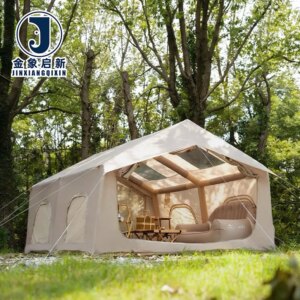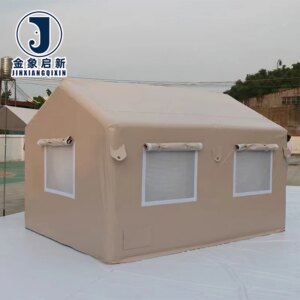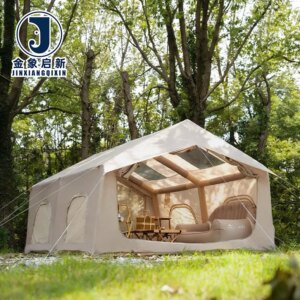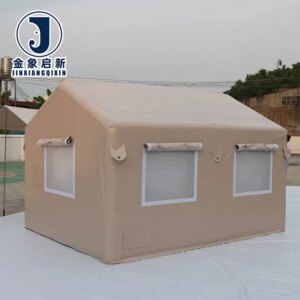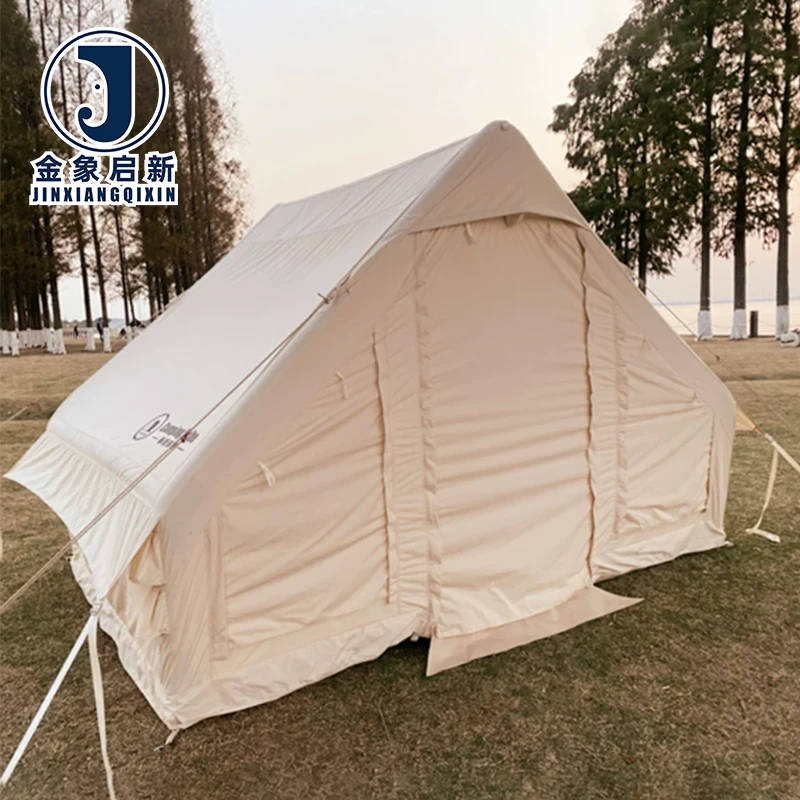
Batch Consistency Assurance — Every roll of inflatable tent fabric is traced through a 36-set equipment line with in-process QA checkpoints, ensuring uniform coating weight and colour across your entire fleet shelter order.
Technical Specifications
| Parameter | Value |
|---|---|
| Product Type | Inflatable Tent Fabric for Truck and Transport |
| Core Material | UV Water-resistant PVC Fabric |
| Product Form | Inflatable structure, single layer design |
| Waterproof Rating | Water column ≥ 5000mm |
| Tear Strength | Exceeding 300N (ISO 13934.2) |
| UV Treatment | UPF 50+ (grade not stated — confirm duration rating for your region) |
| Fabric Thickness Range | 0.3mm–0.8mm (range covers product family — confirm the grade for this item) |
| Dimensional Accuracy | Within ±2cm for custom orders |
| Key Features | Waterproof, UV-resistant, tear-resistant |
| Customization | OEM & ODM — sample customization, pattern printing |
| Sample Lead Time | 7–10 days |
| Mass Production Lead Time | 15–20 days for standard orders |
| Standards | ISO9001, ISO14001, ISO45001, CE |
Application Suitability
| Application | Exposure & Requirement |
|---|---|
| Transport fleet roadside shelters | Constant UV exposure, road spray, rapid inflation and deflation cycles, abrasion from ground contact |
| Construction site temporary enclosures | Wind loading on inflated panels, dust and debris impact, repeated relocation across sites |
| Emergency response field units | Rapid deployment under adverse weather, modular configuration, water ingress prevention |
| Commercial rental inflatable shelters | High-frequency handling, packing and unpacking stress, batch colour consistency across units |
Why Inflatable Tent Fabric for Truck and Transport Fails at the Seam First
Seam integrity determines usable life far more than fabric weight alone.
Fleet operators and field shelter builders regularly encounter inflatable structures that split along welded joints while the main panels remain intact. The flexing that occurs during inflation, wind gusts, and packing introduces cyclic stress at every heat-sealed junction. When the welding temperature or pressure is not matched to the specific PVC formulation, the bond line becomes the weakest element in the system [NEED_CITE: heat-seal parameter optimisation for PVC-coated fabrics]. This is why tear strength data tested to ISO 13934.2 matters — it tells you how the material behaves under real-world directional load, not just static weight.
How UPF 50+ Coating Supports Long-Term Fleet Shelter Use
Inflatable tent fabric for truck and transport applications faces uninterrupted sunlight during roadside staging and open-site deployment. A UPF 50+ treatment addresses polymer chain degradation that causes embrittlement and colour loss over sustained UV exposure. The PVC coating formulation is designed to absorb and scatter ultraviolet radiation before it reaches the base fabric, preserving tensile properties across the panel surface.
Single-Layer Inflatable Construction and Structural Behaviour
The single-layer inflatable design relies on internal air pressure to maintain panel rigidity. High-tensile PVC layers carry the hoop stress generated by inflation, and the fabric must resist elongation beyond its elastic recovery point. When multiple shelter units are deployed across a fleet operation, consistent air retention depends on uniform coating thickness and reliable seam adhesion throughout the structure [NEED_CITE: inflatable structure engineering standards for temporary shelters].
Reading the Specs That Actually Govern Inflatable Shelter Performance
Waterproof rating expressed as a water column ≥ 5000mm indicates the hydrostatic head the coating can withstand before leakage. Tear strength exceeding 300N per ISO 13934.2 reflects resistance to propagation once a puncture or cut occurs — critical when inflatable panels contact sharp ground surfaces or equipment edges. The fabric thickness range spanning 0.3mm to 0.8mm covers multiple grades within the product family; selecting the correct thickness for your application balances pack weight against puncture resistance and inflation pressure capacity. Coating adhesion to the base fabric determines whether delamination occurs before the fabric itself wears out, particularly at fold lines created during packing.
The Cost of Underspecifying Inflatable Shelter Fabric
Choosing a thickness grade below what the deployment environment demands leads to puncture failures that ground entire shelter units mid-operation. Inflatable structures used on construction sites or alongside transport routes encounter gravel, metal debris, and abrasive surfaces that penetrate thin coatings rapidly. Batch-to-batch colour variation across a fleet order becomes visible when shelters are erected side by side at a single staging area, triggering rejection and rework [NEED_CITE: colour consistency measurement methods for coated fabrics]. Weld line failure under cyclic inflation stress leaves operators without shelter and forces emergency procurement at premium lead times.
Why Procurement Teams Source This Fabric Here
Three full production lines and 36 sets of professional equipment support bulk inflatable tent fabric orders without splitting batches across different machines, which reduces coating variation. A 10-technician R&D team handles thickness selection, pattern printing, and structural design adjustments specific to your shelter geometry. Pre-shipment inspection covers fabric performance test results and seam strength data before any roll leaves the 9,180 square meter facility. Sample development within 7–10 days allows you to validate inflation behaviour and seam construction before committing to full production. ISO9001, ISO14001, and ISO45001 certifications ensure that production records are traceable per order number.
Documentation & Verification
- Material specification sheet stating GSM, base fabric construction, coating type, and UV treatment basis for each inflatable tent order
- Pre-shipment inspection record including seam strength test data and tear resistance results per ISO 13934.2
- 24-hour pressure retention verification report confirming airtightness of each inflatable unit before dispatch
- ISO and CE certificates retrievable by order number for site compliance audits
- Roll packing list with batch identification linking each unit to its production run
Fabrication, Handling & Storage
- Heat-seal temperature and dwell time must match the specific PVC grade selected from the 0.3mm–0.8mm range
- Reinforce inflation valve attachment points with additional PVC patches to distribute stress across the single-layer panel
- Store rolled inflatable fabric upright in shaded conditions to prevent permanent creasing that weakens the coating at fold lines
- Avoid dragging deflated shelters across abrasive surfaces during packing to preserve the UV-resistant coating layer
- Use PVC-compatible cleaners only; solvent-based products can degrade the water-resistant coating surface
Requesting a Quotation That Matches Your Fleet Requirements
Provide your typical deployment environment — roadside, construction site, or field staging — along with expected wind load and ground conditions. Specify the inflatable structure dimensions and whether you require finished units or roll stock for in-house fabrication. Indicate any target market compliance requirements for UV or fire performance so the correct grade can be confirmed before sampling.
Frequently Asked Questions
Q: How is UV resistance verified and what test basis supports the UPF 50+ claim?
A: UV protection is stated as UPF 50+, though the specific test standard and exposure duration rating should be confirmed for your target market. Request batch-specific test data with your order to verify that the coating formulation meets the solar radiation conditions your inflatable shelters will encounter during transport and field deployment.
Q: What seam construction method is used and how does it resist flex-point failure?
A: Heat-sealed seams are employed throughout the inflatable structure, with welding parameters matched to the selected PVC grade. Tear resistance exceeding 300N per ISO 13934.2 indicates how the joined panels perform under directional stress at inflation and deflection points.
Q: How is colour consistency controlled across multiple inflatable units in one order?
A: Production runs use centralised coating batches to minimise variation. Pre-shipment inspection includes visual and instrumental colour checks across units within the same order, reducing the risk of visible mismatch when multiple inflatable shelters are deployed at a single site.
Q: What custom sizing and fabric thickness options are available?
A: The fabric is available in thicknesses from 0.3mm to 0.8mm within the product family. Custom dimensions are produced to ±2cm accuracy. Confirm the specific thickness grade needed for your inflation pressure and deployment environment before sampling.
Q: What documentation accompanies each shipment?
A: Each order ships with a material specification sheet, pre-shipment inspection record, ISO and CE certificates, and a batch-linked packing list. These documents support customs clearance and on-site compliance verification for transport fleet and construction applications.