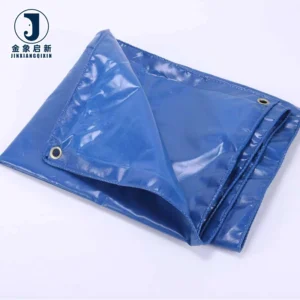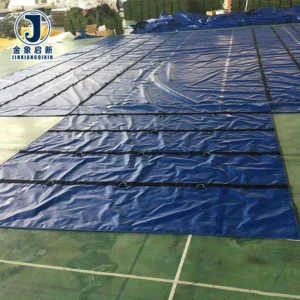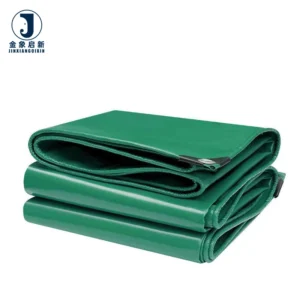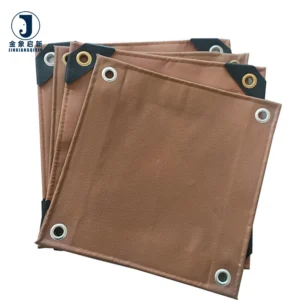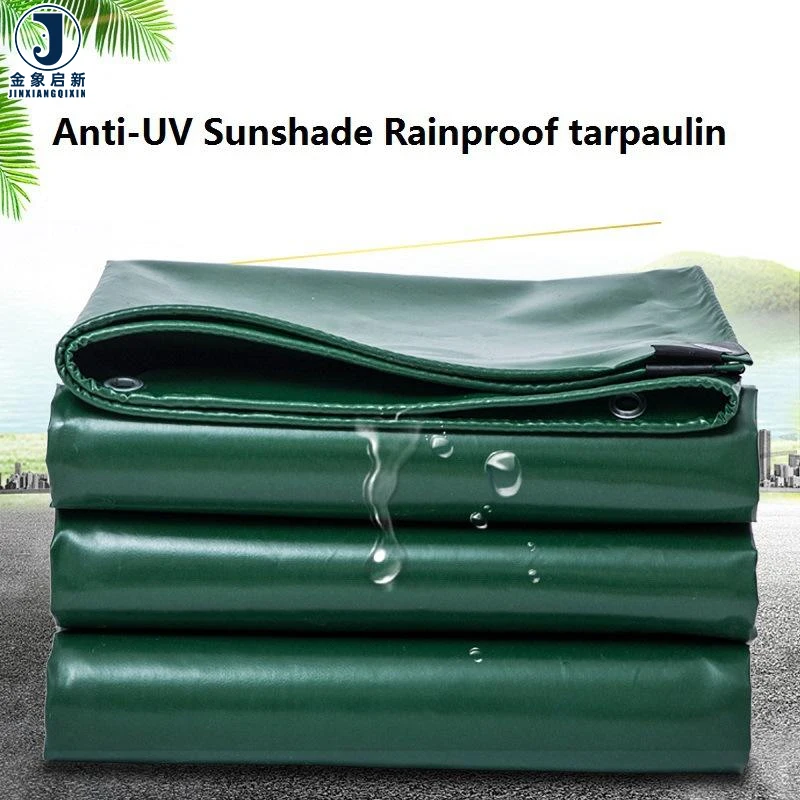
Custom Model Fitment — we cut and weld PVC coated tarpaulin to the exact dimensions of your truck or trailer model, reinforcing eyelets and hems where road loads flex most.
Technical Specifications
| Parameter | Value |
|---|---|
| Product Type | PVC Coated Tarpaulin |
| Base Fabric | 500D-500D polyester |
| Coating Material | PVC (double-sided, polyester base) |
| Weight Range | 450–900 g/m² |
| Waterproof Performance | Water resistant / fully waterproof coated construction |
| Flame Retardant | Available in flame retardant grades — confirm the grade required for your market |
| UV Treatment | Anti-UV treatment available — test basis to be confirmed per order |
| Surface Finish | Smooth and soft surface with a leather-like texture |
| Repairability | Repairable by hot air welding |
| Service Life | Suited to extended outdoor weather exposure |
Application Suitability
| Application | Exposure & Requirement |
|---|---|
| Truck and trailer top covers | Constant road vibration, wind-driven rain, UV exposure, tie-down abrasion at hems |
| Side curtain fabric for articulated trailers | Repeated flexing at load points, lateral wind pressure, contact with cargo edges |
| Flatbed and tipper load covers | Direct weather exposure, mechanical abrasion from uneven loads, high tensile stress at fastening points |
| Machine and equipment covers | Outdoor storage, dust and moisture ingress protection, occasional handling and repositioning |
| Awning and tent fabric | Prolonged UV exposure, wind loading, need for clean appearance and colour consistency |
Why a Generic-Size Cover Fails Where the Load Flexes Most
A PVC coated tarpaulin for truck and trailer must be cut to the specific vehicle model, not to a generic sheet size.
Transport operators who buy off-the-shelf covers routinely find that edges lift at speed, eyelets tear through the hem under crosswind load, and seams split at the exact point where the trailer articulates. The problem is not the fabric itself — it is the mismatch between a standard rectangle and a three-dimensional load profile. When a cover does not sit flush, wind gets underneath, the material flutters, and fatigue concentrates at the tie-down points. [NEED_CITE: fatigue failure in coated fabrics at stress concentration points per ISO 1421 tensile and tear test methods]
A model-fitment approach starts with the trailer dimensions and works back to the roll. The PVC coated tarpaulin is cut to wrap the load with enough overlap for secure fastening, and eyelets are placed to match the vehicle’s tie-down rail spacing. Reinforced hems distribute the load across a wider strip of the 500D-500D polyester base fabric, preventing the pull-through that ends a cover’s working life prematurely.
Cutting to the Vehicle Profile, Not the Catalogue Page
Fleet operators running mixed fleets face a recurring problem: one cover size never fits every trailer. A PVC coated tarpaulin for truck and trailer applications must account for differences in deck height, side rail position, and tailgate clearance between models. We supply fabric cut and welded to the dimensions you confirm against your vehicle drawings, so the cover wraps the load without excess material that flaps or gaps that let water in.
Eyelet spacing is set to match the tie-down rail pattern on your specific trailer, not to a generic interval. Each eyelet is punched through a reinforced hem strip, spreading the tie-down force across a broader area of the 500D-500D polyester base fabric. This matters most on articulated trailers where the cover flexes with every corner and lane change.
Welded Seams That Outlast the Fabric at Flex Points
The most common failure on a truck cover is not the material tearing in the middle of a panel — it is the seam splitting where the load flexes. Stitched seams concentrate stress at each needle hole, and thread degrades under UV exposure long before the PVC coating does. Hot air welding fuses two panels of PVC coated tarpaulin into a single continuous layer, eliminating needle holes and creating a seam whose strength is governed by the coating adhesion rather than the thread tensile rating. [NEED_CITE: hot air weld peel strength requirements for PVC coated polyester per DIN 53354]
For side curtains on articulated trailers, the weld lines run vertically between panels and horizontally at the top and bottom hems. These are the lines that flex thousands of times per journey. A properly welded seam on a 500D-500D base fabric moves with the curtain rather than resisting it, which is why field repairs also rely on hot air welding rather than sewing patches.
Reading the Specification Sheet Beyond the Weight Number
The stated weight of a PVC coated tarpaulin is a starting point, not the full story. A 450 g/m² fabric with a dense 500D-500D polyester weave can outperform a heavier fabric built on a looser base cloth, because tensile and tear resistance depend on how the yarns interlock, not just how much PVC sits on top. The double-sided coating process matters equally: knife-over-roll coating produces a smoother, more uniform layer that welds cleanly, while laminated coating can leave air pockets that weaken the bond at seam lines.
The leather-like surface finish on this material is not cosmetic — a smooth PVC face sheds road grime and resists abrasion from cargo contact better than a textured surface that traps particles. For fleet operators running a uniform livery, the surface consistency also determines how well printed branding holds across multiple covers in the same batch. Anti-UV and flame retardant treatments are available, and the specific grade should be confirmed against the regulatory requirements of the market where the vehicles operate. [NEED_CITE: flame retardant classification standards for transport covers in different regulatory markets]
The Hidden Cost of Specifying on Price Per Kilogram Alone
When a buyer selects a PVC coated tarpaulin based on the lowest cost per kilogram, the savings often disappear at the fabrication stage. A lighter coating weight may pass the scale check but leaves the base fabric insufficiently encapsulated, allowing water to wick through cut edges and weld lines to peel under thermal cycling. Colour variation between rolls in the same shipment becomes visible once covers are installed side by side on a fleet, forcing a reorder to match the livery.
Flame retardant treatment claimed without a supporting test report creates a different risk: the cover passes a visual inspection but fails a site audit, delaying the vehicle’s entry into service. [NEED_CITE: consequences of non-certified flame retardant claims on transport compliance audits] Batch inconsistency and missing documentation cost more in downtime and rework than the margin saved on the initial order.
Why Transport Buyers Source This Fabric Here
Three full production lines and 36 sets of professional equipment give us the capacity to run fleet-volume orders on PVC coated tarpaulin without compressing the coating cure cycle, which is where adhesion failures originate.
A 10-person R&D team handles model-specific pattern cutting and weld line placement, developing samples within days so you can confirm fitment on the actual trailer before we commit to bulk production.
Dedicated QA/QC runs at every production stage, with 100% pre-shipment inspection covering coating weight verification against the stated g/m², weld seam integrity, and colour consistency across every roll in your order.
Custom widths and lengths are produced on the same lines as standard stock, so lead times on model-fitment covers remain practical rather than being pushed to the back of the queue.
ISO and CE certified processes underpin the documentation package that accompanies each shipment, giving fleet compliance officers the paperwork they need without chasing it after delivery.
Documentation & Verification
- Material specification sheet stating base fabric denier, coating type, and confirmed weight per roll
- Pre-shipment inspection record verifying coating weight matches the quoted specification
- Test report for flame retardant and anti-UV treatment where the grade has been confirmed
- Roll packing list with individual roll weights and dimensions for receiving inspection
- Certificate of origin and customs documentation for cross-border fleet supply
Fabrication, Handling & Storage
- Hot air weld temperature must match the PVC coating formulation; test welds on offcuts before setting production parameters
- Reinforced hem strips should be at least double the fabric weight at eyelet positions to prevent pull-through under tie-down load
- Store rolls upright on end caps to avoid flat spots that create visible crease lines when the cover is deployed
- Clean the smooth leather-like surface with mild detergent only; solvent-based cleaners can soften the PVC coating layer
- Field repairs on punctures use hot air welding with matching PVC-coated patches, not adhesive tape
- Lay out patterns across the roll width to minimise offcuts, nesting curved cuts for trailer nose sections within straight panel waste
What We Need to Start Your Enquiry
Share the truck or trailer model designations in your fleet, along with the type of load each vehicle carries and the environmental exposure it faces. If your market requires a specific flame retardant grade or UV test standard, include the reference so we can match the treatment to the regulation. Let us know whether you need finished covers cut and welded to model dimensions, or roll stock in a specified width and colour for your own fabrication.
Frequently Asked Questions
Q: How do I specify the exact dimensions for my truck or trailer model?
A: Provide the vehicle model designation and the cover style you need — top cover, side curtain, or full wrap. We develop a cut pattern from those dimensions and produce a sample for your fitment check before bulk production begins. Eyelet spacing and hem reinforcement are set to match your tie-down rail layout.
Q: What documentation proves the flame retardant treatment is certified?
A: When flame retardant treatment is specified, we supply a test report from a recognised laboratory stating the grade achieved. Confirm the standard required in your market before ordering, as transport compliance requirements vary by country and application type.
Q: Can I order custom colours with batch consistency across multiple covers?
A: Custom colours are produced with a colour reference confirmed by sample approval before the run begins. All rolls in a single fleet order are produced in the same batch to eliminate visible shade variation when covers are installed side by side on adjacent vehicles.
Q: How do welded seams perform compared to stitched seams under load flexing?
A: Hot air welding fuses the PVC coating layers into a continuous bond without needle holes, so the seam flexes with the fabric rather than concentrating stress at stitch points. This is critical on side curtains and top covers where articulation and wind loading cycle the material thousands of times per journey.
Q: What is the typical lead time for custom-sized tarps with eyelets and reinforced hems?
A: Lead times depend on order volume and the complexity of the cut pattern. Sample development is completed within days so you can approve fitment before production scheduling. We confirm the dispatch date at quotation stage once the sample is approved and the roll quantity is locked.