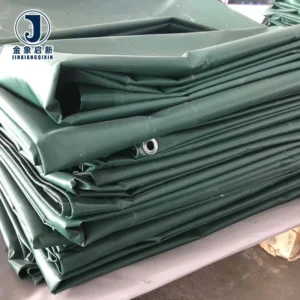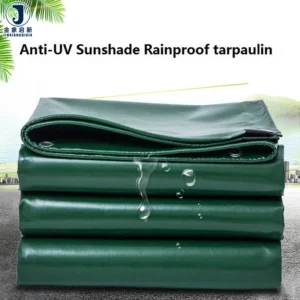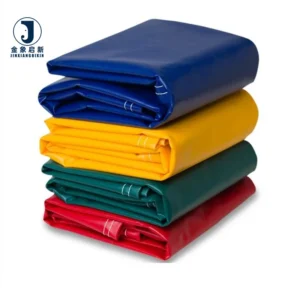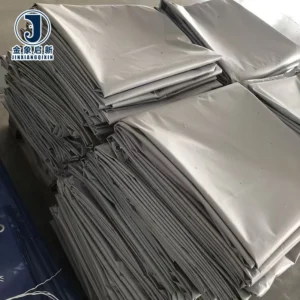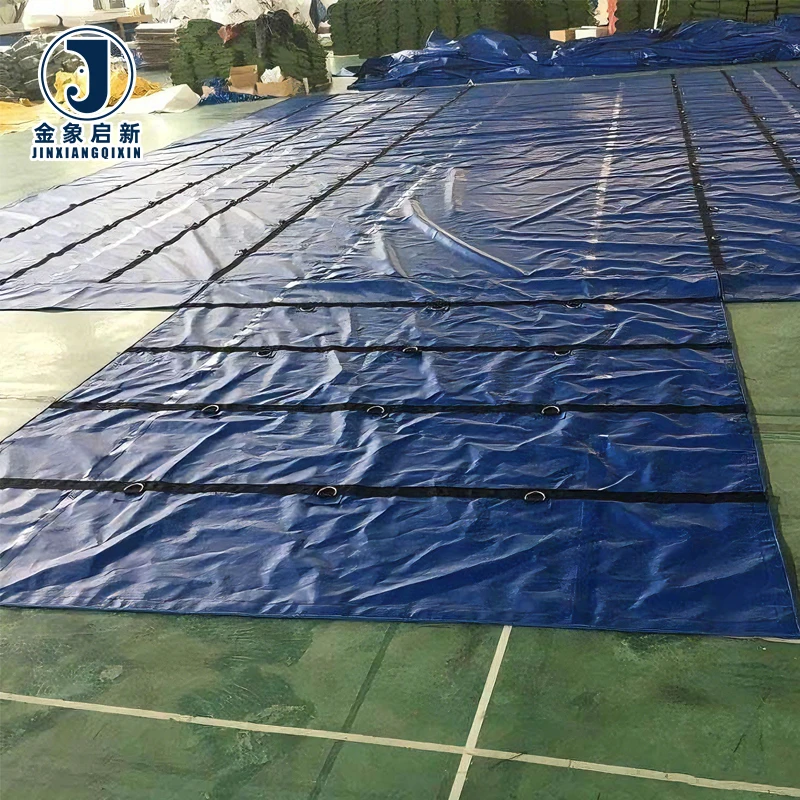
Trailer-Model Fitment — every cover cut against the exact vehicle drawing so the load stays sealed from pickup to delivery, eliminating tailgate gaps and corner slack that generic sizing leaves behind.
Technical Specifications
| Parameter | Value |
|---|---|
| Product Type | PVC Coated Tarpaulin Truck Cover |
| Coating Material | PVC |
| Waterproof Rating | Fully waterproof |
| Flame Retardant | Available (grade not stated) |
| Anti-Static | Available (standard not stated) |
| Anti-Cold Treatment | Available |
| Anti-Mildew Treatment | Available |
| Weather Resistance | Suited to extended outdoor transport exposure |
| Key Features | High strength, multiple treatment options, custom sizing |
Application Suitability
| Application | Exposure & Requirement |
|---|---|
| Flatbed and curtain-side fleet trailers | Wind load at speed, tie-down friction, road spray, UV exposure |
| Heavy machinery transport on open trailers | Abrasion from shifting equipment, weather shielding during transit |
| Construction material haulage | Cement dust, moisture ingress, load flexing at coupling points |
| Long-haul logistics covering high-value cargo | Sustained highway speed, temperature fluctuation, rain ingress prevention |
Why Generic Sizing Costs Fleets More Than Fabric Weight
A cover cut to the exact trailer model eliminates the flapping, slack and tailgate gaps that cause early seam failure on the road.
Many transport operators receive PVC truck tarpaulin for cargo cover orders where the dimensions are close but not matched to the specific trailer profile. The extra half-metre of loose material flaps at highway speed, concentrates stress at the eyelets, and wears through at the hem within weeks. [NEED_CITE: tarpaulin failure modes related to improper sizing on moving vehicles]
Fitment That Starts with the Trailer Drawing
Before production begins, the cover dimensions are set against the specific truck or trailer model drawing — not a generic size chart. This PVC coated tarpaulin truck cover supplier approach means the hem line, eyelet spacing and tie-down reinforcement zones are positioned where your fleet’s securing system actually connects, rather than where a standard template assumes they should be.
Reinforcement Where the Load Moves Most
The areas around tie-down points and flex zones — where the trailer chassis twists and the cargo shifts under braking — receive additional hem reinforcement. Standard covers fail at these stress concentrations first, often tearing at the eyelet before the main fabric shows wear. Configuring reinforcement around the actual tie-down pattern of your trailer extends the working life of the PVC truck tarpaulin for cargo cover substantially. [NEED_CITE: stress concentration points in transport tarpaulin applications]
How Treatment Claims Relate to What Arrives at the Dock
Coated transport fabrics can carry flame retardant, anti-static, anti-cold and anti-mildew treatments, each addressing a different operating condition. However, the gap between a quotation that lists "flame retardant" and a delivery that includes a verifiable test report is where procurement problems surface. Requesting the specific grade and test standard before production ensures the PVC coated tarpaulin truck cover arrives with documentation matching what your compliance requirements demand. The relationship between PVC coating weight and the base fabric denier determines how well these treatments perform over time — a heavier coating holds chemical treatments more uniformly across the surface, while a lighter base fabric may compromise structural performance regardless of coating specification.
Specifying Treatments Without a Test Standard
Ordering a cover with flame retardant or anti-static treatment stated on the invoice but arriving without a grade or test reference creates a documentation gap at the receiving end. Fleet operators in regulated transport corridors may face inspection delays when compliance officers cannot match the claimed treatment to a recognised standard. [NEED_CITE: regulatory inspection requirements for flame retardant transport covers]
Why Procurement from a Specialist Matters
Production runs on dedicated coating lines maintain consistent PVC thickness across the full cover area, which matters when a single truck cover spans several metres and any thin spot becomes the first failure point. The R&D capability covers material selection and custom sizing against vehicle drawings, not just standard roll cutting. QA inspection before dispatch checks eyelet pull-out resistance, seam integrity and dimensional accuracy against the trailer model drawing. Sample development allows operators to verify fitment and treatment documentation on one unit before committing to a fleet order.
The Cost of Skipping Pre-Shipment Verification
Receiving a batch of covers where colour varies between units becomes visible once they are installed on trailers parked side by side at a depot. Eyelet spacing that does not match the trailer’s tie-down rails forces drivers to improvise securing methods, concentrating load on fewer points. Covers that arrive lighter than the quoted specification may not carry sufficient coating weight to hold the stated treatments through a full transport season. [NEED_CITE: pre-shipment inspection impact on coated fabric delivery quality]
Procurement Support Built Around Fleet Orders
Three full production lines and 36 sets of professional equipment support volume orders with reliable scheduling for fleet renewals. A 10-person R&D team handles pattern layout against specific trailer drawings rather than applying standard templates. In-process QA at every stage means seam welds and eyelet settings are checked during production, not only at final inspection. Samples for new trailer models are developed within days, allowing fitment confirmation before bulk production runs. Full documentation packages ship with every dispatch, supporting compliance records across multiple operating regions.
Documentation & Verification
- Material specification sheet stating base fabric, coating type and all treatment options applied to the cover
- Flame retardant test report with grade and applicable standard where treatment is specified
- Pre-shipment inspection record confirming cover dimensions against the trailer model drawing
- Dimensional check report verifying eyelet spacing matches the buyer’s tie-down configuration
- Certificate of origin and customs documentation for cross-border fleet supply
- Packing list detailing roll count, cover identification and dispatch reference
Fabrication, Handling & Storage
- Heat welding parameters must match the PVC coating thickness to achieve full seam adhesion without scorching the base fabric
- Eyelet reinforcement zones should be doubled at tie-down stress points to prevent pull-through under dynamic road loads
- Store rolled covers upright on pallets to prevent creasing that weakens the coating along fold lines
- Allow cold-stored PVC covers to reach ambient temperature before unfolding to avoid coating cracking in low-temperature conditions
- Use mild detergent for cleaning — solvent-based cleaners can degrade the PVC coating surface and compromise treatment performance
What to Include with Your Enquiry
Provide the exact trailer model designation and year, along with photographs showing the current tie-down and securing configuration if available. Specify which treatments are required and the compliance standards your operating region mandates. Confirm whether you need individual covers per vehicle or a fleet quantity with consistent colour across the full order.
Frequently Asked Questions
Q: How do I ensure the cover fits my specific truck or trailer model?
A: We work from the exact trailer model drawing or physical measurement template you provide. Eyelet spacing, hem lines and reinforcement zones are positioned to match your tie-down system rather than a generic template. A sample cover is produced for fitment verification before the bulk order enters production.
Q: What test reports are available for flame retardant and anti-static claims?
A: Test reports are supplied with the specific grade and applicable standard noted. Because different markets require different compliance frameworks, confirm the test standard your operating region mandates before production begins so the correct formulation is applied.
Q: Can eyelet spacing and reinforcement be matched to my tie-down system?
A: Yes. Eyelet placement is configured against your trailer’s tie-down rail or strap anchor positions. Reinforcement patches are added at each eyelet location and at flex zones where load movement concentrates stress during transit.
Q: How do you ensure colour consistency across multiple covers in one order?
A: All covers in a single fleet order are produced from the same coating batch. Pre-shipment inspection includes a colour comparison check across units to verify visual consistency before the covers are packed and dispatched.
Q: What documentation ships with the covers?
A: Each dispatch includes a material specification sheet, test reports for any claimed treatments, a pre-shipment inspection record, packing list and certificate of origin. Documentation is structured to support compliance record-keeping across your fleet operations.