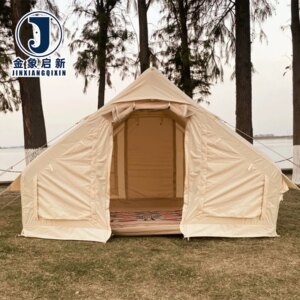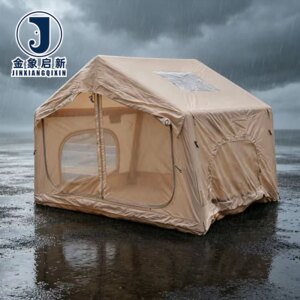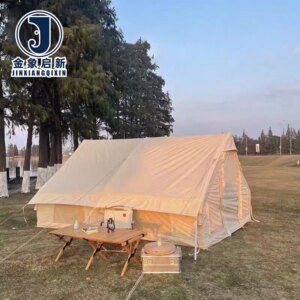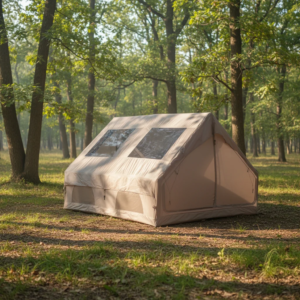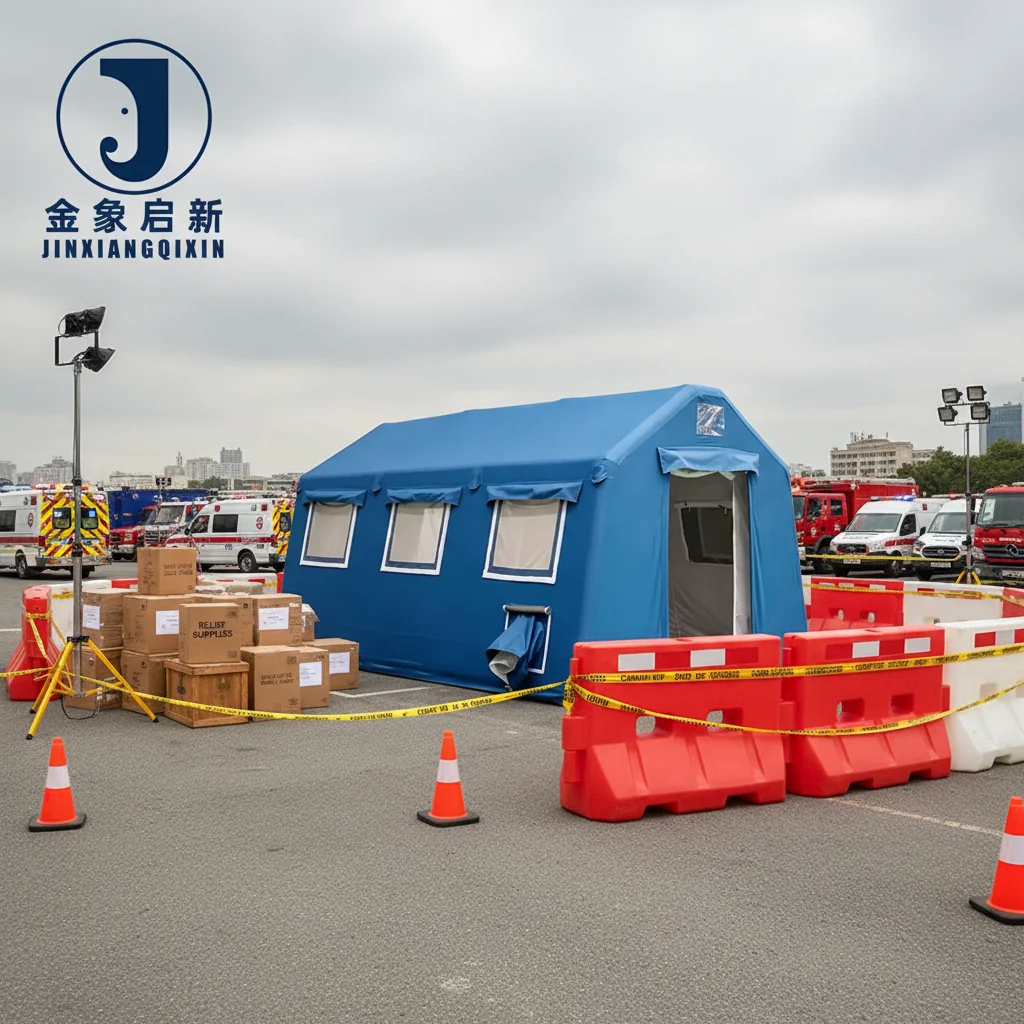
Quick-Deploy PVC Shelter — 3 full production lines and 36 sets of professional equipment enable consistent output of inflatable transport and field shelters with verified airtight performance.
Technical Specifications
| Parameter | Value |
|---|---|
| Product Type | Inflatable Tent |
| Core Material | PVC Tarpaulin |
| Waterproof Rating | >3000mm |
| Season Rating | 4-Season |
| Deployment Mechanism | Quick Automatic Opening |
| Product Form | Family Shelter |
| Construction | Single-layer PVC |
| Customization Service | OEM & ODM (sample customization, pattern printing, material thickness adjustments, custom color matching, logo printing, size modifications) |
| Flame Retardant | Available in flame retardant grades — confirm the grade required for your market |
| UV Treatment | Available with UV stabilisation — request test documentation for your target climate |
| Certifications | ISO9001, ISO14001, ISO45001, CE |
Application Suitability
| Application | Exposure & Requirement |
|---|---|
| Transport fleet roadside emergency shelters | Prolonged UV exposure, heavy rain, rapid deployment at breakdown sites, wind loading |
| Remote construction site personnel facilities | Temperature extremes across seasons, dust and debris ingress, repeated inflation cycles |
| Mobile equipment storage and field command posts | Mechanical abrasion from gear movement, sustained inflation pressure, water pooling on roof panels |
| Temporary event shelters for logistics operations | High foot traffic, varied weather during multi-day events, quick teardown and redeployment |
Why Inflatable Shelters Fail at the Seams During Field Operations
Seam integrity under sustained pressure separates a reliable inflatable shelter from a field liability.
Fleet operators and site managers frequently report that inflatable structures lose pressure within the first deployment cycle, not because the fabric tears but because the heat-welded seams separate at stress concentration points. A PVC inflatable tent for truck and transport applications must maintain internal pressure across temperature swings that cause the membrane to expand and contract repeatedly. When the weld line is narrower than the fabric’s flex zone, the joint fatigues first. [NEED_CITE: heat-welded seam strength testing for PVC coated fabrics per ISO 1421]
Rapid Deployment Without Compromising Structural Integrity
The quick automatic opening mechanism reduces setup time from hours to minutes, a critical advantage for transport fleets responding to roadside incidents or logistics crews establishing temporary field stations. This Inflatable Shelter for fleet and field operations relies on single-layer PVC construction that balances tear resistance with transport efficiency — the shelter folds compactly for vehicle storage and inflates into a rigid, weather-rated enclosure on demand.
Maintaining Airtight Performance Across Temperature Extremes
Four-season deployment means the PVC membrane faces sub-zero stiffness in winter and high-temperature softening in summer. The material formulation must resist low-temperature embrittlement while retaining sufficient rigidity to hold shape when internal pressure fluctuates. Every unit undergoes a 24-hour inflation and pressure test before shipment, verifying that the heat-sealed construction holds under sustained load without seam creep or valve leakage. [NEED_CITE: PVC tarpaulin cold-crack and heat-ageing test methods]
How Waterproof Rating and Coating Thickness Interact in Inflatable Structures
A waterproof rating above 3000mm indicates the PVC coating resists hydrostatic pressure well beyond typical rainfall intensity, but the rating only holds if the coating maintains uniform thickness across welded seams. In inflatable tent construction, the single-layer PVC membrane serves dual duty as both the weatherproof barrier and the structural envelope. Coating adhesion to the base fabric determines whether the membrane delaminates under repeated inflation-deflation cycles, particularly at fold lines where the material creases during packing and transport.
The Hidden Cost of Specifying Without Pressure-Test Documentation
Inflatable shelters that arrive without batch-specific pressure test records create immediate risk for fleet operators who deploy them in emergency scenarios. A unit that holds air in the warehouse may fail at altitude or in temperature extremes if the seam parameters were not calibrated for the specific membrane thickness. Buyers who accept generic compliance statements rather than per-unit test results often discover the gap during the first field deployment, when a deflated shelter at a remote job site becomes a safety and operational failure rather than a simple product return. [NEED_CITE: field failure rates for inflatable structures without pre-shipment pressure verification]
Why Procurement Teams Source This Inflatable Tent Here
Deep process control over PVC coating weight and adhesion ensures the membrane performs consistently across every production run, critical when inflatable shelters must hold pressure under identical conditions unit after unit.
Three full production lines and 36 sets of professional processing equipment support bulk orders with reliable on-time delivery, whether you need a single prototype or a fleet-wide deployment quantity.
A 10-person R&D team handles custom sizing, color matching, and pattern printing directly, eliminating the communication gaps that occur when intermediaries interpret technical requirements.
Dedicated QA and QC staff conduct in-process inspection at every stage, culminating in the 24-hour inflation and pressure test that verifies airtight performance before any unit leaves the facility.
Pre-production samples are developed within days, allowing you to validate material thickness, seam construction, and deployment mechanism before committing to full production volume.
Documentation & Verification
- Material specification sheet stating PVC base fabric, coating weight, and waterproof rating for each batch
- 24-hour inflation and pressure test record attached to every unit before dispatch
- Test documentation for flame retardant or UV treatment grades upon confirmation of target market requirements
- ISO9001, ISO14001, ISO45001, and CE certificates supporting cross-border project compliance
- Pre-shipment inspection report covering seam integrity and valve function
Fabrication, Handling & Storage
- Heat-weld seams using temperature and dwell time parameters matched to the single-layer PVC thickness to prevent seam creep under sustained pressure
- Store deflated shelters in dry, temperature-stable conditions to prevent PVC membrane blocking or surface tackiness between deployment cycles
- Avoid sharp fold lines at identical positions across packing cycles to reduce stress whitening and coating micro-cracks at crease points
- Clean the PVC surface with pH-neutral detergents to preserve coating integrity and maintain the waterproof rating above 3000mm
- Repair minor punctures with compatible PVC adhesive patches applied to deflated, clean surfaces before re-inflation
What We Need to Quote Your Inflatable Shelter Requirement
Provide the intended deployment environment — climate zone, expected wind loads, and whether the shelter will remain inflated for extended periods or undergo daily deflation. Confirm your target market’s fire safety or regulatory requirements so we can specify the correct flame retardant grade. Indicate the dimensions, quantity, and whether you need custom color matching or logo printing, and whether a pre-production sample is required before bulk commitment.
Frequently Asked Questions
Q: What customization options are available for size, color, and branding?
A: OEM and ODM services cover custom dimensions, material thickness adjustments, color matching, logo printing, and pattern printing. Our R&D team develops a pre-production sample reflecting your exact specifications, allowing you to validate the material, seam construction, and deployment mechanism before authorising bulk production.
Q: How is waterproof and airtight performance verified before shipment?
A: Every unit undergoes a 24-hour inflation and pressure test at the factory. A batch-specific inspection record documenting seam integrity, valve function, and pressure retention is attached to each shelter before dispatch, giving you verifiable evidence that the unit meets the stated waterproof rating above 3000mm.
Q: What certifications support compliance for international project requirements?
A: Production is certified to ISO9001, ISO14001, and ISO45001, with CE marking for applicable markets. For flame retardant or UV stabilisation requirements, confirm the specific grade or test standard your target market mandates so we can supply the corresponding test documentation with your order.
Q: Can samples be produced before placing a bulk order?
A: Yes. Standard samples are developed within 7 to 10 working days, while customised samples requiring specific thickness, color, or printing take 10 to 15 working days. The sample approval step ensures the final production matches your operational requirements for deployment speed and weather performance.
Q: What is the typical production lead time for custom specifications?
A: Standard orders are completed within 15 to 20 working days. Large-volume or highly customised orders requiring extensive pattern printing, non-standard sizing, or specific treatment grades typically require 25 to 30 working days, confirmed at the quotation stage before production begins.