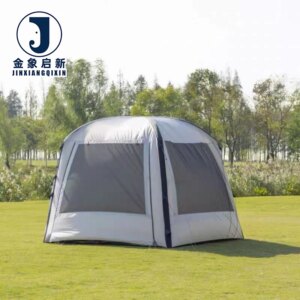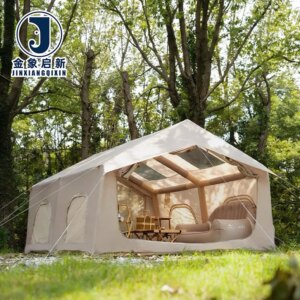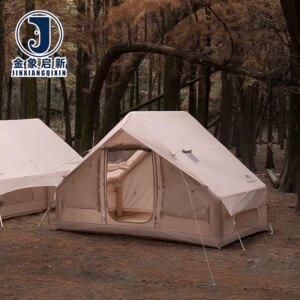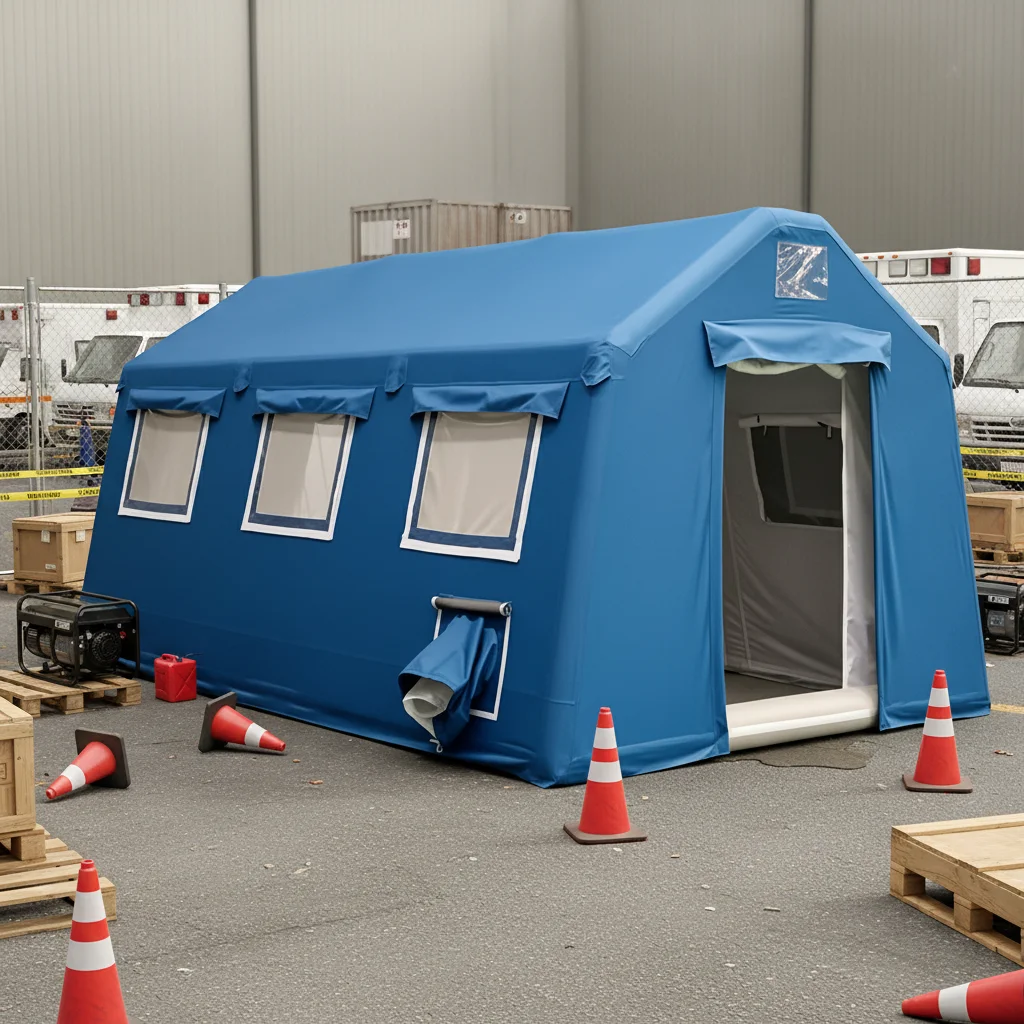
Proven Coating Process Control — Nearly 30 years focused on PVC coated fabric with deep adhesion and weight consistency verified at every production stage for inflatable shelter applications.
Technical Specifications
| Parameter | Value |
|---|---|
| Product Type | Inflatable Tent |
| Core Material | PVC tarpaulin |
| Product Forms | Single layer construction, extended type |
| Key Performance | Waterproof, UV-resistant (test basis not stated), quick automatic opening |
| Season Rating | Four-season |
| Customization Service | OEM & ODM including sample customization and pattern printing |
| Certifications | ISO9001, ISO14001, ISO45001, CE |
Application Suitability
| Application | Exposure & Requirement |
|---|---|
| Fleet staging yards and depot equipment shelters | Prolonged sun exposure, wind load, repeated inflation cycles, ground abrasion |
| Roadside emergency response and mobile command centers | Rapid deployment under time pressure, all-weather resistance, transportability |
| Temporary transport corridor weather covers and loading dock extensions | Continuous moisture exposure, forklift and vehicle proximity, UV degradation risk |
Why Automatic Inflation Matters More Than Fabric Weight Alone for Fleet Shelters
Setup speed and air-holding integrity determine whether a shelter actually protects the load before weather moves in.
Fleet operators and transport equipment builders often specify inflatable shelters by fabric weight alone, assuming a heavier PVC tarpaulin guarantees field performance. In practice, an inflatable tent that loses pressure at the seams or takes a full crew to rig wastes dock time and leaves cargo exposed during the critical window between staging and dispatch. The automatic opening mechanism built into this PVC inflatable tent for transport and fleet operations reduces labor to a single operator, while the welded single-layer construction is designed to maintain internal pressure across temperature swings encountered at depot yards [NEED_CITE: tensile and air-retention test methods for inflatable coated fabric structures].
Rapid Deployment Without Compromising Load Protection
Transport fleet operations run on tight turnaround schedules where every minute of dock occupancy counts. This PVC inflatable tent for transport and fleet use features a quick automatic opening mechanism that eliminates the need for multi-person rigging crews at staging yards. The single-layer PVC tarpaulin construction balances structural rigidity when inflated with manageable packed weight for repositioning across depot bays or loading dock extensions.
Four-Season Weather Resistance for Year-Round Fleet Operations
Fleet staging areas and emergency response sites do not shut down for weather. The waterproof PVC tarpaulin core prevents moisture ingress that can damage sensitive cargo or electronic equipment stored inside temporary shelters. UV-resistant treatment is applied to the fabric surface to address prolonged sun exposure at open-air depots — confirm the specific UV test standard required for your market and application.
Decoding the Material Choices Behind Inflatable Shelter Performance
Single-layer PVC tarpaulin construction for inflatable structures must balance two competing demands: sufficient rigidity to hold shape under internal air pressure, and enough flexibility to pack and transport without cracking. The coating weight and base fabric density together determine how well the material resists puncture from ground debris at staging yards while maintaining the air seal at welded seam lines. Coating adhesion directly affects whether the fabric delaminates after repeated inflation and deflation cycles — a failure mode that appears first at high-stress fold points rather than across the panel face [NEED_CITE: coating adhesion test methods for PVC tarpaulin per ISO 2411]. Waterproof performance in inflatable shelters depends as much on seam welding quality as on the base fabric specification.
The Hidden Cost of Specifying Inflatable Shelters on Weight Alone
Procurement teams that select inflatable shelters based only on stated PVC weight often encounter problems once units arrive at the depot. Fabric that measures lighter than the quoted specification cannot hold the same internal pressure, leading to sagging roof panels that collect rainwater and create collapse risk under wind load. Welded seams that fail before the fabric itself does are a recurring issue where heat-bonding parameters are not matched to the specific coating formulation [NEED_CITE: heat welding parameters for PVC coated fabrics]. Batch-to-batch colour variation across multiple shelters installed side by side at a fleet yard creates visible inconsistency that reflects poorly on operator branding — a problem that originates in pigment dosing control during coating rather than in the base fabric.
Why Source This PVC Inflatable Tent from Jinan Jinxiang
Three full production lines and 36 sets of professional processing equipment support batch volumes required for multi-site fleet deployments without splitting orders across subcontractors. A 10-technician R&D team handles size adjustment and pattern printing for OEM requirements, developing custom samples within days rather than weeks. Dedicated QA and QC staff inspect every production stage, with 100% pre-shipment inspection verifying that each inflatable tent meets the stated material and dimensional specification before dispatch. ISO9001, ISO14001, ISO45001, and CE certifications underpin the quality management system for compliance-sensitive procurement. Deep process control over PVC coating weight and adhesion, built through nearly 30 years of coated fabric production, addresses the seam and delamination failures that generic suppliers cannot consistently prevent.
Documentation & Verification
- Material specification sheet confirming PVC tarpaulin grade, weight, and coating type per roll
- UV and waterproof test reports supplied on request for engineering validation
- Pre-shipment inspection record with batch-specific performance and dimensional checks
- ISO9001, ISO14001, ISO45001, and CE certificates for fleet compliance audits
- Certificate of origin and customs documentation for cross-border shipment
Fabrication, Handling & Storage
- Weld single-layer PVC tarpaulin seams at temperatures matched to the specific coating formulation to prevent delamination
- Store deflated inflatable tent flat or loosely rolled to avoid permanent crease marks in the PVC coating
- Use mild detergent for cleaning; solvent-based cleaners may degrade the waterproof PVC surface treatment
- Inflate to recommended pressure only; over-inflation stresses welded seams beyond their rated holding capacity
- Inspect welded seam lines after each deployment cycle for early signs of coating separation or air leakage
Request a Specification Match for Your Fleet Application
Provide the intended deployment scenario — whether staging yard shelter, roadside command center, or loading dock extension — along with the target footprint dimensions and local climate exposure conditions. Confirm any compliance standards your market requires for UV resistance or fire classification so we can align the material specification. Indicate whether OEM pattern printing or custom colour matching to fleet branding is needed, and whether you require finished units or fabric rolls for in-house fabrication.
Frequently Asked Questions
Q: How is UV-resistant performance verified and what test basis applies?
A: UV-resistant treatment is applied during the PVC tarpaulin coating process. The specific test standard and exposure duration depend on your market requirements. Request the applicable test report for engineering validation before approving bulk production, and confirm which UV classification your local regulations or site specifications mandate.
Q: Can the tent be sized to fit a specific trailer bay or yard footprint?
A: OEM and ODM customization covers dimensional adjustment to match trailer bay widths, depot spacing, or loading dock extensions. The 10-technician R&D team develops size-adjusted samples for approval before mass production, ensuring the inflatable structure fits the exact footprint your fleet operation requires.
Q: What documentation accompanies each shipment for fleet compliance audits?
A: Each shipment includes a material specification sheet, pre-shipment inspection record, ISO9001, ISO14001, ISO45001, and CE certificates, plus a roll packing list and certificate of origin. UV and waterproof test reports are available on request to support engineering and procurement compliance documentation.
Q: How are batch-to-batch color and material consistency controlled across multiple shelters?
A: Dedicated QA and QC staff monitor pigment dosing and coating weight at every production stage. The 100% pre-shipment inspection verifies consistency across all units in an order, reducing the risk of visible colour variation when multiple inflatable tents are installed side by side at fleet staging yards.
Q: What is the sample development lead time for custom dimensions and printed branding?
A: Sample development for custom sizing and OEM pattern printing is completed within days, not weeks. The R&D team prepares the sample using the same PVC tarpaulin coating line and welding equipment used for bulk production, so approved samples accurately represent the final manufactured product.