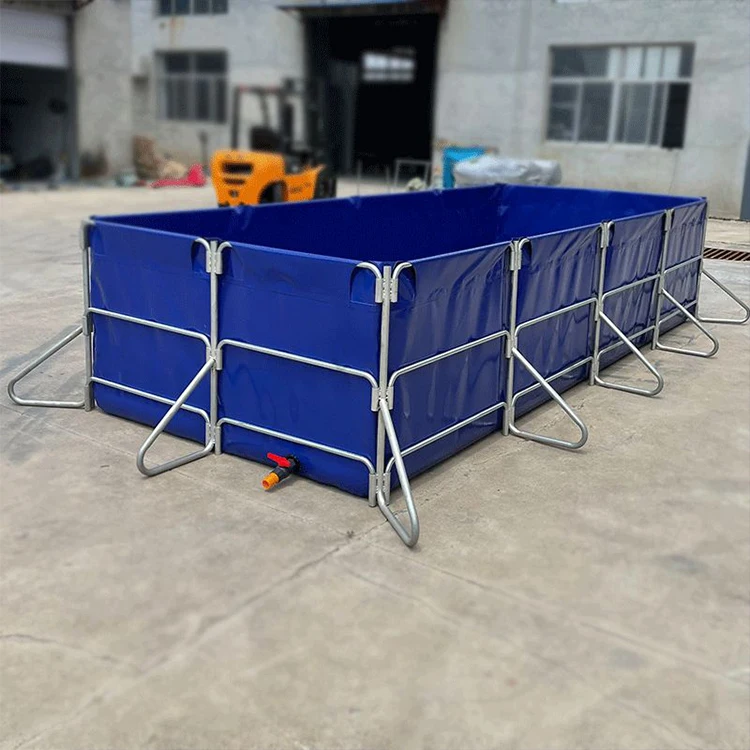
Verified GSM Coating Expertise — Nearly 30 years focused on PVC coated fabric gives us deep process control over coating weight and adhesion for aquaculture pond liners, ensuring material integrity under continuous water exposure.
Technical Specifications
| Parameter | Value |
|---|---|
| Product Type | PVC Tarpaulin Pond Liner |
| Coating Material | PVC |
| Shape Options | Circular / Rectangular / Custom |
| Foldable Design | Yes |
| Application Form | Pre-cut pond liner / fish tank liner |
| Surface Finish | Available in glossy or matte finish |
| Edge Reinforcement | Available with reinforced hems and eyelets |
| Treatment Options | Anti-UV and flame retardant grades available — confirm the grade required for your market |
| Certifications | ISO, CE |
Application Suitability
| Application | Exposure & Requirement |
|---|---|
| Aquaculture fish ponds | Permanent water contact, biological growth resistance, continuous submersion, pond floor abrasion |
| Shrimp farming containment | Saline water exposure, high UV in tropical climates, puncture risk from substrate |
| Backyard ornamental ponds | Aesthetic appearance, foldable for seasonal storage, UV exposure |
| Agricultural water storage | Long-term outdoor exposure, temperature fluctuation, mechanical stress during filling |
| Aquaculture transport tanks | Road vibration and flex during transit, tie-down stress at fittings, rapid deployment and folding |
When Quoted Weight Does Not Match What Arrives at Your Pond Site
The only way to confirm a PVC tarpaulin fish pond liner matches your order is to verify GSM at the coating stage and again before shipment.
Pond liner arrives at the farm, gets unrolled, and something feels off. The material seems lighter than the sample approved weeks earlier. Welded seams that should hold under water load start showing stress marks during the first fill. This happens when stated GSM on the quotation is not verified against actual coating weight delivered. For aquaculture operators, a liner that underperforms means water loss, stock risk, and an unplanned shutdown of production ponds. [NEED_CITE: coating weight verification methods for PVC tarpaulin per industry QA standards]
Custom Cut to Your Exact Pond Frame
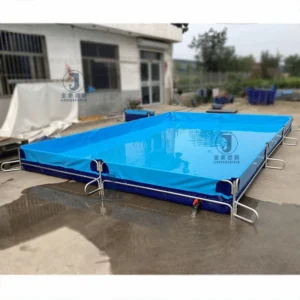
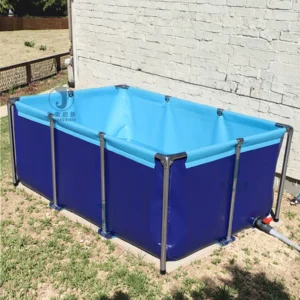
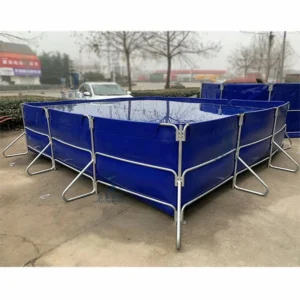
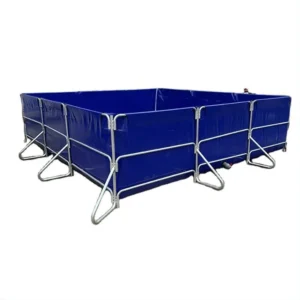
Generic-size pond covers that do not match your actual tank frame or excavated pond dimensions lead to pooling at edges, stress tears at corners, and wasted material trimmed on-site. Our PVC Tarpaulin Pond Liner is sized to your containment structure, whether that is a standard circular aquaculture tank or a rectangular pond built into existing farm infrastructure. Every cut is confirmed against your dimensional drawing before production begins, eliminating fit issues at installation. This matters especially for transport-mounted tanks where a liner that is even slightly off-dimension causes flex failures during road transit.
Welded Seams Engineered for Water Load and Flex Points
Heat-welded seams on a pond liner face constant pressure from water load and mechanical flex where the fabric folds or meets a rigid frame. The seams must hold as well as the base fabric itself, because a seam failure under water means immediate containment loss. Our welding process targets corner zones and high-stress fold areas with reinforced passes, so the liner withstands both static water pressure and dynamic movement from transport vibration or wind-driven surface agitation. [NEED_CITE: welded seam integrity testing for PVC coated fabric under continuous water load]
Reading the Specs That Actually Matter for Pond Liners
GSM alone tells only part of the story. A heavier coating weight gives better puncture resistance against sharp substrate or shell debris on the pond floor, but the base fabric denier and weave density determine how well the liner resists tear propagation once a puncture starts. The coating method — whether knife-over-roll, lamination, or calendering — directly affects how well heat-welded seams bond and how the liner behaves during folding and unfolding on-site. Surface finish choice between glossy and matte influences how easily biofilm and algae can be cleaned between production cycles. Buyers specifying pond liners for saline or chemically treated water should confirm coating formulation compatibility with the water chemistry at their site.
What Happens When Specification Choices Fall Short
Selecting a pond liner grade without matching it to actual site conditions creates failures that surface weeks or months after installation. A liner deployed in high-UV tropical aquaculture without verified UV treatment will show surface degradation and embrittlement at fold points, leading to seam cracks during routine handling. Batch colour inconsistency across multiple pond liners installed side by side becomes visible once the ponds are filled and operational, creating an aesthetic issue for commercial operations that host site visits. Welded seams that receive insufficient heat penetration during fabrication become the first failure point when water load flexes the fabric at corner zones. [NEED_CITE: common failure modes in PVC pond liner installations related to specification mismatch]
Why Procurement Teams Choose This Source
Three full production lines and 36 sets of professional equipment support bulk pond liner orders with reliable on-time delivery, even when custom dimensions require dedicated production runs. A 10-person R&D team handles material selection, custom sizing, and sample development — turning a new pond design into a production-ready liner specification within days. Dedicated QA and QC inspection at every production stage means coating weight, seam integrity, and dimensional accuracy are checked before the liner leaves the factory. ISO and CE certification underpins the documentation package, so customs clearance and site compliance requirements are covered. Deep process control over coating weight and adhesion, built over nearly 30 years of PVC coated fabric production, ensures the liner you receive matches the material you specified.
Documentation & Verification
- GSM and thickness confirmed on pre-shipment inspection record per roll
- Custom pond dimensions verified against approved drawing before fabrication
- UV and flame retardant test reports included where applicable treatments are specified
- Roll packing list, certificate of origin, and customs documentation supplied with dispatch
- Material specification sheet stating base fabric denier, weave density, and coating formulation
Fabrication, Handling & Storage
- Heat-weld seams at manufacturer-recommended temperature and speed settings to match PVC coating formulation
- Reinforce eyelet zones and tie-down points with patch overlays before installing liner into transport tanks
- Store folded pond liners in shaded, dry conditions to prevent UV degradation before deployment
- Avoid sharp creasing during container transit by using interleaving material between folds
- Clean liner surface with mild detergent compatible with PVC coating — avoid solvent-based cleaners
- Field repairs to punctures use compatible PVC patches with heat or adhesive bonding matched to coating weight
Preparing Your Pond Liner Inquiry
To receive an accurate specification and lead time for your PVC tarpaulin fish pond liner, share your pond or tank dimensions including diameter or length and width, depth, and whether the frame is rigid or flexible. Specify the water type — fresh, brackish, or saline — and whether the liner will be stationary or subject to transport vibration. Indicate any treatment requirements such as UV resistance grade or flame retardant classification needed for your market, along with target colour and whether branding or pattern printing is required.
Frequently Asked Questions
Q: How are pond liner dimensions verified against my tank or trailer frame before production?
A: We require a dimensional drawing or measured template of your containment structure. Custom liner dimensions are confirmed against this reference before fabrication begins, and a pre-shipment inspection record verifies final cut sizes match the approved specification.
Q: What seam construction is used to prevent leaks at high-stress fold and flex points?
A: Heat-welded seams with reinforced passes are applied at corner zones and areas where the liner folds over rigid frame edges. This targets the points where water load and flex stress are highest during operation or transport.
Q: Can the liner be supplied with reinforcement patches at tie-down and fitting locations?
A: Yes. Reinforcement patches can be added at specified eyelet, tie-down, and pipe fitting locations during fabrication. The patch material and bonding method are matched to the PVC coating weight of the liner for consistent weld strength.
Q: How is batch colour and material consistency maintained across repeat orders?
A: Colour reference standards are set during sample approval and maintained through controlled coating formulation and process parameters. Pre-shipment inspection checks roll-to-roll consistency so that liners installed side by side match visually.
Q: What packaging method protects folded liners from crease damage during container transit?
A: Folded pond liners are packed with interleaving protection between folds and secured to prevent shifting. The packing method is documented on the roll packing list supplied with each shipment.