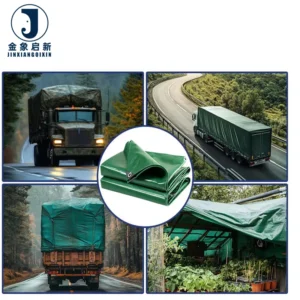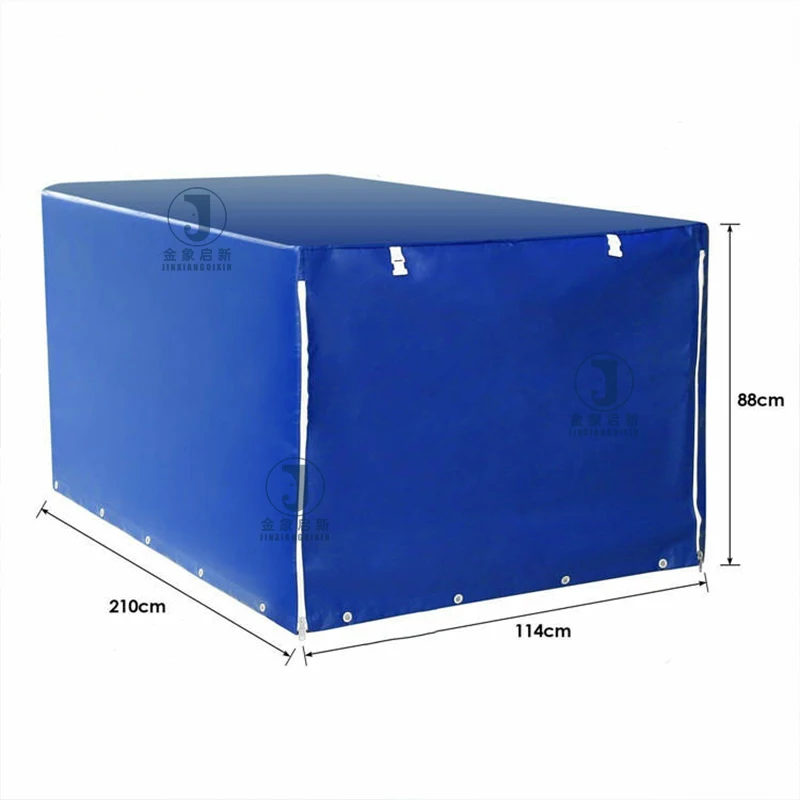
Coating Weight Control — Nearly 30 years of coated fabric production with dedicated QA at every stage, ensuring each PVC truck cover grade matches its quoted GSM before it leaves the line.
Technical Specifications
| Parameter | Value |
|---|---|
| Product Type | PVC Truck Cover |
| Material | PVC + High-strength polyester mesh fabric |
| Weight (GSM) | 350gsm, 420gsm, 500gsm, 550gsm, 600gsm, 750gsm (confirm grade for your application) |
| Total Thickness | 0.32mm, 0.35mm, 0.4mm, 0.45mm, 0.5mm, 0.65mm |
| Coating Method | Laminated technology & Hot-melt Coating technology |
| Coating Material | PVC (double-sided) |
| Base Fabric | High tenacity polyester yarns |
| Color | Blue, Red, Yellow, Light blue, Grey (Customized) |
| Finish Product Size | Custom items as per customer’s needs or sold by inventory |
| UV Treatment | UV treated material (test basis not stated in source — request test report) |
| Flame Retardant | Flame-retardant type customizable (grade not stated — confirm grade required for your market) |
| Anti-Static | Anti-static treatment available (grade not stated — verify compliance for your site) |
| Trailer Cover Feature | Hot welded hem at the bottom; excellent waterproof performance |
| Eyelet & Hem Options | Eyelets, zipper, velcro as option |
| Key Features | Cold crack resistance, anti-mildew, waterproof, sunproof, best color fastness, outstanding tearing strength for welding |
Application Suitability
| Application | Exposure & Requirement |
|---|---|
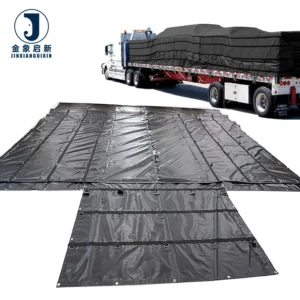
| Open trailer load cover | Road debris impact, constant wind flex, rain and UV exposure over long-haul routes |
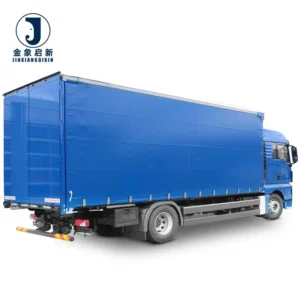
| Side curtain systems on articulated trailers | Repeated lateral flexing at curves, abrasion against load edges, tie-down strap contact |
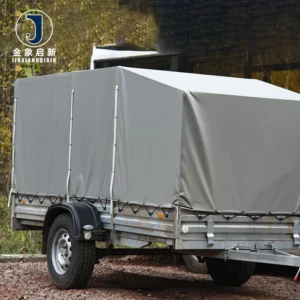
| Fleet replacement covers for specific truck models | Model-specific fitment to avoid excess fabric, matching existing fleet color and hardware layout |
| Transport equipment builder integration | OEM fitment requiring consistent roll-to-roll GSM and precise cut dimensions |
Why a Generic-Size PVC Truck Cover Costs Your Fleet More Than You Think
A cover cut to a standard rectangle will never fit a specific trailer the way a patterned cover does.
Fleet operators routinely order PVC truck cover sheets to a generic length and width, then discover the excess fabric flaps in transit, abrades against itself at speed, and leaves gaps where the tailgate meets the bed. The material bunches near the cab and pulls short at the rear corners. Cargo gets wet at exactly the points that matter. [NEED_CITE: tarpaulin fitment and wind-induced abrasion on open trailer loads] We pattern each cover to the vehicle model, so the PVC truck cover for fleet and trailer use sits flat under tie-down straps without loose material to catch wind or drag on the load.
Sizing Covers to the Trailer, Not the Other Way Around
Every trailer model has a distinct profile — the cab clearance height, the rear door swing radius, the side rail profile, and the tie-down rail position all vary. Our PVC truck cover patterns are developed from the vehicle model reference, not from a generic cut sheet. This means the eyelets land where your strap hooks are, the hem sits flush against the side rail, and there is no loose fabric to flap on the highway.
Welded Hems Where the Load Shifts Most
The hem of a truck cover flexes every time the load settles or the trailer articulates. A stitched hem introduces needle holes through the waterproof layer and relies on thread that degrades under UV exposure. Our hot-welded hem construction fuses the PVC coating layers together at the bottom edge and at high-stress zones, so the seam strength tracks with the fabric itself rather than failing first. [NEED_CITE: tensile and tear test methods for coated fabrics per ISO 1421]
Reading the GSM and Thickness Grades for Your Route
The six available weight grades — 350gsm, 420gsm, 500gsm, 550gsm, 600gsm, and 750gsm — correspond to thickness values from 0.32mm through 0.65mm. GSM alone tells you the total weight per square meter, but the base fabric denier and weave density determine how that weight translates to tensile and tear resistance. A 500gsm cover built on a high-density base may outperform a 550gsm cover on a looser weave in tear propagation resistance. The coating method also matters: hot-melt coating achieves higher adhesion strength between the PVC layers and the polyester base, which directly affects how well the fabric performs at welded seams. For long-haul highway routes with high wind loads, the heavier grades provide additional puncture margin against road debris and shifting cargo edges. Lighter grades serve well for urban distribution where covers are removed and refitted frequently and weight savings matter.
What Happens When Weld Parameters Miss the Mark
Hot welding PVC-coated polyester requires matching the temperature, pressure, and dwell time to the specific coating formulation and thickness. When the heat input is too low, the weld peels apart under tension because the coating layers never fully fused. When it is too high, the polyester base fabric weakens at the heat-affected zone, and the tear starts right beside the weld line. [NEED_CITE: weld strength versus parent fabric strength in PVC coated polyester] This is why we run weld integrity checks on every PVC truck cover before it ships — a seam that fails before the fabric does is a manufacturing fault, not a material limitation.
What Happens When Color Varies Between Covers in One Fleet Order
A fleet that orders twelve replacement covers in the same color expects them to match when installed side by side on the truck line. If the coating batch varies between production runs, the difference becomes visible under daylight once the covers are hung. We control this by running the full fleet order from a single coating batch where possible, and by comparing each roll against the approved color reference before cutting begins.
Why Fleet Operators Source This PVC Truck Cover Here
Three full production lines and 36 sets of professional equipment mean we handle bulk fleet orders without splitting them across subcontractors. The 10-person R&D team develops pattern templates for new trailer models and runs sample production before your full order goes to the line. QA inspection runs at every production stage, with 100% pre-shipment checks covering dimensional accuracy against the trailer model pattern. Material specification sheets confirm GSM and base fabric details for each grade so you can verify what you receive matches what was quoted. [NEED_CITE: ISO and CE certification requirements for coated fabric manufacturers]
Documentation & Verification
- Material specification sheet stating GSM, base fabric, and coating weight per grade ordered
- Pre-shipment inspection record with dimensional check against your trailer model pattern
- UV test report provided for UV-treated grades where applicable
- Flame-retardant certification documentation matching the grade specified at inquiry
- Roll packing list with batch reference for color traceability across fleet orders
Fabrication, Handling & Storage
- Hot-weld hem zones using temperature settings matched to the 0.32mm–0.65mm thickness range of the grade selected
- Position eyelets through reinforced PVC patches to distribute tie-down load across the polyester mesh base
- Store rolls flat or on racks to prevent crease marks in the PVC coating surface
- Allow cold-stored covers to reach ambient temperature before unfolding to avoid cold crack stress
- Clean with mild detergent only — solvent-based cleaners attack the PVC plasticizer layer
How to Specify Your PVC Truck Cover Order
Provide the trailer make, model, and year so we can build or confirm the pattern template. Tell us the route climate and load type so we can recommend the appropriate GSM grade from the available range. Specify the eyelet spacing, zipper placement, and any velcro closure positions to match your existing tie-down hardware. If you need a specific fleet color, share a reference sample or RAL code for us to match.
Frequently Asked Questions
Q: How do you ensure the cover fits my specific trailer model?
A: We build a pattern template from your trailer make, model, and dimensions before cutting. The template accounts for cab clearance, side rail profile, door swing, and tie-down rail position. A sample cover can be produced for fitment verification before the full fleet order runs on the production line.
Q: What GSM grade is right for my route climate and load type?
A: Heavier grades like 600gsm and 750gsm suit long-haul highway routes with high wind exposure and heavy cargo edges. Lighter grades like 350gsm and 420gsm work for urban distribution with frequent cover handling. Share your typical route and load details so we can recommend from the available range.
Q: How are welded seams reinforced at high-flex points?
A: Hot welding fuses the PVC coating layers at hem and flex zones without needle holes. The weld temperature, pressure, and dwell time are set to the specific coating thickness of the grade ordered, so the seam integrity matches the parent fabric rather than becoming the weak point.
Q: What eyelet spacing and hardware options are available?
A: Eyelet placement is configured to your trailer tie-down rail position and strap spacing. Zippers and velcro closures can be positioned for access hatches or partial load opening. All hardware positions are confirmed on the pattern template before production begins.
Q: How do you control color consistency across multiple covers in one fleet order?
A: We schedule the full fleet order from a single coating batch where possible and compare each roll against the approved color reference before cutting. The pre-shipment inspection record notes the batch reference so any future reorders can be matched back to the original run.