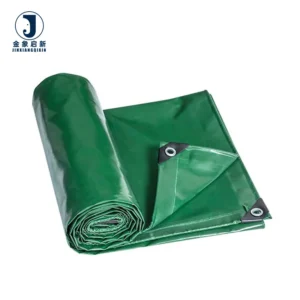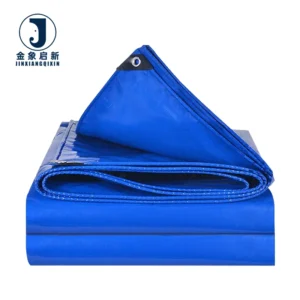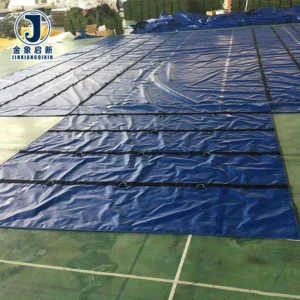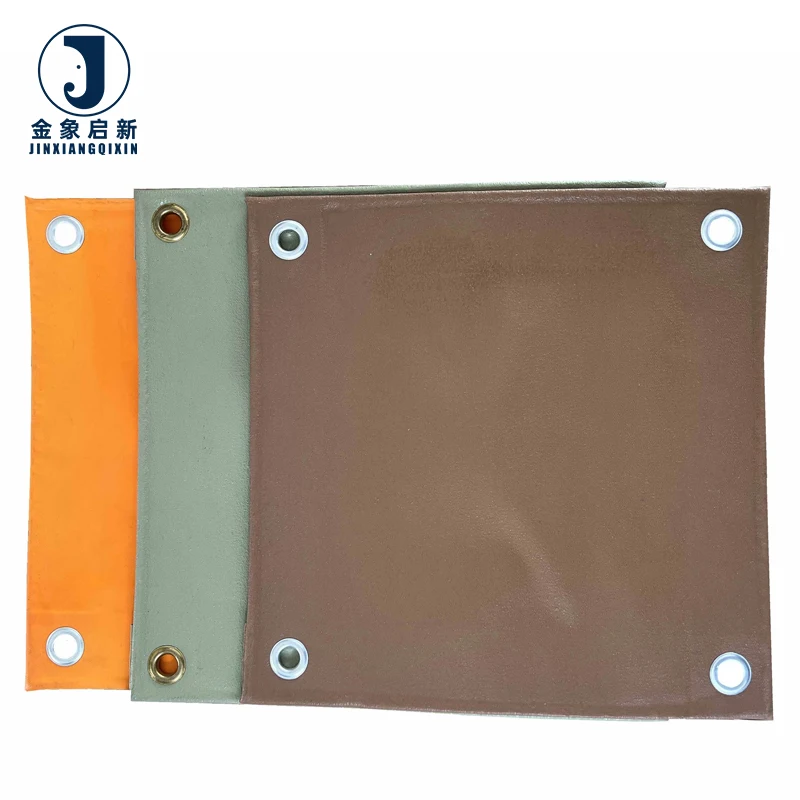
Precision Fitment Engineering — Every PVC Coated Tarpaulin for Truck and Transport application is sized to specific trailer models, with reinforcement mapped to actual flex and tie-down load paths.
Technical Specifications
| Parameter | Value |
|---|---|
| Product Type | PVC Coated Tarpaulin |
| Coating Material | PVC |
| Waterproof | Yes, fully coated construction |
| Flame Retardant | Available in flame retardant grades — confirm the grade required for your market |
| Anti-Static Treatment | Available upon request (specify market compliance requirements) |
| Anti-Cold Treatment | Available for low-temperature operating environments |
| Anti-Mildew Treatment | Available for humid or tropical transport routes |
| Weather Resistance | Rated for extended outdoor road exposure (1–3 years typical service window) |
| Custom Sizing | Cut to specific truck and trailer model dimensions |
Application Suitability
| Application | Exposure & Requirement |
|---|---|
| Flatbed trailer load covers | Constant highway wind load, UV exposure, tie-down tension at corners, road debris impact |
| Curtain-side truck bodies | Repeated lateral flexing, abrasion against frame rails, daily manual or mechanical handling |
| Equipment transport wraps | Puncture risk from sharp edges, moisture ingress during multi-day transit, securement strap pressure |
| Box trailer top covers | Standing water drainage, thermal cycling across seasons, long-term UV degradation resistance |
Why Generic-Size Covers Fail on Moving Loads
A cover that does not match the trailer dimensions fails at the stress concentration points first — corners, eyelets, and where the load flexes most.
Fleet operators frequently replace truck covers long before the fabric itself reaches end of life. The failure pattern is predictable: a generic-size PVC Coated Tarpaulin for Truck and Transport use either hangs loose and flaps in highway wind, causing abrasive wear against the load, or stretches too tight across the frame, pulling eyelets free at the corners. [NEED_CITE: tensile and tear test methods for coated fabrics per ISO 1421] Neither scenario reflects a material deficiency — both are fitment errors that occur when the cover is sized to a standard dimension rather than the actual trailer profile.
Fitment by Trailer Model Rather Than Standard Dimensions
Flatbed, curtain-side, and box trailers each present a distinct geometry. A PVC Coated Tarpaulin for Truck and Transport use must account for roof bow height, side rail profile, and tailgate clearance. When the cover is cut to the trailer’s actual dimensions with tolerance for strap tensioning, the load sits uniformly across the fabric surface without pooling water or creating drag-inducing billows.
Reinforcement at the Points That Actually Take the Load
Tie-down straps concentrate force at specific eyelet positions, while corners and seams near the trailer bed endure repeated abrasion during transit. Reinforcing these zones — rather than applying uniform edge binding — extends the interval between cover replacements for fleet operators running daily long-haul routes.
How Base Fabric Density and Coating Weight Interact
The tensile performance of a PVC coated tarpaulin depends on the interplay between base fabric denier, weave density, and coating weight. A heavier coating does not compensate for a loosely woven base cloth; conversely, a tightly woven high-denier fabric with insufficient coating weight may delaminate under repeated flex cycles. The coating method — whether knife-over-roll, lamination, or calendering — determines the adhesion strength between the PVC layer and the polyester or nylon base. [NEED_CITE: DIN 4102 fire classification for building materials] When flame retardant or anti-static treatments are specified, the coating formulation must be adjusted to incorporate the required additives without compromising the peel strength between layers. This balance is where process control in coating weight and adhesion becomes critical to long-term field performance.
The Cost of Overlooking Specification Verification Before Dispatch
When a truck cover arrives lighter in weight than the quotation stated, the fleet operator may not discover the discrepancy until the cover fails prematurely under highway conditions. Similarly, flame retardant fabric supplied without the matching test report will be rejected at site inspection — delaying operations and triggering a full replacement order. [NEED_CITE: pre-shipment inspection protocols for coated textile consignments] Colour variation across multiple covers delivered in the same batch forces a fleet to either accept visible inconsistency or reorder selectively. Each of these outcomes is preventable when GSM, treatment grade, and colour reference are confirmed against physical samples and documented before the roll leaves the production line.
Why Procurement Teams Route Transport Fabric Orders Here
Three full production lines equipped with dedicated coating and welding stations support consistent output for high-volume fleet orders without bottlenecking at peak demand periods.
The in-house development team handles pattern layout, custom cut-to-size samples, and fitment verification, turning around prototypes for new trailer profiles within days rather than weeks.
Dedicated QA/QC checkpoints at coating, cutting, welding, and packing stages ensure that every PVC Coated Tarpaulin for Truck and Transport application is inspected against the confirmed specification before dispatch.
ISO and CE certified production processes provide a documented quality baseline that transport compliance teams and fleet auditors can trace through inspection records.
Specialist treatment options — flame retardant, anti-static, anti-cold, and anti-mildew — are formulated in-house, allowing each cover to be matched to the specific operating climate and regulatory environment of the fleet’s routes.
Documentation & Verification
- Material data sheet confirming PVC coating weight, base fabric construction, and treatment specifications per cover
- Flame retardant or anti-static test report matched to the grade specified for your transport compliance market
- Pre-shipment inspection record verifying dimensions, eyelet count, and reinforcement layout against the trailer model drawing
- Colour reference confirmation documented per production batch to ensure consistency across fleet-wide orders
- Roll or cut-piece packing list with weight, dimensions, and roll identification for receiving verification
Fabrication, Handling & Storage
- Heat-weld seams using temperature and dwell settings calibrated to the PVC coating thickness to prevent delamination at flex points
- Space eyelets to align with the specific tie-down strap positions of the trailer model to distribute tension evenly
- Store rolled PVC coated tarpaulin covers upright on pallets to prevent permanent crease lines across the coating surface
- Deploy anti-cold treated covers in low-temperature transit only after allowing the material to acclimatize and fully unfurl
- Clean surfaces with mild pH-neutral agents; avoid solvent-based cleaners that may degrade the PVC coating bond
- Repair minor abrasions at reinforcement zones using compatible PVC patch material and hot-air welding
Before You Request a Quote
To specify a PVC Coated Tarpaulin for Truck and Transport use accurately, share the trailer make, model, and body type — flatbed, curtain-side, or box — along with the operating climate range and any fire or static compliance requirements for your transport market. If you need multiple covers for an existing fleet, provide the quantity and whether colour matching across the batch is required. Indicate whether you need finished covers with eyelets and hems or roll stock for in-house fabrication.
Frequently Asked Questions
Q: How do you ensure the cover fits my specific trailer model and not just a generic size?
A: We work from the trailer manufacturer’s dimensional drawings or on-site measurements to cut each cover. The fitment accounts for roof bow clearance, side rail geometry, and strap routing positions. A sample cover is produced and verified against the actual trailer before bulk production begins, eliminating the mismatch that causes premature edge and corner failures.
Q: What flame retardant grade can you supply, and will the test report match my market’s requirements?
A: Flame retardant treatments are available in multiple grades. We need to know the specific standard your transport market requires — whether a regional fire classification or a transport sector regulation. Once confirmed, the matching grade is formulated into the coating and a corresponding test report is issued with the shipment documentation.
Q: How is eyelet spacing and hem reinforcement engineered for tie-down and flex-point durability?
A: Eyelet positions are mapped to the trailer’s strap anchor points so tension distributes across the fabric rather than concentrating at isolated holes. Hems at corners and along high-flex zones receive additional reinforcement layers, preventing the common failure mode where the fabric tears radially outward from the eyelet under sustained highway wind load.
Q: What anti-cold or anti-mildew treatments are available for extreme climate routes?
A: Anti-cold formulations maintain fabric flexibility at sub-zero temperatures, preventing the coating from becoming brittle and cracking during winter transit. Anti-mildew treatment is applied within the coating for routes through tropical or high-humidity corridors where prolonged moisture exposure promotes biological growth on stored covers.
Q: How do you control colour consistency across multiple covers ordered for the same fleet?
A: All covers within a single fleet order are produced from coating batches mixed in the same production run. A colour reference is documented and compared at the inspection stage before packing. This batch-level control prevents the visible shade variation that occurs when covers from different production dates are installed on adjacent vehicles.