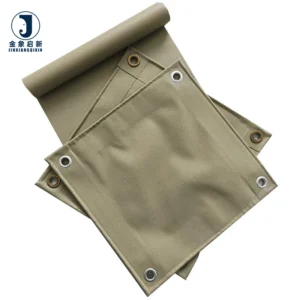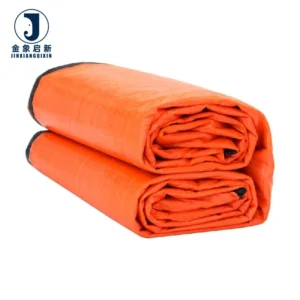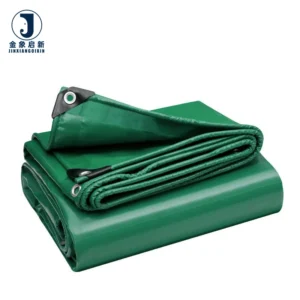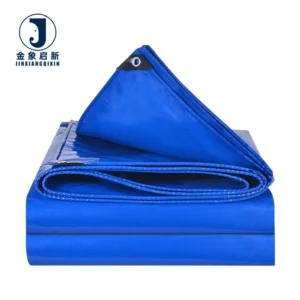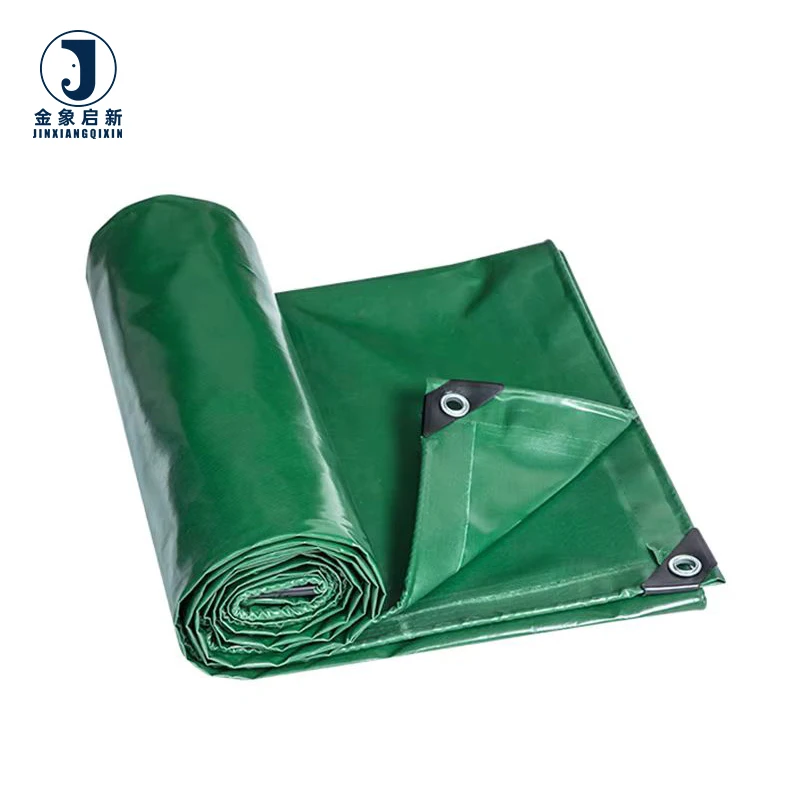
Proven Coating Adhesion — Nearly three decades of process control over lamination and hot melt coating ensures the PVC layer stays bonded to the polyester base under constant road vibration and load flexing.
Technical Specifications
| Parameter | Value |
|---|---|
| Product Type | PVC Coated Tarpaulin Roll |
| Base Fabric | 100% high toughness polyester yarn |
| Coating Material | PVC |
| Coating Method | Lamination technology and hot melt coating technology |
| Waterproof | Yes |
| Flame Retardant | Available in flame retardant grades — confirm the grade required for your market |
| Anti-Static | Available in anti-static grades — confirm the surface resistance standard for your application |
| UV Treatment | Available — confirm the test basis and duration rating required |
| Anti-Mildew | Mold proof formulation |
| Cold Resistance | Cold resistant cracking formulation |
| Color Fastness | High color fastness rating claimed by manufacturer |
| Welding Tear Strength | Excellent rating claimed by manufacturer |
| Certifications | ISO, CE |
Application Suitability
| Application | Exposure & Requirement |
|---|---|
| Truck side curtain fabric | Constant flexing at load points, road debris abrasion, rain and UV exposure during long-haul transit |
| Custom-fit truck and trailer covers | Tension across uneven loads, wind flap fatigue, tie-down stress at reinforced zones |
| Flatbed load covers | Direct weather exposure, friction from shifting cargo, repeated folding and unfolding at depots |
| Transport equipment protective wraps | Abrasion from contact surfaces, moisture ingress prevention, temperature variation across routes |
Why Welded Seams Fail Before the Fabric Does on Transport Covers
The seam is only as strong as the coating adhesion beneath it.
When a PVC coated tarpaulin for truck and transport covering flexes over a moving load, the stress concentrates at every welded joint. I have reviewed failed covers where the fabric body remained intact but the heat-welded seams separated cleanly along the bond line. The root cause is rarely the welding temperature or the operator — it is the adhesion strength between the PVC coating and the polyester base fabric. If that bond is weak, no amount of seam overlap will hold under repeated flex cycles. [NEED_CITE: peel adhesion test methods for coated fabrics per ISO 2411]
How Hot Melt Coating Holds Up Under Road Vibration
The lamination and hot melt coating technology used in this PVC coated tarpaulin for truck and transport covering forces the PVC compound into the weave structure of the polyester base under heat and pressure. This creates a mechanical lock between coating and yarn that resists delamination when the fabric flexes repeatedly at tie-down points and fold lines. For fleet operators running daily routes, that bond integrity determines whether the cover lasts through multiple seasons or starts peeling at the seams within months.
Custom Sizing Versus Generic Dimensions for Fleet Fitment
A truck cover cut to a generic rectangle will billow, pool water, and wear prematurely at the corners where it does not match the trailer profile. This PVC coated tarpaulin for truck and transport covering is supplied as roll stock that can be cut and welded to the exact dimensions of specific vehicle models, ensuring the fabric sits under light tension across the load rather than flapping loose. Side curtain applications benefit from the same approach, with panels cut to match the curtain runner spacing and door aperture of each trailer type in the fleet. [NEED_CITE: tensile and tear test methods for coated fabrics per ISO 1421]
Reading the Base Fabric Denier and Coating Weight Together
The polyester base fabric provides the structural skeleton, while the PVC coating adds waterproofing, abrasion resistance, and the surface that accepts heat-welded seams. A heavier coating does not automatically mean a stronger fabric — a thick coating over a low-denier base will crack and peel under tension because the yarn structure cannot support the coating mass. Conversely, a high-denier base with inadequate coating weight will expose the yarns to moisture and UV degradation. The balance between base fabric toughness and coating thickness determines how the material performs when a ratchet strap pulls against a reinforced hem or when wind loads cycle across a side curtain panel. Cold-resistant formulation matters in northern routes where the fabric must remain pliable at low temperatures rather than becoming brittle and cracking at fold lines.
The Hidden Cost of Specifying on GSM Alone
Fleet buyers often set a minimum GSM on their purchase order and assume that any roll meeting that number will perform equally. I have seen transport covers fail prematurely not because the GSM was wrong, but because the coating-to-base adhesion was insufficient for the flex demands of the route. A roll that measures correctly on a scale can still delaminate at the weld line if the lamination process was inconsistent. Colour variation between rolls in the same batch order also creates visible mismatches once side curtains are installed side by side on identical trailers, forcing a full replacement rather than a panel swap. [NEED_CITE: batch colour consistency standards for coated technical textiles]
What This Supply Chain Brings to Fleet-Scale Orders
The production facility runs three full lines with 36 sets of professional equipment, giving the capacity to fulfil fleet-wide roll orders within a reliable lead time rather than分批 shipping across months. A ten-person R&D team handles material selection and sample development, so a custom colour or width can be sampled and approved before the full production run begins. Every roll undergoes 100 percent inspection before dispatch, catching coating defects, GSM variance, and colour drift at the factory rather than at your receiving dock. The hot melt coating process is controlled in-house, meaning adhesion strength is a managed parameter rather than a variable dependent on a third-party coater. Samples for custom requirements are developed within days, allowing fitment trials on actual trailer models before committing to the bulk order.
Documentation & Verification
- Material specification sheet stating base fabric denier, coating weight, and colour reference per roll
- Pre-shipment inspection record confirming GSM matches the quoted value for every roll in the order
- Test report for flame retardant or UV treatment grades where applicable to your market
- Roll packing list with batch traceability for fleet-scale roll orders
- Certificate of origin and customs documentation for cross-border shipment
Fabrication, Handling & Storage
- Hot weld temperature and dwell time must be calibrated to the PVC coating thickness to avoid burn-through or weak bonds
- Reinforced hem zones at tie-down points should use doubled fabric layers welded through the full coating thickness
- Rolls must be stored upright on their cores to prevent flat-spot creases that become permanent fold weaknesses
- Cold-weather handling requires the fabric to acclimatise before unrolling to avoid cracking the cold-resistant coating
- Cut panels should be laid flat and welded on a clean platen to prevent debris inclusions in the seam line
What to Include in Your Enquiry
Tell us the specific truck or trailer models in your fleet, the type of cover or curtain you need, and the route climate conditions the fabric will face. If your market requires a particular fire classification or anti-static standard, include that in the specification so we can match the correct treatment grade. Confirm whether you need roll stock for your own fabrication or finished covers cut and welded to vehicle dimensions.
Frequently Asked Questions
Q: How is GSM verified on arrival against the quoted specification?
A: Every roll is weighed and measured during pre-shipment inspection, and the recorded GSM is logged against your purchase order. A verification record accompanies the shipment so you can cross-check the delivered weight against the quoted value immediately on receipt. Any variance outside tolerance is flagged before dispatch.
Q: What reinforced hem options are available for truck cover tie-downs?
A: Hem zones can be doubled with an additional layer of the same PVC coated fabric, welded through the full thickness to distribute tie-down load across a wider area. The hot melt coating bond supports multi-layer welding without delamination when the correct temperature profile is applied.
Q: How do you ensure colour consistency across rolls in a fleet-wide order?
A: Rolls within a single production batch are coated from the same compound mix, minimising shade variation. Pre-shipment inspection includes a visual colour check across rolls, and any panel that falls outside the accepted reference is held back before packing.
Q: What custom sizing is available to match specific truck and trailer models?
A: Covers and side curtain panels can be cut and welded to the exact dimensions of your vehicle models, including door apertures, curtain runner spacing, and corner profiles. Provide the model drawings or dimensional schedules and we will develop a cut pattern for approval before bulk production.
Q: How do welded seams perform under repeated load flexing during transport?
A: The hot melt coating process creates strong adhesion between the PVC layer and the polyester base, which is the foundation for a durable weld. When the seam is made at the correct temperature and overlap, the welded joint resists peeling under the flex cycles experienced during transit.