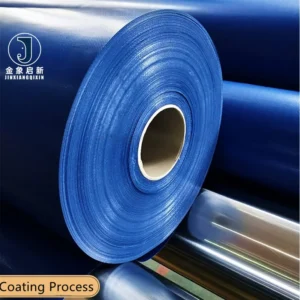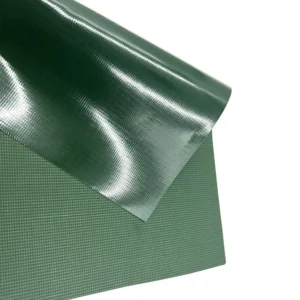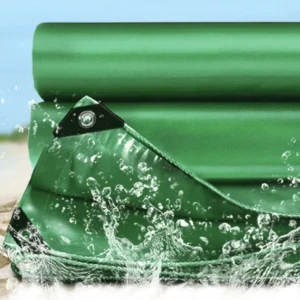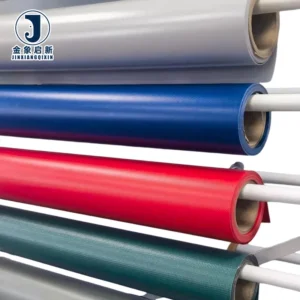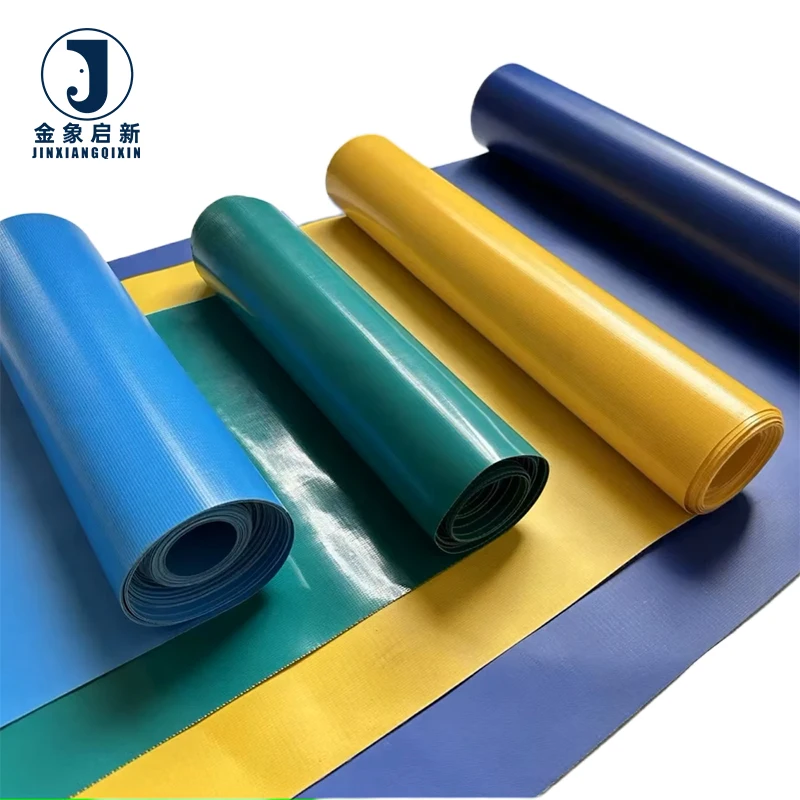
Precision Weld Matching — Every PVC tarpaulin roll for truck cover we dispatch is tested at the seam before it leaves the line, because highway flex will expose a bad weld long before it breaks the fabric.
Technical Specifications
| Parameter | Value |
|---|---|
| Product Type | PVC Coated Tarpaulin |
| Weight Range | 250gsm-1500gsm |
| Base Fabric Denier | 200DX300D, 500DX500D, 840DX840D, 1000DX1000D |
| Surface Finish | Available in glossy or matte finish |
| Color Options | Blue, yellow, black, green, white, custom colors |
| Temperature Range | -15°C to 70°C |
| Treatment | Waterproof, UV protection, flame retardant, anti-fungal |
| Size Options | 3x4m, 6x8m, 8x10m, 10x12m or custom made |
| Certification | ISO, CE |
Application Suitability
| Application | Exposure & Requirement |
|---|---|
| Truck and trailer side curtains | Constant flexing at load points, road debris abrasion, high-speed wind load, daily UV exposure |
| Flatbed and tipper covers | Tie-down strap friction, pooling water on horizontal surfaces, repeated folding and unfolding |
| Construction site enclosures | Wind-driven rain, scaffold contact abrasion, dust and chemical splash, UV degradation over extended deployment |
| Tent and awning structures | Tension loading at pole points, prolonged sun exposure, folding and storage cycles, fire safety compliance in public spaces |
Why the Weakest Point on a Truck Cover Is Never the Fabric Itself
A PVC tarpaulin roll for truck cover fails first at the weld, not in the body of the material.
I have watched heavy-grade coated rolls come back from a fleet run with the fabric intact but the seam split clean along the flex line. The heat-weld parameters were slightly off for that particular weight and coating formulation, and the seam gave way where the trailer load shifted most during highway transit. When the specification only calls out GSM and ignores weld compatibility, the cover is only as strong as its weakest joined edge. [NEED_CITE: tensile and tear test methods for coated fabrics per ISO 1421]
Matching Roll Dimensions to Trailer Geometry
A generic roll width rarely maps cleanly onto a specific trailer model. Every fleet operator we supply provides the exact side curtain or top cover dimensions, including tie-down spacing, so that the cut panels align with the hardware already on the vehicle. This eliminates mid-panel seams that would otherwise sit at high-stress flex zones. Our R&D team reviews the fitment drawing before the PVC tarpaulin roll for truck cover enters production, confirming eyelet placement and hem reinforcement locations against the trailer specification.
Weld Integrity at the Points That Matter Most
The coating formulation, base fabric denier, and welding temperature must all agree. A 1000DX1000D base with a heavy coating requires different heat-weld dwell time and pressure than a lighter 500DX500D construction. When the parameters are correct, the weld zone achieves strength comparable to the parent fabric. When they are not, the seam becomes the first failure point under cyclic loading — exactly where the trailer body flexes through corners and over uneven road surfaces. [NEED_CITE: heat-weld strength testing for PVC coated fabrics]
Decoding the Specification Sheet for Transport Use
The denier options — 200DX300D through 1000DX1000D — describe the yarn thickness in warp and weft. A higher denier base fabric resists tear propagation more effectively, but the coated weight alone does not determine this. Two rolls at the same GSM can behave very differently if one uses a denser weave with a thinner coating and the other uses a looser weave loaded with more PVC. For side curtains that flex thousands of times per journey, the base fabric construction matters as much as the coating weight. The available glossy or matte finish affects surface cleaning and print adhesion; glossy surfaces shed road grime more readily, while matte finishes reduce glare and accept branding inks with stronger mechanical bonding.
What Happens When the Roll Spec Does Not Fit the Route
A fleet running regulated routes needs documentation proving the fire-retardant grade meets local transport safety standards. If the roll arrives without a test report matching the claimed treatment, the entire batch can be held at inspection — vehicles off the road, deliveries delayed, and the buyer scrambling for a replacement supplier. Similarly, color variation between rolls in the same order becomes immediately visible when two panels are installed side by side on a trailer. Batch-to-batch inconsistency forces the buyer to reject material that is technically sound but visually unacceptable. [NEED_CITE: fire classification requirements for transport covering materials]
Why Buyers Keep Coming Back to This Line
Three full production lines run simultaneously, which means custom-width rolls do not get pushed behind standard stock orders. The 10-person R&D team handles pattern printing, custom sizing, and sample development in-house, so a trial roll can be produced and shipped for fitment verification before the main order runs. Every roll passes through dedicated QA/QC at each production stage, with full inspection before dispatch — not a sampling audit, but a roll-by-roll check. Coating weight and adhesion are monitored continuously, drawing on process control refined over decades of coated fabric production. The result is a PVC tarpaulin roll for truck cover that arrives matching the agreed specification, not an approximation of it.
Documentation & Verification
- Weight verification per roll against the stated 250gsm-1500gsm range before dispatch
- Fire retardant test report provided with grade reference where applicable
- UV treatment test result documentation for outdoor exposure validation
- Roll packing list with individual roll dimensions and color batch reference
- ISO and CE certificates included with shipment documentation
- Pre-shipment inspection record confirming GSM, color, and surface finish
Fabrication, Handling & Storage
- Heat-weld temperature and dwell time must be set to match the specific base fabric denier and coating weight of this roll
- Reinforce hem and eyelet zones at tie-down points where strap friction concentrates cyclic load
- Store rolls upright on a flat surface to prevent permanent creasing through the coating layers
- Allow the roll to acclimatize before unrolling in cold conditions, as PVC becomes less pliable near -15°C
- Use only mild, non-solvent cleaners on glossy or matte surfaces to avoid stripping the coating finish
- Plan panel cutting layout to minimize off-cut waste and avoid placing a weld seam across a flex zone
Before You Request a Quote
Send us the trailer model and the exact cover dimensions you need, including tie-down point spacing and any reinforcement requirements at corners or edges. If your route crosses jurisdictions with specific fire safety regulations, let us know the required grade so we can match the treatment and provide the correct certification with the roll. Confirm whether you need the material as a full PVC tarpaulin roll for truck cover or as pre-cut panels, and whether color matching across multiple rolls in the same order is required.
Frequently Asked Questions
Q: How do I specify the right size for my trailer model?
A: Provide the exact trailer make, model, and year along with measured cover dimensions including any overhang allowance. We cross-reference tie-down hardware positions to place eyelets and reinforced hems correctly, avoiding generic sizing that leaves excess material flapping or falls short at the mounting rail.
Q: What fire retardant certification comes with the material?
A: Where fire retardant treatment is specified, we supply the corresponding test report stating the grade achieved. Confirm the classification required for your market and route before ordering, as different jurisdictions reference different standards for transport covering materials.
Q: Can you match color across multiple rolls in the same order?
A: Yes. Rolls in the same production run are formulated from a single color batch to eliminate visible variation when panels are installed side by side. We verify color consistency during pre-shipment inspection and can provide a batch color reference for your records.
Q: What reinforcement options work best at flex and tie-down points?
A: Reinforced hems and additional eyelet spacing at strap contact zones handle cyclic loading from tie-down tension. The specific reinforcement layout depends on your trailer’s load securement system, which we review against the cover design before production begins.
Q: How do I verify the GSM weight matches what I ordered?
A: Each roll undergoes weight verification against the stated GSM during our pre-shipment inspection. The inspection record travels with the shipment documentation so you can confirm the delivered material matches the quoted specification before fabrication begins.