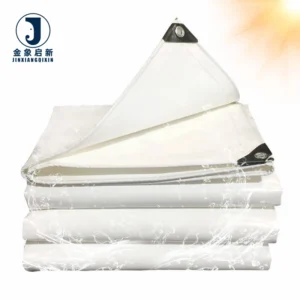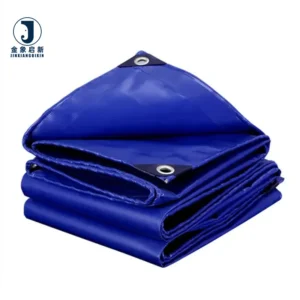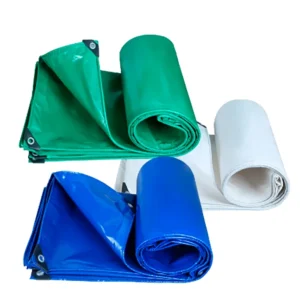
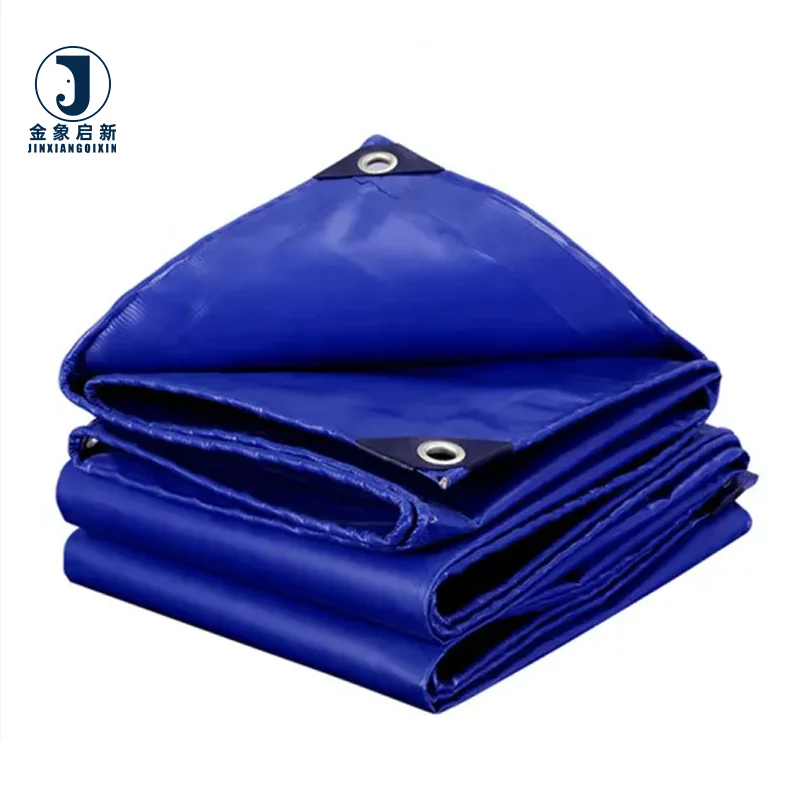
Hot-melt adhesion control — laminated and hot-melt coated PVC fabric built to hold at flex and weld zones where truck loads concentrate stress on the road.
Technical Specifications
| Parameter | Value |
|---|---|
| Product Type | PVC Coated Tarpaulin |
| Material | PVC + high-strength polyester mesh fabric |
| Coating Technology | Laminated technology & hot-melt coating technology |
| Weight Options | 350gsm, 420gsm, 500gsm, 550gsm, 600gsm, 750gsm |
| Total Thickness | 0.32mm, 0.35mm, 0.4mm, 0.45mm, 0.5mm, 0.65mm |
| Roll Width | 2m, 2.1m |
| Roll Length | 75m (2m width), 50m (2.1m width) |
| Colour Options | Blue, Red, Yellow, Light Blue, Grey (customisable) |
| Waterproof | Yes |
| Anti-Mildew | Yes |
| Anti-Static | Yes (standard not stated) |
| Cold Crack Resistance | Yes |
| Flame Retardant | Available in flame retardant grades — confirm the grade required for your market |
| UV Resistance | Available in sunproof grades — confirm the test basis required for your market |
| Key Features | High tenacity polyester yarns, outstanding tearing strength for welding, best colour fastness |
| Certifications | ISO, CE |
Application Suitability
| Application | Exposure & Requirement |
|---|---|
| Truck side curtain | Constant flexing at load points, road debris abrasion, UV and weather exposure, tie-down stress at hems |
| Flatbed trailer cover | Wind lift, water ingress risk, repeated folding and unfolding, strap tension at eyelets |
| Cargo ship deck cover | Salt spray, permanent moisture contact, heavy wind loads, long-term UV exposure |
| Lorry tarpaulin | Daily handling, friction against cargo edges, temperature swings from cold-start to highway speed |
| Tent and awning structure | Tension loading, seasonal storage, UV and mildew exposure during extended outdoor use |
Why a PVC Truck Tarpaulin Cover Fails at the Weld Before the Fabric Does
Seam integrity depends on coating adhesion, not just base fabric weight.
Fleet operators often specify a heavier GSM assuming it will solve premature cover failure, only to find the welded seams split while the fabric body remains intact. The breakdown typically starts where the load flexes most — near tie-down straps and corner reinforcements — because the coating-to-fabric bond cannot absorb repeated bending cycles [NEED_CITE: tensile and tear test methods for coated fabrics per ISO 1421]. A PVC coated truck tarpaulin for fleet and transport applications must be engineered so the weld zone matches or exceeds the tear strength of the parent material.
Model-Specific Sizing Eliminates Material Waste and Cargo Exposure
Generic-sized covers force operators to fold excess material or leave edges short, both of which create flapping zones that accelerate abrasion and allow water ingress. When a PVC coated truck tarpaulin for fleet and transport is patterned to the exact trailer model — including door clearance, tail lift recess and curtain runner profile — the fabric sits flush against the frame. This reduces wind-induced flutter on long-haul routes and prevents the chafing that wears through coating layers at contact points.
Hot-Melt Coating Adhesion at Flex Zones
Laminated and hot-melt coating technology creates a bond between the PVC layer and the high-strength polyester mesh that resists delamination under repeated bending. The PVC coated truck tarpaulin for fleet and transport undergoes flex cycles every time a trailer articulates through a corner or encounters road vibration. Where coating adhesion is weak, micro-cracks form at fold lines and propagate along the weld seam [NEED_CITE: peel strength testing methods for PVC-coated polyester fabrics]. Hot-melt coating penetrates the mesh structure more deeply than surface-only lamination, producing a mechanical lock that survives thousands of flex cycles.
Reading GSM and Thickness Together for Trailer Applications
Weight in gsm tells you how much coating and base fabric exist per square metre, but thickness in millimetres reveals how that mass is distributed. A 500gsm fabric at 0.4mm thickness has a denser, more compact construction than one at 0.5mm — the former tends to offer higher tensile resistance per unit weight because the yarns are packed tighter. For truck side curtains that must flex daily, a mid-range thickness with strong coating adhesion outperforms a thicker, stiffer alternative that cracks at fold points in cold weather. The base fabric denier and mesh count work alongside the PVC coating weight to determine the overall tear propagation resistance [NEED_CITE: relationship between base fabric weave density and tear strength in coated textiles].
What Happens When Colour Consistency Slips Across a Fleet Order
A transport company ordering replacement covers for multiple trailers expects every panel to match once installed side by side in the yard. When colour drifts between rolls in the same batch — even within the same stated colour code — the fleet looks patched rather than uniform, and customers notice. This is not a cosmetic issue alone; colour variation often signals inconsistent coating formulation across the production run, which can correlate with uneven anti-mildew additive distribution or variable cold-crack performance. Colour reference documentation tied to each roll ensures that repeat orders placed months apart still match the original fleet standard.
Why Procurement Teams Specify Here
Our production lines run laminated and hot-melt coating in controlled sequences, so each roll of PVC coated truck tarpaulin for fleet and transport exits with verified GSM matching the quotation. The 10-person R&D team develops pattern cuts for specific trailer models rather than forcing buyers into generic dimensions. Pre-shipment inspection covers every roll before dispatch, catching coating defects, weld inconsistencies and colour deviations before they reach the loading bay. Custom widths and lengths are produced without prohibitive minimums, allowing fleet operators to trial a new GSM grade on a single vehicle before committing the entire fleet. Anti-mildew and cold-crack formulations are applied as standard, not treated as expensive add-ons.
Documentation & Verification
- Material specification sheet stating base fabric type, coating weight and total GSM for each roll
- Pre-shipment inspection record confirming 100% roll-by-roll check before dispatch
- Colour reference document linking each roll to the agreed fleet colour standard
- Test reports for UV and flame retardant grades supplied when the buyer specifies those treatments
- Roll packing list with individual roll dimensions and weight for customs and warehouse receiving
- Certificate of origin and customs support documentation for cross-border shipment
Fabrication, Handling & Storage
- Set hot-air weld temperature to match the selected GSM grade — heavier grades like 750gsm need higher heat input for full seam fusion
- Allow 2m and 2.1m rolls to acclimatise before unrolling in cold conditions to prevent stress cracking at the core
- Store rolls horizontally on pallets to avoid permanent creasing across the polyester mesh base fabric
- Space eyelet reinforcement patches at intervals matched to the chosen thickness to distribute tie-down load evenly
- Use PVC-compatible cleaners only — solvents degrade the hot-melt coating bond on the fabric surface
- Pattern-cut panels with nesting software to minimise offcuts from the 75m or 50m roll lengths
What We Need to Quote Your Fleet Accurately
Send us the trailer make, model and year so we can pull or develop the correct pattern dimensions. Specify your route climate — cold-region fleets need confirmed cold-crack performance, while tropical routes prioritise anti-mildew and UV treatments. Let us know whether you need finished covers with hems and eyelets or roll stock for your own fabrication line. If colour matching to an existing fleet is required, provide a physical sample or Pantone reference so we can confirm the formulation before production begins.
Frequently Asked Questions
Q: How is the truck cover sized to fit my specific trailer model?
A: We pattern each PVC coated truck tarpaulin cover to the exact trailer dimensions — including door frames, tail lift recesses and curtain track profiles — rather than cutting to a generic rectangle. You provide the trailer make, model and any modifications, and our R&D team develops the cut pattern. Samples are produced for fitment approval before the full fleet order runs.
Q: What eyelet spacing and hem reinforcement options are available?
A: Eyelet spacing and hem reinforcement are configured to match the tie-down system your fleet uses. The PVC-coated polyester mesh fabric supports welded reinforcement patches at stress points, and hem folds are heat-welded rather than stitched to prevent water ingress through needle holes. We confirm the spacing pattern with you before production.
Q: How do you control colour consistency across rolls for fleet-wide replacement?
A: Each production run is referenced to a documented colour standard, and rolls are compared under controlled lighting before packing. When a fleet operator places a repeat order months later, we match against the original colour reference on file rather than relying on a generic colour name. This prevents the visible panel mismatch that occurs when covers are installed side by side.
Q: What GSM grade should I specify for my route climate and cargo type?
A: Lighter grades such as 350gsm suit short-haul and light cargo protection, while long-haul and heavy-load routes typically require 550gsm to 750gsm for abrasion and tear resistance. Cold-region fleets benefit from grades with confirmed cold-crack resistance, and tropical routes need verified anti-mildew treatment. We recommend a grade after reviewing your route profile and trailer type.
Q: How are welded seams tested before shipment?
A: Welded seams are inspected during the pre-shipment quality check, with particular attention to high-flex zones near tie-down points and corners where load movement concentrates stress. Inspection records are included with each shipment so buyers have documented evidence of seam integrity before the covers are fitted to vehicles.