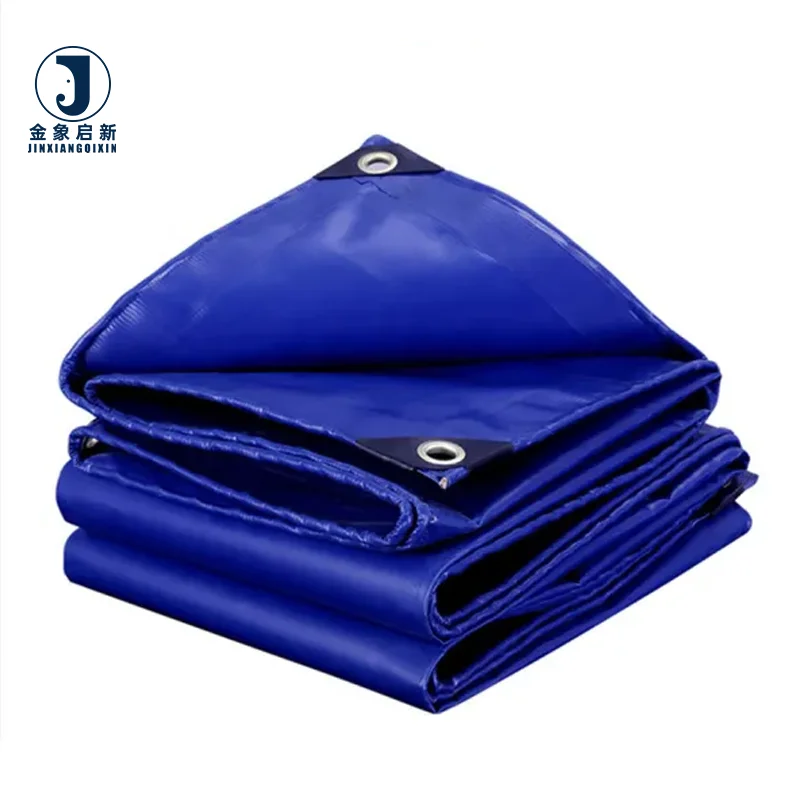
Proven Coating Adhesion — our hot-melt lamination process bonds PVC to the polyester mesh at a molecular level, preventing delamination at the seams where truck loads flex most during long-haul transit.
Technical Specifications
| Parameter | Value |
|---|---|
| Product Type | PVC Coated Tarpaulin |
| Coating Material | PVC |
| Base Fabric | High-strength polyester mesh fabric |
| Coating Method | Laminated technology & Hot-melt Coating technology |
| Weight (GSM) | 350gsm / 420gsm / 500gsm / 550gsm / 600gsm / 750gsm (multiple grades available — confirm the grade for your application) |
| Total Thickness | 0.32mm / 0.35mm / 0.4mm / 0.45mm / 0.5mm / 0.65mm |
| Roll Width | 2m / 2.1m |
| Roll Length | 75m (for 2m width) / 50m (for 2.1m width) |
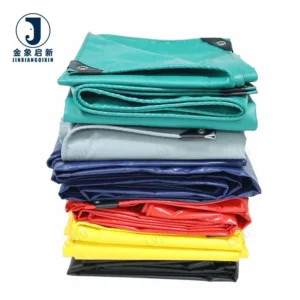
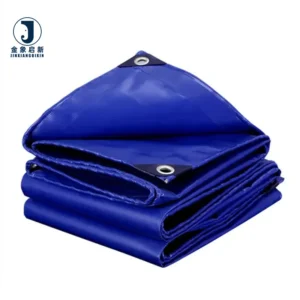
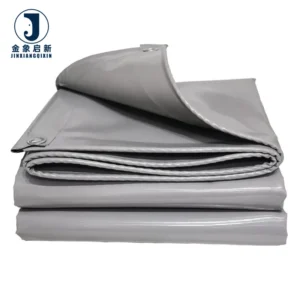
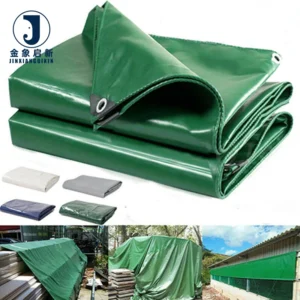
| Color Options | Blue, Red, Yellow, Light blue, Grey (custom colors available) |
| Key Features | Cold crack resistance, anti-mildew, anti-static treatment¹, waterproof, sunproof², best color fastness |
| Service Life | 3–7 years under normal circumstances |
¹ Anti-static treatment applied; grade not stated in source — confirm the static dissipation requirement for your operational environment.
² Sunproof claimed; test basis not stated in source — available in UV-stabilised grades, request the test report applicable to your market.
Application Suitability
| Application | Exposure & Requirement |
|---|---|
| Flatbed and curtain-sider trailers | Continuous road vibration, load flex at tie-down points, rain and wind-driven debris |
| Construction material transport on open trucks | Abrasive contact with palletised cement and steel, UV exposure during multi-day site staging |
| Agricultural produce transit | Weather-sensitive cargo exposed to rain and direct sun, humidity build-up under the cover |
| Cargo ship deck covers | Salt spray, standing water, heavy wind loads requiring secure tie-down reinforcement |
| Temporary tent and awning structures | Prolonged outdoor exposure, wind uplift forces, repeated assembly and tear-down cycles |
Why Generic-Sized Truck Covers Cost Fleets More Than Custom Cuts
A PVC truck tarpaulin cover aftermarket supplier that cuts to your exact trailer dimensions eliminates the gap-and-abrasion cycle that destroys generic covers within months.
Fleet operators routinely receive covers that overhang or fall short at the tailgate because the supplier used a standard size matrix rather than the specific trailer drawing. The excess fabric flaps at highway speed, wearing through at the hem within weeks. Where the cover is too short, straps cut directly into the cargo edge and the exposed fabric takes concentrated UV and abrasion damage [NEED_CITE: common failure modes in fleet tarpaulin covers]. The PVC truck tarpaulin cover aftermarket supplier approach we follow starts with the vehicle model and works backwards to the cut pattern, so every panel lands where it should.
How Hot-Melt Coating Survives the Flex Points
Long-haul trailers subject side curtain fabric to thousands of articulation cycles per trip as the load shifts under braking and cornering. The laminated and hot-melt coating technology used on this PVC coated polyester mesh creates a bond that resists separation at the weld line — the exact location where competing coating methods begin to peel after repeated flex exposure. For transport fleets covering irregular loads, this adhesion durability determines whether a PVC truck tarpaulin cover lasts through its expected service window or requires patching mid-contract.
Cold Crack Resistance for Year-Round Fleet Operation
Trailer covers in northern routes experience sub-zero temperatures that make standard PVC films brittle at the fold lines. The cold crack resistance built into this fabric maintains flexibility when the material is folded, strapped, and re-deployed in low-temperature conditions. Fleet operators running year-round schedules across seasonal temperature swings need this property verified before committing to a bulk order — request the low-temperature flex test data to match your coldest operating environment [NEED_CITE: cold crack testing standards for PVC coated fabrics].
Reading the GSM and Thickness Range for Your Load Type
The available weight range from 350gsm to 750gsm covers everything from light agricultural transit covers to heavy-duty construction load protection. Heavier grades pair higher GSM with greater thickness — up to 0.65mm — which directly increases resistance to puncture from sharp-edged cargo like rebar or palletised masonry. However, GSM alone does not define tear resistance; the high-strength polyester mesh base fabric provides the structural backbone that prevents a small cut from propagating across the panel. Selecting the correct grade means matching the payload abrasiveness and tie-down tension to the fabric weight, not simply choosing the heaviest option available.
The Hidden Cost of Skipping Pre-Shipment GSM Verification
One of the most common disputes between fleet buyers and fabric suppliers centres on GSM discrepancy at delivery. A cover quoted at a higher grade but produced lighter than specified will appear identical on the roll but will fail prematurely at high-wear zones — typically the eyelet line and the bottom hem where road debris strikes repeatedly [NEED_CITE: GSM verification methods for coated tarpaulin fabrics]. This is not a defect visible to the eye; it only reveals itself after weeks in service. Securing a pre-shipment inspection record with weight-per-square-metre readings taken from multiple points across the roll is the only reliable safeguard.
What This Supply Chain Delivers to Transport Buyers
Three full production lines and 36 sets of professional equipment handle bulk roll output with consistent coating weight across the entire order, which matters when a fleet operator is covering 40 trailers in the same colour and needs roll-to-roll uniformity. A dedicated 10-person R&D team develops cut patterns matched to specific trailer models, producing physical samples within days so the fleet can trial-fit before full production begins. Every roll undergoes 100% inspection before dispatch, checking coating adhesion, colour consistency, and dimensional accuracy against the confirmed cut sheet. The facility holds ISO and CE certification, and ships with a complete documentation package designed to clear customs in cross-border fleet operations without delays.
Documentation & Verification
- Material specification sheet stating confirmed GSM, base fabric type, and coating weight per roll
- Pre-shipment inspection record covering seam pull-test and dimensional checks against your trailer model drawing
- Roll packing list with individual roll weight and running metre count for warehouse receiving
- Certificate of origin and customs documentation supporting cross-border fleet procurement
- UV stabilisation and anti-static test reports supplied upon request — confirm the standard required for your market
Fabrication, Handling & Storage
- Hot-air welding at temperatures matched to the selected PVC coating method ensures full penetration at seam overlaps
- Hem reinforcement should use fabric folded to double thickness before eyelet insertion, especially on the 350gsm and 420gsm grades
- Store rolls horizontally on pallets to prevent compression creases that become permanent fold marks in cold conditions
- Deploy covers gradually in sub-zero environments; the cold crack resistance allows flexibility but forced unfolding can still stress the coating
- Clean with mild detergent and soft brush; solvent-based cleaners may degrade the sunproof surface treatment over time
- Cut panels using a heated blade to seal edges and prevent fraying of the high-strength polyester mesh base fabric
Starting Your Fleet Cover Specification
To move from inquiry to confirmed cut pattern, share your trailer make, model, and year along with the side and top panel dimensions you currently run. Let us know the GSM grade you have specified historically and whether you need the sunproof or anti-static treatment backed by a specific test standard for your operating region. If you are evaluating multiple colourways or require branded printing on the side curtain panels, send the artwork files and Pantone references so we can prepare matched samples before the production run.
Frequently Asked Questions
Q: How do you cut covers to fit specific truck and trailer models?
A: We work from your trailer manufacturer’s dimensional drawing or physical measurements you provide. A cut pattern is developed and a sample panel is produced for trial fitment on the actual vehicle. Once the fit is confirmed, full production proceeds using that locked pattern, ensuring every cover in the fleet order matches the same dimensions.
Q: What GSM grade works best for long-haul transport?
A: Lighter grades such as 350gsm or 420gsm suit enclosed curtain-siders where the fabric flexes but does not bear direct load contact. Open flatbeds carrying abrasive construction materials typically require 550gsm or above. The high-strength polyester mesh base fabric contributes to tear resistance independently of the coating weight, so we recommend evaluating both together.
Q: Can I get a test report for UV or anti-static treatment?
A: Sunproof and anti-static treatments are applied during production. Test reports are available on request — specify the standard your market or site requires so we can match the documentation to your compliance needs before the order ships.
Q: How is colour consistency managed across multiple rolls?
A: Each production run uses a single colour batch mixed to the confirmed Pantone reference. Our pre-shipment inspection checks colour consistency roll-to-roll before dispatch, and inspection records are included in the documentation package so you have a traceable quality record for the full order.