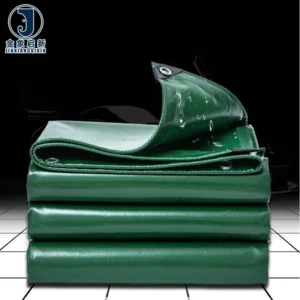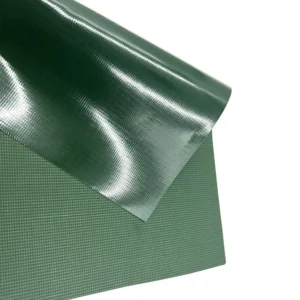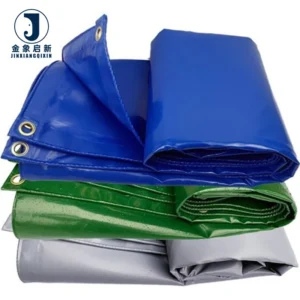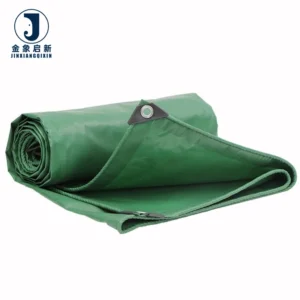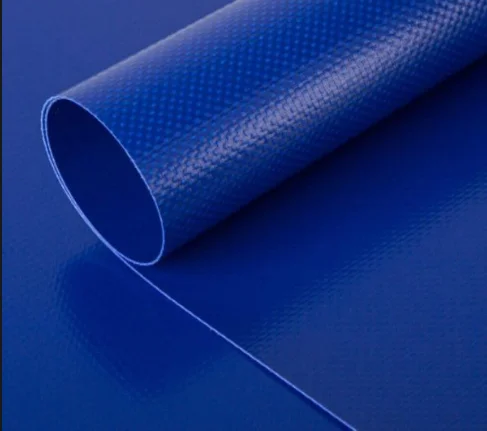
Deep Process Control Over Coating Weight — Every roll of PVC knife coated tarpaulin undergoes stage-by-stage QA with 100% pre-shipment inspection to ensure coating adhesion meets the demands of moving loads.
Technical Specifications
| Parameter | Value |
|---|---|
| Product Type | PVC Knife Coated Tarpaulin Roll |
| Coating Method | Knife coated |
| Coating Material | PVC |
| Welding Options | HF / Hot Air / Sewing |
| Surface Properties | Self-cleaning, oil and stain resistance, acid and alkali resistance, antibacterial and mildew proof |
| Temperature Resistance | High temperature and cold resistant |
| UV Treatment | UV resistant (test basis not stated — confirm requirement) |
| Flame Retardant | Fire retardant (grade not stated — confirm grade for your market) |
| Finish | Self-cleaning system |
Application Suitability
| Application | Exposure & Requirement |
|---|---|
| Truck and trailer side curtains | Constant flexing under load, road debris abrasion, UV and weather exposure year-round |
| Custom-fit truck covers for specific vehicle models | Precise dimensional fit, repeated folding at hinges and tie-down points, wind flutter stress |
| Flatbed tie-down and cargo tarpaulin | High tensile stress at eyelet and hem zones, puncture risk from irregular cargo shapes |
Why Seam Peeling Strength Matters More Than Fabric Weight Alone
A truck cover fails at the weld line long before the fabric itself gives way.
When fleet operators specify PVC tarpaulin roll aftermarket supplier options, the focus often lands on GSM weight as the primary indicator of durability. Yet on moving loads, the flex points where side curtains fold and where tie-downs pull create repeated peel stress at every welded seam. If the coating adhesion to the base fabric is weak, the seam delaminates under load movement even when the body of the fabric remains intact [NEED_CITE: tensile and peel test methods for coated fabrics per ISO 1421]. This is why a PVC knife coated tarpaulin for truck and transport cover must deliver peeling resistance that matches or exceeds its tear strength. Fabricators building custom-fit covers for specific trailer models need a material that holds together at the join under thousands of flex cycles, not just one that looks heavy on the specification sheet.
Flex-Point Engineering for Moving Loads
A side curtain on a curtain-side trailer folds and unfolds with every loading cycle, concentrating stress at the curtain edges and where reinforcement patches meet the main panel. The knife coated construction of this PVC tarpaulin roll creates a mechanical bond between coating and base fabric that resists the peeling forces generated at these junctions. Fabricators using HF or hot air welding can achieve seam integrity that matches the body of the material, reducing warranty claims from fleet operators who experience premature cover failure.
Welding Flexibility for Custom Trailer Fitment
Every trailer model has distinct dimensions, corner radii, and reinforcement zone layouts. This PVC knife coated tarpaulin supports HF welding, hot air welding, and sewing, giving fabricators the latitude to choose the join method that best suits the stress profile of each panel. Hot air welding works well for long straight runs on side curtain panels, while HF welding delivers strong localized bonds at corner patches and eyelet reinforcement zones [NEED_CITE: high frequency vs hot air welding performance on PVC coated fabrics]. The ability to combine methods on a single cover means fabricators can build truck and trailer covers tailored to vehicle-specific geometry without compromising seam durability.
Decoding the Specification Sheet for Transport Covers
The knife coating process forces PVC compound into the base fabric weave under blade pressure, producing a thicker and more uniform coating layer than dip or spray methods. This translates to better abrasion resistance at contact points where the cover rubs against cargo edges or trailer hardware. The self-cleaning surface treatment reduces the adhesion of road grime, diesel soot, and cargo residue, which means fleet operators spend less time and money on cover maintenance between trips. Temperature resistance across high and cold ranges keeps the PVC knife coated tarpaulin for truck and transport cover pliable enough to fold in winter without cracking at the fold line, while resisting softening and sagging when parked in direct summer sun. Acid and alkali resistance protects the coating from chemical attack when transporting agricultural or industrial cargo that may leak or off-gas during transit.
The Hidden Cost of Specifying on Price Per Roll
Fleet operators who select truck cover fabric primarily on unit cost frequently encounter two failures within the first year. The first is colour variation between rolls in a single order — when two panels installed side by side on the same trailer show visibly different shades, the entire cover looks unprofessional and the operator faces pressure to replace it. The second is batch-to-batch GSM inconsistency, where the fabric specified at a given weight arrives lighter, reducing tear resistance at flex zones and eyelet reinforcement points [NEED_CITE: batch consistency challenges in PVC coated fabric manufacturing]. These failures do not show up in pre-purchase samples because suppliers often send from premium stock. The cost of re-covering a single trailer — labour, downtime, and lost revenue — exceeds the savings from choosing the cheaper roll many times over.
Why Fabricators Source This Fabric Here
Three full production lines and 36 sets of professional equipment provide the capacity to fulfil multi-roll orders for fleet-standardisation projects without splitting production across outsourced workshops. The 10-person R&D team develops samples within days when a fabricator needs a specific colour match or custom width for a new trailer model. Dedicated QA/QC runs at every production stage, with 100% pre-shipment inspection generating a roll-by-roll record that fabricators can share with their fleet-operator clients as proof of specification compliance. Nearly 30 years of focused coated fabric production means the coating weight, adhesion, and surface treatment parameters for transport-grade material are established from long production history, not guessed from generic formulations.
Documentation & Verification
- Material specification sheet stating GSM, base fabric denier, and coating weight per roll
- UV and fire retardant test reports provided where applicable to your market grade
- Pre-shipment inspection record documenting colour and weight check for every roll
- Roll packing list with net weight and dimensions for container loading planning
- Certificate of origin and customs documentation for cross-border shipment
Fabrication, Handling & Storage
- HF welding suits corner patches; adjust power to coating thickness for full penetration
- Hot air weld long side-curtain seams at temperature matched to PVC knife coated layer
- Store rolls upright on pallets to prevent flat-spotting and permanent crease marks
- Allow cold-stored rolls to reach ambient temperature before unrolling to avoid coating crack
- Use neutral pH cleaners only; solvents degrade the self-cleaning surface treatment over time
- Reinforce eyelet zones with extra fabric patches welded before punching to spread tie-down load
What to Include in Your Enquiry
Provide your trailer model list, the number of covers needed per model, and the operating climate zone so the correct temperature and UV treatment grade can be confirmed. Specify whether you require finished covers with welded hems and eyelets, or roll stock for your own fabrication facility. Include any fleet colour standards or logo placement requirements if branding is part of the cover specification.
Frequently Asked Questions
Q: How do I verify the GSM of truck cover fabric when it arrives?
A: Each roll ships with a specification sheet stating the base fabric and coating weight. We conduct 100% pre-shipment inspection and provide a roll-by-roll QA record. On receipt, you can cut a measured sample from the roll end and weigh it to confirm the stated GSM matches the material in hand before cutting into production panels.
Q: Which welding method works best at flex points on a truck side curtain?
A: HF welding delivers strong localized bonds ideal for corner reinforcement patches and eyelet zones where peel stress concentrates. Hot air welding suits long straight seams on main curtain panels. Many fabricators combine both methods on a single PVC knife coated tarpaulin cover to optimise seam performance at different stress zones.
Q: Can colour be matched across multiple rolls for a fleet order?
A: Colour consistency across rolls is maintained through controlled coating compound batching and in-line colour monitoring during production. For fleet orders requiring multiple rolls, we run the entire order as a single production batch and provide a pre-shipment inspection record documenting colour uniformity before dispatch.
Q: What fire retardant grade do transport covers need in my market?
A: Fire retardant requirements for truck and trailer covers vary by jurisdiction and application — some markets mandate specific grades for covers used in tunnel transit or airport apron areas. Share your operating region and cargo type so we can confirm the available fire retardant grade and provide the matching test documentation with your order.