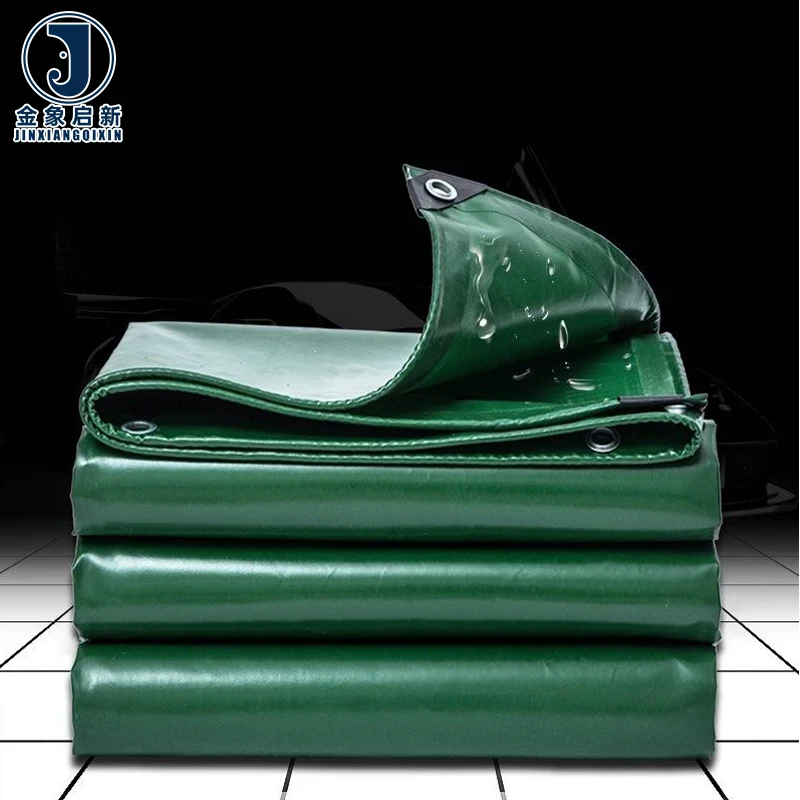
Coating Adhesion Control — Every roll undergoes 100% pre-shipment inspection to verify coating weight and adhesion, ensuring the PVC tarpaulin roll for truck and transport applications meets the quoted specification on arrival.
Technical Specifications
| Parameter | Value |
|---|---|
| Product Type | PVC Tarpaulin Roll |
| Coating Material | PVC |
| Key Features | Waterproof, Breathable, Heavy Duty |
| Application Environment | Outdoor Use |
| Customization | Custom width and length available |
| Finish Options | Glossy or matte finish available |
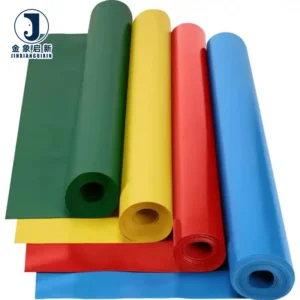
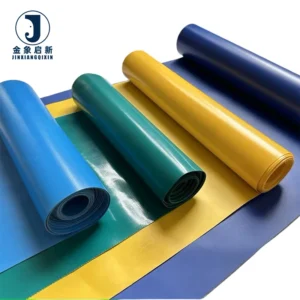
| Colour Options | Single or double side colour available |
| Certification | ISO, CE |
Application Suitability
| Application | Exposure & Requirement |
|---|---|
| Truck and trailer side curtain fabric | Constant flexing at hinges, road abrasion, weather exposure, tie-down load at eyelets |
| Load protection tarpaulin for transport fleets | Wind lift at speed, UV exposure on long hauls, water ingress prevention |
| Replacement roll stock for worn truck covers | Fitment to existing trailer frame dimensions, colour match to fleet livery |
| Transport equipment builder stock | Fabrication by heat welding, reinforcement at stress points, batch consistency across builds |
Why a Generic-Size PVC Tarpaulin Roll for Truck and Transport Costs More Than You Think
Specifying the exact roll width and length to your trailer model eliminates costly rework and cargo exposure.
When a truck cover is cut from a generic-size PVC tarpaulin roll for truck and transport use, the excess material flaps in the wind at highway speed, accelerating abrasion at the flex points. Too short, and the cargo sits exposed at the edges, defeating the purpose of the cover entirely. Fleet operators who have switched to model-specific roll dimensions report fewer warranty claims on both the fabric and the load [NEED_CITE: fitment tolerances for commercial vehicle side curtains].
The problem compounds when the roll stock arrives in a width that forces the fabricator to add a welded seam down the centre of a side curtain — a seam that sits exactly where the fabric flexes most during opening and closing. Each unnecessary weld is a potential failure point that appears long before the base fabric reaches the end of its service life.
Covering a Moving Load Demands More Than Static Waterproofing
A truck or trailer cover faces conditions that a static roof or pond liner never encounters. The PVC tarpaulin roll for truck and transport applications must withstand repeated flexing as the side curtain opens and closes, vibration transmitted from the road surface through the trailer frame, and direct abrasion where tie-down straps press against the fabric at every stop. The heavy-duty grade in this roll stock is selected to absorb these dynamic loads without the coating cracking or delaminating from the base fabric.
Breathable Fabric Options Reduce Condensation Damage in Transit
Moisture trapped beneath a fully sealed cover condenses on the inner surface when external temperature drops, creating a wet environment that can damage sensitive cargo. The breathable fabric option available in this PVC tarpaulin roll for truck and transport allows moisture vapour to pass through while maintaining waterproof protection against rain and road spray. This balance is particularly relevant for operators carrying goods that are sensitive to humidity, such as paper products, electronics, or certain agricultural loads [NEED_CITE: condensation formation under impermeable transport covers].
Understanding How Coating Weight and Base Fabric Work Together
The waterproof performance of a PVC coated tarpaulin depends on the interaction between the coating material and the base fabric beneath it. A heavier coating provides a thicker barrier against water penetration and mechanical abrasion, but without a sufficiently dense base fabric to support it, the coating can crack under tension. The heavy-duty grade designation signals that both the coating weight and the base fabric have been selected to work as a system — the base fabric carries the tensile and tear loads while the PVC coating seals the surface and protects the yarns from UV degradation and chemical exposure. Surface finish also plays a role: a glossy finish sheds dirt and water more readily on the road, while a matte finish reduces glare and can accept printed fleet branding more effectively. The available custom width options mean fabricators can order rolls that match the exact panel dimensions of the trailer, minimising offcuts and the number of welded seams required.
The Hidden Cost of Batch Colour Drift Across a Fleet Order
When a transport company orders enough roll stock to replace covers across an entire fleet, even a slight colour variation between rolls becomes immediately visible once the covers are installed side by side on adjacent trailers. This is not a cosmetic concern alone — it signals inconsistent coating formulation between batches, which can also mean variation in coating weight, flexibility, and weld behaviour. Fabricators who have received mismatched rolls face the choice of absorbing the rework cost or explaining to their fleet customer why half the trailers look different [NEED_CITE: colour consistency standards in coated fabric production batches]. The consequence extends beyond appearance: if the coating formulation varies, the heat welding parameters that worked on one roll may produce weak seams on the next, creating failures that only appear once the cover is under load on the road.
Why Transport Operators Source This Roll Stock Here
Three full production lines and 36 sets of professional equipment support bulk roll orders with consistent output quality, so a fleet covering twenty trailers receives fabric from a controlled production run rather than mixed batches.
A 10-person R&D team develops samples within days when a transport equipment builder needs to confirm that a specific width, colour, or finish will work with their existing welding setup and trailer frame geometry.
Dedicated QA/QC at every production stage with 100% inspection before shipment means the GSM, colour, and dimensions of every roll are verified against the quotation before the container is sealed.
Custom width and length orders are supported without prohibitive minimums, allowing fabricators to order rolls cut to the exact panel sizes their trailer models require rather than paying for and discarding excess material.
Nearly 30 years of focused coated fabric production provides the process control over coating weight and adhesion that prevents the delamination failures that appear at flex points after months of road use.
Documentation & Verification
- Material specification sheet confirming GSM, base fabric type, and PVC coating weight for each roll
- Pre-shipment inspection record covering weight, colour, and dimensions verified per roll before dispatch
- Roll packing list with individual roll weight and dimensions for container load planning
- ISO and CE certificates included with shipment documentation
- Test reports for UV or flame retardant grades supplied where applicable to the order specification
- Certificate of origin and customs documentation prepared for cross-border shipment
Fabrication, Handling & Storage
- Heat welding temperature must be matched to the PVC coating thickness; request recommended parameters with your sample
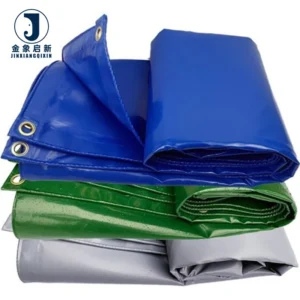
- Reinforce eyelet zones with additional fabric patches to distribute tie-down strap loads across the heavy-duty base fabric
- Store rolls upright on pallets in a dry environment to prevent permanent creasing of the coated surface
- Allow rolls to acclimatise before unrolling in cold conditions to avoid stiffness-related coating damage
- Use mild detergent for cleaning; avoid solvent-based products that may attack the PVC coating surface
- Plan panel cutting layout around available custom widths to minimise welded seams on finished truck covers
What We Need to Quote Your Roll Stock Accurately
Provide the specific trailer models or panel dimensions you need to cover, along with the annual roll quantity your fleet or fabrication operation requires. Let us know if your market mandates a particular fire classification or UV treatment level so we can include the correct test reports with your shipment. If you need fleet branding or a specific colour match, send the reference and we will develop a sample roll section for your approval before full production.
Frequently Asked Questions
Q: How is GSM verified on arrival against the quoted specification?
A: Every roll is weighed and measured during our 100% pre-shipment inspection, and the results are recorded on the inspection report that ships with your container. On arrival, you can verify any roll by cutting a measured sample and weighing it against the stated GSM on the material specification sheet. We support third-party inspection at our facility before loading.
Q: What eyelet and reinforced hem options are available for tie-down points?
A: We supply roll stock with reinforced hems and eyelet spacing configured to your trailer frame requirements. The heavy-duty base fabric provides a strong anchor for metal or welded eyelets. Specify the spacing and diameter you need, and we will confirm the reinforcement method best suited to your tie-down system during sample development.
Q: How is batch colour consistency controlled across rolls in the same shipment?
A: All rolls in a single order are produced within the same coating run using matched pigment batches. Our QA team checks colour against the approved reference under controlled lighting before packing. The pre-shipment inspection record documents the colour verification for every roll, so you have traceability from the production batch to the installed cover.
Q: What lead times and minimums apply to custom width or colour orders?
A: Custom widths and colours are supported across our three production lines with minimums that remain accessible for fleet-scale orders rather than requiring full container commitments. Typical lead times depend on the specification complexity and current line schedule. Submit your requirements and we will confirm the timeline and minimum with your quotation.
Q: How are welded seams reinforced at the points the load flexes most?
A: At high-flex zones such as side curtain hinges and tie-down edges, we recommend additional fabric layers welded over the seam to distribute stress across a wider area. Our R&D team will advise on the reinforcement approach that matches your trailer geometry and operating conditions. Request a welded sample so you can test seam strength under your specific flex cycle.