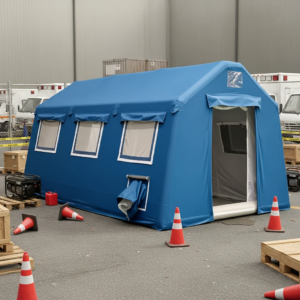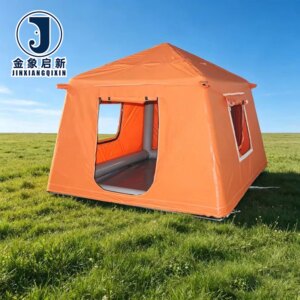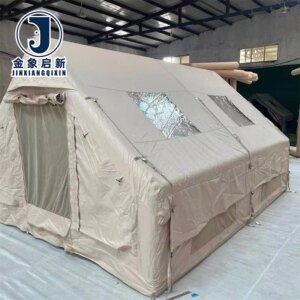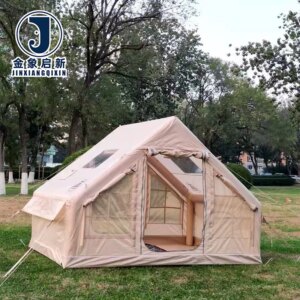
Verified Capacity — Three full production lines and 36 processing sets maintain reliable output for inflatable disaster relief tent orders requiring consistent PVC tarpaulin quality across every batch.
Technical Specifications
| Parameter | Value |
|---|---|
| Product Type | Inflatable Tent |
| Core Material | PVC Tarpaulin |
| Waterproof Rating | 3000mm |
| Season Rating | 4-Season Design |
| Deployment Mechanism | Quick Automatic Opening (inflatable) |
| Capacity | 2-8 Person |
| Structure Type | Extended Type |
| Construction | Single Layer |
| UV Resistance | UV-resistant (test basis not stated in source) |
| Flame Retardant Grade | Grade not stated — available in flame retardant grades, confirm the grade required for your market |
| Customization | OEM & ODM (size adjustments, pattern printing, material thickness modifications) |
| Standards | ISO9001, ISO14001, ISO45001, CE |
Application Suitability
| Application | Exposure & Requirement |
|---|---|
| Emergency response logistics hubs | Rapid deployment, heavy rainfall exposure, frequent relocation requiring fully waterproof shelter |
| Mobile command centers for construction sites | Extended outdoor UV exposure, temperature fluctuations, equipment protection |
| Temporary storage facilities during infrastructure projects | Ground moisture ingress, wind loading, long-duration weathering in remote locations |
| Equipment sheltering in remote work locations | All-season thermal stress, abrasive ground contact, minimal maintenance capability |
| Disaster response operations | Immediate setup with limited personnel, unpredictable weather, structural integrity under load |
What Happens When Tent Delivery Timelines Derail Emergency Readiness
A verified production schedule with pre-shipment inflation testing prevents shelter gaps when response windows are measured in hours.
Coordinating disaster preparedness infrastructure means any delivery delay leaves personnel and equipment exposed during the most critical period. Batch inconsistency in waterproof performance compounds the problem when shelters fail during the first rainfall event. [NEED_CITE: supply chain reliability for emergency response equipment procurement]
Rapid Inflation Deployment for Time-Critical Setups
The quick automatic opening mechanism on this inflatable disaster relief tent reduces on-site labour requirements, enabling deployment with minimal personnel. When emergency response teams face compressed timelines, the inflatable structure eliminates complex pole assembly and stake-driving sequences. This rapid setup capability matters most when establishing forward operating bases or mobile command centers in areas where infrastructure has been compromised.
Temperature-Resistant PVC Tarpaulin Across All Operating Seasons
The 4-season design incorporates PVC tarpaulin engineered to maintain structural integrity through both extreme heat and freezing conditions. Field operators relying on inflatable disaster relief tent shelters through seasonal transitions need materials that resist becoming brittle in cold or softening under sustained solar exposure. [NEED_CITE: PVC tarpaulin thermal performance boundaries for coated industrial fabrics] The single-layer construction reduces weight during transport while the inflatable frame maintains shape without rigid internal supports.
Reading the Specification Sheet Beyond Marketing Claims
The 3000mm waterproof rating describes the hydrostatic head pressure the PVC tarpaulin can withstand before water penetrates the coated surface. This rating is verified per batch, ensuring each inflatable disaster relief tent order meets the documented threshold regardless of production run. UV-resistant treatment is applied to the PVC tarpaulin surface, though buyers should request the specific test basis to match their market’s outdoor exposure requirements. The extended type structure provides internal volume for equipment staging and operational activities beyond basic personnel shelter.
The True Cost of Underspecified Temporary Shelters
Selecting tent fabric without verifying batch-level waterproof performance often results in water ingress during the first significant rainfall event, damaging stored equipment and forcing relocation. Inconsistent coating weight across a production run creates weak points where the inflatable structure flexes under wind load. [NEED_CITE: field failure analysis of temporary industrial shelters in harsh environments] Shelters that fail during active emergency response operations create secondary logistics problems that compound the original disruption.
Sourcing Inflatable Structures from a Coated Fabric Specialist
Nearly 30 years focused on PVC tarpaulin coating provides process control over coating weight and adhesion that directly affects inflatable structure reliability. Three full production lines with 36 sets of equipment support the batch volumes required for large-scale emergency preparedness programmes without compromising lead times. A 10-person R&D team handles material selection, custom sizing, and sample development, enabling rapid iteration when specifications change mid-project. Dedicated QA/QC at every production stage with 100% pre-shipment inspection ensures the inflatable disaster relief tent units leaving the facility match documented performance specifications.
Documentation & Verification
- Material specification sheet stating core material, 3000mm waterproof rating, and UV treatment details
- Batch-specific quality inspection report with waterproof performance and structural integrity test data
- Pre-shipment inflation testing and waterproof verification with documented traceability per unit
- ISO9001, ISO14001, ISO45001, and CE certificates available for compliance validation
- Roll packing list with quantity, dimensions, and weight per shipment
Fabrication, Handling & Storage
- Confirm inflation pressure parameters with manufacturer before first deployment to avoid over-stressing PVC tarpaulin seams
- Store rolled units in dry, shaded conditions to prevent surface coating degradation before deployment
- Use only manufacturer-recommended repair patches compatible with the PVC tarpaulin coating chemistry
- Inspect inflatable bladders for puncture damage before each deployment cycle, focusing on ground contact points
- Avoid dragging extended type structures across abrasive surfaces during position adjustments
- Clean with mild detergent only; harsh solvents will compromise the UV-resistant surface treatment
Requesting a Specification Review for Your Deployment Requirements
Provide your typical deployment environment, expected duration per setup cycle, and any regional compliance requirements for flame retardant classification. Specify whether you need OEM sizing adjustments or pattern printing for operational identification. Confirm target order volumes and delivery timelines so sample development can be scheduled accordingly.
Frequently Asked Questions
Q: How is PVC tarpaulin material thickness and waterproof rating verified before shipment?
A: Each production batch undergoes waterproof performance testing against the documented 3000mm rating. Pre-shipment inspection records include material thickness measurements and inflation testing results. Buyers receive batch-specific quality documentation with every order, providing traceability back to the production run that manufactured their inflatable disaster relief tent units.
Q: What UV treatment test basis applies to extended outdoor deployments?
A: The PVC tarpaulin fabric carries UV-resistant treatment suited to prolonged outdoor sun exposure, reducing replacement frequency. However, the specific test standard is not stated in base documentation. Buyers operating in regions with high solar intensity should request the applicable test basis during the specification review stage to confirm alignment with local exposure conditions.
Q: What customization options exist for size, capacity, and branding requirements?
A: OEM and ODM customization covers size adjustments beyond the standard 2-8 person capacity, pattern printing for operational identification, and material thickness modifications. The 10-person R&D team develops samples within days once specifications are confirmed, allowing buyers to evaluate physical units before committing to full production volumes.
Q: How is colour and material consistency maintained across large-volume orders?
A: The three full production lines maintain controlled coating processes that reduce batch-to-batch variation in PVC tarpaulin colour and material properties. Pre-shipment inspection compares units across the entire order, flagging any deviations before dispatch. Buyers with strict visual consistency requirements should specify colour references during the inquiry stage.
Q: What does the OEM and ODM process involve from initial inquiry to production?
A: The process begins with application review covering deployment environment, size requirements, and treatment specifications. Sample development follows, with physical units shipped for buyer evaluation and approval. Once approved, production proceeds with in-process QA checkpoints, culminating in 100% pre-shipment inspection before dispatch with full documentation packages.