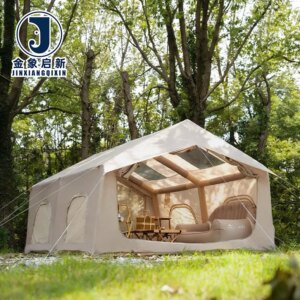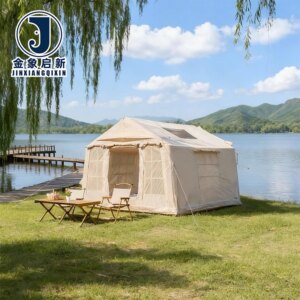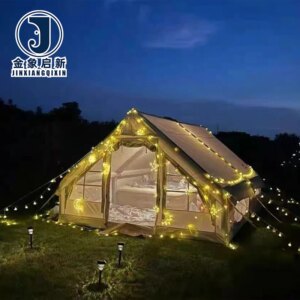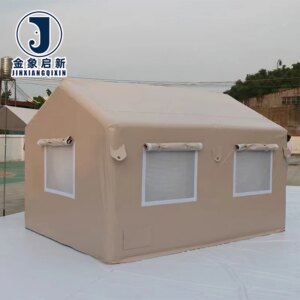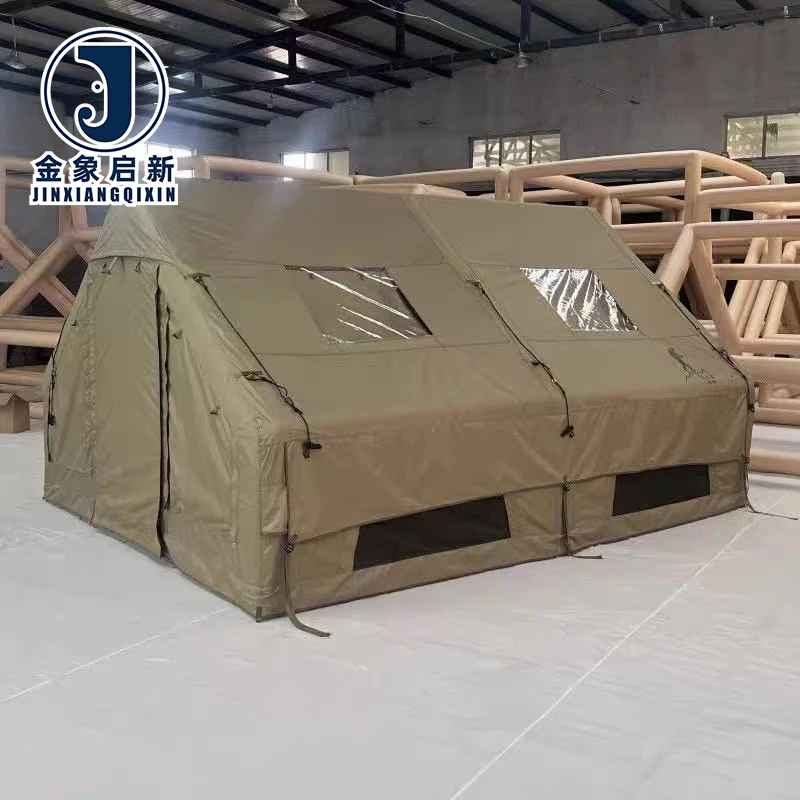
Coated Fabric Process Control — Nearly 30 years focused on PVC tarpaulin coating weight and adhesion, applied here to inflatable tent structures requiring consistent air-holding seam integrity across production batches.
Technical Specifications
| Parameter | Value |
|---|---|
| Product Type | Inflatable Tent Fabric |
| Core Material | PVC Tarpaulin |
| Waterproof Performance | Fully coated waterproof construction |
| UV Resistance | UV-resistant formulation (test basis not stated in source) |
| Tear Resistance | Tear-resistant construction (grade not stated) |
| Product Form | Inflatable structure fabric |
| Customization | OEM & ODM, sample customization, pattern printing available |
| Production Lines | 3 full production lines |
| Processing Equipment | 36 sets of professional equipment |
| R&D Support | 10 technicians |
| Standards | ISO9001, ISO14001, ISO45001, CE |
Application Suitability
| Application | Exposure & Requirement |
|---|---|
| Commercial camping gear manufacturing | Repeated inflation cycles, outdoor weather exposure, consumer safety compliance |
| Transport fleet temporary shelters at job sites | Rapid deployment, wind loading, UV exposure at remote locations |
| Outdoor event accommodation structures | High occupant load, frequent setup and takedown, branded exterior surfaces |
| Industrial activity suppliers for temporary venues | Large-span inflatable frames, continuous air pressure, abrasion from ground contact |
Why Inflatable Tent Fabric Demands More Than a Weight Specification
Air-holding structures fail first at the weld, not the face fabric, when coating adhesion is inconsistent.
When sourcing Inflatable Tent Fabric for truck and transport application or commercial outdoor gear lines, buyers often anchor decisions on GSM alone. Yet inflatable tent tubes and chambers place cyclic stress on every welded seam each time the structure is inflated and deflated. A coating that bonds weakly to the base fabric will delaminate at the heat-weld line long before the face fabric shows wear [NEED_CITE: tensile and tear test methods for coated fabrics per ISO 1421]. For fleet operators deploying temporary shelters at loading docks or remote job sites, a seam failure during a storm is not a minor inconvenience — it is a safety incident.
Coating Adhesion and Inflatable Structure Integrity
Inflatable tent tubes maintain shape through continuous internal air pressure, meaning every longitudinal and circumferential weld carries constant load. The PVC coating must bond to the polyester base fabric with sufficient peel strength to survive thermal welding without degradation. Inflatable Tent Fabric for truck and transport application must tolerate high-frequency heat welding or hot-air welding processes used in industrial tent fabrication, where temperature and dwell time directly affect the coating-to-yarn bond at the seam zone.
Batch Consistency Across Multi-Roll Orders
Commercial camping gear manufacturers running production batches of inflatable tents need every roll to behave identically on the welding table. Variations in coating weight or plasticiser content between rolls shift the optimal welding temperature, leading to either under-welded seams that peel or over-welded zones where the coating burns through. Maintaining roll-to-roll consistency requires in-process coating weight checks and formulation control at the compounding stage [NEED_CITE: coating weight variance and its effect on thermal weld parameters for PVC tarpaulin].
Reading the Specification Sheet Beyond GSM
GSM tells you the total mass per square metre but reveals nothing about how that mass is distributed between base fabric and coating. A PVC tarpaulin with a heavy coating over a light base fabric will show high GSM yet poor tear strength, because the yarns carrying the mechanical load are undersized. For inflatable tent applications, the base fabric denier and weave density determine how well the tube resists bursting pressure, while the coating weight governs waterproofness and weldability. Both parameters must be reviewed together on the material specification sheet before committing to a production run.
The Hidden Cost of Specifying on Price Per Kilogram
Selecting Inflatable Tent Fabric primarily on cost per kilogram incentivises suppliers to reduce coating weight or substitute lower-grade plasticisers, neither of which is visible on a certificate of analysis. The consequence surfaces weeks after delivery: colour drift between rolls that forces the cutting room to reject panels, or welded seams that pass initial peel tests but creep open after repeated inflation cycles in hot conditions [NEED_CITE: plasticiser migration and long-term seam creep in flexible PVC structures]. For outdoor activity organisers relying on quick-deploy inflatable shelters, these failures translate directly into event cancellations and reputational damage.
Why Procurement Teams Consolidate Here
Three full production lines and 36 sets of processing equipment allow simultaneous running of multiple inflatable tent fabric orders without cross-contamination of colour or formulation. The 10-person R&D team handles material selection, pattern printing layouts, and sample development within days rather than weeks, which matters when a camping gear brand needs to validate a new tube diameter before tooling commitment. Dedicated QA/QC inspection at every production stage, with 100% pre-shipment checks, catches coating weight deviation and colour variance before rolls leave the factory. ISO9001, ISO14001, ISO45001 and CE certifications provide the compliance documentation that importers in regulated markets require at customs.
Documentation & Verification
- Material specification sheet confirming PVC coating weight, base fabric denier, and weave density per roll
- UV resistance and tear performance test reports matched to batch number
- Pre-shipment inspection record verifying colour consistency across all rolls in the order
- ISO and CE certificate copies aligned to the inflatable tent fabric product category
- Roll packing list with net weight, gross weight, and roll dimensions for container planning
- Certificate of origin and customs documentation for cross-border shipment
Fabrication, Handling & Storage
- Set heat-weld temperature based on the specific PVC coating formulation provided, not generic PVC defaults
- Allow welded inflatable tube seams to cool fully under pressure before releasing the clamping fixture
- Store rolls upright on pallets to prevent flat-spot deformation of the coating surface
- Avoid dragging rolls across concrete floors to protect the outer PVC coating layer from abrasion
- Clean finished inflatable tent panels with mild detergent only; solvents may attack the plasticiser system
- Plan cutting layouts to minimise off-cuts, accounting for the available roll width and tube circumference
Requesting a Quotation
Provide the intended inflatable tube diameter and operating air pressure so the correct base fabric denier can be recommended. Specify whether you require plain colour, pattern printing for fleet branding, or custom Pantone matching across your annual volume. Confirm the welding method your production line uses — high-frequency, hot-air, or wedge — so the coating formulation can be matched accordingly. If your market requires specific fire classification documentation, state the target standard at enquiry stage.
Frequently Asked Questions
Q: How do I verify the PVC coating weight and tear strength match the quotation when rolls arrive?
A: Request the pre-shipment inspection record that documents measured coating weight per roll against the stated specification. On receipt, cut sample swatches from each roll and run a peel test at the intended weld parameters. Discrepancies between stated and actual values should be raised before fabrication begins, supported by the batch test report provided with the shipment.
Q: Is there a test report available for UV-resistant performance on inflatable tent fabric?
A: UV-resistant formulation is included in the standard specification, with test documentation available upon request. Confirm the exposure duration and climate zone for your end-use market so the appropriate test protocol can be referenced. For transport-adjacent installations with continuous sun exposure, discuss accelerated weathering data with the R&D team before placing bulk orders.
Q: What OEM customisation options are available for fleet-branded inflatable tent production?
A: Pattern printing, custom Pantone colour matching, and OEM/ODM sample development are supported across the inflatable tent fabric range. Provide artwork files and colour references at enquiry stage for sample approval before production. The 10-person R&D team can advise on print placement relative to weld lines to ensure branding remains intact through repeated inflation cycles.
Q: How is roll-to-roll colour consistency controlled across large-volume orders?
A: Colour consistency is managed through controlled pigment dosing at the compounding stage and verified during pre-shipment inspection. Each production batch undergoes visual and instrumental colour comparison against the approved sample. If your inflatable tent product line requires panels from multiple rolls to sit adjacent in the finished structure, specify this requirement so rolls can be allocated from the same dye lot.