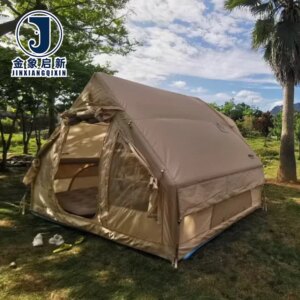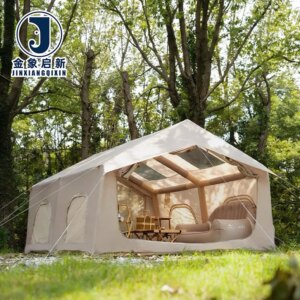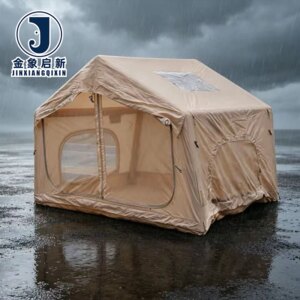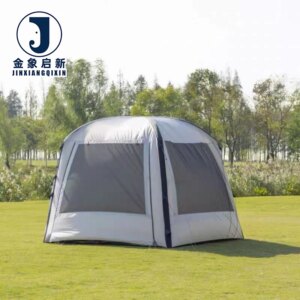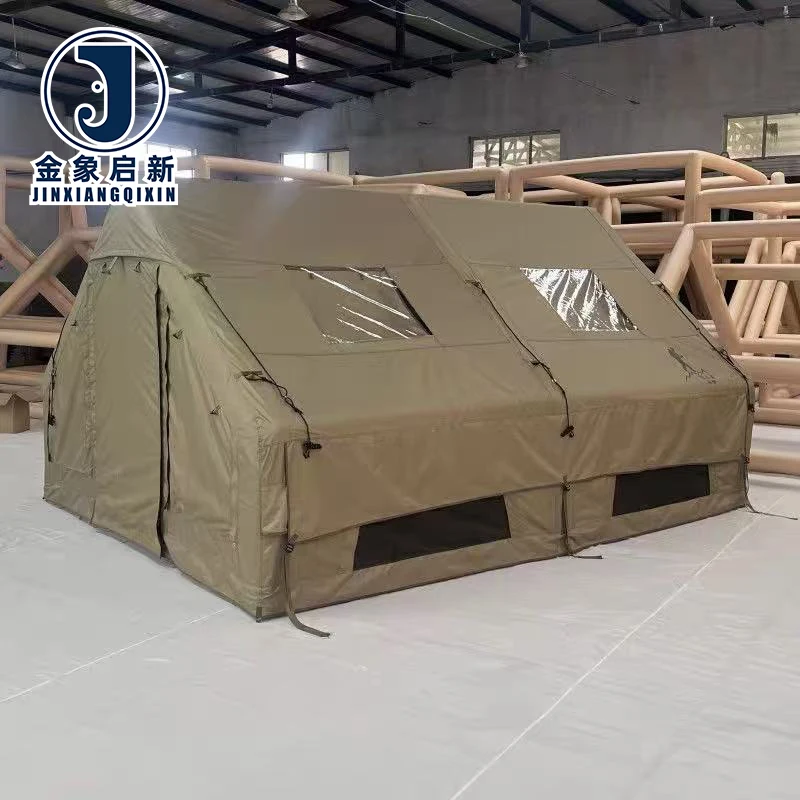
Rapid Deployment Shelter Engineering — Three dedicated production lines manufacture inflatable structures from PVC tarpaulin with 100% pre-shipment inspection, ensuring field-ready reliability when conventional shelters are not an option.
Technical Specifications
| Parameter | Value |
|---|---|
| Product Type | Inflatable Tent |
| Core Material | PVC tarpaulin |
| Product Form | Inflatable structure |
| Key Performance | Waterproof, tear-resistant |
| UV Resistance | Available (test basis not stated) |
| Customization | OEM & ODM — sample customization, pattern printing, size adjustments, material thickness variations |
| Quality System | Full-process QA & QC with dedicated inspection staff |
| Manufacturing Standards | ISO 9001, ISO 14001, ISO 45001, CE |
Application Suitability
| Application | Exposure & Requirement |
|---|---|
| Disaster relief rapid deployment shelters | Immediate weather protection, repeated inflation/deflation cycles, transport abrasion |
| Temporary site offices at construction projects | Continuous outdoor exposure, wind loading on inflatable beams, foot traffic at entry points |
| Equipment storage shelters in remote operations | Moisture ingress prevention, UV exposure over project duration, puncture resistance from stored machinery |
| Mobile command centers for infrastructure maintenance | Rapid setup and teardown, interior climate containment, secure cable routing through fabric |
| Temporary covered workspace for outdoor industrial events | Public-facing appearance, branding surface integrity, structural stability under variable weather |
Why Inflatable Shelter Fabric Integrity Matters More Than You Think
An inflatable tent fails at the coating adhesion point long before the base fabric reaches its tensile limit.
Procurement teams sourcing rapid deployment shelters frequently receive inflatable structures that pass visual inspection but delaminate at the air beam seams after repeated pressurization cycles. The failure is rarely visible during pre-deployment checks. Once the structure is inflated in the field and internal pressure fluctuates with temperature changes, micro-separations at the heat-welded joints allow slow air loss that ground crews attribute to valve defects rather than coating failure [NEED_CITE: coating adhesion test methods for inflatable structures per ISO 2411]. When the inflatable tent manufacturer does not provide batch-level adhesion data, the buyer absorbs the risk of field failure during critical operations.
Air Beam Construction Demands Coating Adhesion Beyond Standard Tarpaulin Grades
The inflatable tent relies on pressurized air beams as its sole structural support, meaning every linear meter of welded seam carries continuous internal pressure throughout deployment. Standard PVC tarpaulin produced for static covers does not require the same peel strength specification. The coating must bond to the base fabric with sufficient adhesion to resist cyclic stress as the beams flex under wind load and thermal expansion. Our R&D team specifies coating formulations that maintain bond integrity across the pressure range encountered in four-season outdoor deployment.
Thermal Welding Parameters Must Match the Specific Coating Weight and Formulation
Each material thickness variation we produce for custom inflatable tent orders requires distinct welding temperature and dwell time settings. A welding profile optimized for a lighter coating will under-penetrate a heavier grade, leaving a cold weld that appears sound but separates under sustained internal pressure. Our 10-technician R&D team develops welding protocols for each production run, documenting the parameters that match your specified material thickness [NEED_CITE: thermal welding parameter documentation for PVC coated fabrics].
Understanding How PVC Tarpaulin Properties Translate to Inflatable Structure Performance
The waterproof performance of the inflatable tent depends on both the coating continuity and the seam integrity across the entire structure. PVC tarpaulin provides inherent moisture barrier properties, but the heat-welded joints that form the air beams and panel connections must achieve equal impermeability. The tear-resistant characteristic of the base fabric determines how well the structure resists propagation damage if the outer surface encounters sharp contact during deployment or transport. UV-resistant formulation options are available for extended outdoor deployment — confirm the specific test basis required for your market and application duration. Material thickness directly influences both the rigidity of inflated beams and the packed weight for transport logistics, creating a specification tradeoff that our team addresses during the sample development phase.
What Happens When Coating Weight Is Quoted but Not Verified at Dispatch
The inflatable tent air beams operate under constant internal pressure, placing continuous peel stress on the coating-to-fabric bond. When the actual coating weight delivered falls below the specification stated on the quotation, adhesion strength drops proportionally. Field crews report progressive air loss that worsens with each inflation cycle, eventually rendering the structure unable to maintain rigidity in moderate wind conditions [NEED_CITE: relationship between coating weight and peel strength in PVC tarpaulin]. The root cause is often identified only after the shelter has been deployed and failed, at which point replacement lead times create operational downtime that procurement did not budget for.
Why This Manufacturer for Your Inflatable Shelter Requirement
Our 9,180 square meter facility operates 3 full production lines with 36 sets of professional processing equipment dedicated to coated fabric conversion, providing the capacity to fulfill bulk inflatable tent orders without splitting production across external workshops. The 10-person R&D team handles material selection and welding protocol development specific to inflatable structure requirements, not generic tarpaulin applications. Every production run undergoes full-process quality inspection by dedicated QA and QC staff, with pre-production samples developed for client approval before mass manufacturing begins. We provide complete documentation packages including material specification sheets, inspection records, and certification documents aligned with ISO 9001, ISO 14001, ISO 45001, and CE standards. Sample development proceeds within days for custom size, thickness, and printing requirements, allowing procurement teams to validate specifications before committing to full production volume.
Documentation & Verification
- Material specification sheet stating PVC tarpaulin type, coating formulation, and confirmed thickness per order
- Quality inspection report traceable by batch number covering coating adhesion and seam integrity checks
- ISO 9001, ISO 14001, ISO 45001, and CE certification documents provided with each shipment
- Pre-production sample approval record confirming dimensional and material specification alignment
- Pattern printing proof and color reference documentation for branded inflatable tent orders
Fabrication, Handling & Storage
- Heat welding temperature must match the specific PVC tarpaulin thickness to ensure full coating penetration at air beam seams
- Inflate structure to partial pressure during storage checks to prevent permanent crease damage to coated surfaces
- Avoid dragging deflated inflatable tent sections across abrasive ground surfaces during deployment to protect outer coating
- Clean PVC tarpaulin surfaces with neutral pH detergents only to prevent chemical degradation of coating formulation
- Store rolled inflatable structures in climate-controlled conditions to prevent low-temperature coating stiffening and cracking
Inquiry Preparation for Custom Inflatable Shelter Orders
Specify the deployment environment and expected duration of continuous inflation to allow our team to recommend appropriate material thickness and UV treatment levels. Provide dimensional requirements including floor area, peak height, and air beam configuration. Indicate whether pattern printing or color matching is required for your application. Confirm any fire safety or compliance standards applicable in your target market so we can align material specifications accordingly.
Frequently Asked Questions
Q: What material thickness options are available for custom inflatable tent orders?
A: We produce inflatable tent structures across a range of PVC tarpaulin thickness grades to match different deployment requirements. Thicker coatings increase air beam rigidity and puncture resistance but add packed transport weight. Our R&D team provides sample units in your specified thickness for field evaluation before mass production begins. Minimum order quantities vary by customization complexity.
Q: How is UV resistance verified for inflatable structures deployed outdoors long-term?
A: UV-resistant formulation is available for inflatable tent applications requiring extended outdoor exposure. The specific test basis and performance grade should be confirmed against your market requirements and expected deployment duration. Request the applicable test documentation when specifying UV treatment for your order to ensure alignment with your project compliance standards.
Q: What is the process for pattern printing and branding on custom inflatable shelters?
A: Pattern printing and color matching proceed through a structured approval workflow. We produce a printing proof for client review before applying graphics to production material. Color references are documented and maintained across production batches to ensure consistency. Sample approval is required before full-run printing commences on your inflatable tent order.
Q: What documentation ships with each inflatable tent batch for import compliance?
A: Each shipment includes material specification sheets, batch inspection reports, and certification documents covering ISO 9001, ISO 14001, ISO 45001, and CE standards. Quality inspection records are traceable by order number. Additional documentation for customs clearance and certificate of origin is provided upon request to support your import process.
Q: How long does sample development take before mass production can begin?
A: Pre-production samples for custom inflatable tent specifications are developed within days of inquiry confirmation. The sample allows verification of material thickness, dimensional accuracy, and printing specifications before committing to full production. Approval of the sample triggers mass manufacturing with full-process quality inspection at every stage.