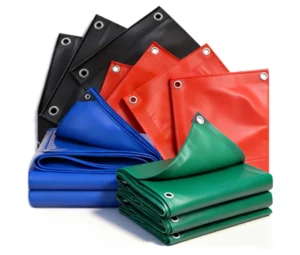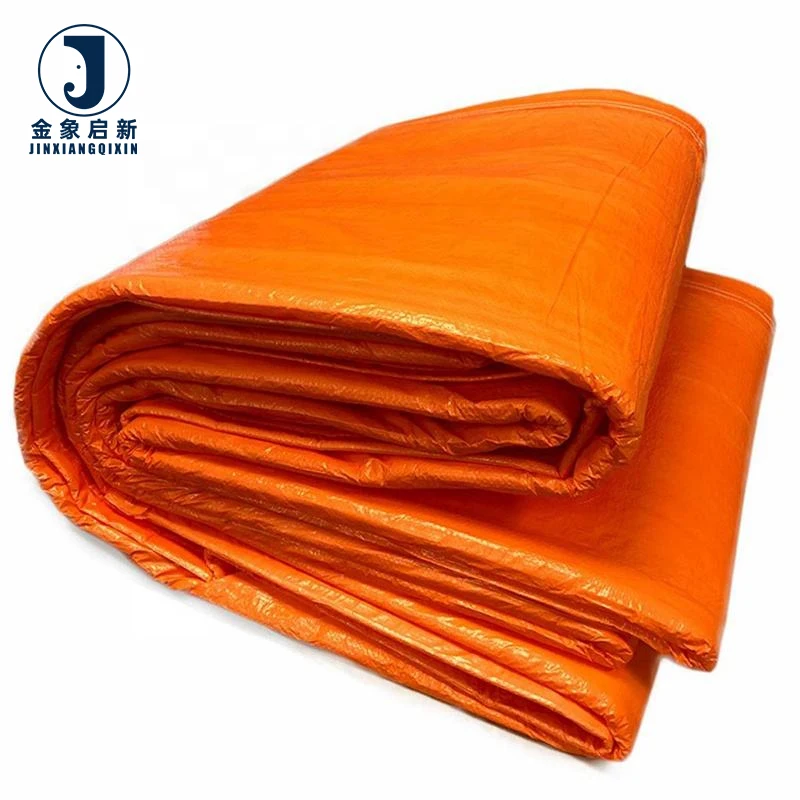
Closed-Cell Foam Core — Three full production lines with dedicated QA at every stage ensure multi-layer PE foam blankets maintain consistent thermal retention and waterproof integrity from first panel to last.
Technical Specifications
| Parameter | Value |
|---|---|
| Product Type | Insulated Tarpaulin |
| Dimensions (ft) | 6×24 / 8×25 / 12×20 / 12×24 |
| Thickness Options | 2×2 mm / 3×1.5 mm / 1×4 mm / 5 mm / 6 mm / 8 mm / 12 mm |
| Material Structure | PE cloth + closed cell PE foam core + PE cloth |
| Grommet Configuration | Aluminum grommets, hole distance 61 cm and 91.5 cm |
| Color Options | Orange / Black / White / Silver / Customized |
| UV Treatment | UV resistant treatment built into base fabric (test basis not stated — confirm before ordering) |
| Water Resistance | Waterproof surface fabric |
| Edge Finish | Reinforcement stitch, rust-proof brass grommets |
Application Suitability
| Application | Exposure & Requirement |
|---|---|
| Concrete curing blanket | Sustained ground contact, moisture exposure, overnight temperature drops requiring continuous thermal retention |
| Heated enclosure insulation | Wind load, internal heat containment, repeated panel removal and reinstallation |
| Vertical wind block and building enclosure | Lateral wind pressure, grommet pull-out resistance, UV exposure on exposed facades |
| Low-temperature weather protection | Snow accumulation, rain ingress prevention, freeze-thaw cycling on active job sites |
| Truck and trailer load insulation | Road vibration, flexing at load edges, cold-weather transport thermal stability |
Why Insulation Thickness Matters More Than Surface Weight on a Truck Enclosure
An insulated concrete curing tarpaulin lives or dies by its core, not its face fabric.
Fleet operators and construction crews often compare blankets by outer fabric weight, but thermal retention in a heated enclosure depends almost entirely on the foam core density and thickness. A blanket with a heavy outer shell but a thin foam layer will lose heat through conduction faster than a lighter-faced blanket with a thicker closed-cell core. When a truck-side enclosure panel cannot hold temperature overnight, the concrete pour fails specification regardless of how strong the outer fabric is. [NEED_CITE: thermal conductivity testing methods for closed-cell foam insulation]
Thermal Containment for Moving Loads and Static Enclosures
When a heated enclosure surrounds a fresh concrete pour or a temperature-sensitive load on a trailer, the Insulated Concrete Curing Tarpaulin aftermarket supplier must deliver panels that seal every gap. Closed-cell PE foam traps air within its structure, resisting moisture absorption that would otherwise collapse the insulation value in wet job site conditions. The waterproof PE cloth on both sides keeps the core dry through rain, snow, and condensation inside the enclosure.
Secure Tie-Down Under Wind Load on Open Sites
Aluminum grommets spaced at 61 cm and 91.5 cm intervals distribute tie-down tension across the blanket edge, preventing localized pull-through when panels hang vertically as wind blocks. Rust-proof brass grommet hardware resists corrosion from de-icing salts and construction site chemicals. Reinforcement stitching along every finished edge adds a secondary load path, so a single grommet failure does not propagate a tear across the panel width. [NEED_CITE: grommet pull-out test methods for reinforced tarpaulins]
Reading the Thickness Options for Your Climate Zone
The available thickness range — from 2×2 mm up to 12 mm — reflects different insulation requirements rather than a simple quality ladder. Thinner grades such as 2×2 mm suit short-duration curing in mild cold, where the primary need is wind blocking and moisture protection. Mid-range options like 5 mm and 6 mm address sustained overnight temperature drops in temperate winter zones. The 8 mm and 12 mm grades target deep-freeze conditions or extended curing cycles where heat loss through a thin core would compromise concrete strength gain. The closed-cell structure across all grades prevents water ingress from wet curing compounds or rain pooling on horizontal surfaces.
What Happens When Enclosure Panels Are Sized Wrong
Generic-size blankets that do not match the trailer bed or curing area force crews to overlap panels, creating uninsulated gaps where heat escapes at the seams. On vertical building enclosures, undersized panels leave exposed strips of formwork that freeze overnight, defeating the purpose of the heated perimeter. Oversized panels add dead weight and catch more wind, increasing grommet load until reinforcement stitching begins to pull apart. Every panel should fit its designated section with enough grommet overlap for secure lashing, no more and no less. [NEED_CITE: heat loss through uninsulated gaps in temporary building enclosures]
Why Procurement Teams Source Insulated Blankets Here
Three full production lines with 36 sets of professional equipment support bulk panel orders across multiple thickness grades without splitting the run across subcontractors. The 10-person R&D team develops custom cut sizes and colour samples within days, so fleet operators can match blanket panels to existing enclosure hardware before committing to a full container load. Dedicated QA/QC inspection at every production stage — from foam core lamination to grommet pressing — catches delamination and spacing deviations before panels reach pre-shipment audit. Material specification sheets accompany every dispatch, stating the exact thickness grade, structure composition, and colour reference for each roll or cut panel.
Documentation & Verification
- Material spec sheet stating PE foam core thickness, structure layers, and colour reference per panel
- Pre-shipment inspection record confirming grommet spacing at 61 cm and 91.5 cm intervals
- UV treatment test documentation available upon confirmation of required test basis
- Edge reinforcement stitch inspection log per finished panel before packing
- Certificate of origin and customs documentation included with every export shipment
Fabrication, Handling & Storage
- Use heat-sealing parameters matched to PE cloth melting point — the closed cell PE foam core compresses under excessive pressure
- Reinforcement stitch lines carry the primary edge load; avoid placing grommets through unstitched zones
- Store folded panels flat to prevent permanent crease lines in the PE foam core
- Deploy panels above freezing temperature to maintain PE cloth flexibility during unfolding
- Clean surfaces with mild detergent only — solvents may degrade the waterproof PE coating layer
What to Include in Your Enquiry
Provide the target enclosure dimensions or concrete pour area so we can recommend the closest standard cut size or propose a custom panel layout. Specify the expected low-temperature range and curing duration to match the correct foam core thickness grade. Indicate any colour consistency requirements across multiple panels in a single installation, and confirm whether you need the standard grommet spacing or an alternative hole distance for your tie-down hardware.
Frequently Asked Questions
Q: What thickness do I need for my climate and curing duration?
A: Thinner grades such as 2×2 mm suit short-term curing in mild conditions, while 8 mm or 12 mm blankets target extended exposure in deep-freeze environments. The closed-cell PE foam core thickness directly determines thermal retention capacity. Share your lowest expected temperature and required curing window so we can match the appropriate grade to your specification.
Q: Can these blankets be hung vertically as a wind block or enclosure wall?
A: Yes. The aluminum grommets at 61 cm and 91.5 cm spacing are designed for both horizontal coverage and vertical hanging. Reinforcement stitching along all finished edges distributes wind load across the panel. Specify the panel height and expected wind exposure so we can confirm grommet spacing meets your tie-down hardware arrangement.
Q: How do I secure the blanket — what grommet spacing is available?
A: Standard configuration includes rust-proof brass and aluminum grommets at 61 cm and 91.5 cm intervals. This spacing balances tie-down security against edge stress concentration. If your enclosure frame or truck-side rail requires a different hole distance, confirm the measurement in your enquiry and we will adjust the punching pattern before production.
Q: Is the surface truly waterproof in sustained rain and snow?
A: The PE cloth outer layers are stated as waterproof, and the closed-cell PE foam core does not absorb moisture, which preserves insulation value even when the surface is wet. For projects requiring documented water resistance testing, request the test basis with your sample approval so the performance claim matches your site specification.
Q: Can I order custom sizes or colors for a large project?
A: Custom cut sizes and colour options beyond Orange, Black, White, and Silver are available. Batch colour consistency across multiple panels is maintained through controlled PE cloth sourcing per production run. Confirm your panel count, colour requirement, and minimum order quantity per thickness grade when submitting your enquiry.