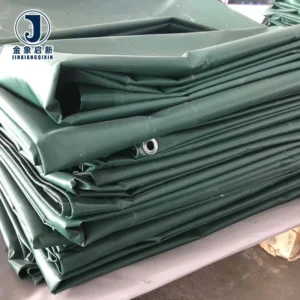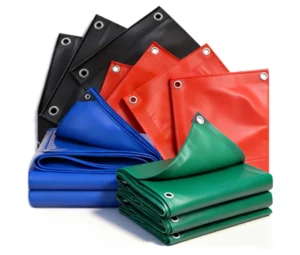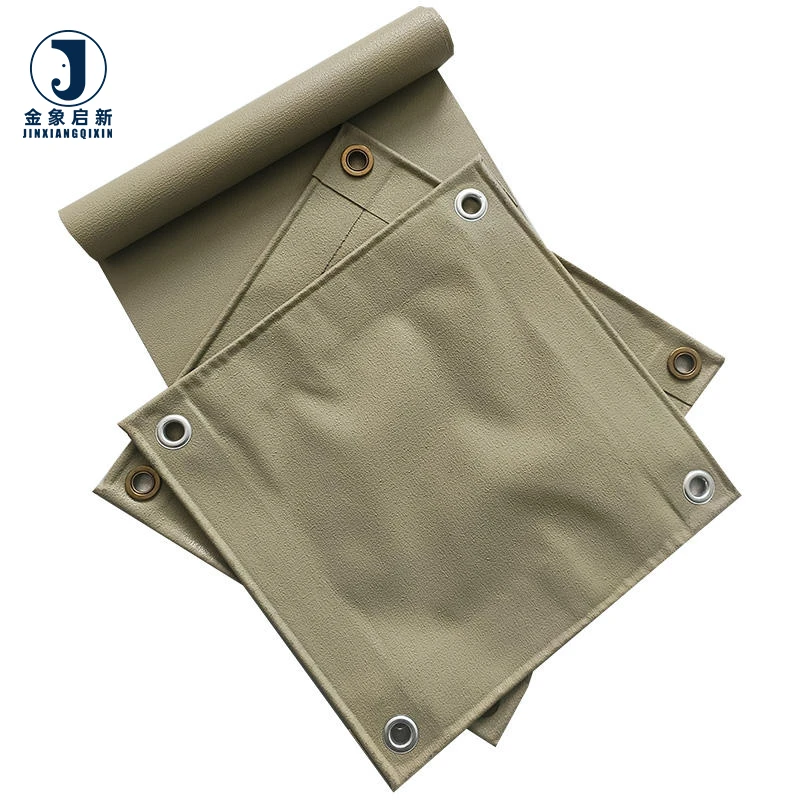
Precision-Coated Fabric — Knife coating process controls PVC adhesion and GSM uniformity across every roll, verified by pre-shipment inspection before dispatch.
Technical Specifications
| Parameter | Value |
|---|---|
| Product Type | PVC Coated Tarpaulin |
| Base Fabric | Woven Fabric |
| Coating Material | PVC Vinyl |
| Coating Method | Knife Coated |
| Weight | At least 450 g/m² |
| Waterproof | Yes |
| Anti-UV | Yes (test basis not stated) |
| Oilproof | Yes |
| Tear-Resistant | Yes |
| Custom Size | Available |
Application Suitability
| Application | Exposure & Requirement |
|---|---|
| Truck side curtains | Constant flexing at load points, road abrasion, weather and UV exposure |
| Flatbed load covers | Direct rainfall, wind uplift at speed, tie-down stress at hems |
| Trailer roof sheeting | Ponding water, thermal cycling, hail impact |
| Outdoor equipment covers | Long-term UV exposure, dust and moisture ingress |
| Industrial structure protection | Wind load, temporary weather enclosure on construction sites |
Why Generic-Sized Truck Covers Fail Before the Fabric Does
A cover that does not match your trailer model creates loose fabric, flapping damage and exposed loads — custom-cut dimensions eliminate the failure at the source.
Fleet operators replacing PVC Coated Tarpaulin for truck and transport covers often find that generic-sized sheets flap in transit, concentrating abrasion at the points where the material folds against the trailer frame. The weld seams take the brunt of this movement and fail long before the fabric itself reaches end of life. [NEED_CITE: flex fatigue and seam failure in transport covers]. Loose fabric also exposes the load to road spray and weather, defeating the purpose of the cover. Cut-to-model sizing removes the excess material that causes flapping and keeps tie-down loads distributed across the full reinforced hem.
Matching the Cover to the Trailer Profile
Every trailer model has a different frame geometry, curtain track profile and tie-down arrangement. This PVC Coated Tarpaulin for truck and transport applications is available in custom dimensions confirmed against specific vehicle measurements before production begins. Side curtain fabric must clear the curtain runners without binding, while flatbed covers need enough material to drape over the load without stretching taut across sharp edges. Getting these dimensions right at the specification stage prevents costly rework after delivery.
Controlling Roll-to-Roll Consistency Across Fleet Orders
When a fleet operator orders multiple covers for identical trailers, colour variation between rolls becomes immediately visible once the sheets are installed side by side on adjacent vehicles. Dedicated QA/QC at every production stage ensures colour consistency across the entire batch. The coating weight and GSM are monitored throughout the run so that each roll performs identically under the same flex and abrasion conditions [NEED_CITE: batch consistency standards for coated fabric in transport applications].
How Coating Weight and Base Fabric Work Together
The at least 450 g/m² weight stated for this knife-coated PVC tarpaulin reflects the combined mass of the woven base fabric and the PVC coating applied to both sides. GSM alone does not determine tear or tensile strength — the base fabric denier and weave density govern how the material resists tearing once a puncture starts. Knife coating ensures the PVC penetrates the weave and bonds uniformly to the yarn, which directly affects peel strength at welded seams. A heavier coating on a loosely woven base may feel substantial but can delaminate under flex stress, while a lighter coating on a tightly woven base can outperform it in tear resistance. Understanding this relationship helps buyers specify on actual performance requirements rather than weight alone.
The Hidden Cost of Under-Specifying Transport Covers
A cover ordered at the minimum GSM to save cost may pass initial inspection but fail at the weld line within months of daily flexing on a side curtain application. When anti-UV treatment is claimed without a supporting test report, the buyer has no basis to predict how the material will hold up after prolonged sun exposure on an open flatbed. Colour shifts between production batches force a fleet operator to replace an entire set of covers rather than a single damaged sheet. These failures are not fabric defects — they are specification errors that surface only after the covers enter service [NEED_CITE: common specification gaps in transport tarpaulin procurement].
Why Source This PVC Coated Tarpaulin Here
Three full production lines and 36 sets of professional equipment support bulk capacity with on-time delivery for fleet-scale orders. The 10-person R&D team handles custom sizing, pattern layout and sample development specific to truck and trailer profiles. Every roll undergoes dedicated QA/QC at each production stage, with a pre-shipment inspection record provided before dispatch. Samples for custom dimensions or treatment grades are developed within days so buyers can verify fitment before committing to full production. Nearly 30 years of process control over coating weight and adhesion underpins the consistency buyers see across repeat orders.
Documentation & Verification
- Material specification sheet confirming GSM, base fabric, coating weight and colour reference
- Weight verification per roll against the stated GSM before dispatch
- Pre-shipment inspection record covering every roll in the order
- ISO and CE certificates included with full shipment documentation
- Certificate of origin and customs support documentation provided
Fabrication, Handling & Storage
- Heat welding parameters must match the knife-coated PVC layer thickness for full seam adhesion
- Reinforce hem and tie-down areas where the woven base carries concentrated load
- Store rolls upright on a flat surface to prevent permanent creasing in the PVC coating
- Allow cold-stored rolls to reach ambient temperature before unrolling to avoid coating crack
- Use mild detergent for cleaning — solvent-based agents can degrade the PVC surface
- Plan cutting layout to minimise off-cuts and reduce the number of welded joins per cover
What to Include in Your Inquiry
Provide the truck or trailer model and the type of cover required — side curtain, flatbed sheet or full enclosure. Confirm whether anti-UV or flame-retardant grades are needed for your operating market and specify any target compliance standards. State the quantity of covers or linear metres of roll stock required and whether custom colour matching across the batch is necessary.
Frequently Asked Questions
Q: How is the GSM verified on delivery against the quoted specification?
A: Each roll is weighed and measured during the pre-shipment inspection, and the recorded GSM is documented on the inspection report included with your shipment. This verification happens before dispatch so any deviation from the quoted weight is caught before the goods leave the facility.
Q: Can the tarpaulin be cut to fit specific truck and trailer model dimensions?
A: Yes. Provide the trailer model, frame measurements and curtain track details so the cover can be cut to match. The dimensions are confirmed with you before production begins, ensuring the finished cover fits without excess material that causes flapping in transit.
Q: What is the test basis for the anti-UV treatment and expected outdoor service life?
A: Anti-UV treatment is applied during the coating process. Request the available test reports for the specific grade you require, as test methods and performance levels vary. Confirm the UV standard required for your market when placing the inquiry.
Q: How is batch colour consistency maintained across multiple rolls for fleet-wide fitment?
A: Colour is controlled at the coating stage with dedicated QA/QC checks at every production step. Each roll in the batch is compared against the approved colour reference before packing, and the inspection record documents the result for your verification.
Q: What eyelet spacing and reinforced hem options are available for tie-down loads?
A: Eyelet spacing and hem reinforcement are configured to match your tie-down arrangement and load requirements. Specify the spacing, hem width and reinforcement method during the inquiry so the fabrication team can prepare the correct pattern before cutting.