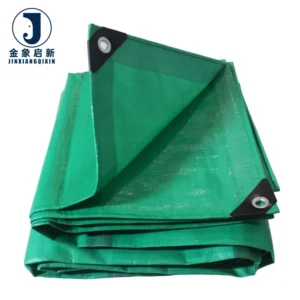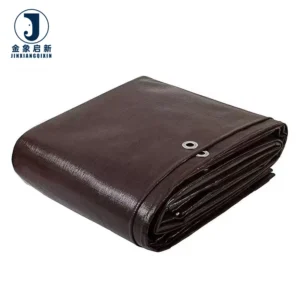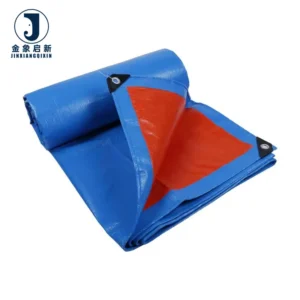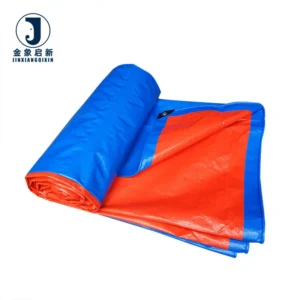
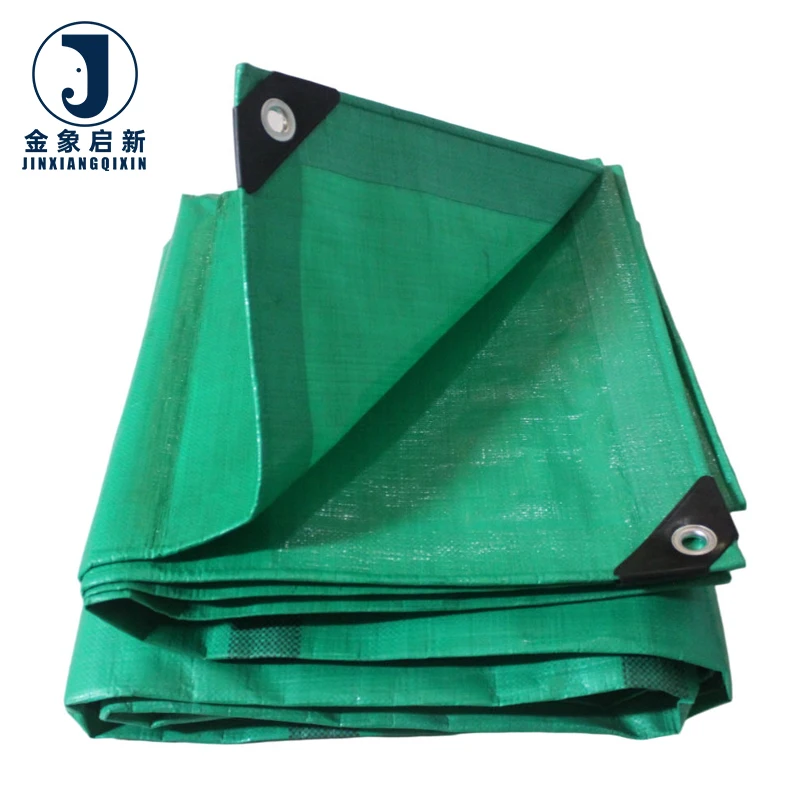
Fleet-Matched Fitment — HDPE woven PE tarpaulin cut to your exact trailer model with PP rope reinforced hems and galvanized eyelets aligned to tie-down rails, ensuring covers stay secure under road flex and weather exposure.
Technical Specifications
Product Type | PE Tarpaulin
| Parameter | Value |
|---|---|
| Base Fabric | HDPE weaving |
| Coating / Lamination | LDPE lamination on both sides |
| Weight Range | 50 gr/m² ~ 220 gr/m² (confirm grade for your application) |
| Thickness | 0.2–0.4 mm / 8–16 mil |
| Roll Width Options | 6 ft, 8 ft, 10 ft, 12 ft / 2 m, 4 m, 6 m |
| Roll Length Options | 100 yards, 100 meters, or custom |
| Finished Size Options | 2×2 m, 3×3 m, 3×5 m, 4×4 m, 4×5 m, 4×6 m, 4×8 m, 4×10 m, 5×5 m, 5×6 m, 5×8 m, 5×10 m, 6×6 m, 6×8 m, 6×10 m, 8×10 m and imperial equivalents |
| Colour Options | Blue, Blue/Orange, Green, Grey, Black, Clear, Grey/Green, Orange, or custom |
| Edge Treatment | PP rope reinforced hem on all four edges |
| Eyelet Specification | Galvanized eyelets every 3 ft or 1 m interval; reinforced plastic corners |
| Waterproof | Yes |
| Mildew Resistance | Yes |
| UV Treatment | Available (test basis not stated — confirm requirement) |
| Anti-Aging | Anti-oxidant additive |
| Corrosion Resistance | Acid and alkali resistant |
| Printing | Custom printing available |
| Standards | ISO, CE |
Application Suitability
| Application | Exposure & Requirement |
|---|---|
| Flatbed truck and trailer load covering | Constant road vibration, tie-down strap abrasion, UV and rain exposure during transit |
| Side curtain fabric for transport equipment | Repeated flexing at fold lines, wind load, contact with cargo edges |
| Open-bed trailer weather protection for owner-operators | Seasonal temperature variation, prolonged sun exposure, manual handling and folding |
| Construction equipment and material covers on transport | Puncture risk from sharp loads, dirt and debris contact, short-term to medium-term outdoor storage |
| Agricultural stock covering during haulage | Moisture contact, chemical exposure from fertiliser or feed residue, UV degradation |
When Eyelet Alignment Fails Before the Fabric Does
Generic-size PE tarpaulin for truck and transport covers leave gaps at the edges and place eyelets where your trailer’s tie-down rails are not.
A cover cut to a standard dimension rarely matches the exact bed length, width and rail spacing of a specific trailer model. Eyelets land between tie-down points, forcing operators to improvise with extra rope or bungee cords that shift under vibration [NEED_CITE: fleet maintenance data on tarpaulin tie-down failure modes*forcement begins to pull through at the stress points long before the HDPE weave itself shows wear. For transport fleets running mixed vehicle models, this mismatch compounds across every truck in the yard — each cover slightly wrong, each load slightly exposed.
Cut-to-Model Sizing for Real Trailer Configurations
PE tarpaulin for truck and transport supplied as finished pieces is cut to the exact bed dimensions of your trailer model, not to a catalogue standard. The process starts with your vehicle specification — bed length, bed width, rail spacing and required overhang — then translates those measurements into a finished panel with eyelets positioned to align with your existing tie-down hardware. This eliminates on-site modification and ensures every cover in a fleet order fits the same way across identical or similar units.
Hem and Eyelet Reinforcement Built for Road Flex
The PP rope reinforced hem runs continuously on all four edges, distributing strap tension across the full edge length rather than concentrating it at isolated eyelet points. Galvanized eyelets are set at 3 ft or 1 m intervals, matched to standard tie-down rail spacing used across North American and European trailer designs [NEED_CITE: tie-down hardware spacing standards for commercial trailers]. Reinforced plastic corners add a second layer of protection at the highest-wear junctions where two hems meet and where folding stress concentrates during manual handling.
Understanding HDPE Weave and LDPE Lamination as a Transport System
The HDPE woven base provides the structural grid — warp and weft density determine how the fabric resists tear propagation when a sharp cargo edge presses against it under strap tension. The LDPE lamination on both sides seals the weave, creating the waterproof barrier and adding resistance to abrasion from repeated folding and contact with load surfaces. Together, the weave density and lamination thickness determine how the PE tarpaulin for truck and transport performs at flex points — the areas where side curtains bend, where flatbed covers wrinkle under wind load, and where eyelet holes experience repeated stress during transit. GSM alone does not capture this interaction; a heavier fabric with loose weave may underperform a lighter one with tighter weave density when subjected to the same road conditions.
The Hidden Cost of Specifying by GSM Alone
Fleet operators who select PE tarpaulin for truck and transport based on quoted GSM without verifying arrival weight face a predictable failure sequence. Material lighter than specified stretches more under strap tension, accelerates UV degradation at thinner cross-sections, and loses hem adhesion faster at fold lines [NEED_CITE: coated fabric weight verification and field failure correlation]. The result is not a single catastrophic tear but a fleet-wide pattern of premature replacement — covers that look adequate on day one but show hem separation, eyelet pull-through and surface cracking well before the expected service window closes. Colour variation between rolls in the same order compounds the problem when covers are installed side by side on a uniform fleet, creating visible inconsistency that undermines fleet presentation standards.
Why Fleet Operators Source This PE Tarpaulin from Jinan Jinxiang
Three full production lines and 36 sets of professional equipment support bulk roll and finished-piece output with consistent lead times across fleet-scale orders. A dedicated 10-person R&D team handles custom sizing to specific trailer models, colour matching for fleet branding, and sample development within days for fitment trials on target vehicles. Dedicated QA/QC at every production stage includes 100% pre-shipment inspection with eyelet pull tests and hem adhesion checks, verified against pre-agreed specifications. Material specification sheets state GSM, base fabric, coating type and colour reference for every roll, enabling receiving teams to confirm arrival quality against the purchase order. Custom width, length and eyelet spacing are available without the extended lead times and high minimums that typically apply to transport-spec covers from other suppliers.
Documentation & Verification
- Material specification sheet stating GSM, base fabric weave and LDPE lamination details per roll
- Pre-shipment inspection record confirming finished dimensions against agreed trailer model
- Roll packing list with individual roll weight, width and length for receiving verification
- Certificate of origin and customs support documentation for cross-border fleet procurement
- ISO and CE certificates available for compliance file reference
- Colour reference sample and batch consistency record for multi-roll fleet orders
Fabrication, Handling & Storage
- Store rolls upright on pallets to avoid flat-spot creasing in the LDPE lamination layer
- Allow rolls to acclimate to site temperature before unfolding to prevent surface cracking in cold conditions
- Use mild soap and water for cleaning; avoid solvent-based agents that may degrade the LDPE coating
- Inspect PP rope hem and galvanized eyelets periodically for abrasion at high-flex fold lines
- Patch tears with compatible PE tape applied to clean, dry LDPE-laminated surface
- Plan cutting layout across full roll width to minimise waste on custom finished sizes
Specifying Your PE Tarpaulin for Truck and Transport
Provide your trailer model, bed dimensions, tie-down rail spacing and required overhang to receive a finished-size recommendation. Indicate your preferred GSM range, colour and whether UV treatment verification is required for your operating region. Specify whether you need finished pieces with reinforced hems and eyelets, or rolls for in-house fabrication, along with estimated annual volume to determine production scheduling.
Frequently Asked Questions
Q: How do I specify the right finished size for my specific truck or trailer model?
A: Provide your trailer bed length, bed width, tie-down rail spacing and the overhang you need on each side. The R&D team translates these measurements into a finished PE tarpaulin with eyelets positioned to match your existing hardware. A sample can be developed within days for a physical fitment trial on your target vehicle before committing to a full fleet order.
Q: What eyelet spacing and hem reinforcement do you recommend for side curtain applications?
A: Galvanized eyelets are available at 3 ft or 1 m intervals, aligned to standard tie-down rail spacing. The PP rope reinforced hem runs continuously on all four edges to distribute strap tension across the full edge length. Reinforced plastic corners are added at high-stress junctions where two hems meet and folding stress concentrates during manual handling.
Q: Can you match our fleet colour across multiple roll orders placed at different times?
A: Yes. Each production batch is matched to an agreed colour reference, and a batch consistency record is maintained. When you place repeat orders, the colour reference from your original specification is used to ensure visual consistency across rolls produced in different production runs, avoiding visible variation when covers are installed side by side.
Q: What documentation confirms the GSM and UV treatment on arrival?
A: Every roll ships with a material specification sheet stating the GSM, base fabric weave, LDPE lamination details and colour reference. UV treatment availability is noted on the specification sheet; confirm the test basis required for your market, as treatment options are available but test certification basis should be verified against your compliance needs before ordering.
Q: How do you handle custom width and length orders for non-standard trailer sizes?
A: Custom widths are available across the full roll width range, and custom lengths can be specified beyond standard 100-yard or 100-meter rolls. Provide your exact dimensions and the R&D team will confirm feasibility, production scheduling and minimum order requirements. Finished pieces with custom eyelet spacing and hem reinforcement are also available for non-standard configurations.