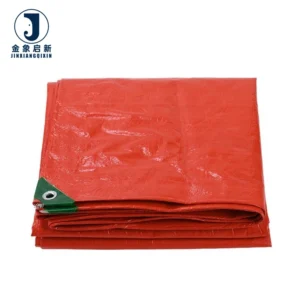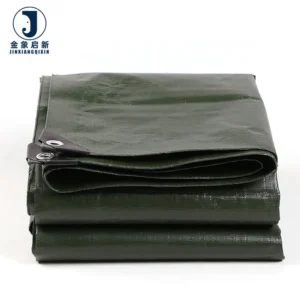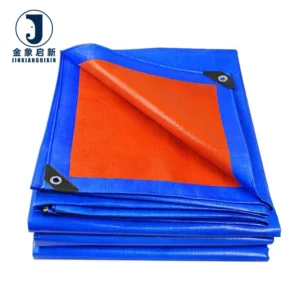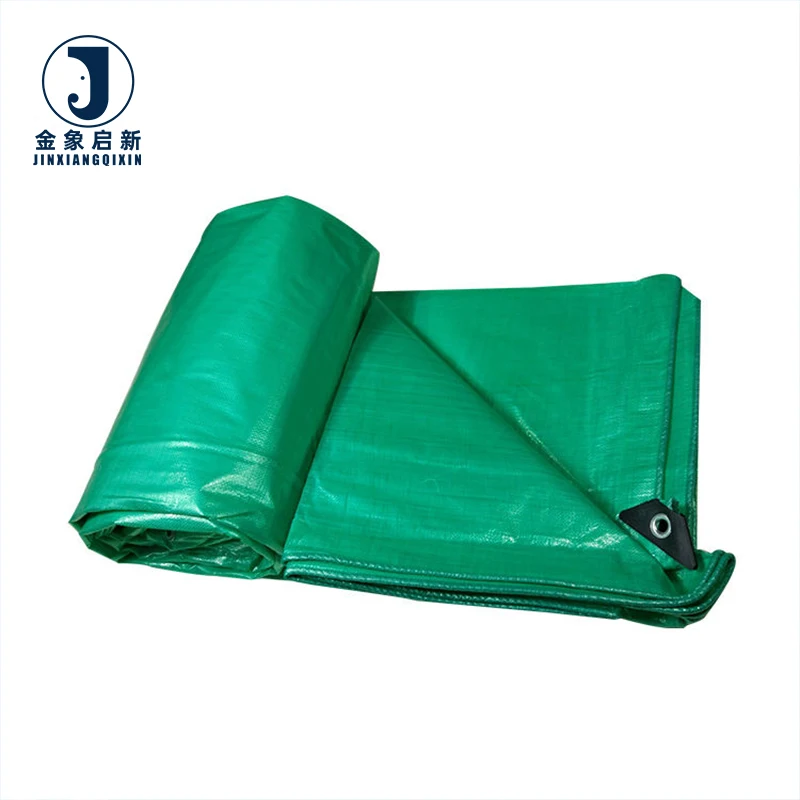
Process Control Over Coating Weight — Every roll of PE tarpaulin we extrude and laminate is weighed and measured against the stated GSM before it leaves the line, so the material you receive matches the specification you approved.
Technical Specifications
| Parameter | Value |
|---|---|
| Product Type | PE Tarpaulin |
| Material | HDPE woven base with LDPE lamination on both sides |
| Weight Range | 50 g/m² – 300 g/m² depending on weave density |
| Weave Density Options | 6×6, 6×7, 7×7, 7×8, 8×8, 9×9, 8×10, 10×10, 12×12, 14×14, 14×16 |
| Total Thickness | 0.2 mm – 0.4 mm (8 mil – 16 mil) |
| Roll Width Options | 6 ft, 8 ft, 10 ft, 12 ft, 2 m, 4 m, 6 m |
| Roll Length Options | 100 yards, 100 meters, or custom |
| Edge Reinforcement | PP rope in hem on all four edges |
| Eyelet Spacing | Galvanized eyelets every 3 ft or 1 m interval |
| Corner Reinforcement | Reinforced plastic corners |
| UV Treatment | Available — confirm duration requirement for your route climate |
| Key Features | Waterproof, mildew proof, anti-aging, tear resistant, washable |
Application Suitability
| Application | Exposure & Requirement |
|---|---|
| Flatbed truck cover | High-speed wind load, tie-down tension at eyelets, continuous UV and rain exposure |
| Curtain-side trailer fabric | Repeated flexing at folds, road spray abrasion, lateral tension during transit |
| Container top cover | Static load bearing, long-term UV exposure at port or yard, salt air in coastal routes |
| Boat transport wrap | Water immersion during loading, abrasion from hull contact, UV during open storage |
| Equipment and machinery cover | Outdoor parking exposure, dust and moisture ingress, wind flap fatigue at edges |
Why Generic-Sized PE Tarpaulin Covers Fail on the Highway
A cover that does not match your trailer dimensions leaves gaps where wind enters and cargo shifts, regardless of how heavy the fabric is.
Fleet operators who order off-the-shelf sizes often find that a few inches of overhang or shortfall creates flapping at highway speed. That flapping concentrates stress at the eyelets and hem, tearing the fabric long before UV degradation becomes a factor. I have watched transport teams replace covers mid-route because a generic size caught crosswind on a flatbed and ripped at the corner reinforcement. A PE Tarpaulin for trucks and transport must be specified to the exact trailer model, with eyelet spacing and hem construction designed for the tie-down system the fleet already uses. [NEED_CITE: wind load stress concentration at tarpaulin eyelet points during highway transit]
Cut-to-Model Fitment for Flatbed and Curtain-Side Trailers
A PE Tarpaulin for trucks and transport performs only when it stays flat against the load. Custom sizing starts with your trailer model and tie-down configuration — we develop the pattern and send a sample for approval before production runs. The four-edge PP rope reinforcement and galvanized eyelet placement are set to align with your existing ratchet straps, eliminating the need for additional bungees or rope that introduce uneven tension points.
Reinforcement at the Points Where Highway Loads Flex Most
The corners and edges of a truck cover experience the highest mechanical stress during transit. Every finished cover we produce includes reinforced plastic corners and PP rope running through the hem on all four sides. This construction spreads the tie-down load across a wider fabric area instead of concentrating it at a single eyelet puncture. Galvanized eyelets are set at intervals matching standard strap spacing, so the cover sits tight without slack sections that vibrate and fatigue in crosswinds. [NEED_CITE: eyelet pull-out failure modes in polyethylene tarpaulins under dynamic loading]
Weave Density and GSM Selection for Your Load Profile
The HDPE woven base determines how the fabric resists tearing when a strap pulls tight or cargo shifts against the cover. Lower density weaves such as 6×6 or 7×7 suit lighter loads and shorter routes, while 12×12 and above provide the tear resistance needed for long-haul flatbeds carrying heavy machinery or steel. GSM alone does not define strength — a 140 GSM fabric with 12×12 weave behaves differently from a 140 GSM fabric with a looser base, because the yarn count and tension during weaving set the baseline tensile and tear performance before lamination is applied.
What Happens When Weave Density Does Not Match the Route
Selecting a lighter weave for a long-haul route often shows no problem during the first few trips. The LDPE lamination holds water out, and the cover looks intact at visual inspection. But the base fabric is absorbing flex stress on every trip, and once a yarn breaks at a high-tension point — usually near an eyelet or corner — the tear propagates quickly along the weave line. Operators who standardize on a single GSM across an entire mixed fleet end up replacing covers on heavy-load vehicles far sooner than expected, while over-specifying for light-load vehicles that never needed the extra weight. [NEED_CITE: relationship between HDPE weave density and tear propagation in laminated tarpaulins]
Why Batch Consistency Matters Across a Fleet
When you order covers for ten trailers and the blue shade varies from roll to roll, the difference is immediately visible once the fleet is parked together. Color inconsistency across batches is a common complaint from fleet operators who source from suppliers without controlled pigment dosing. We run dedicated QA checks at the lamination stage to confirm roll-to-roll color consistency, because fleet branding depends on every vehicle presenting the same appearance at the yard and on the road.
Production Capability Behind Every Truck Cover Order
Three full production lines and 36 sets of professional equipment mean that a 500-piece custom cover order does not displace your roll stock schedule. The 10-person R&D team develops the pattern from your trailer drawings and produces a sample within days for fitment approval. QA inspection runs at every stage — base fabric weave check, lamination weight verification, eyelet placement confirmation — with 100 percent pre-shipment inspection on finished covers. This production discipline supports reliable on-time dispatch whether you need a trial batch or a container load.
Documentation & Verification
- Material spec sheet listing confirmed GSM, weave density, and LDPE coating weight per roll
- UV treatment test report documenting exposure duration and retention results for the grade supplied
- Pre-shipment inspection record with eyelet count and spacing verification per cover
- Roll packing list matched to container load plan for customs clearance
- ISO and CE certificates covering the production facility and processes
Fabrication, Handling & Storage
- Heat-seal the LDPE surface at temperature settings matched to the lamination thickness to avoid delamination at seams
- Punch eyelets through the PP rope hem, not through the flat fabric, to distribute tie-down load correctly
- Store rolls upright on a flat surface to prevent permanent creasing in the HDPE woven base
- Unfold covers in temperatures above freezing to prevent cracking of the LDPE lamination at fold lines
- Clean with mild detergent and soft brush — avoid solvents that degrade the LDPE surface coating
What We Need to Prepare Your Quotation
To match the correct weave density and sizing to your fleet, provide the trailer model and dimensions, your standard tie-down strap spacing, and the primary route climate. If your company requires a specific color code for fleet branding, send the Pantone or RAL reference so we can confirm pigment availability and produce a color swatch for approval before the production run begins.
Frequently Asked Questions
Q: How do I measure my trailer to get a cover that fits properly?
A: Measure the load bed length, width, and the height from the bed to the top of the highest load point. Add the drape allowance you need on each side — typically enough to reach the tie-down rail. Provide these dimensions along with your strap spacing so we can set eyelet positions to match, and we will send a cutting pattern for your review before production.
Q: How does eyelet spacing affect the cover at highway speeds?
A: Wider eyelet spacing leaves unsupported fabric sections that flap and fatigue in crosswinds. Our standard galvanized eyelets are set every 3 ft or 1 m, which aligns with most ratchet strap configurations. If your tie-down system uses closer spacing, we adjust the eyelet layout on the pattern so every strap has a reinforced anchor point through the PP rope hem.
Q: Which GSM and weave density should I choose for long-haul truck covers?
A: Long-haul routes with heavy loads typically require a denser weave such as 10×10 or 12×12 to resist tear propagation under continuous tie-down tension and wind load. The GSM that corresponds to your selected weave gives you the weight reference, but the weave density is what determines how the fabric handles flex stress over repeated trips. We recommend a sample for fitment and field testing on one vehicle before fleet-wide rollout.
Q: Can you match our fleet color across multiple production batches?
A: Yes. We control pigment dosing at the lamination stage and run roll-to-roll color checks during QA inspection. When you provide your Pantone or RAL reference, we produce a color swatch for approval. Once approved, that reference is locked for all subsequent orders, so replacement covers match the originals parked side by side in your yard.