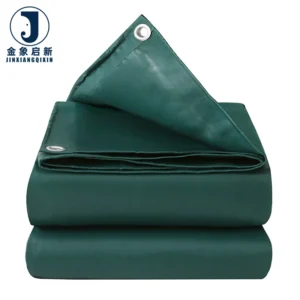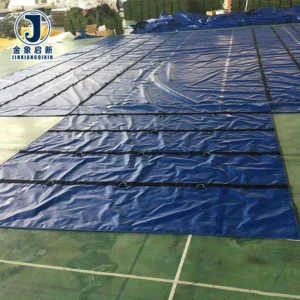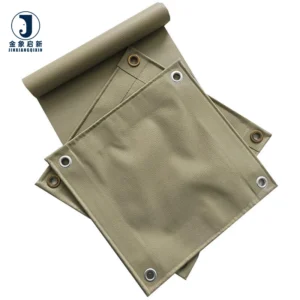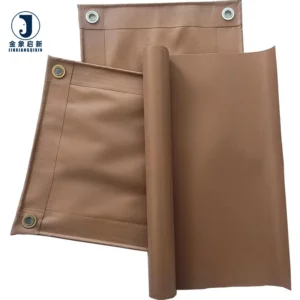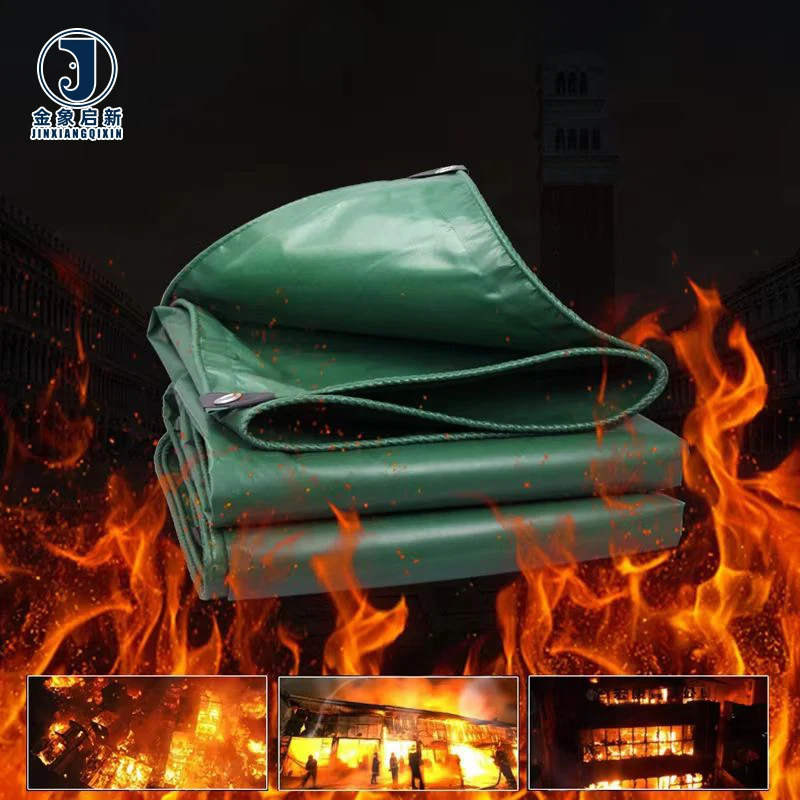
Precision Coating Control — Three full production lines maintain consistent GSM weight and adhesion across every roll of PVC Coated Tarpaulin, with dedicated QA/QC inspecting coating thickness before the fabric leaves the factory.
Technical Specifications
| Parameter | Value |
|---|---|
| Product Type | PVC Coated Tarpaulin Roll |
| Coating Material | PVC |
| Coating Method | Knife Coated |
| Weight | At least 450 GSM |
| Base Fabric | 1000×1000 Denier Woven |
| Waterproof | Yes |
| Anti-UV Treatment | Available (test basis not stated) |
| Tear-Resistant | Yes |
| Oilproof | Yes |
| Finish Options | Glossy or matte |
| Custom Size | Available |
| Standards | ISO, CE |
Application Suitability
| Application | Exposure & Requirement |
|---|---|
| Truck and trailer side curtains | Constant flexing at highway speed, road spray, abrasion against load edges, UV exposure on long-haul routes |
| Transport load covers | Tie-down strap pressure at eyelet zones, wind flap stress, repeated folding and unfolding at depots |
| Vehicle and equipment covers | Rain and snow pooling on horizontal surfaces, dust ingress prevention, daily handling and repositioning |
| Construction site enclosures | Impact from scaffolding and materials, wind uplift on temporary fencing, mud and chemical splash contact |
Why Generic-Size Covers Fail Before the Fabric Does
A truck cover cut to a standard dimension will always find its weakest point at the seam, not the material.
When a PVC coated tarpaulin for truck and transport is ordered in a generic size rather than matched to the specific trailer model, the excess fabric flaps under aerodynamic load at speed. This constant movement concentrates stress at welded seams and eyelet zones. The fabric itself may still hold its tensile strength, but the cover fails where the flex is greatest — at the hem, the weld line, or the point where the tie-down strap pulls through a poorly reinforced edge. Fleet operators replacing covers every season often blame the material weight, when the real issue is the fit and the reinforcement detail at stress points. [NEED_CITE: stress concentration at flex points in coated fabric assemblies]
Cut-to-Model Fitment for Fleet-Specific Dimensions
Every trailer model has different corner radii, door frame clearances, and side curtain track profiles. A PVC coated tarpaulin for truck and transport must be measured against the actual vehicle, not a catalogue dimension, to eliminate the loose fabric that causes wind flap and premature weld failure. Custom sizing developed from trailer drawings ensures the cover sits taut under tie-down tension without over-stressing the hem construction.
Reinforcement Where the Load Flexes Most
The point where a trailer articulates over uneven road surfaces is where the cover experiences repeated bending and stretching. Reinforced hems and strategic eyelet placement distribute the tie-down load across a wider area of the woven base fabric, preventing the concentrated pull that tears through standard single-layer edges. This reinforcement strategy addresses the failure mode that generic covers cannot solve.
Knife Coated Construction for Coating Adhesion Under Stress
The knife coating process forces PVC into the weave structure of the 1000×1000 denier base fabric, creating a mechanical bond that resists delamination when the material bends and flexes repeatedly. Laminated or calendar-coated alternatives sit on the surface and separate at the coating-to-fabric interface once the cover is subjected to the constant movement of highway transport. [NEED_CITE: coating adhesion test methods for knife-coated PVC fabrics]
Reading GSM and Base Fabric Together
A stated weight of at least 450 GSM tells you the total mass per square metre but nothing about how that weight is distributed between the base fabric and the coating. A heavier coating on a lighter base fabric may achieve the same GSM as a balanced construction, but the tear resistance and tensile strength come primarily from the woven layer. The 1000×1000 denier woven base provides the structural backbone, while the PVC coating delivers waterproofing and surface protection. Knife coating ensures the PVC penetrates the weave rather than sitting as a surface film, which improves both peel strength and resistance to cracking at low temperatures. Finish selection between glossy and matte affects cleanability and how road grime adheres to the surface during service.
The Hidden Cost of Unverified Weight on Arrival
When the quotation states a specific GSM but the delivered roll weighs less, the missing material is almost always in the coating layer. This reduces waterproofing performance, lowers abrasion resistance at contact points, and shortens the interval before the base fabric becomes exposed to UV and mechanical damage. Fleet operators who do not verify roll weight against the specification on arrival often experience cover failure within months, attributing it to harsh conditions rather than a material shortfall that could have been caught at the loading dock. [NEED_CITE: impact of coating weight deviation on tarpaulin service life]
Why Procurement Choices Matter at the Roll Level
The 10-person R&D team develops custom sizing, colour, and reinforcement details from trailer drawings, producing samples within days rather than weeks so fitment can be confirmed before bulk production. Three full production lines with 36 sets of professional equipment handle bulk volume while maintaining coating weight consistency across every roll in the order. Dedicated QA/QC at every production stage with 100% pre-shipment inspection catches GSM deviation, colour shift between rolls, and coating adhesion defects before dispatch. ISO and CE certification provides the documentation framework for technical buyers who need verified test data rather than datasheet claims. Samples are developed and approved for custom width, print, and reinforcement specifications so the production run matches the approved reference.
Documentation & Verification
- Material specification sheet confirming GSM, base fabric denier, weave density, and coating method for each roll
- Pre-shipment inspection record verifying coating weight and adhesion quality before container loading
- Custom size confirmation drawing matched to your trailer model dimensions before production release
- Test reports for anti-UV treatment supplied on request with the applicable test basis stated
- Roll packing list with individual roll weight and dimensions for receiving verification
- Certificate of origin and customs documentation for cross-border shipment clearance
Fabrication, Handling & Storage
- Heat welding parameters should be set to the knife coated PVC layer thickness, testing peel strength on a sample weld before full production
- Eyelet installation must penetrate the reinforced hem zone, not the single-layer field fabric, to distribute tie-down loads across the 1000×1000 woven base
- Rolls should be stored upright on end cores to prevent flat-spotting and creasing that becomes permanent in the PVC coating
- Cold-weather unfolding requires gradual warming to avoid cracking the coating at the fold line before the material reaches ambient temperature
- Surface cleaning with mild detergent preserves the glossy or matte finish without degrading the anti-UV treatment layer
- Field repairs on punctures or seam separations require compatible PVC welding rod or adhesive matched to the knife coated surface chemistry
What to Specify in Your Enquiry
To receive a PVC coated tarpaulin for truck and transport that fits your fleet, provide the trailer make and model, the side curtain track profile, and the number of vehicles requiring covers. Specify whether you need roll stock for your own fabrication facility or finished covers with eyelets and reinforced hems installed. Include any colour requirements, branding or pattern printing needs, and the target market compliance requirements for flame retardant or anti-UV grades. Confirm whether samples are required for fitment testing before the full production order is released.
Frequently Asked Questions
Q: How is GSM verified on delivery to ensure the fabric matches the quoted weight?
A: A pre-shipment inspection record confirms the actual coating weight and total GSM per roll before dispatch. On arrival, you can cross-check by cutting a measured sample and weighing it against the material specification sheet provided with the shipment. Any deviation is flagged during the 100% inspection stage at the factory.
Q: Can the tarpaulin be cut and welded to fit specific truck and trailer model dimensions?
A: Custom sizing is developed from your trailer drawings or physical measurements. The R&D team produces samples within days so fitment can be confirmed on the actual vehicle before bulk production begins, eliminating the loose fabric that causes wind flap and seam stress on generic-size covers.
Q: What eyelet spacing and hem reinforcement options are available for tie-down loads?
A: Eyelet placement and hem construction are specified based on your tie-down system and load characteristics. Reinforced hems distribute strap pressure across the 1000×1000 woven base fabric, preventing the concentrated pull that tears through single-layer edges at flex points during highway transport.
Q: How are welded seams tested at flex points to prevent failure under road vibration?
A: Welded seams at high-stress zones are inspected for peel strength and coating adhesion during the pre-shipment inspection. The knife coated construction ensures the PVC penetrates the weave structure, creating a bond that resists delamination under the repeated bending that occurs when a trailer articulates over uneven surfaces.
Q: What anti-UV treatment is applied and what is the test basis for outdoor exposure?
A: Anti-UV treatment is available as an option. The specific test basis and performance grade should be confirmed for your market requirements and expected exposure conditions. Request the applicable test report with your sample or specification sheet to verify the treatment level matches your application.