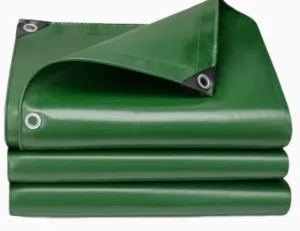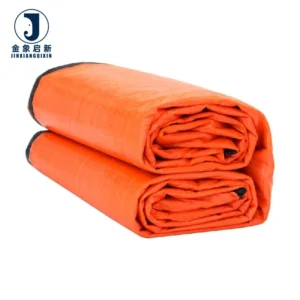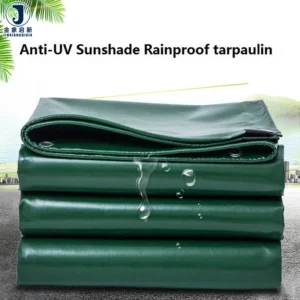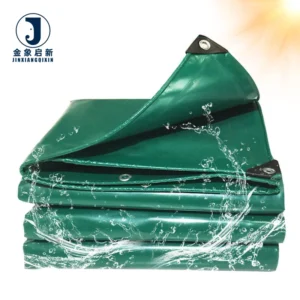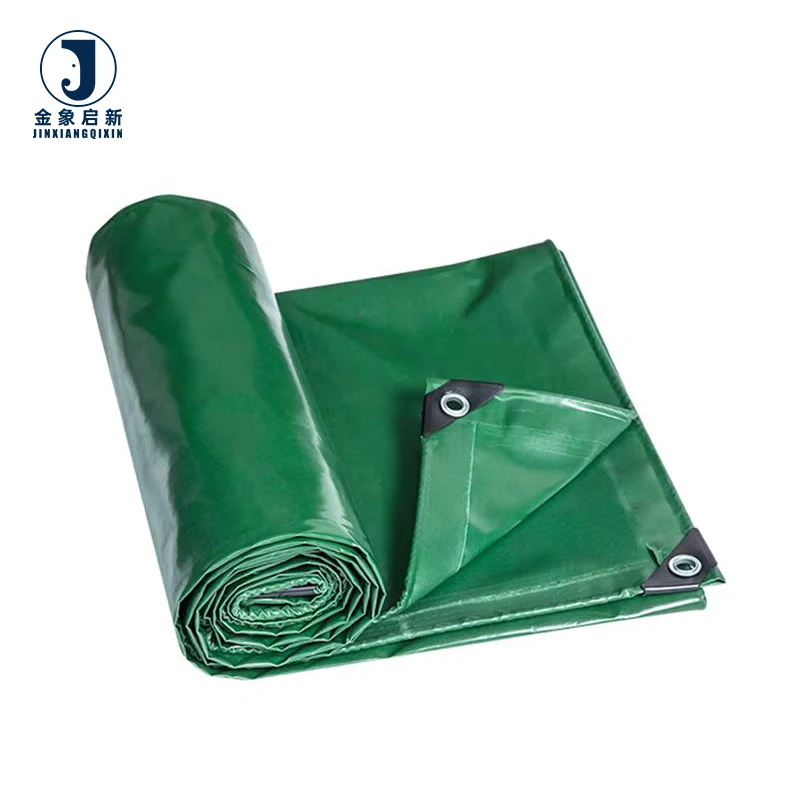
Deep Process Control Over Coating Weight — Knife coating applied under continuous tension monitoring ensures the PVC layer bonds uniformly to the woven base, verified roll by roll before dispatch.
Technical Specifications
| Parameter | Value |
|---|---|
| Product Type | PVC Coated Tarpaulin |
| Material | PVC Vinyl Coated Woven Fabric |
| Base Fabric | Woven, 1000×1000 denier |
| Coating Method | Knife Coated |
| Weight | At least 450 GSM (verify against manufacturer catalog for exact grade) |
| Waterproof | Yes |
| Properties | Tear-Resistant |
| Surface Finish | Banner coated / Black back options available |
| Custom Size | Available |
| UV Treatment | Available in anti-UV grades — confirm the grade required for your market |
| Flame Retardancy | Available in flame retardant grades — confirm the grade required for your market |
| Standards | ISO, CE (company-level certification) |
Application Suitability
| Application | Exposure & Requirement |
|---|---|
| Truck side curtain fabric | Constant flexing at load points, road abrasion, tie-down stress, rain and spray |
| Flatbed trailer covers | UV exposure, wind flap fatigue, cargo securing tension at eyelets |
| Fleet vehicle wraps | Daily weather cycling, colour consistency across multiple units |
| Transport equipment covers | Equipment vibration, outdoor storage, puncture risk from sharp edges |
Why Generic Sizing Undermines PVC Coated Tarpaulin for Truck and Transport Performance
A cover cut to a standard dimension rarely matches the actual trailer profile, and the mismatch shows up first at the seams.
Fleet operators ordering truck covers in generic sizes frequently encounter flapping at unsupported zones, excessive tension at corners, and premature weld failure where the fabric folds unnaturally against the trailer frame. The PVC coated tarpaulin for truck and transport then carries concentrated stress at points the pattern was never designed for. Replacement cycles shorten, cargo claims rise, and the cost of a poorly fitted cover quickly exceeds the price difference of a model-specific cut. [NEED_CITE: common failure modes in fitted truck tarpaulin systems]
Model-Specific Fitment Eliminates the Cost of Misalignment
When a truck cover is dimensioned to the exact trailer model, the fabric lies flat against the frame without excess material pooling at the base or stretching thin at the ridgeline. This PVC coated tarpaulin for truck and transport supports custom sizing so that side curtains, roof panels and tail sheets align with the structural members of the trailer. Proper fitment distributes tie-down loads evenly across the reinforced hems rather than concentrating force at isolated eyelets, which is where generic covers typically begin to tear.
Weld Integrity at the Flex Points That Matter Most
A loaded trailer flexes continuously during transit, and the welded seams on a truck cover absorb that movement cycle after cycle. Knife-coated PVC construction produces a uniform coating thickness that responds predictably to hot-air and high-frequency welding, creating joints that match the tear resistance of the parent fabric. When seam strength falls below the fabric’s tear threshold, the weld becomes the failure origin. Consistent coating weight across the roll ensures that welding parameters set on a sample piece remain valid through the full production run. [NEED_CITE: weld strength requirements for flexible PVC transport covers]
How Coating Method and Base Fabric Determine Real-World Durability
Knife coating forces PVC paste into the woven base under controlled blade pressure, filling the interstices between yarns and creating a mechanical bond that resists delamination under repeated flexing. The 1000×1000 denier base fabric provides a grid of interlocked yarns that arrest tear propagation — when a puncture occurs, the tear must break successive yarns in both warp and weft directions rather than unzipping along a single line. Weight alone does not predict this behaviour; a heavier fabric with a lower denier base can tear more easily than a lighter one built on a denser weave. Surface finish selection also plays a role: a banner-coated surface accepts printed fleet branding, while a black-back option reduces light transmission for sensitive cargo.
The Hidden Cost of Overlooking Batch Consistency
A fleet replacing covers across multiple trailers may order several rolls in a single purchase. If colour drifts between rolls — a difference invisible on the sample swatch but obvious once installed side by side — the fleet either accepts a mismatched appearance or returns the affected rolls at significant delay. Similarly, GSM variation within a batch means some covers carry less coating than quoted, making them lighter and more vulnerable to abrasion at contact points. [NEED_CITE: acceptable colour tolerance standards for coated fabric batches] These inconsistencies rarely appear on the quotation and only surface when the fabric is unrolled on the workshop floor.
Why Sourcing This Fabric Here Reduces Fitment Risk
Three full production lines running knife-coated PVC allow batch volume to scale without shifting coating parameters mid-run, preserving GSM and colour consistency across the order. A 10-person R&D team develops samples within days, letting fleet operators test fitment on an actual trailer before committing to a production order. Dedicated QA/QC inspects every roll before shipment, catching weight deviations and surface defects that would otherwise reach the customer. Custom widths and cut-to-model sizing are handled in-house, removing the need for a third-party converter.
Documentation & Verification
- Material specification sheet stating base fabric denier, coating method and confirmed GSM
- Pre-shipment inspection record with measured weight per roll against quoted specification
- UV test report supplied where anti-UV grade is specified in the order
- Flame retardant test report provided where fire-retardant grade is requested
- Roll packing list with individual roll dimensions and net weight
- Certificate of origin and customs documentation for export shipments
Fabrication, Handling & Storage
- Hot-air welding at temperatures matched to the knife-coated PVC layer for consistent seam adhesion
- Eyelet reinforcement plates recommended at tie-down points to spread load across the 1000×1000 woven base
- Store rolls upright on pallets to prevent flat-spotting and permanent creasing of the coated surface
- Allow cold-stored rolls to reach workshop temperature before unrolling to avoid coating micro-cracking
- Use mild detergent and soft brush for cleaning; avoid solvent-based cleaners that attack the PVC coating
- Offcut pieces from the same roll can be hot-air welded as field patches for minor transport damage
What to Include in Your Enquiry
Provide the exact truck or trailer model, year and body type so that cover dimensions match the frame profile. Specify whether you need side curtain fabric supplied by the roll or cut and finished to panel size, and indicate any eyelet spacing or hem reinforcement requirements. If your market requires fire-retardant or anti-UV certification, state the grade or standard so that test documentation is prepared with the shipment. Colour references or printed branding artwork should be submitted early to allow sample approval before the production run.
Frequently Asked Questions
Q: How do I confirm the right cover size for my specific trailer model?
A: Supply the trailer manufacturer, model designation and body type. The R&D team cross-references frame dimensions and can develop a sample panel for physical fitment trial on your vehicle before the full order is cut. This eliminates guesswork and ensures the PVC coated tarpaulin for truck and transport lies flat without excess tension or loose zones.
Q: What reinforcement options are available at eyelets and hems?
A: Hems can be folded and welded with additional PVC strip reinforcement, while eyelets are set through reinforced patches that spread tie-down load across the woven base fabric. Spacing and patch size are matched to the expected tension at each anchor point, reducing the risk of tear-out under road vibration and wind load.
Q: Can you supply side curtain fabric by the roll or cut to size?
A: Both options are available. Rolls are supplied in standard or custom widths for operators with in-house fabrication capability. Cut-to-size panels are produced to specific trailer dimensions with finished hems and eyelet patterns, ready for direct installation on the curtain runner system.
Q: What test reports support the anti-UV and flame-retardant claims?
A: Where anti-UV or flame-retardant grades are specified in the order, the corresponding test report is included in the shipment documentation. The report identifies the standard applied, the test method and the result, allowing you to present verified performance data to your compliance team or end customer.
Q: How are welded seams tested for flex-point durability?
A: Weld samples from each production batch undergo peel and shear testing to confirm that seam strength meets or exceeds the tear resistance of the parent PVC coated tarpaulin for truck and transport. Test values are recorded in the pre-shipment inspection report, ensuring the welded joints will withstand continuous flexing under loaded transit conditions.