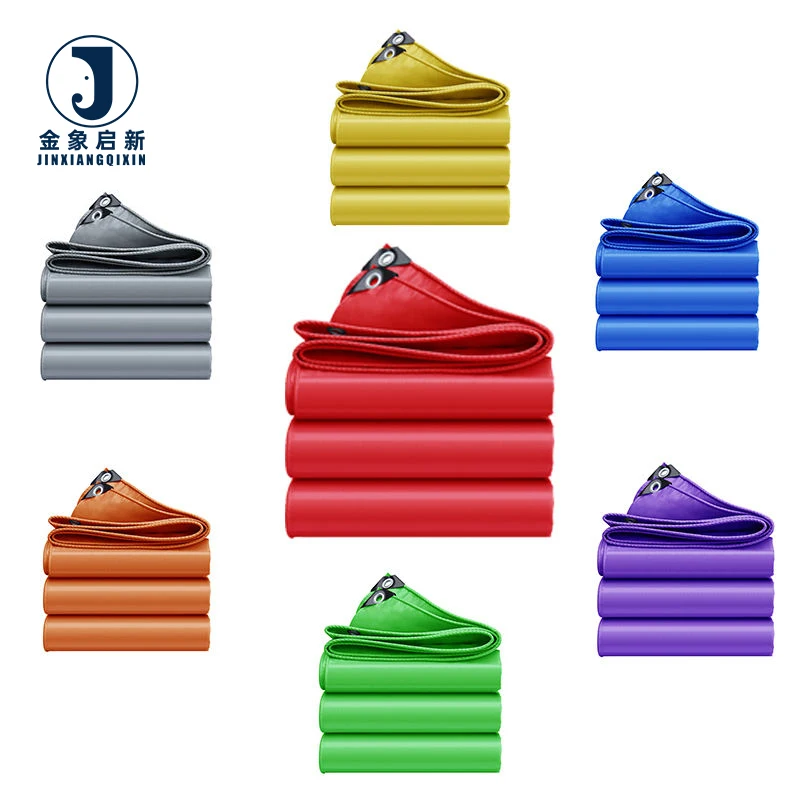
Process-Controlled Output — Three full production lines and 36 sets of equipment ensure consistent coating weight and adhesion across every roll of PVC coated tarpaulin for truck cover applications.
Technical Specifications
| Parameter | Value |
|---|---|
| Product Type | PVC Coated Tarpaulin Roll / Finished Tarpaulin |
| Coating Material | PVC (100% PES dipping coating process) |
| Construction Types | Knitting and plain weave |
| Total Thickness | 0.35-0.45mm (medium) / 0.70-1.0mm (heavy-duty) / 1.2-1.5mm (super heavy) |
| Weight | 400-500 g/m² (medium) / 700-1000 g/m² (heavy-duty) / 1100-1500 g/m² (super heavy) |
| Base Fabric Denier | 500D (medium) / 1000D (heavy-duty) / 500D-2000D (super heavy) |
| Tensile Strength (N/5cm) | Warp 1500-2000 / Weft 1200-1800 (medium); Warp 2000-2500 / Weft 1800-2200 (heavy-duty); Warp 2500-3000 / Weft 2200-2800 (super heavy) |
| Roll Width | 6ft, 8ft, 10ft, 12ft or 2m, 4m, 6m |
| Roll Length | 100 yards, 100 meters, or custom |
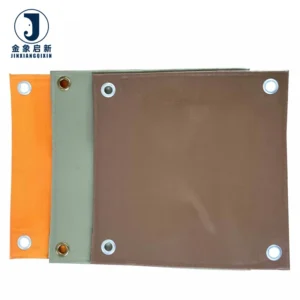
| Color | Blue, Blue/Orange, Green, Grey, Black, Clear, Grey/Green, Orange, or custom |
| Edge Reinforcement | PP rope reinforced hem on all four edges |
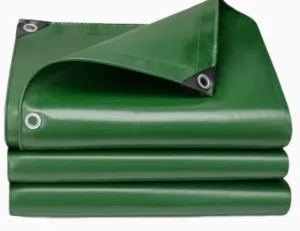
| Eyelet Spacing | Galvanized eyelets every 3ft or 1 meter interval |
| Corner Reinforcement | Reinforced plastic corners |
| UV Treatment | Available (test basis not stated) |
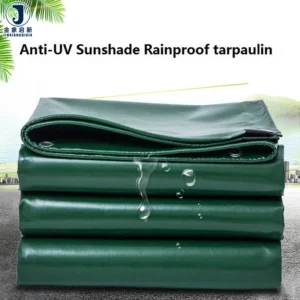
| Key Features | Waterproof, washable, tear resistant, weather proof, mildew proof, anti-aging |
Application Suitability
| Application | Exposure & Requirement |
|---|---|
| Flatbed truck covers | Constant road vibration, tie-down abrasion at contact points, UV and rain exposure during multi-day transit |
| Side curtain systems | Repeated flexing at load shift points, wind flutter stress on seams, daily roll and unroll cycles |
| Lumber tarp fabrication | Sharp timber edges pressing into fabric, moisture from fresh-cut wood, heavy tie-down loads on grommets |
| Steel coil tarp fabrication | Concentrated point loads from coil edges, road salt exposure in winter haulage, high tensile demand at weld lines |
| Trailer roof covers | Permanent sun exposure, pooling water at low points, thermal expansion and contraction cycles |
Why a Generic-Size Truck Cover Fails Before the Fabric Does
A tarpaulin cut to standard dimensions will always leave gaps or excess fabric that catches wind and accelerates wear at the edges.
Fleet operators often replace covers within months not because the material failed, but because the sizing was wrong for the specific trailer model. Excess fabric flaps in highway wind, creating fatigue at the hem where the PP rope reinforcement meets the eyelet line. Gaps expose cargo to spray and debris. When a PVC coated tarpaulin for truck cover is cut to match the exact vehicle dimensions, the load distributes evenly across all tie-down points rather than concentrating stress at a few over-tensioned grommets. [NEED_CITE: fabric fatigue failure patterns in transport cover applications]
Matching the Cover to the Specific Trailer Model
Every trailer manufacturer builds to slightly different external dimensions, and even within the same brand, flatbed height and side rail configurations change between model years. A PVC coated tarpaulin for truck cover must account for the exact measurement of the deck, the drop from rail to deck, and the overhang needed at front and rear. Our sizing process starts with the specific vehicle model and year, ensuring the hem line sits flush against the trailer edge rather than hanging loose or pulling tight.
Tie-Down Hardware Built for Highway Stress
The galvanized eyelets at 3ft or 1-meter intervals distribute tie-down force along the entire perimeter. PP rope inside the hem prevents the fabric from tearing through at the grommet insertion point, which is where most transport covers begin to fail under load. For heavy-haul applications carrying steel or lumber, the reinforced plastic corners add an extra layer at the four points that take the highest concentrated force when straps are tensioned. [NEED_CITE: tie-down load distribution in heavy transport tarpaulin systems]
Reading the Specification Sheet Beyond the GSM Number
The weight in g/m² tells you how much material is present, but the base fabric denier and weave construction determine how that weight translates into real-world strength. A 700 g/m² fabric built on 1000D yarn with a tight plain weave will resist puncture from lumber edges far better than a 700 g/m² fabric built on lighter yarn with a looser construction. The 100% PES dipping coating process used here ensures the PVC penetrates the base fabric fully, creating mechanical adhesion that resists delamination at weld lines where the fabric flexes most during transit. The tensile strength values across warp and weft directions — ranging up to 2500-3000 N/5cm on the super heavy grade — indicate how the material handles the bidirectional stress of a loaded flatbed moving over uneven road surfaces.
The Cost of Underspecifying for Road Exposure
When a transport cover is specified at the minimum GSM to hit a price target, the first failures appear at the welded seams where load flex concentrates. The coating may be thin enough that abrasion from steel edges or lumber splinters reaches the base fabric within weeks. Eyelets pulled from insufficiently reinforced hems leave cargo exposed mid-route. UV treatment claimed without a supporting test report means the fabric degrades under sustained sun exposure faster than expected, showing chalking and embrittlement at the surface. These failures are not material defects — they are specification mismatches that could have been caught before production started. [NEED_CITE: weld seam versus fabric body failure modes in coated tarpaulins]
What This Supply Chain Delivers for Transport Buyers
Deep process control over coating weight and adhesion means the g/m² stated on the quotation is the g/m² that arrives on the dock. Three full production lines and 36 sets of professional equipment support bulk roll orders with consistent colour and weight across every unit in the shipment. A 10-person R&D team handles the pattern development and sample production so that custom sizing and printing requirements are validated before the full run begins. Every roll undergoes 100% pre-shipment inspection with documentation, so you receive the actual weight verification rather than relying on a production average. Samples are developed within days, allowing fitment checks on your specific trailer model before committing to volume.
Documentation & Verification
- Material specification sheet confirming denier, coating weight, and tensile values for the selected grade
- Pre-shipment inspection record showing actual measured GSM per roll against the quoted specification
- Test report for UV treatment where extended outdoor exposure is part of the application
- Roll packing list with individual roll identification for traceability on arrival
- Certificate of origin and customs documentation supporting international freight clearance
Fabrication, Handling & Storage
- Heat welding parameters must account for the selected thickness grade to avoid burning through at 1.2-1.5mm or weak bonds at 0.35-0.45mm
- Galvanized eyelets at 1-meter intervals require backing plates when tie-down loads exceed standard strap tension
- Rolls stored flat on pallets prevent permanent creasing in heavier grades above 700 g/m²
- Unfolding in cold conditions requires gradual deployment to avoid cracking the PVC coating below its flex threshold
- PP rope hems should not be dragged across abrasive surfaces during installation to prevent rope displacement
Preparing Your Inquiry for Accurate Quotation
To get a PVC coated tarpaulin for truck cover quoted correctly, provide the specific trailer make, model, and year along with the type of cargo hauled most frequently. State the GSM range or weight tier that matches your route conditions, and whether UV treatment documentation is required for your operating region. Confirm if you need finished tarps with eyelets and hems or roll stock for your own fabrication shop, and whether custom colour or printed branding is part of the requirement.
Frequently Asked Questions
Q: How do I match the tarpaulin size to my specific truck and trailer model?
A: Provide the exact trailer make, model, and year along with deck dimensions and side rail height. Generic sizes leave excess fabric that flaps in wind or gaps that expose cargo. We cut to the specific vehicle measurements so the hem sits flush and tie-down points align with the trailer’s anchor positions, eliminating premature wear at over-stressed edges.
Q: How do I verify the GSM weight matches what was quoted when the rolls arrive?
A: Request the pre-shipment inspection record that documents actual measured weight per roll before dispatch. On arrival, a simple scale test on a known-area sample cut from the roll confirms the specification. Our 100% inspection process means every roll is weighed and recorded, so discrepancies are caught before the material leaves the facility.
Q: What eyelet spacing and hem reinforcement options are available for heavy tie-down loads?
A: Standard configuration includes galvanized eyelets at 3ft or 1-meter intervals with PP rope reinforced hems on all four edges and reinforced plastic corners. For steel and lumber haulage where strap tension is higher, closer eyelet spacing distributes the load across more attachment points, reducing the pull-out risk at individual grommets under sustained highway vibration.
Q: What documentation supports UV treatment claims for outdoor transport exposure?
A: UV treatment is available and supported by a test report when specified at the inquiry stage. Without requesting this documentation, the treatment claim remains unverified. Specify your expected exposure duration and operating climate so the appropriate test basis is applied and included with your shipment documentation.
Q: How durable are welded seams at load flex points and what are the repair options?
A: Welded seam strength depends on correct heat settings matched to the fabric thickness grade. When parameters are set properly, the weld outlasts the surrounding fabric under flex stress. For field repairs on transport routes, PVC-compatible adhesive patches or portable hot-air welders restore seam integrity without requiring the cover to be removed from the trailer.