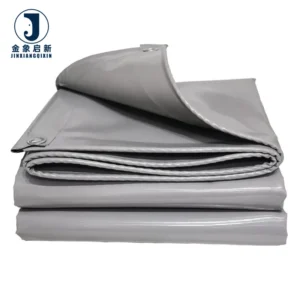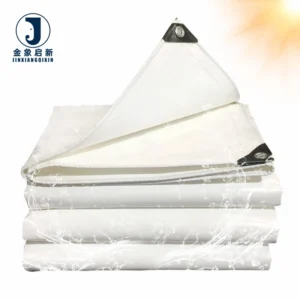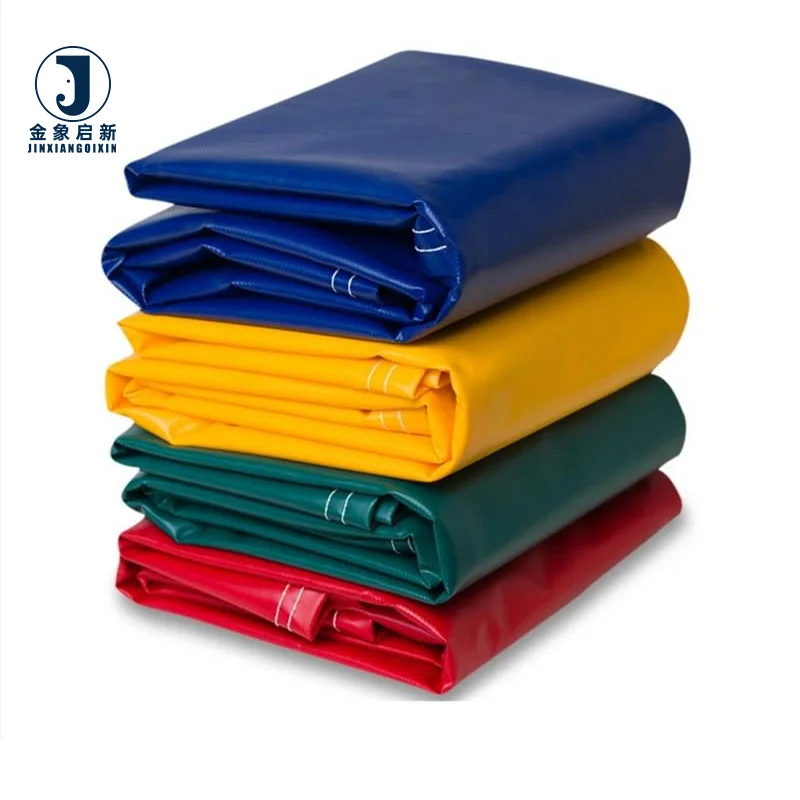
Custom Fitment — Covers are cut to your specific trailer model dimensions rather than generic off-the-shelf panels, with welded seams engineered to survive the flex points where loads shift during transit.
Technical Specifications
| Parameter | Value |
|---|---|
| Product Type | PVC Coated Tarpaulin |
| Material | PVC + High-strength polyester mesh fabric |
| Available GSM | 350gsm / 420gsm / 500gsm / 550gsm / 600gsm / 750gsm |
| Available Thickness | 0.32mm / 0.35mm / 0.4mm / 0.45mm / 0.5mm / 0.65mm |
| Standard Roll Width | 2m / 2.1m |
| Standard Roll Length | 75m (2m width) / 50m (2.1m width) |
| Coating Technology | Laminated & Hot-melt Coating |
| Base Fabric | High-strength polyester mesh fabric |
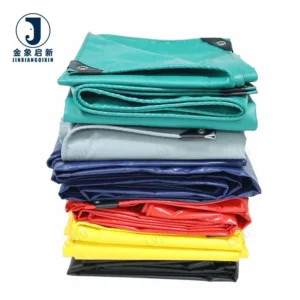
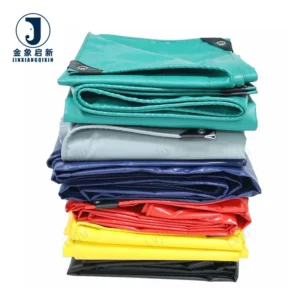
| Color Options | Blue / Red / Yellow / Light Blue / Grey (customizable) |
| Surface Treatment | Anti-UV, Anti-Mildew, Anti-Static (grade not stated — confirm the grade required for your market) |
| Cold Crack Resistance | Yes (test basis not stated — confirm operating temperature range) |
| Key Features | High tenacity polyester yarns, flexibility and adhesion strength, tearing strength for welding, color fastness |
| Finish Product Size | Custom cut to requirement |
| Standards | ISO, CE (certification held by manufacturer) |
Application Suitability
| Application | Exposure & Requirement |
|---|---|
| Flatbed trailer top cover | Continuous UV exposure, wind uplift at highway speed, water pooling risk, tie-down abrasion at edges |
| Curtain-side trailer fabric | Constant flexing at fold lines, road grit abrasion, daily tension and release at track runners |
| Lorry tarpaulin for urban delivery | Frequent handling, folding and unfolding, contact with loading dock edges, soot and exhaust exposure |
| Truck awning and canopy | Intermittent deployment, prolonged sun exposure when stowed, mildew risk in humid storage |
| Cargo ship deck cover | Salt spray, heavy rain, mechanical abrasion from shifting cargo, prolonged wet contact |
Why Seam Failure Happens Before the Fabric Gives Way on PVC Truck Tarpaulin Covers
Welded seam strength must be matched to base fabric tear resistance — otherwise the joint becomes the weakest link under load flex.
Fleet operators consistently report that PVC coated truck tarpaulin covers do not fail in the middle of a panel. The failure starts at the weld line, precisely where the load shifts and the fabric is under cyclic tension. A PVC truck tarpaulin cover aftermarket supplier that does not control the relationship between coating adhesion and weld parameters will deliver covers that delaminate at the seams within the first season. Hot-melt coating on high-tenacity polyester mesh produces the adhesion strength necessary for reliable heat welding, yet this only matters when the welding process itself is calibrated to the specific GSM and coating weight in production [NEED_CITE: tensile and tear test methods for coated fabrics per ISO 1421].
Flex Points and Coating Adhesion on Moving Loads
A truck cover is not a static membrane. Every time a vehicle brakes, corners or hits uneven road surface, the cargo shifts and the tarpaulin flexes at the tie-down and eyelet zones. PVC coated tarpaulin for truck and trailer applications demands coating-to-fabric adhesion that survives thousands of these micro-flex cycles. The hot-melt coating process bonds PVC into the polyester mesh structure rather than sitting on the surface, which directly determines how the material behaves at welded joints where two panels meet under tension.
Cut-to-Model Sizing Versus Generic Panels
A cover cut to generic dimensions leaves excess fabric that flaps in the wind at highway speed, accelerating abrasion at the hem and eyelet points. Equally, a cover that is slightly short creates constant tension across the panel, overstressing the welded seams. Our approach is to cut each PVC coated truck tarpaulin cover to the exact trailer model dimensions, accounting for the tie-down system, roller mechanism clearance and the natural drape of the fabric under its own weight. This is the difference between a cover that loads tolerate and one that actively protects [NEED_CITE: DIN 53354 testing standard for coated fabric tear resistance].
Weight Grades and Route Exposure Matching
Selecting the correct GSM is not simply about choosing the heaviest option. A 350gsm grade may serve well for short-distance urban delivery where the cover is handled frequently and weight matters for the driver. A long-haul highway route with continuous sun and wind exposure calls for a heavier grade with greater coating thickness to resist abrasion and UV degradation over time. The available range from 350gsm to 750gsm allows fleet operators to match the material to the actual operating conditions rather than over-specifying for every vehicle in a mixed fleet.
Reading the Specification Sheet Beyond GSM
GSM alone tells you the weight per square metre but nothing about how that weight is distributed between base fabric and coating. Two PVC coated tarpaulin for truck and trailer covers can share the same GSM yet perform very differently depending on whether the weight sits in a dense polyester base or a thick coating layer. A heavier base fabric with higher denier yarns and tighter weave density delivers better tear resistance and weld strength, while a thicker coating contributes more to abrasion resistance and waterproofing. The thickness range from 0.32mm to 0.65mm across the available grades reflects this balance. Hot-melt coating technology, as opposed to simple lamination, forces the PVC compound into the mesh structure under heat and pressure, producing superior peel strength at the coating-to-fabric interface — a property that directly determines whether a welded seam holds or delaminates under cyclic load.
The Cost of Underspecifying for Your Route
When a fleet operator selects a lighter GSM than the route demands, the consequences do not appear immediately. The cover performs adequately through the first weeks, then micro-abrasion at contact points with the cargo or trailer frame begins to penetrate the coating layer. Once the polyester base fabric is exposed to water ingress, mildew develops within the mesh structure and the material loses tensile strength from the inside outward. Similarly, specifying a cover without confirming the cold crack resistance rating for winter routes leads to stiffening and brittle fracture at fold lines when temperatures drop. Batch colour inconsistency across rolls in a single order becomes visible only once multiple covers are installed side by side on fleet vehicles, forcing a complete replacement rather than a targeted swap [NEED_CITE: batch colour consistency testing methods for coated fabrics].
Why Procurement Teams Source PVC Truck Tarpaulin Covers Here
Three full production lines and 36 sets of professional equipment support bulk roll output with on-time delivery for fleet-scale orders. The 10-person R&D team handles cut-to-model pattern development, ensuring each PVC truck tarpaulin cover aftermarket order matches the specific trailer dimensions rather than relying on generic templates. Dedicated QA/QC runs at every production stage, with 100% inspection before shipment, so GSM, colour and weld strength are verified before the material leaves the facility. Hot-melt coating process control maintains consistent coating-to-fabric adhesion across the full production run, which is critical for welded seam performance in the field. Custom colour matching is managed per order with pre-production sample approval, preventing the batch inconsistency that plagues multi-cover fleet orders.
Documentation & Verification
- Weight verification per roll against the stated GSM before dispatch with inspection record
- Material specification sheet confirming base fabric, coating technology and thickness for each grade
- Colour reference sample approved before production to ensure batch consistency across the order
- UV and flame retardant test reports provided where applicable to the specified grade
- Roll packing list with individual roll identification for traceability in fleet maintenance records
- Certificate of origin and customs documentation for cross-border shipment
Fabrication, Handling & Storage
- Hot-melt coated grades require calibrated weld temperature matched to the specific GSM and thickness
- Store rolls vertically on end caps to prevent flat-spotting and permanent creasing across the 2m or 2.1m width
- Allow cold-stored rolls to reach ambient temperature before unrolling to avoid coating crack at fold lines
- Reinforce eyelet zones with additional PVC patches on grades below 500gsm for heavy tie-down loads
- Clean with mild detergent only — solvent-based cleaners degrade the PVC coating surface over time
- Field repairs on hot-melt coated fabric require compatible PVC weld tape, not adhesive patches
Preparing Your PVC Coated Truck Tarpaulin Cover Enquiry
To specify the right material for your fleet, provide the trailer make and model, the type of tie-down system in use and the primary route climate conditions. Confirm whether you require full roll stock for in-house fabrication or finished cut-to-size covers with hem and eyelet reinforcement. If your operating jurisdiction mandates a specific flame retardant grade, state the standard so we can confirm which available grades carry the required certification [NEED_CITE: regional fire safety standards for transport tarpaulin covers]. Colour requirements should include a Pantone or RAL reference for matching, and mixed-fleet operators should note the different trailer models in a single order to allow consolidated sampling.
Frequently Asked Questions
Q: Can the PVC truck tarpaulin cover be cut to fit my exact trailer model rather than a generic size?
A: Yes. Each cover is pattern-cut to the specific trailer make and model dimensions you provide, accounting for tie-down points, roller clearance and fabric drape. This eliminates excess material that flaps at highway speed and reduces stress at welded seams. Pre-production samples are available to confirm fit before the full order runs.
Q: How do I choose the right GSM and thickness for my truck route and climate?
A: Route distance, sun exposure frequency and temperature range all factor into grade selection. Short urban delivery routes with frequent handling suit lighter grades, while long-haul highway exposure demands heavier coating thickness for abrasion and UV resistance. Share your operating profile and we will recommend the grade with the supporting specification sheet.
Q: How is colour consistency controlled across multiple truck covers in one fleet order?
A: Colour is matched against an approved reference sample before production begins. In-process QA checks pigment dispersion across every roll in the batch, and pre-shipment inspection compares rolls side by side under controlled lighting. This prevents the visible variation that occurs when covers from different production runs are installed on adjacent vehicles.
Q: What is the difference between laminated and hot-melt coating for truck tarpaulin covers?
A: Laminated coating bonds a pre-formed PVC film to the polyester base under pressure, while hot-melt coating forces liquid PVC compound into the mesh structure under heat. Hot-melt produces superior peel strength at the coating-to-fabric interface, which directly improves welded seam durability at flex points. We recommend hot-melt coated grades for covers subject to repeated load flexing.
Q: Can I order custom-sized PVC truck tarpaulin covers with low minimums for a mixed fleet?
A: Custom cut-to-model sizing is available across the GSM range, and mixed-fleet orders covering multiple trailer models in one shipment are supported. Minimum order quantities depend on the colour and grade selected — standard stock colours carry lower minimums than custom Pantone matches. Confirm your fleet composition and we will structure the order accordingly.