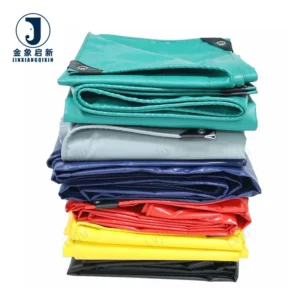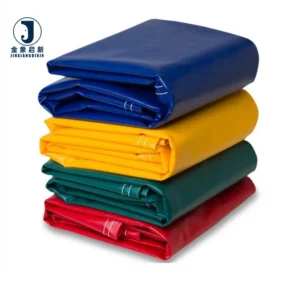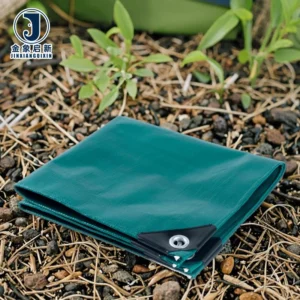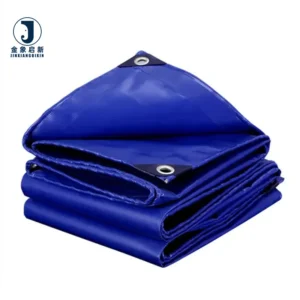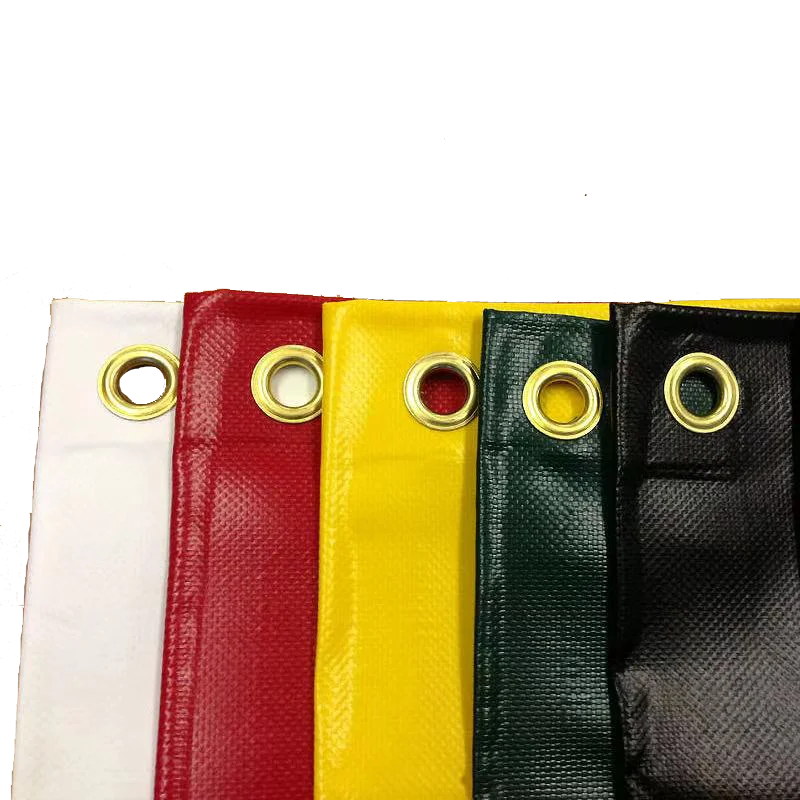
Coating adhesion control — every roll of PVC knife-coated tarpaulin for truck and transport is produced on one of three dedicated lines, with in-process peel strength checks that prevent delamination at welded seams.
Technical Specifications
| Parameter | Value |
|---|---|
| Product Type | PVC Knife-Coated Tarpaulin |
| Weight Range | 300–600 GSM (confirm required grade for your application) |
| Coating Method | Knife coated |
| Coating Material | PVC |
| Waterproof | Yes, fully coated construction |
| Oilproof | Yes |
| Flame Retardant | Available in flame retardant grades — confirm the grade required for your market |
| Anti-Static | Available — confirm applicable standard for your site |
| Anti-UV | Available — test basis to be confirmed per order |
| Anti-Cold | Available |
| Anti-Mildew | Available |
| 3P Treatment | Available |
| Tear Resistance | Tear-resistant construction (test standard available on request) |
| Format | Roll stock or custom-cut sizes |
| Outdoor Service Life | Suited to extended outdoor exposure |
Application Suitability
| Application | Exposure & Requirement |
|---|---|
| Truck side curtain fabric | Constant flexing, road abrasion, UV and rain exposure, tie-down stress at hems |
| Flatbed and trailer cover | Wind flap, puncture from shifting cargo, weather during long-haul transit |
| Fleet replacement tarp | Model-specific dimensions, colour match to existing panels, weld seam durability |
| Transport equipment build | Fabrication into curtain systems, heat-welded joints, eyelet and hem reinforcement |
Why Generic Sizing Costs Fleets More Than Fabric
A truck cover cut to a standard size that misses your trailer dimensions forces either wasteful folding or dangerous load exposure.
Fleet operators repeatedly order PVC knife-coated tarpaulin for truck and transport covers only to find the finished panel does not sit flush against the trailer rail. Loose fabric flaps in crosswinds, accelerating abrasion at the contact points. Tight fabric strains the eyelets beyond their holding capacity, and the first gale tears a corner free. The fabric itself was never the problem — the dimension mismatch was. [NEED_CITE: fit-related tarpaulin failure rates in transport fleets]
Sourcing knife-coated PVC fabric by the roll and cutting locally introduces another variable: yard waste. When every panel is trimmed from a fixed-width roll, the offcuts from one trailer model cannot be reused on the next. Over a fleet replacement cycle, this waste compounds into significant material cost that never reaches the vehicle.
Matching Fabric Grade to the Load It Protects
A side curtain on an articulated trailer flexes hundreds of times per journey. The PVC knife-coated tarpaulin for truck and transport applications must resist repeated bending without cracking the coating or fatigue-tearing the base fabric. Lighter GSM grades serve well for temporary flatbed covers where the fabric sits flat, while heavier grades handle the constant movement and road debris impact of curtain-side operation.
Selecting the correct weight is not a matter of choosing the heaviest option available. Excess weight adds to the curtain track load, increases the force needed to open and close the system, and raises shipping costs on every roll purchased. The right grade balances tear resistance with flexibility for the specific trailer mechanism.
Colour Consistency Across a Multi-Vehicle Order
When a logistics company replaces covers across a mixed fleet, panels from the same order may hang side by side on adjacent vehicles. Visible colour variation between rolls signals inconsistent pigment dispersion or coating thickness — and it draws attention from both customers and roadside inspectors. [NEED_CITE: batch-to-batch colour control in PVC coating lines]
Our production runs for PVC knife-coated tarpaulin for truck and transport use controlled pigment metering on each line, with a colour reference recorded at the start and verified at the end of every roll. This ensures panels cut from different rolls within the same shipment present a uniform appearance once installed.
What the Coating Method Means for Welded Joints
Reading the Specifications That Actually Matter
Knife coating forces PVC paste into the base fabric under blade pressure, filling the weave interstices rather than simply sitting on the surface. This produces higher adhesion between coating and yarn compared to laminating methods, which matters when heat-welded seams carry the load at flex points. A welded joint on knife-coated fabric approaches the tensile strength of the body material when weld temperature and dwell time are set correctly for the coating weight.
The GSM figure combines base fabric weight and coating weight. Two fabrics at the same GSM can have very different tear resistance depending on how that weight is distributed. A high-denier base fabric with a thinner coating will resist tear propagation better than a low-denier base loaded with heavy coating, even though both read the same on a scale. Requesting a specification sheet that separates base fabric denier from coating weight allows a meaningful comparison between options.
Flame retardant and anti-static treatments, where required for tunnel, aviation or mining transport corridors, must be specified at the coating stage — they cannot be added after the roll is produced. Confirm the classification your destination market requires before placing the order. [NEED_CITE: flame retardant classification systems for transport fabrics]
Anti-UV treatment extends the period before plasticiser migration causes embrittlement, but the rate of UV exposure varies enormously between a truck parked in Scandinavia and one running daily in the Middle East. Specify the operating region so the treatment level matches actual solar load.
The Hidden Cost of Specifying on Price per Kilogram Alone
When procurement selects PVC knife-coated tarpaulin for truck and transport covers based on lowest cost per kilogram, the delivered roll may arrive at the lower end of the GSM tolerance — or below it. A cover that should weigh 550 GSM but arrives at 480 GSM will feel lighter, flex more easily, and fail earlier at the hem line where the load concentrates. The saving on the purchase order is erased by the first premature replacement. [NEED_CITE: GSM tolerance and tarpaulin service life correlation]
Colour variation between rolls ordered at the lowest price point is common when pigment is dosed by volume rather than weight. Panels installed on adjacent trailers show a visible shade step, triggering rejection by the fleet brand manager. A re-order to fix the mismatch costs more than specifying a tighter colour tolerance from the start.
Welded seams on under-weight coating tear before the fabric body does. The joint is the highest-stress point on any truck cover, and a coating layer that is thinner than specified cannot absorb the weld energy evenly, leaving a brittle zone that cracks in cold weather.
Why Fabricators and Fleet Buyers Source Here
Three full production lines and 36 sets of professional equipment handle both roll stock and custom-cut orders without queueing one behind the other, keeping dispatch on schedule for fleet replacement programmes.
A 10-person R&D team develops cut-to-fit patterns against specific truck and trailer model drawings, so the panel arrives ready to install rather than requiring on-site trimming.
Dedicated QA/QC at every production stage — including weight verification per roll against the quoted GSM — catches deviations before the roll is packed, not after it arrives at your dock.
Samples for custom width, colour or treatment are developed within days, allowing approval before bulk production locks in the full order quantity.
Full documentation — from material specification sheets to test reports for flame retardant and anti-UV grades — travels with every shipment, supporting customs clearance and site compliance audits.
Documentation & Verification
- Material specification sheet stating base fabric denier, coating weight, and colour reference per roll
- Test reports for flame retardant or anti-UV grades, matched to the standard specified on the purchase order
- Pre-shipment inspection record confirming GSM, width, and length against the order
- Roll packing list with individual roll weights and dimensions for container loading verification
- Certificate of origin and customs documentation for cross-border shipment
Fabrication, Handling & Storage
- Heat-weld knife-coated rolls at temperatures matched to the specific coating weight, adjusting dwell time for heavier GSM grades to avoid incomplete fusion
- Reinforce hem lines with additional fabric strips before inserting eyelets, distributing tie-down load across a wider area of the PVC coating
- Store rolls upright on end-caps in a shaded area; horizontal stacking of heavy-grade rolls causes permanent creasing in the bottom layers
- Allow cold-weather rolls to reach ambient temperature before unrolling to prevent coating micro-cracking at the fold lines
- Use only PVC-compatible cleaners on the coated surface; solvent-based products can extract plasticisers and cause premature embrittlement
- Plan cut-to-size panels from roll width to minimise offcut waste, keeping the grain direction consistent across all panels of one cover
Requesting a Fabric Recommendation
Provide the truck or trailer model drawing, the operating climate region, and any flame retardant or anti-static classification your route requires. If you are replacing an existing cover, share the current panel dimensions and the failure mode you are experiencing. For roll stock orders, specify the required width, colour reference, and estimated annual volume so we can plan production runs for batch consistency.
Frequently Asked Questions
Q: Can the tarpaulin be cut to fit specific truck and trailer model dimensions, and what is the MOQ for custom sizes?
A: Yes, we develop cut-to-fit patterns from the specific vehicle model drawing you provide. The minimum order depends on the panel size and the number of identical units required. For fleets with mixed models, we can batch several vehicle types into one production run to reach efficient volumes while keeping each panel dimensionally accurate to its target trailer.
Q: How is GSM verified on arrival and what documentation supports the quoted weight?
A: Every roll undergoes a weight check during our pre-shipment inspection, recorded on a per-roll basis against the GSM stated in your quotation. The inspection record travels with the shipment. On arrival, you can verify with a calibrated scale and a known-area sample cut. Any deviation flagged at inspection is resolved before dispatch, not after delivery.
Q: What flame retardant grades are available and which test standards do they meet?
A: Flame retardant treatment is available in several grades. The specific classification must be confirmed at order stage based on your destination market requirements — different regions mandate different test standards. Request the applicable test report during the quotation phase so the grade produced matches the compliance documentation your site or fleet requires.
Q: How are welded seams reinforced at the flex points where truck covers fail most often?
A: At hem lines, curtain edges, and panel junctions we apply additional fabric overlap strips before heat welding, distributing stress across a broader zone. Weld temperature and dwell time are set for the specific coating weight of your roll grade. QA checks peel strength on test welds from each production run to confirm the joint approaches the body fabric strength.