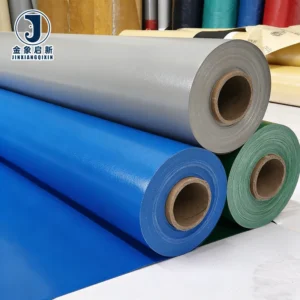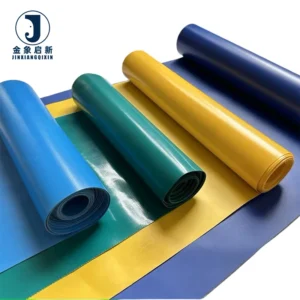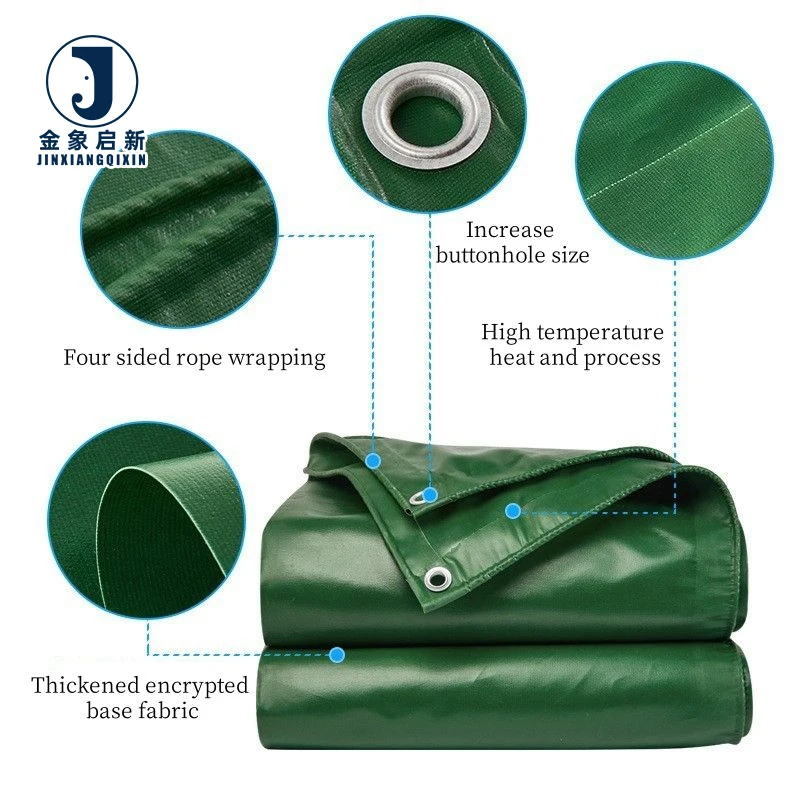
Precision-Weighted Coated Fabric — verified GSM per roll with 100% pre-shipment inspection, matching the exact specification on your quotation before dispatch.
Technical Specifications
| Parameter | Value |
|---|---|
| Product Type | PVC Coated Tarpaulin Roll |
| Weight | 500GSM |
| Base Fabric | Woven plain industrial tricot |
| Coating Material | PVC |
| Waterproof Performance | Anti-permeable ≥20KPa |
| Flame Retardant | ≤10 seconds (grade not stated) |
| Low-Temperature Flexibility | No fracture at -30°C |
| Corrosion Resistance | Acid, alkali and brine |
| Finish | Abrasion-resistant surface |
Application Suitability
| Application | Exposure & Requirement |
|---|---|
| Long-haul truck and trailer covers | Continuous road vibration, wind load at flex points, rain and spray |
| Side curtain fabric for curtain-siders | Constant folding and unfolding, edge abrasion from tracks and buckles |
| Flatbed cargo covers with tie-downs | Concentrated stress at eyelet zones, UV and weather exposure |
| Heavy-duty pool covers | Sustained water contact, chemical treatment splash, seasonal temperature shifts |
| Outdoor equipment protection | Static outdoor exposure, mildew-prone environments, UV degradation |
Why Generic Sizing Fails on Moving Loads
Generic-size truck covers that ignore your trailer model dimensions waste material at the overlap and leave cargo exposed at the gaps — the exact points where road spray and wind get in. Our PVC coated tarpaulin roll is either supplied as stock for your own fabrication or converted into cut-to-model covers matched to your fleet’s axle configuration and body height.
Fleet operators who replace covers frequently often discover the root cause is not fabric weight but dimensional mismatch. A cover cut three inches short on the drop side forces excessive tension on the hem, pulling eyelets out under highway speeds. Conversely, excess material flaps in the slipstream, accelerating wear at the buckle contact zones. [NEED_CITE: dimensional tolerances for transport cover fitment per trailer body type]
Covering a Moving Load Against Flex-Point Fatigue
When a truck negotiates a corner or crosses uneven pavement, the cargo shifts and the cover flexes at specific stress zones. The woven plain tricot base fabric in this PVC coated tarpaulin roll is engineered to distribute that flex load across multiple yarn intersections rather than concentrating it at a single thread. This anti-pull construction reduces the risk of tear initiation at the points where the load moves most during transit.
Side curtain applications demand particular attention to the track interface. The fabric edge that slides through the curtain track endures repeated abrasion every time the curtain is opened or closed at loading docks. The abrasion-resistant surface treatment on this material provides a sacrificial layer that protects the structural base fabric underneath.
Weld Integrity Where the Trailer Articulates
Heat-welded seams on truck covers fail when the weld parameters do not match the coating weight and base fabric density. A 500GSM construction requires sufficient heat penetration to fuse the PVC coating through both layers without scorching the tricot yarns beneath. Under-welded seams peel apart at the overlap edge; over-welded seams become brittle and crack under the cyclic loading of road travel. [NEED_CITE: heat-weld parameter correlation with coated fabric weight and coating thickness]
For fleet operators running mixed trailer types, the seam configuration must account for where each body style flexes. A refrigerated trailer with a rigid insulated roof flexes differently from a flatbed with a soft top, and the seam layout should follow the stress map of the specific application rather than a standard template.
What the Specification Numbers Mean in Practice
The 500GSM weight of this PVC coated tarpaulin roll represents the combined mass of the tricot base fabric and the PVC coating applied to both surfaces. However, GSM alone does not determine how the material behaves under load — a fabric with a high coating-to-yarn ratio may weigh the same but offer less tear resistance than one with a denser base weave. The woven plain industrial tricot here prioritizes yarn interlock, which resists tear propagation once a puncture occurs.
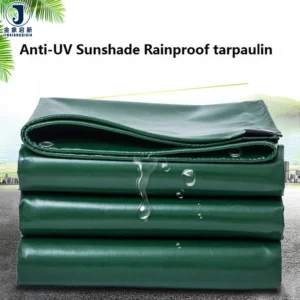
The anti-permeable ≥20KPa waterproof rating indicates the hydrostatic pressure the coating can withstand before water penetrates. For truck covers exposed to sustained highway rain and road spray, this rating ensures that water does not force its way through the coating at the flex points where the material stretches under wind load. The PVC coating itself is inherently waterproof; the rating reflects the coating adhesion and uniformity across the full fabric surface.
Low-temperature flexibility to -30°C is critical for fleets operating across seasonal or geographic temperature ranges. Standard PVC compounds become rigid and prone to cracking when folded in cold conditions. This formulation maintains sufficient plasticity to allow the cover to be folded, strapped, and deployed without fracture even in winter transport environments.
The Hidden Cost of Colour Variation Across Rolls
When a fleet orders multiple truck covers or a distributor takes delivery of several rolls for regional resale, colour consistency across the batch is essential. Rolls that vary in shade become immediately visible once installed side by side on adjacent trailers or displayed together in a warehouse. This variation typically stems from inconsistent pigment dosing during the coating stage or from batch-to-batch differences in the PVC compound preparation. [NEED_CITE: colour consistency standards for coated fabric batch production]
For fleet operators, visible colour mismatch across the fleet undermines brand presentation. For distributors, it forces selective selling — matching rolls to the same customer while holding back the outliers. The production process addresses this through controlled pigment measurement and compound mixing protocols that maintain colour reference consistency throughout the production run.
Why Source This PVC Coated Tarpaulin Roll Here
Three full production lines and 36 sets of professional equipment support bulk roll output with consistent coating application across long production runs. This equipment capacity means that when you order multiple rolls, the coating weight and surface finish remain uniform from the first roll to the last.
A 10-person R&D team handles custom sizing, pattern requirements, and material adjustments specific to your trailer model or application. Whether you need stock rolls for your own fabrication workshop or finished covers cut to fleet specifications, the sample development cycle runs within days for validation before bulk commitment.
Dedicated QA/QC runs at every production stage with 100% inspection before shipment. Each roll is checked against the stated GSM, colour reference, and coating uniformity — not sampled, but individually verified. This prevents the common failure of receiving material lighter than quoted.
Custom width and length orders are supported without the typical penalty of extended minimums or lead times. Fleet operators specifying non-standard trailer widths or distributors requiring container-optimized roll lengths can confirm sizing without compromising on delivery scheduling.
ISO and CE certified production provides the documentation trail that fleet compliance officers and terminal operators require. Certificates and test reports accompany the shipment rather than being requested separately after delivery.
Documentation & Verification
- Material specification sheet stating verified 500GSM weight, tricot base fabric type, and PVC coating details
- Pre-shipment inspection record confirming individual roll verification before dispatch
- Flame retardant test report available — confirm the grade required for your transport compliance standard
- ISO and CE certificates supplied with shipment documentation package
- Roll packing list matching roll count, weight, and colour reference to your order
Fabrication, Handling & Storage
- Heat-weld at parameters matched to 500GSM coating weight to ensure full penetration without tricot yarn damage
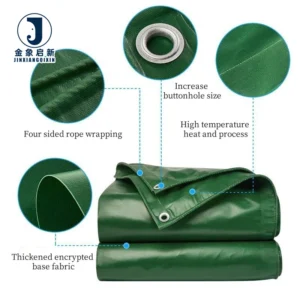
- Reinforce eyelet zones with additional PVC patches to distribute tie-down load across the tricot base
- Store rolls horizontally on racking to prevent permanent creasing of the PVC coating surface
- Allow cold-stored rolls to reach ambient temperature before unrolling to avoid coating fracture below -30°C flexibility threshold
- Use PVC-compatible cleaners only; solvent-based products may degrade the coating adhesion on the tricot base
How to Specify Your Requirement
Provide the exact trailer make, model, and body dimensions so the cover can be sized to your fleet rather than a generic cut. Include the operating environment — whether your routes involve coastal salt exposure, chemical transport splash, or sustained cold-climate operation — so the appropriate treatment can be confirmed.
If your terminal or fleet compliance standard requires a specific flame-retardant grade, state the standard reference so the correct test report can be prepared. Indicate whether you require stock rolls for in-house fabrication or finished covers with hem and eyelet reinforcement.
Frequently Asked Questions
Q: Can the cover be cut to fit my specific trailer model rather than a generic size?
A: Yes. Provide your trailer make, model, body length, width, and drop height. Covers are then cut and hemmed to match those dimensions, with eyelet spacing positioned to align with your existing tie-down rail configuration. This eliminates excess material that flaps at speed and reduces tension on the hem.
Q: How do you verify the GSM matches what is on the quotation?
A: Each roll undergoes individual weight verification during the 100% pre-shipment inspection. The actual GSM is recorded against the stated specification, and the inspection report accompanies the dispatch documentation. Rolls that fall outside the tolerance band are held back rather than shipped.
Q: Will the colour be consistent across all rolls in a bulk order?
A: Production runs maintain controlled pigment dosing and compound mixing to hold colour reference consistency throughout the batch. A colour reference sample can be provided for approval before production, and rolls are checked against that reference during inspection to prevent visible variation when installed side by side.
Q: Do you supply test reports for flame-retardant treatment?
A: Flame-retardant grades are available, and test reports can be provided for the grade applicable to your market. Confirm the specific standard your fleet compliance or terminal operator requires — such as a regional fire classification — so the correct grade and documentation are matched to your order.
Q: What reinforcement options exist for tie-down and eyelet areas?
A: High-stress zones around eyelets and hem corners can receive additional PVC patches welded over the tricot base to distribute load across a wider area. Specify your tie-down strap type and spacing so reinforcement can be positioned at the actual load points rather than at standard intervals.