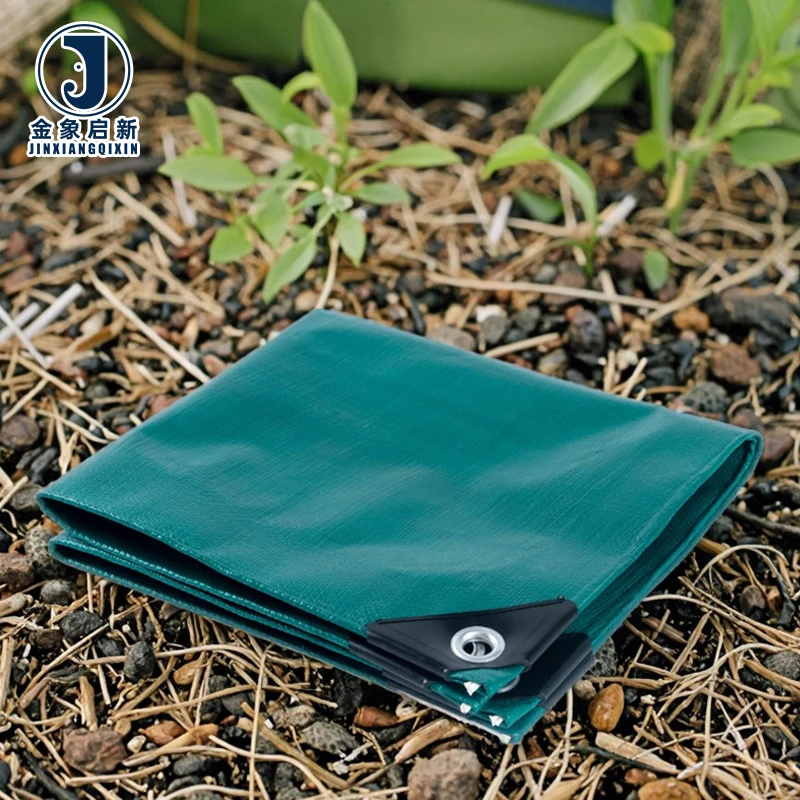
Precision-coated truck tarpaulin with verified GSM — every roll is weighed and measured against the quoted specification before dispatch, preventing the common shortfall where delivered fabric is lighter than agreed.
Technical Specifications
| Parameter | Value |
|---|---|
| Product Type | PVC Coated Tarpaulin |
| Material | PVC + High-strength polyester mesh fabric |
| Coating Method | Laminated technology & Hot-melt coating technology |
| Weight (GSM) | 350gsm / 420gsm / 500gsm / 550gsm / 600gsm / 750gsm (confirm grade at inquiry) |
| Total Thickness | 0.32mm / 0.35mm / 0.4mm / 0.45mm / 0.5mm / 0.65mm |
| Roll Size | 2m width × 75m length / 2.1m width × 50m length |
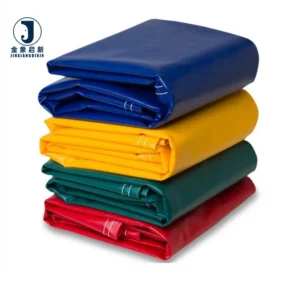
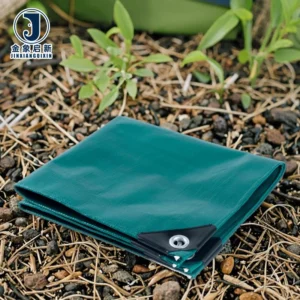
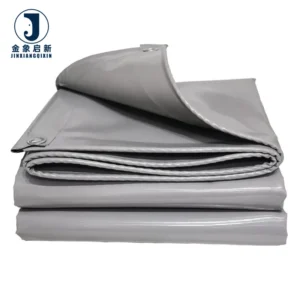
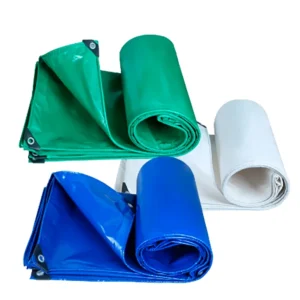
| Color Options | Blue, Red, Yellow, Light Blue, Grey (custom colours available) |
| Key Features | Waterproof, anti-mildew, cold crack resistance, sunproof, good adhesion strength, outstanding tearing strength for welding |
| Available Treatments | Flame retardant (grade not stated — confirm requirement), anti-static (standard not stated — confirm requirement) |
| Standards | ISO, CE |
Application Suitability
| Application | Exposure & Requirement |
|---|---|
| Truck and trailer side curtains | Constant flexing at load points, road debris abrasion, sustained wind load, UV exposure |
| Flatbed load covers | Tie-down strap tension, weather exposure during transit, repeated folding and unfolding |
| Transport equipment OEM fitment | Model-specific dimension matching, batch colour consistency across production runs |
| Truck awnings and canopies | Outdoor weathering, frequent deployment and retraction, moderate mechanical stress |
When a Generic Truck Cover Fails on a Specific Trailer
A PVC coated tarpaulin for truck and trailer covers must match the exact trailer geometry — generic cuts create loose edges that flap, abrade and fail.
Fleet operators who source covers cut to standard dimensions frequently find the fabric rides short on the corners or drags on the ground at the rear. The result is not just cosmetic. Loose material catches wind at highway speed, placing concentrated stress on eyelets and welded seams. Water pools in the gaps and penetrates the load. In my experience reviewing field returns, the majority of early seam failures trace back to a cover that was never patterned to the vehicle it sits on. [NEED_CITE: field failure patterns in transport covers related to dimensional mismatch]
Pattern-Cut Sizing for Fleet Fitment
Each PVC coated tarpaulin for truck and trailer covers can be cut to the specific model dimensions of the trailer in service. This is not a trim-to-fit compromise — the pattern accounts for the curvature of the roof bow, the drop of the side rail and the overlap needed at the rear door frame. Transport equipment builders specifying fabric for new builds receive roll stock in widths and lengths that align with their panel layout, reducing offcut waste on the shop floor.
Reinforcement at the Points That Actually Fail
The tie-down zone and the hem line are where a truck cover absorbs the most mechanical punishment. Hot-melt coating and laminated construction deliver PVC-to-fabric adhesion that holds when the material flexes under strap tension. Welded seams in these zones require the coating to re-melt and bond cleanly — a property that depends directly on coating formulation and weight consistency across the roll. [NEED_CITE: hot-melt coating adhesion behaviour during high-frequency welding of PVC tarpaulin]
Reading the GSM and Thickness Correlation
Weight and thickness together define how this fabric behaves under load. A 350gsm grade at 0.32mm suits light cargo covers and short-haul applications where handling weight matters more than abrasion resistance. Moving to 550gsm at 0.45mm shifts the balance toward side curtain use, where the fabric must resist road debris impact and sustained wind pressure without excessive stretch. The 750gsm grade at 0.65mm is positioned for heavy-duty flatbed covers exposed to sharp-edged loads and daily strap tension. Coating method matters here as well — laminated construction with hot-melt bonding produces stronger interlayer adhesion than simple knife coating, which directly affects how well the fabric survives repeated folding without delamination at the crease line. Base fabric denier and mesh density work with GSM to determine tear propagation resistance; a heavier coating on a loose-weave base will not outperform a balanced construction at a lower stated weight.
The Cost of Ordering on GSM Alone
Specifying a cover by weight without verifying coating method, base fabric density and actual delivered GSM leads to predictable disappointment. A roll that arrives lighter than quoted may still pass a visual check but will show early wear at hem lines and flex zones. Colour variance between rolls in the same order becomes visible once multiple covers are deployed on adjacent vehicles in a fleet. When flame retardant or anti-static treatment is claimed without a supporting test report, the cover may fail a site safety audit after installation, forcing a full replacement under time pressure. [NEED_CITE: coating weight variance and its effect on service life of PVC tarpaulin in transport use]
Why Source This Fabric Here
Three full production lines and 36 sets of professional equipment support roll output at volumes that meet fleet-scale demand with reliable dispatch schedules. A 10-person R&D team handles material selection, custom sizing and pattern development for specific trailer models, with samples turned around within days rather than weeks. Dedicated QA and QC checkpoints run at every production stage, culminating in 100% inspection before shipment — each roll is checked against the specification sheet for GSM, colour reference and coating integrity. Deep process control over coating weight and adhesion, built across nearly 30 years of focused production, keeps batch-to-batch consistency tight across repeat orders.
Documentation & Verification
- Material specification sheet stating GSM, base fabric type and coating weight for every roll dispatched
- Colour reference card matched to the agreed fleet palette for batch consistency checks
- Pre-shipment inspection record confirming actual weight and dimensions before container loading
- Test reports for flame retardant and anti-static grades where specified at inquiry
- Roll packing list and certificate of origin prepared for customs clearance
- ISO and CE certificates supplied with shipment documentation package
Fabrication, Handling & Storage
- Hot-melt laminated construction supports high-frequency welding — calibrate dwell time to the specific GSM grade in use
- Hem reinforcement zones should be double-welded when the cover will face sustained tie-down strap tension
- Store rolls upright on pallets in dry conditions to prevent edge crushing and permanent crease marks
- Unroll in temperatures above freezing to avoid cold crack damage during fabrication or installation
- Clean with mild detergent only — solvent-based cleaners may degrade the PVC coating surface over time
- Cut panels from roll stock with the weave direction aligned to the primary stress axis of the finished cover
What to Include in Your Inquiry
Provide the specific truck or trailer model, the panel dimensions required and the number of covers or linear metres of roll stock needed. State whether flame retardant or anti-static certification is required for your operating region and confirm the applicable standard. If colour matching to an existing fleet palette is necessary, supply a physical sample or Pantone reference with your inquiry.
Frequently Asked Questions
Q: How is the delivered GSM verified against the quoted weight?
A: Every roll undergoes pre-shipment inspection where a sample swatch is weighed and measured to confirm actual GSM matches the quoted specification. The inspection record is included with your shipment documentation so you can cross-check on arrival without relying solely on the label.
Q: Can the tarpaulin be cut to my specific trailer model?
A: Yes. Provide the trailer make, model and body dimensions, and the cover is pattern-cut to match. This eliminates the loose edges and short corners that occur with generic sizing, reducing wind flap and premature seam failure during highway transit.
Q: What flame retardant grade is available for my market?
A: Flame retardant treatment is available, but the specific grade must be confirmed at inquiry to match your regional fire safety requirements. Request the applicable test standard and the manufacturer will supply a test report documenting compliance with the grade you specify.
Q: How do you ensure colour consistency across a fleet order?
A: Each roll is checked against a shared colour reference during pre-shipment inspection. For fleet orders requiring identical colour across multiple covers, all rolls are produced in a single batch run and inspected side by side before packing.
Q: What GSM grade should I choose for side curtains versus flat load covers?
A: Side curtains require higher GSM and thickness to resist road debris and wind load, typically in the mid to upper range of the available grades. Flat load covers for enclosed pallets can use lighter grades. Confirm your application and exposure conditions at inquiry for a grade recommendation.