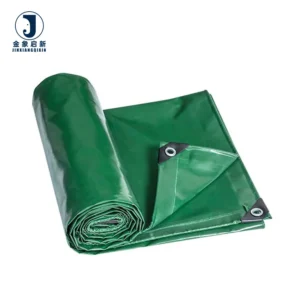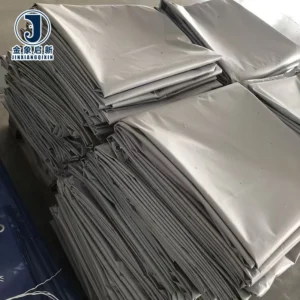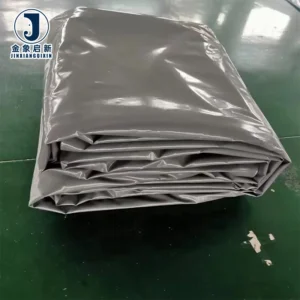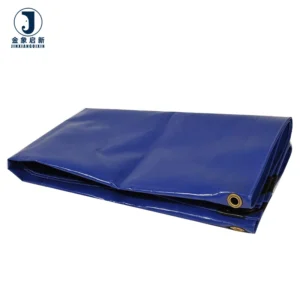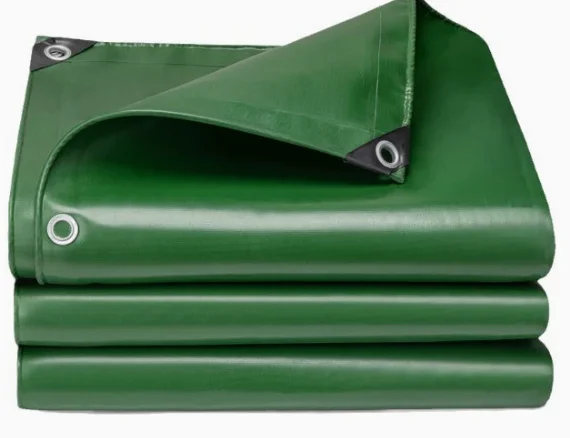
Coated Fabric Process Control — three full production lines with 36 sets of equipment maintain consistent PVC coating weight and adhesion across every roll of PVC Coated Tarpaulin shipped.
Technical Specifications
| Parameter | Value |
|---|---|
| Product Type | PVC Coated Tarpaulin |
| Base Fabric | Woven Fabric |
| Coating Material | PVC Vinyl |
| Weight | At least 450 GSM |
| Waterproof Performance | Fully waterproof coated construction |
| Available Finishes | Glossy or matte (confirm requirement at inquiry) |
| Flame Retardant Options | Available in flame retardant grades — confirm the grade required for your market |
| UV Treatment | Available with anti-UV treatment — request test report for your specification |
| Custom Width and Length | Available — confirm dimensions at inquiry |
Application Suitability
| Application | Exposure & Requirement |
|---|---|
| Truck and trailer side curtains | Constant flexing at load shift points, road spray, abrasion from tie-down straps |
| Flatbed load covering | Direct weather exposure, wind flap stress, UV from prolonged outdoor parking |
| Transport equipment protective covers | Rain and snow ingress prevention, repeated fitting and removal wear |
| Logistics fleet roll stock replacement | Batch colour consistency across multiple vehicles, weld seam integrity under tension |
Why GSM Alone Does Not Guarantee Cover Survival on the Road
A 450 GSM reading on the spec sheet means nothing if the woven base fabric is loosely constructed and the PVC coating carries all the structural load.
Fleet operators who have sourced PVC coated tarpaulin fabric based on weight alone often discover that the material performs well in static warehouse tests but fails within months once fitted to a moving trailer. The woven base fabric denier and thread count determine how the material handles the constant micro-flexing that occurs every time the load shifts under braking or cornering. A heavier coating on a weak base simply adds dead weight without improving tear propagation resistance. [NEED_CITE: tensile and tear test methods for coated fabrics per ISO 1421]
Woven Base Fabric Behaviour Under Road Vibration
The woven construction in this PVC coated tarpaulin provides the structural skeleton that resists tear propagation when the fabric flexes repeatedly at tie-down points and hem edges. On a trailer side curtain, the lower third of the fabric experiences the highest abrasion cycle count from road debris impact and strap contact. The interlocked yarn structure distributes point loads across adjacent threads rather than allowing a single puncture to propagate into a full tear.
PVC Vinyl Coating Adhesion and Waterproof Integrity
The PVC vinyl coating bonds to the woven base fabric to deliver fully waterproof protection across the entire surface. When a truck cover is heat-welded at the seams, the coating must fuse consistently without delaminating from the base yarns at the weld line. Poor coating adhesion reveals itself first at the seams — the welded joint peels apart while the body of the fabric remains intact. Requesting a peel strength value for this PVC coated tarpaulin for truck and transport applications gives you a measurable indicator of long-term seam survival. [NEED_CITE: peel strength test methods for PVC coated fabrics]
Reading the Specification Sheet Beyond the Weight Number
The stated weight of at least 450 GSM represents the combined mass of the woven base fabric and the PVC coating applied to both sides. However, two fabrics at the same GSM can perform very differently depending on how that weight is distributed. A fabric with a heavier base and lighter coating will generally show higher tensile strength but may have reduced surface abrasion resistance. Conversely, a thicker coating on a lighter base improves waterproofing and chemical resistance but can crack under repeated folding in cold conditions. When specifying PVC coated tarpaulin for truck and transport use, ask for the base fabric denier and the coating weight separately rather than relying on the total GSM figure alone. The weave density — ends and picks per centimetre — directly controls how the material resists tear propagation once a cut or puncture occurs. Surface finish selection between glossy and matte also matters: glossy surfaces shed dirt and water more readily on exposed vehicle covers, while matte finishes reduce glare and accept printed branding more effectively.
The Cost of a Specification That Does Not Match the Trailer
Selecting a PVC coated tarpaulin without confirming the exact width, colour batch and weld compatibility for your trailer model creates downstream costs that are rarely visible at the point of purchase. Rolls that arrive lighter than the quoted GSM wear through at high-abrasion zones within the first season. Colour variation between rolls in the same shipment becomes obvious once fitted side by side on a fleet of identical trailers, forcing operators to either accept a mismatched appearance or reorder matching panels. Welded seams that fail before the fabric body does leave the cargo exposed at exactly the flex points where protection matters most. [NEED_CITE: common failure modes in PVC coated truck curtains]
Why Fleet Buyers Source This PVC Coated Tarpaulin Here
Nearly 30 years of focused coated fabric production means the coating weight and adhesion parameters for this PVC coated tarpaulin are controlled at every stage, not adjusted reactively after a complaint.
Three full production lines running 36 sets of professional equipment provide the capacity to fulfil multi-roll fleet orders within typical multi-week lead times without splitting production across incompatible machines.
A 10-person R&D team develops samples within days when you need a specific width, colour or surface finish matched to your trailer curtain specification before committing to a full container order.
Dedicated QA and QC inspection at every production stage, with 100% pre-shipment checking, catches GSM drift and coating inconsistency before the rolls leave the facility.
ISO and CE certified production processes provide the documentation trail that fleet compliance teams and customs authorities require at the border.
Documentation & Verification
- Material specification sheet stating exact GSM, base fabric denier and PVC coating weight per roll
- Pre-shipment inspection record verifying weight and coating consistency against quoted values
- UV and flame retardant test reports supplied where the grade has been specified at inquiry
- Roll packing list with net weight and roll count for container loading verification
- Certificate of origin and customs documentation for international freight clearance
Fabrication, Handling & Storage
- Heat weld at temperatures matched to the PVC coating thickness to avoid delamination at seam lines
- Reinforce hem and eyelet zones with additional PVC layers to distribute tie-down strap loads across the woven base
- Store rolls horizontally on pallets to prevent permanent creasing in the coated surface
- Allow rolls to acclimatise before unrolling in cold conditions to prevent coating crack at the core
- Cut panels using the full roll width where possible to minimise cross-grain weld seams on trailer curtains
What to Include in Your Inquiry
Provide the exact trailer dimensions or cover size you need, the operating climate and UV exposure level for your routes, and whether you require flame retardant certification for your market. Specify if you need rolls in standard stock widths or custom cut panels with eyelets and reinforced hems fitted. Confirm your annual roll quantity and colour requirements so batch consistency can be planned from a single production run.
Frequently Asked Questions
Q: How do I verify the GSM on arrival matches what was quoted?
A: Every shipment includes a pre-shipment inspection record documenting the measured weight per roll. You can independently verify by cutting a measured sample from the roll edge and weighing it against the stated GSM value on the material specification sheet. Discrepancies should be reported with photographs before the rolls are cut or welded.
Q: Can I order custom widths and lengths for a specific trailer model?
A: Custom width and length options are available for this PVC coated tarpaulin fabric. Provide your exact trailer panel dimensions at the inquiry stage so the production team can confirm feasibility, minimum order quantity and lead time. Sample panels can be developed within days for fitment testing before the full production run.
Q: How do welded seams perform at the load flex points?
A: Welded seams on this PVC coated woven fabric fuse the vinyl coating layers together, creating a bond that should match the fabric body strength. Specify the expected flex cycle conditions for your trailer application so the weld temperature and overlap width can be set accordingly. Requesting a peel strength test value gives you a measurable benchmark.
Q: What eyelet and hem reinforcement options are available?
A: Hem edges can be reinforced with additional PVC-coated fabric layers before eyelet installation to distribute tie-down strap tension across the woven base fabric. Specify eyelet spacing and diameter based on your strap system. The reinforcement approach depends on the tie-down load and the flex frequency at the hem line.
Q: How is batch colour consistency maintained across multiple rolls?
A: Rolls within the same order are produced in a single coating run using matched PVC pigment batches to minimise colour variation. Request a colour reference standard at the inquiry stage and confirm the acceptable tolerance range. Pre-shipment inspection includes visual comparison of roll surfaces under controlled lighting before dispatch.