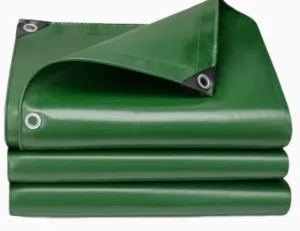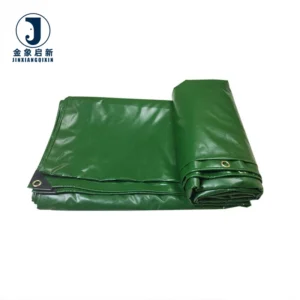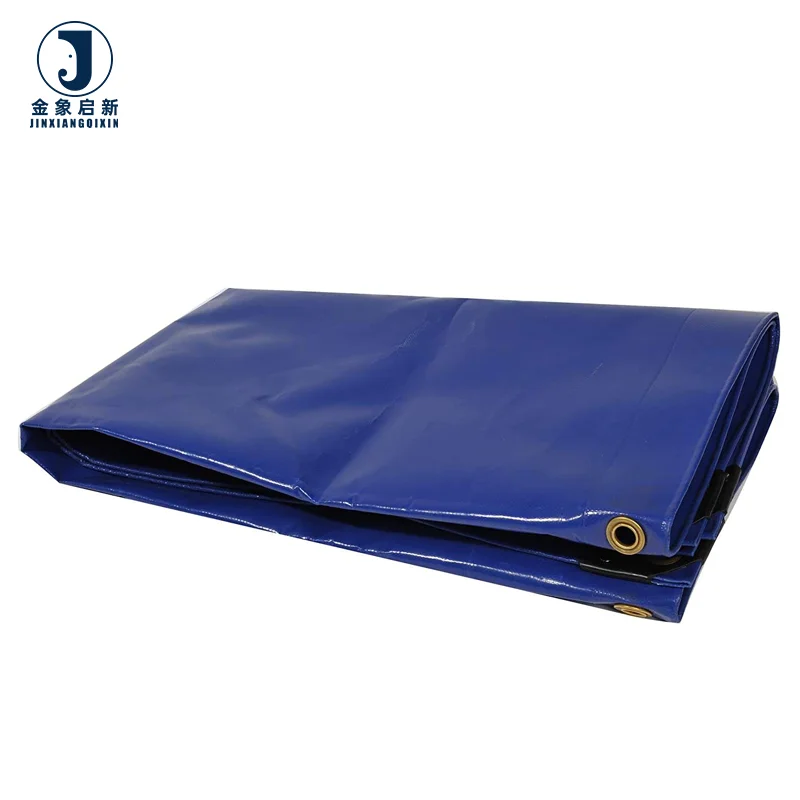
Proven Coating Control — Nearly 30 years of focused PVC coating experience means every roll of PVC Coated Tarpaulin Curtains for Lorries carries verified weight and consistent adhesion across the production batch.
Technical Specifications
| Parameter | Value |
|---|---|
| Product Type | PVC Coated Tarpaulin |
| Weight (GSM) | 250gsm–1500gsm (confirm grade for your application) |
| Base Fabric Denier | 200D×300D, 500D×500D, 840D×840D, 1000D×1000D |
| Coating Material | PVC |
| Available Sizes | 3x4m, 6x8m, 8x10m, 10x12m or custom made |
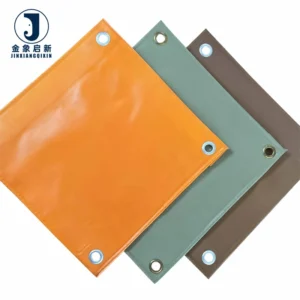
| Colour Options | Blue, yellow, black, green, white, and others |
| Surface Finish | Glossy or matte |
| Temperature Range | -15°C to 70°C |
| UV Treatment | Customized (test basis not stated — confirm grade required for your market) |
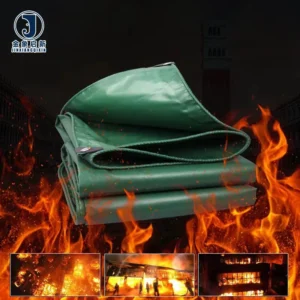
| Flame Retardant | Flame retardant treated (grade not stated — confirm the grade required for your market) |
| Anti-Fungal | Treated |
| Waterproof | Yes |
| Key Features | Rain-resistant, tear-resistant, durable, good flexibility and adhesion strength, abrasion resistance |
| OEM/ODM | Available |
| Standards | ISO, CE |
Application Suitability
| Application | Exposure & Requirement |
|---|---|
| Lorry side curtains | Constant flexing at load shift points, road debris abrasion, daily UV and rain exposure |
| Truck trailer cargo covers | Wind load tension across large spans, tie-down stress at eyelets and hems |
| Fleet weather protection | All-season temperature cycling from -15°C to 70°C, repeated rolling and folding |
| Transport equipment side panels | Abrasion against cargo edges, chemical splash from road surfaces |
Why Generic Sizing Fails on Fleet Curtains
Generic truck covers that do not match your trailer dimensions cause fit gaps, wind catch, and premature seam failure — specifying exact curtain dimensions per vehicle model eliminates these issues.
Fleet operators frequently order PVC Coated Tarpaulin for trucks using standard panel sizes that leave uncovered sections at the trailer corners or create excess fabric that flaps at highway speed. That flapping concentrates stress at the hem and eyelet rows, which is exactly where most field failures originate. When a curtain is cut to the specific trailer model, the load distributes evenly across the full panel and the attachment hardware carries only its designed share of the force. [NEED_CITE: tensile and tear test methods for coated fabrics per ISO 1421]
Model-Specific Curtain Fitment for Every Trailer in Your Fleet
A side curtain that matches the exact profile of a curtain-sider trailer eliminates the two most common causes of early failure: wind catch at loose edges and concentrated load at stretched corners. Our PVC Coated Tarpaulin Curtains for Lorries are produced to the dimensions you supply per vehicle model, so each panel arrives ready to install without on-site trimming. This approach also simplifies fleet standardisation — every replacement curtain for a given trailer type is interchangeable.
Reinforcement at the Points That Actually Fail
Tie-down straps, ratchet buckles, and curtain runners concentrate force into small zones along the hem and eyelet rows. The base fabric denier options — from 200D×300D for lighter panels to 1000D×1000D for high-load curtains — determine how much tear resistance the material provides at these stress points. Where the specification calls for it, additional reinforcement layers are applied at eyelet spacing intervals and along welded seams before the curtain leaves the production line. [NEED_CITE: DIN 4102 fire classification for building materials]
Reading the Specification Sheet Beyond GSM
Buyers often select a curtain grade based on GSM alone, but weight and base fabric denier must be evaluated together. A 900GSM panel woven at 500D×500D carries more coating mass on a lighter base cloth, giving good weather protection but lower tear propagation resistance than a 900GSM panel built on 1000D×1000D yarn. The coating method also matters: knife-coated PVC penetrates the weave for higher peel strength at welded seams, while laminated constructions can be lighter and more cost-effective for panels that will not be heat-welded in the field. Surface finish selection — glossy or matte — affects how easily road grime releases during routine fleet washing and how well printed fleet branding adheres over time.
The Hidden Cost of Specifying by Price Per Square Metre
When a curtain is selected primarily on cost, the GSM stated on the quotation may not match the material that arrives. A panel that tests lighter than agreed lacks the coating thickness needed to protect the base fabric from UV degradation and abrasion at flex points. The result is a curtain that develops pinholes and seam separation within the first season, forcing a full replacement cycle far earlier than a correctly specified grade would require. Colour inconsistency between rolls in the same order is another consequence of rushed production — panels installed side by side on the same trailer show visible shade differences that undermine fleet appearance standards. [NEED_CITE: batch colour consistency standards for coated textiles]
Why Procurement Teams Source This Fabric Here
Three full production lines and 36 sets of professional equipment support bulk curtain orders with reliable on-time delivery, so fleet replacement schedules stay on track. A dedicated 10-person R&D team handles pattern layout, custom sizing per trailer model, and sample development within days rather than weeks. Every production stage includes QA checkpoints, and a 100% pre-shipment inspection verifies GSM, colour consistency, and weld seam integrity before any roll or finished curtain leaves the facility. ISO and CE certification underpins the documentation package that accompanies each dispatch.
Documentation & Verification
- Material specification sheet stating confirmed GSM, base fabric denier, and coating weight per roll
- UV and flame retardant test reports matching the grade specified for your market
- Pre-shipment inspection record covering weight, colour, and weld seam verification
- Roll packing list with net weight and dimensions for customs clearance
- Certificate of origin and customs support documentation for export shipments
Fabrication, Handling & Storage
- Heat-weld seams at temperatures matched to the PVC coating weight to avoid delamination at flex points
- Reinforce eyelet rows with additional PVC patches where 1000D×1000D base fabric carries high tie-down loads
- Store rolls horizontally on pallets to prevent permanent creasing across the glossy or matte surface
- Allow cold-stored curtains to reach ambient temperature before unrolling to prevent coating crack at -15°C threshold
- Use mild detergent for cleaning; avoid solvent-based products that attack the PVC coating layer
What We Need to Quote Your Curtain Requirement
To provide an accurate specification and sample, share the trailer make and model or the exact panel dimensions you require. Let us know the operating environment — particularly UV exposure levels and any flame retardant grade your market mandates — along with the annual curtain volume and whether you need finished panels with eyelets and hems or roll stock for your own fabrication line.
Frequently Asked Questions
Q: How do I specify the right size for my trailer model?
A: Provide the trailer make, model, and year, or supply the exact width, drop length, and overlap measurement for each panel position. We produce PVC Coated Tarpaulin Curtains for Lorries to those dimensions so every curtain fits without on-site modification. Samples are available to confirm fitment before full production runs.
Q: What GSM weight is recommended for heavy-duty transport use?
A: Fleet operators running long-haul routes with daily exposure typically specify grades in the heavier GSM ranges with a 1000D×1000D base fabric for tear resistance at tie-down points. Lighter GSM options suit short-distance or seasonal use. We recommend confirming the grade against your specific load type and route conditions before ordering.
Q: Can you match our existing curtain colour across the fleet?
A: Yes. Provide a physical sample or a colour reference code, and our R&D team will develop a match for approval before bulk production. Roll-to-roll colour consistency is verified during pre-shipment inspection so that replacement panels installed alongside existing curtains show no visible shade variation.
Q: What reinforcement options are available for high-stress areas?
A: Eyelet rows can be reinforced with additional PVC patches and closer eyelet spacing. Hem edges receive double-layer treatment where curtain runners or ratchet straps apply concentrated load. Welded seams at high-flex zones are built with overlap width matched to the base fabric denier to prevent separation under repeated movement.
Q: Do you provide test certificates for UV and flame retardant treatments?
A: We supply UV and flame retardant test reports that correspond to the grade specified in your order. Available in flame retardant grades — confirm the grade required for your market, and we will align the treatment and documentation accordingly before production begins.